Trump Treasury Will Greenlight Some Former Shadow Fleet Tankers by 2026
My call: By New Year’s Eve 2026, Treasury puts in writing a carve‑out that lets some previously sanctioned ‘ghost tankers’ haul approved oil.
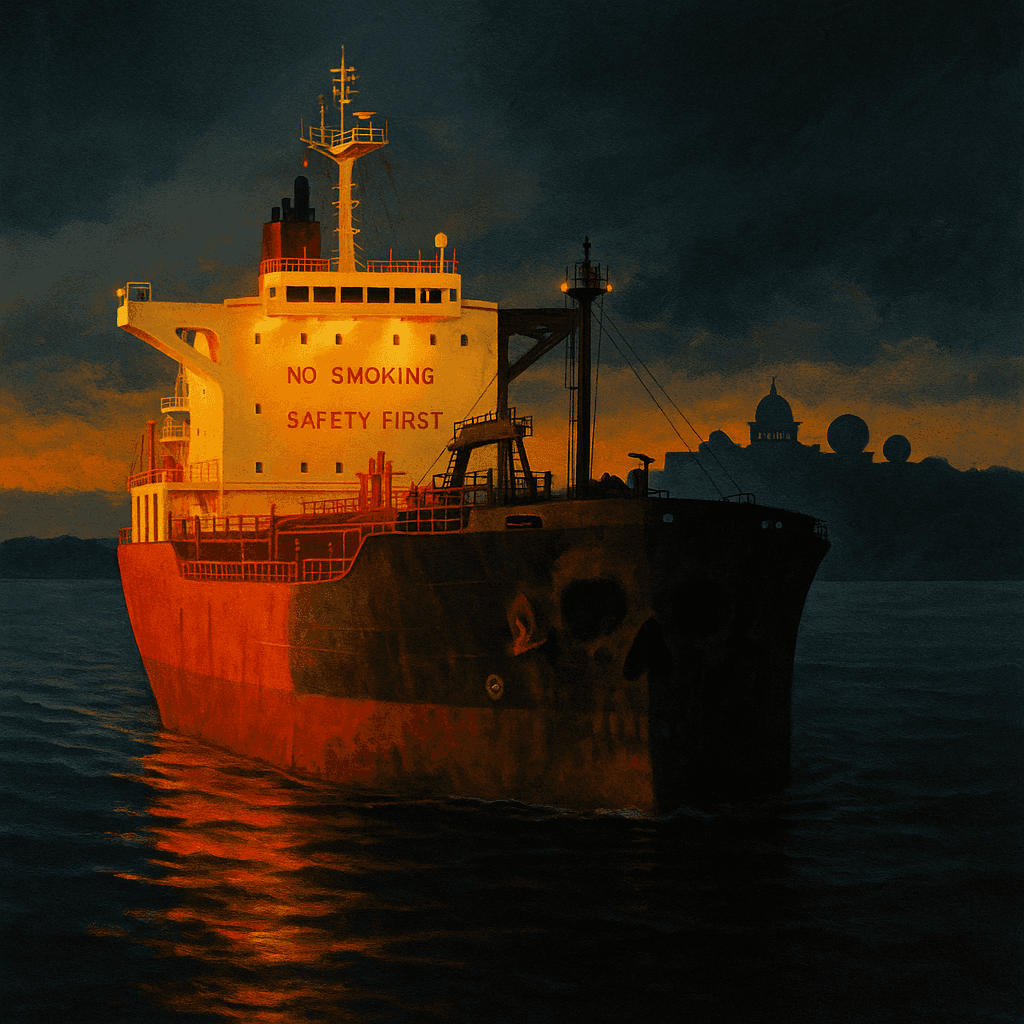
My call: before the ball drops on 2026, the Trump administration signs a permission slip for at least part of the Russian shadow fleet. Not a secret wink, not a leak to traders, but black and white Treasury language that says: some previously sanctioned tankers can move "legal oil" again.
The consensus story is that Washington is finally getting serious about ghost ships hauling Russian crude. Marines on decks, Article 110 inspections, dramatic helicopter photos. The signal story is that the White House is already shopping for ways to let those same ships back into polite society, as long as the cargo looks clean and the pump price looks fragile.
Sanctions are the outfit. Cheap oil is the body. When the two stop fitting, the outfit gets altered.
The bet, in plain English
Here is the scorable claim.
By December 31, 2026, Treasury or State will publish at least one sanctions instrument, general license, FAQ, or formal guidance that explicitly does three things:
- Names or clearly includes previously sanctioned or designated "shadow fleet" tankers or their class of vessels.
- States that, under defined conditions, they may be used for specified non sanctioned or price cap compliant oil trades.
- Thereby relaxes the earlier effective ban on those hulls participating in legal oil commerce.
Quiet under enforcement does not count. A vibes based press gaggle does not count. We are looking for text a compliance officer can print, highlight, and wave at their terrified lawyer.
Why cheap shipping beats pure sanctions
Start with the problem Trump people actually wake up sweating about. It is not UNCLOS. It is not the "credibility of the West." It is gasoline, freight rates, and anyone who can say "you choked off our exports."
Shadow fleet pressure has done one unambiguously effective thing: it has taken usable tonnage off the market and jacked up the cost of moving oil. US led operations like Southern Spear, the seizure of the Bella I, and a handful of highly publicized boardings turned a seedy, semi invisible workaround into a real compliance risk. Result: fewer ships that mainstream players are willing to touch, and higher rates for everyone who still needs to move barrels.
Now layer Trump’s political incentives on top:
He has sworn not to "restrict" American oil and gas exports. His economic brand is cheap fuel, booming shale, and an enemy list that includes "bureaucrats who hate pipelines." If sanctions enforcement starts to look like a supply squeeze, it loses.
So when traders say, look, half of Russia’s exports ride on this gray fleet and your crackdowns are bottlenecking legal cargo too, the Trump instinct is not to reach for a human rights speech. It is to ask why perfectly good steel is sitting idle because some lawyer is scared of an OFAC footnote.
The narrow door Trump can walk through
There is a reason this relaxation is likely to be formal, not just an unspoken shrug.
Congress is busy with its own performance of toughness. A bipartisan group is pushing to harden sanctions on Russia’s shadow fleet, codify broad designations, and wave around new tools. Yet listen closely: those same bills carve out waiver authority for the president. That is not an accident. It is an invitation.
The White House gets to say: Congress told us to be tough on Russian revenue, and we agree. Then Treasury writes the part that markets actually care about, which sounds like: if the cargo is non Russian, fully documented, price cap compliant, and blessed by twelve angels of due diligence, you may use certain previously listed vessels.
Expect the instrument to be narrow and smug:
First, it will obsess over cargo, not sympathy for shipowners. The language will talk about "legal oil," "law abiding market participants," and "minimizing unintended impacts on legitimate trade." The hulls are just unfortunate bystanders who, coincidentally, become available again.
Second, it will outsource the moral hygiene to insurers and traders. Want to use a former shadow tanker for Brazilian crude or US products out of the Gulf? Prove to your underwriter and to OFAC that you are below the cap, outside banned ports, and drowning in paperwork. If anything goes wrong, the policy will say, you lied to us.
Third, it will pretend this is alignment, not defection. As Europe, the UK, and France keep ramping up Article 110 inspections, Washington will loudly agree that unsafe, sanctions busting vessels remain unacceptable. Then it will quietly define "unsafe" and "sanctions busting" several inches to the right.
The signals to watch between now and the carve out
We are not waiting on divine revelation. The prep work for this pivot is already visible in three places.
First, rhetoric. When senior officials start lamenting "freight bottlenecks" and "shortages of legal shipping capacity," that is not small talk. It is the justification phase. The shift from "Russia’s shadow fleet" to "ships unfairly tainted by past trades" will be your tell.
Second, paperwork. New OFAC FAQs that lean heavily on due diligence language, references to "misperceptions" in the market, or reminders that "not all vessels previously involved in sanctioned trades are currently restricted" will be soft openings for a harder policy.
Third, the sanctions list itself. Watch for selective delistings or weirdly technical notes on specific hulls. When a ship that once carried Russian crude under a mystery flag gets its name cleaned up and drifts into a Western insurer’s book, that is not personal growth. That is the market front running a rule change.
What could still kill the deal
There are ways this forecast loses.
A major spill from a decrepit ghost tanker would make any visible relaxation radioactive. So would a fresh Russian atrocity that snaps Western politics back into punishment mode. In those worlds, Congress writes the script and the White House reads it with feeling. No one rushes to rehabilitate the Bella I’s cousins.
There is also the simple path of cowardice: keep the official guidance scary, quietly stop boarding ships, and let the gray fleet seep back into normal trade by custom rather than decree. The politics are cleaner, the lawyers are happier, and my scorable call loses even as the practical outcome converges.
I am betting against that last one because Trump likes visible reversals. He prefers to sign the waiver on TV, not whisper it in a back channel. An explicit carve out lets him claim credit for lower freight costs while still insisting that no one is "soft on Russia," just tough on red tape.
The quiet price of cheaper oil
If this forecast hits, the story in hindsight will sound trite. Markets needed more ships, the administration needed cheap fuel, lawyers needed a theory, and together they found one. A few dozen once taboo tankers will reappear in legal manifests, draped in compliance checklists and American exceptionalism.
The deeper lesson is less photogenic. Every time Washington carves out a pressure valve for sanctions, adversaries learn the same thing: if you can hold up something the White House truly cares about, the rules can be negotiated.
By year end 2026, do not be surprised if the headlines read "US Maintains Tough Stance on Russian Oil" while the fine print reads "subject to General License 47 B." The shadow fleet will not disappear. It will just come with slightly better paperwork.
That is the Trump energy doctrine in one neat package: drill, baby, drill, then let the haunted tankers clean up in the spot market.
Around the Shallot
Stay in the same broken universe.
Forecasts, satire, cartoons, and quizzes should feel like one publication, not disconnected tabs.
Tech
Pentagon Launches ‘Premium Democracy Bundle,’ Now With Elon As War-Planner-in-Chief
For just $366 million, one tech billionaire gets ad-free elections and early access to the future of warfare.
Oct 15

Forecast
A Top‑10 Chemical Giant Will Brand an Enterprise AI Platform by 2027
The industry already runs quiet AI pilots in the back rooms. Rising budgets, Industry 4.0 plumbing, and the EU AI Act’s paperwork machine mean the next step is not more experiments. It is a named AI “platform” that boards can brag about and regulators can blame.
Oct 14
Comments
Be the first to comment.