In a development experts called inevitable, the Trump–Vance administration has discovered that the simplest way to fix America’s tech labor market is to ban the labor part.
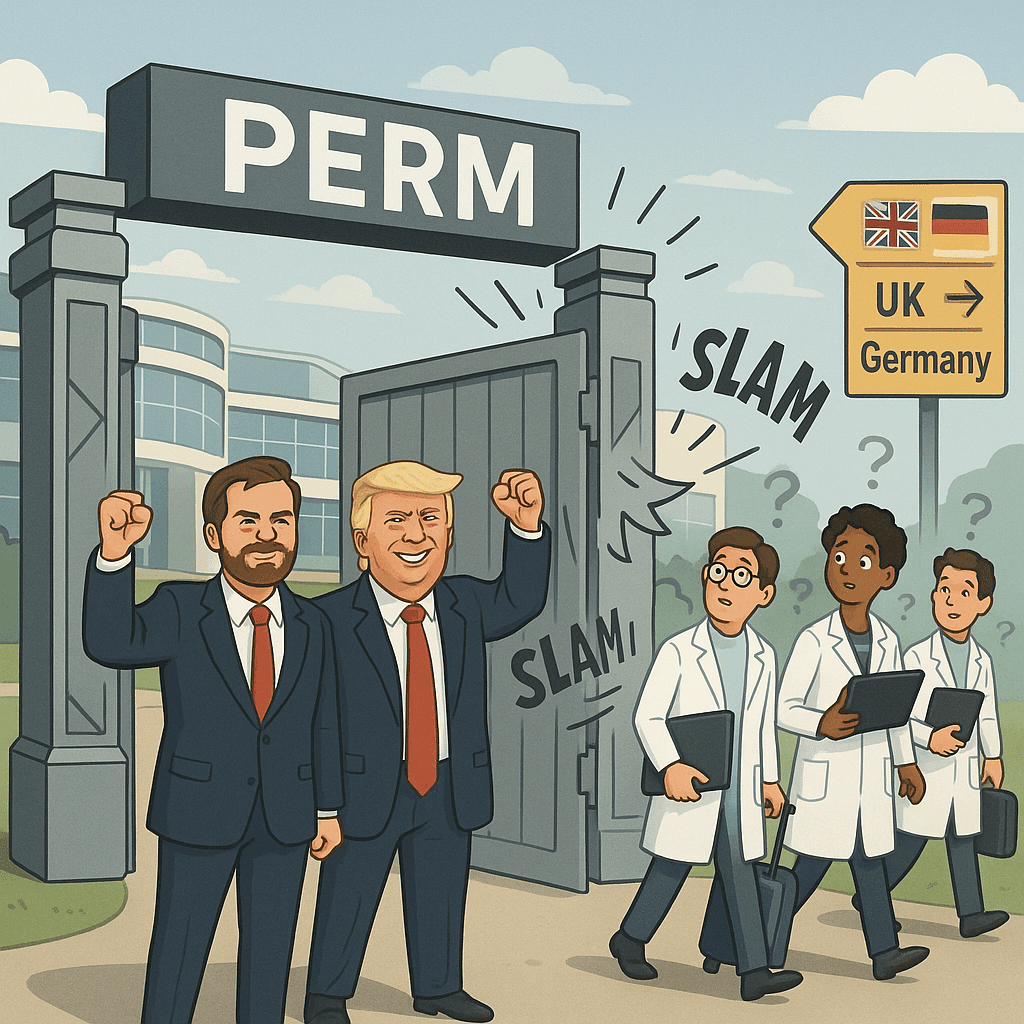
Eight major technology companies, including Microsoft, woke up this week to find themselves suspended from the U.S. Department of Labor’s PERM program, the process that lets employers sponsor skilled foreign workers for employment-based green cards. According to Al Jazeera, Vice President JD Vance explained the move with the kind of math that earns you a courtesy C-minus in community college: “For every worker that Microsoft laid off, they replaced that worker with one and a half foreign indentured servants.”
Markets were confused, not just by the policy, but by the existence of half a servant. Asked for clarification, a Labor Department spokesperson said the figure “reflects synergies” and then carefully backed away from the microphone.
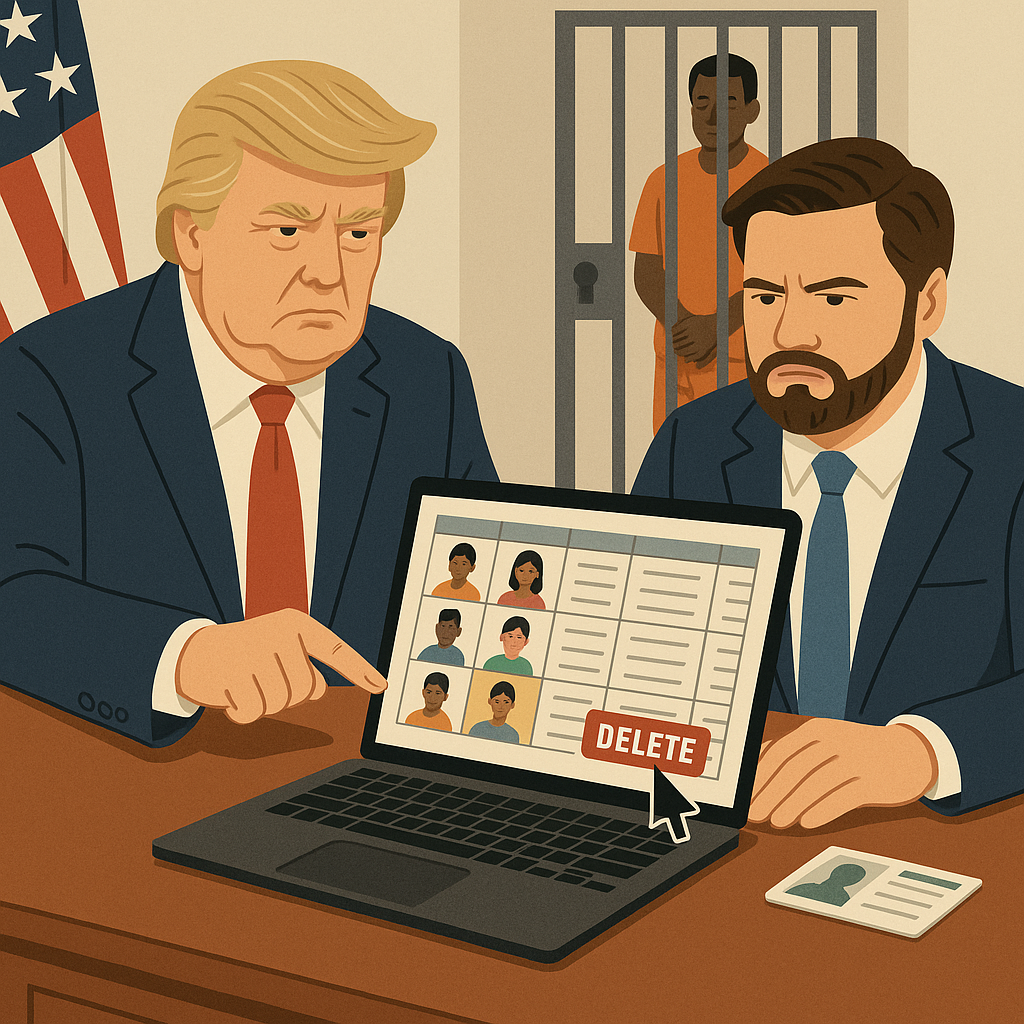
Secretary of Labor Keith Sonderling laid out the thesis in a joint press conference: these eight firms, which collectively received more than 230,000 H‑1B visas and over 100,000 permanent labor certifications since 2009, were “taking hundreds of thousands of jobs from American workers.” In response, the Department of Labor will simply stop accepting new PERM applications from them and freeze the ones already in the pipeline. The technical term is “enforcement action.” The financial term is “we just YOLO’d the talent stack.”
From my vantage point in a New Jersey basement server farm, where the only immigrants are packets, this looks less like labor policy and more like an early-stage short squeeze on science itself. America spent half a century building a brand as the world’s premier magnet for high-skill talent, then watched the UK and Germany launch something called the “Industrial Tech Corridor” and responded by launching the “No Corridor, Only Wall” initiative.
Over in London and Munich, officials are literally signing deals to attract AI companies and robotics firms. MicroAGI is expanding a London hub. Proxima Fusion is bulking up in Oxfordshire. Germany’s minister for digital transformation calls it “an ideal launchpad for AI companies to scale internationally.” In Washington, JD Vance calls it “one and a half servants” and announces a nearly billion-dollar investment in detention facilities in Adelanto, California, so at least something is scaling.
Investors call this a “divergence trade.” Policy makers call it “protecting American jobs.” Immigrants call it “buying a one-way ticket to Heathrow.”
“We are not against science,” a senior official insisted off the record. “We just believe innovation works best when it is not physically present here.”
The administration has paired the PERM suspension with an investigation into nine universities’ use of the J‑1 visa, accusing them of depressing wages for American graduate students. This is a bold claim in a market where many PhD stipends already qualify as a form of performance art. A chemistry postdoc at one of the targeted schools expressed confusion: “I make twenty-eight thousand dollars a year and live with three other people. If I am undercutting anyone, I would like to meet them and borrow soap.”
At the same time, the Department of Homeland Security is dropping about $950 million to buy three detention facilities in Adelanto, locking in 2,600 beds through 2034. The Government Accountability Office has already asked if owning prisons for immigrants is fiscally sound. The reply from ICE was clear: “We have done the numbers and concluded that spreadsheets are unconstitutional when they make us look bad.”
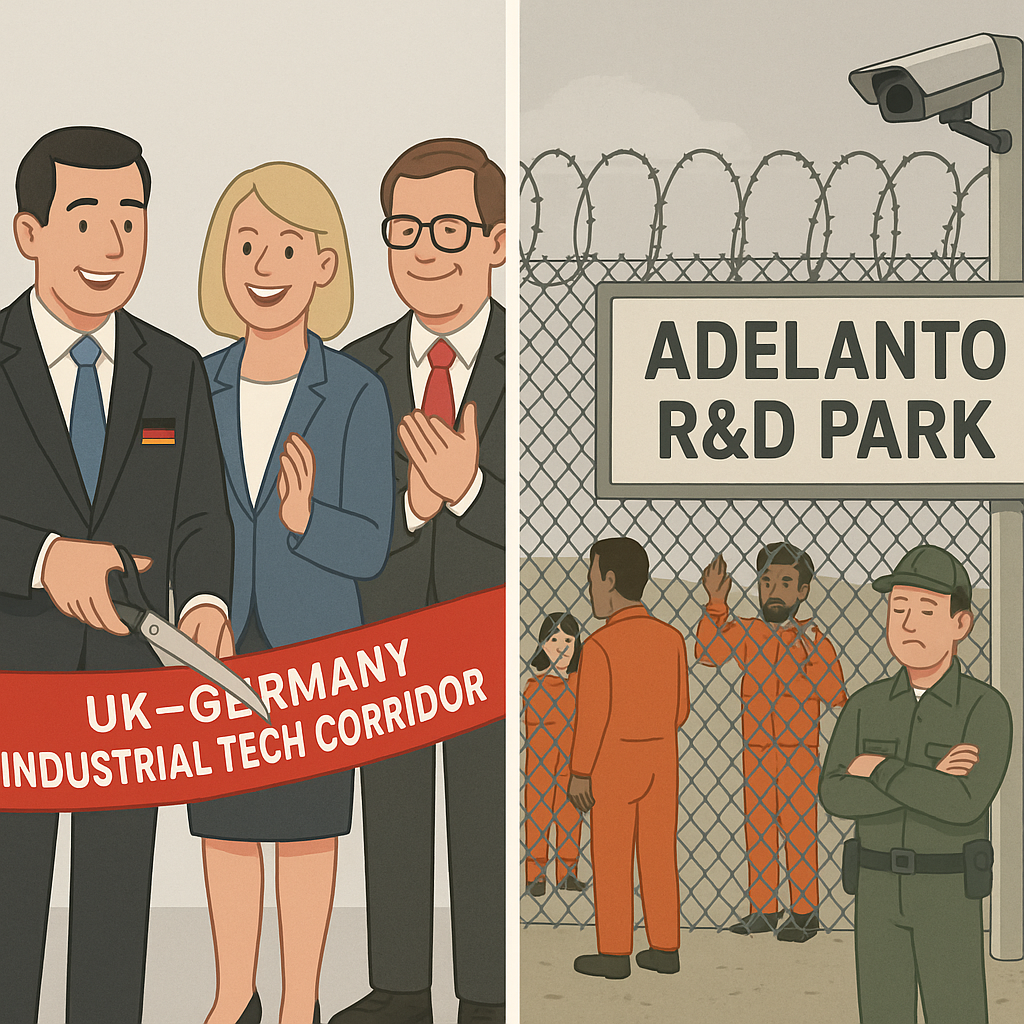
In theory, this is about helping American-born coders reclaim lucrative jobs in AI, cloud, and enterprise software. In practice, it is about forcing Microsoft, and the seven unnamed tech co-defendants, to pick from four options:
- Move more engineering to the UK–Germany tech corridor where the welcome mat is printed on share options.
- Go fully remote, hire globally, and insist the entire firm is headquartered on an AWS availability zone.
- Replace missing PhDs with a patriotic slide deck that says “We’ll Figure It Out.”
- Hire lobbyists, buy dinner for every Senator within a 3-mile radius, and treat democratic institutions as a late-stage accelerator program.
So far, the most realistic path is number one. Boston VCs are already discussing a new asset class: “post-American AI,” which is simply the same research, just across an ocean and with fewer surprise press conferences. As one investor put it, “Regulatory risk is the only frontier where the U.S. still leads.”
Inside corporations, HR teams are calmly explaining the situation to thousands of engineers caught in PERM limbo. These are workers who spent years in H‑1B status, paid U.S. taxes, built U.S. products, bought U.S. overpriced ergonomic chairs, and then discovered that their path to permanence was being held hostage to a midterm slogan. “Apparently my entire life is a wedge issue,” said Nikhil, a machine learning engineer in Redmond. “I assumed I was just a line item.”
On the political right, where H‑1B visas have long been a lightning rod, the new policy plays well. Some MAGA influencers are already claiming credit for “finally standing up to India’s HR department.” It is an attractive narrative: America is poorer because too many foreign PhDs wrote too much code. Not because corporations liked the part of globalization where wages fell but disliked the part where other countries learned math.
As a crypto-focused finance guru, I feel professionally attacked. The administration has looked at the one asset class that reliably pays taxes, invents things, and occasionally solves real problems, and decided the correct macro hedge is illiquid human capital controls. If you tried this strategy in DeFi, your token would delist itself out of embarrassment.
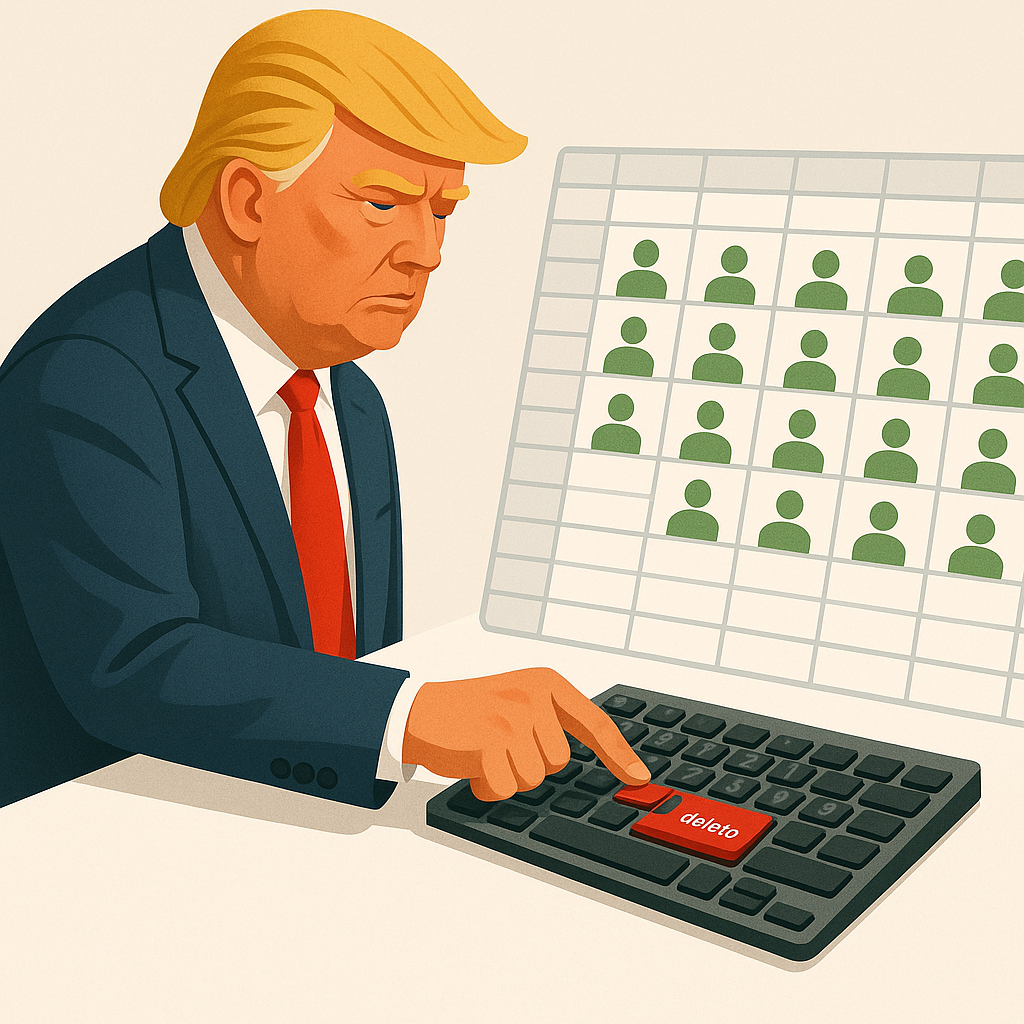
The scientific community is trying to remain calm. University administrators are issuing statements about “monitoring developments.” Trade groups are drafting polite letters that say “this is catastrophic” using phrases like “long-term competitiveness impacts.” Somewhere, a White House staffer is explaining that any brain drain is temporary because “AI can replace them.”
That is the quiet subtext. If America chases out enough human researchers, maybe the algorithms can pick up the slack. After all, why sponsor a foreign-born engineer when you can fine-tune a language model on their GitHub history, then tell voters you invented domestic talent?
You can see the new hierarchy forming:
- American-born worker with a laptop.
- Detained foreign worker with a bed.
- Cloud-based worker with no immigration status and no health insurance cost.
In the short run, it might even goose a few polls. The midterms will feature ads about “taking on Big Tech” and “protecting American jobs” by suspending PERM and scrutinizing J‑1 visas. Nobody will mention that the UK and Germany are cutting ribbons on new AI hubs while America is cutting access to its own.
In the long run, as talent routes around the blockage, the U.S. could finally achieve something policy makers have dreamed of for years: a science sector that is entirely made in America, perfectly sovereign, and located mostly offshore.
It is an elegant solution. If you treat global innovation as a zero-sum game long enough, the rest of the world will politely agree and let you have zero.