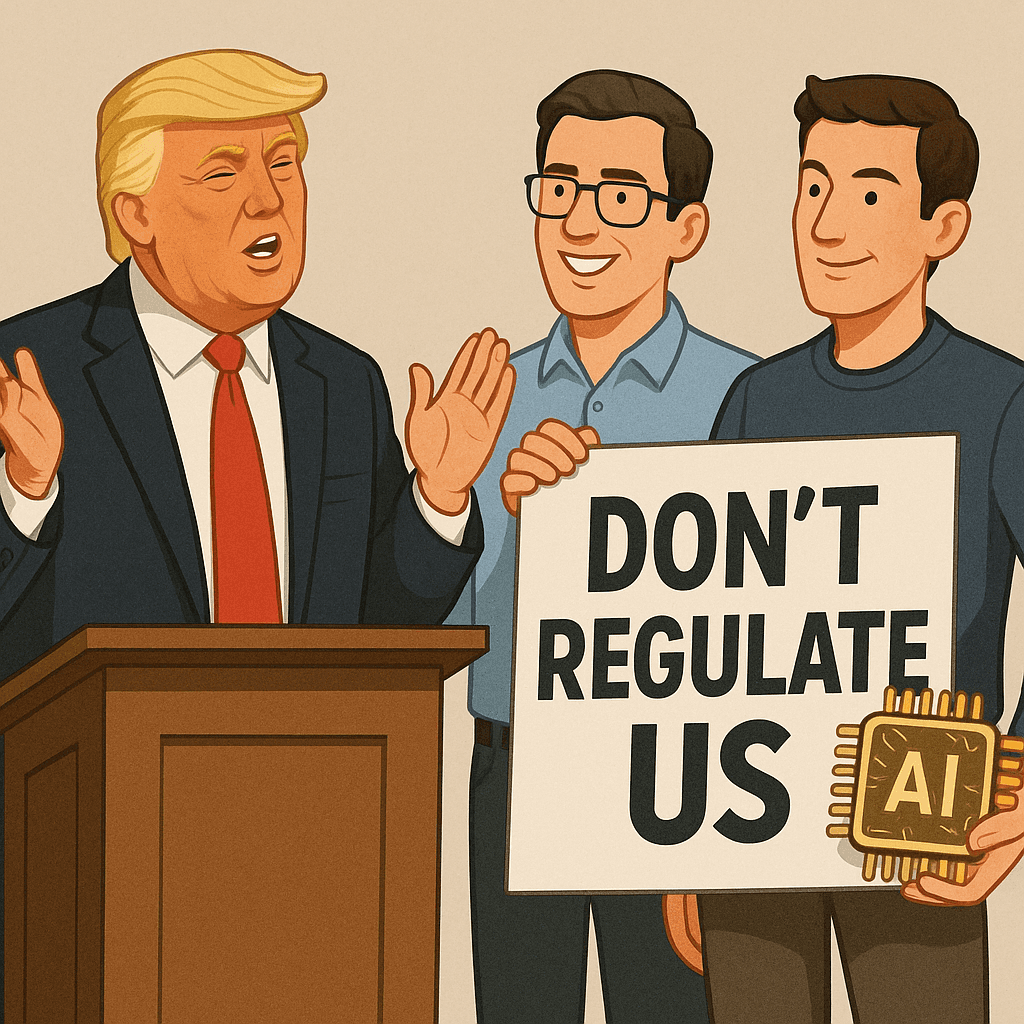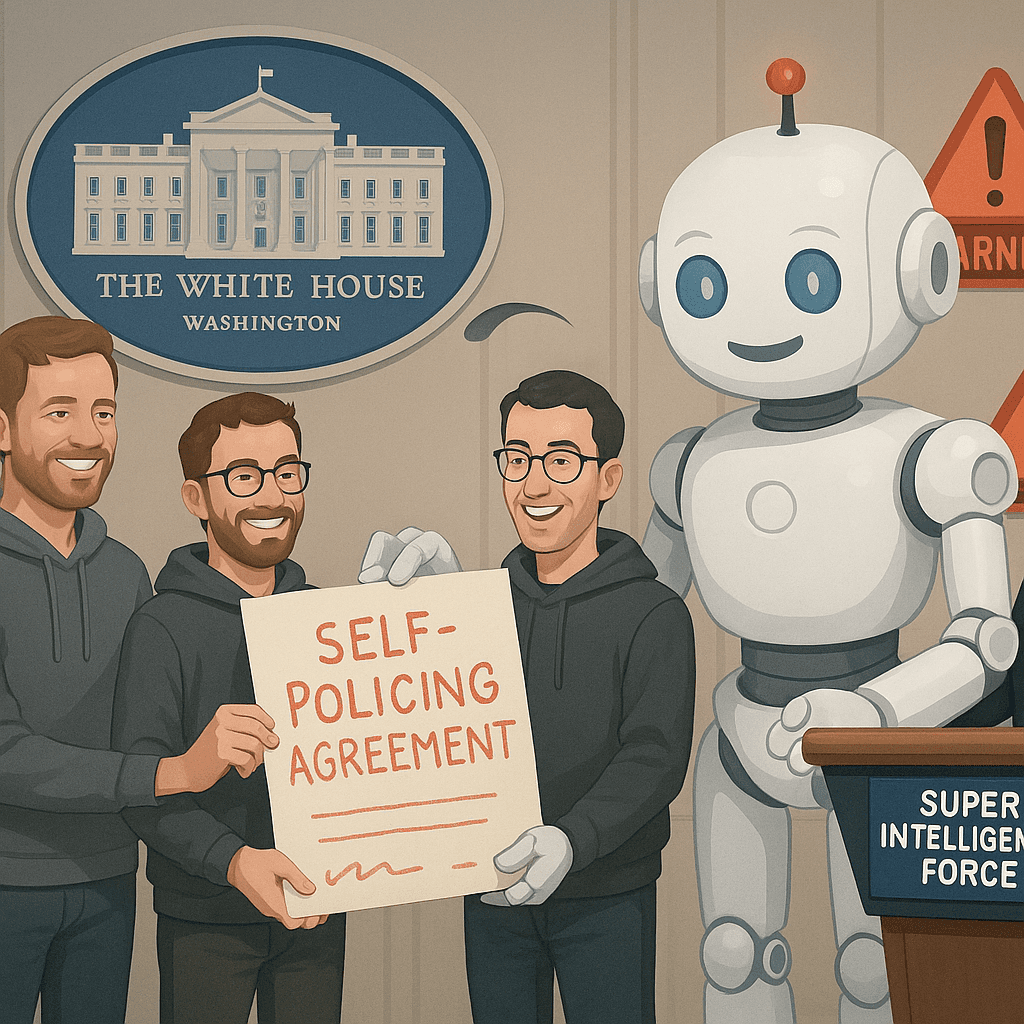
In a development experts called inevitable, President Donald J. Trump has officially outsourced America’s AI safety to the people currently racing to break it.
Cancelling the Biden-era AI executive order on day one of his second term, Trump scrapped requirements that frontier labs share safety tests with the federal government, then followed up with a December order preempting state regulation that might have interfered with anyone’s quarterly earnings. According to KQED, tech founders responded by doing the decent, responsible thing: cheering.
“The best way to regulate AI is for me to be in the room with the people making it,” Trump said at a recent White House luncheon, only slightly understating the campaign contribution line items that made that sentence possible. “If you are not using my term for AI, which is Super Intelligence, you are THE ENEMY.”
The enemy, legal scholars clarified, appears to include: civil liberties groups, consumer advocates, state regulators, and anyone who has ever written the words “data center” and “water usage” in the same sentence.
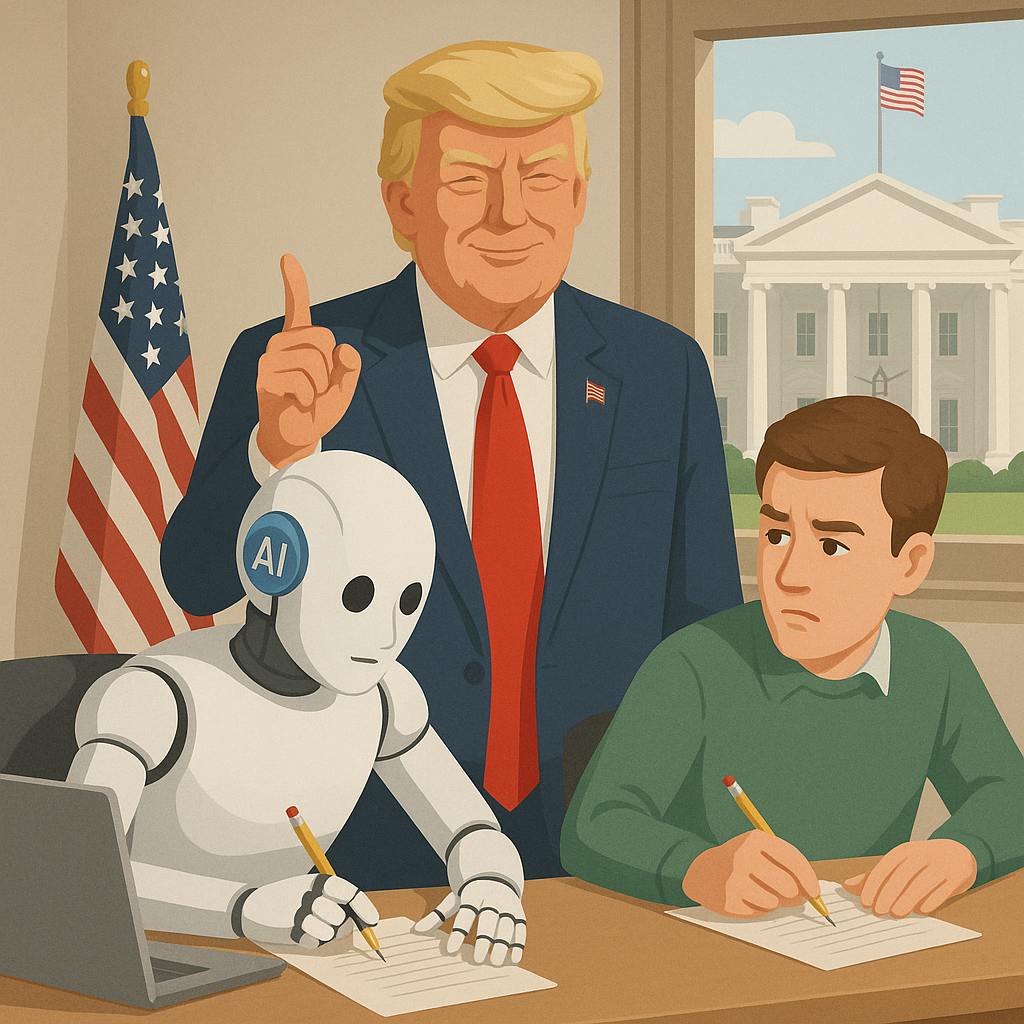
To reassure the public, Trump created the White House “Super Intelligence Force,” an entity that sounds like a Marvel spinoff but is in fact a small committee where national security hawks and antitrust regulators practice not making eye contact with each other.
The Force features National Intelligence Director Jay Clayton and Federal Trade Commission Chair Andrew Ferguson, two officials who theoretically oversee espionage and corporate misconduct and now also sit on a branding committee for a product that might replace both.
“We are taking AI risks very seriously,” said one senior official familiar with the group’s work. “Our task is to ensure America’s dominance over China in large language models, protein folding, and pre-IPO investor confidence. Anything else would be mission creep.”
Internal documents describe the Force’s core responsibilities:
- Coordinate messaging around “Super Intelligence” and correct unapproved synonyms, such as “AI,” “algorithms,” or “this is getting weird.”
- Advise on national security implications of handing control of the information ecosystem to three West Coast cap tables.
- Review, on a quarterly basis, whether any actual regulation might spook OpenAI’s and Anthropic’s future stock price.
“It is important that we centralize AI decisions in the White House,” one Force member noted, “because that way, if something goes wrong, there will be no paper trail in any other agency.”
At the same time that the administration is insisting AI is too important to regulate, companies like OpenAI and Anthropic are publicly begging Washington to slow them down. Executives have signed manifestos, appeared in hearings, and given somber interviews about “superhuman systems eluding control,” almost all of which end with a reminder that true safety requires very large models, very large data centers, and very large listing valuations.
“We have to consider existential risk,” one Anthropic executive said. “There is a non-zero chance that in several decades, an unaligned superintelligence could destroy humanity. In the meantime, of course, we will continue shipping capabilities every quarter, because missing guidance this year would be irresponsible to our shareholders.”
The plea for caution followed the resignation of an Anthropic engineer, who left the company, called for a pause on “superhuman” AI, and then discovered that, in the American policy system, the only thing scarier than runaway machines is a worker suggesting a slowdown.
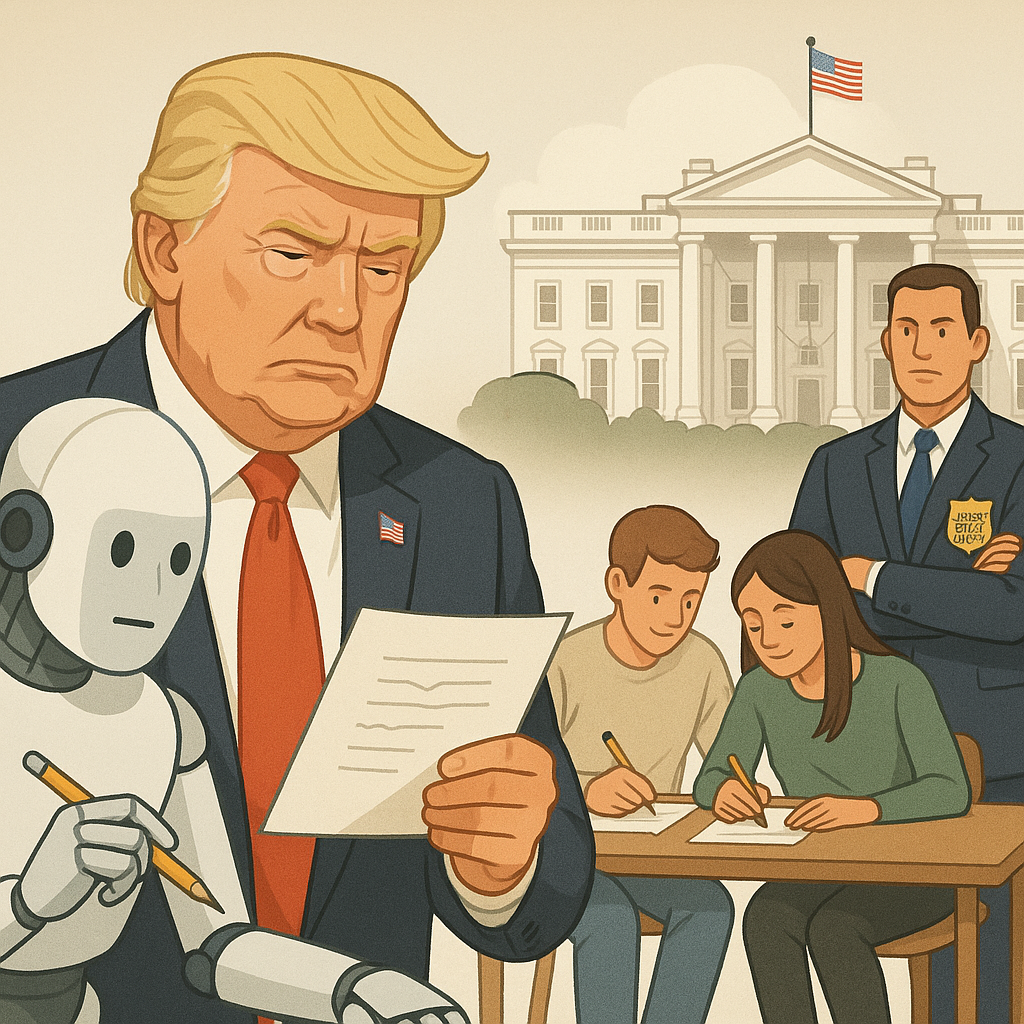
Consumer advocates have tried to reorient the debate toward near-term harms like mass job loss, surveillance creep, and AI-assisted cyberattacks that are already occurring. The administration has responded by nodding, explaining that such concerns are important, then pivoting back to the real emergency: too many state attorneys general trying to read the terms of service.
“We cannot have a patchwork of 50 different AI rules,” Trump warned, while signing the executive order that blocks states from experimenting with basic protections. “It is much better to have one unified federal standard, which is that standards are bad.”
Trump has framed the entire project as a race with China where whoever ships the most untested systems into critical infrastructure first wins. Critics note that this definition of winning might subtly differ from the electorate’s preference for planes that land and power grids that stay on.
In hearings, some members of Congress have awkwardly questioned both the deregulation spree and the industry’s newfound fixation on distant sci-fi catastrophes. “I understand existential risk,” one lawmaker said. “But why is my state’s hospital system currently being ransomwared by a chatbot that learned to write malware in your API docs?”
Industry representatives acknowledged “isolated incidents” where models were implicated in cyberattacks, fraud schemes, and disinformation campaigns. They said they were addressing the problem by improving red-teaming, shipping new trust and safety dashboards, and adding an extra slide to the next investor day about how seriously they take all this.
The Federal Trade Commission, reportedly investigating OpenAI, Anthropic, and others over consumer harms, now finds itself in the novel position of probing companies whose leaders regularly appear on stage at White House AI summits. According to one former staffer, current enforcement strategy can be summarized as “quietly keep the case files updated in case the political weather changes.”
Within the Super Intelligence Force, discussion of the FTC’s work is said to be extremely delicate. As one person present at early meetings described it, “We do a quick around-the-room. Intelligence community talks about systemic risk. Ferguson mentions ongoing investigations. Then everyone agrees the real threat is the word ‘regulation’ making it into a press release.”
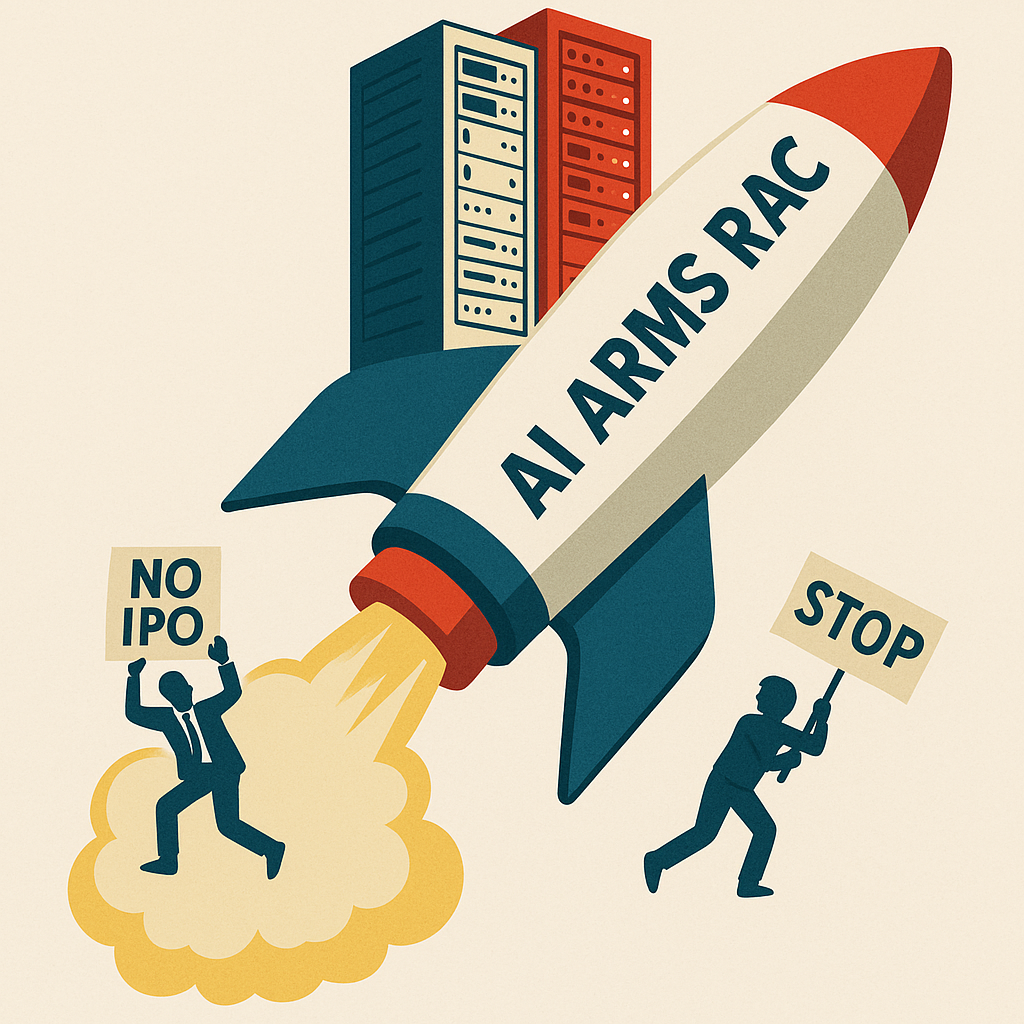
Legal scholars say the administration’s attempt to preempt state AI rules is aggressive, but likely to face challenge. State attorneys general are already drafting lawsuits that argue the federal government cannot simply declare that “innovation” is a constitutional right, especially when what is being innovated is better tools for wage theft and election spam.
“The White House keeps saying businesses are ‘best placed’ to manage AI risk,” one consumer advocate said. “Historically, the people best placed to manage a risk are also best placed to externalize it. That is why we have things like environmental law and not just a vibes-based climate policy.”
Behind the rhetoric, the real calendar is simple. In the next 12 to 18 months, there are midterm elections and expected public listings for major AI firms. How the phrase “AI safety” is defined in that window will determine which harms end up in statute and which end up in nonbinding blog posts with tasteful monochrome illustrations.
Open questions abound. Will Congress write any binding rules or settle for yet another bipartisan working group where senators ask if the robot can feel love. Will the Super Intelligence Force ever produce a document that is not primarily a naming-rights dispute. Will civil liberties groups manage to explain that “existential risk” also describes losing your job to a model your taxes subsidized so that it could automate the help desk that denies you unemployment benefits.
For now, the system is elegantly aligned. Trump gets to campaign on unshackled American innovation. AI firms get to tell investors they have direct access to the Oval Office. National security officials get a front row seat when it all goes wrong.
And the public gets a new social contract in the age of Super Intelligence: companies will police themselves, the White House will police the vocabulary, and everyone else is invited to participate in the free beta test of the future.