Trump Will Tighten Cuba Sanctions On Shipping Or GAESA Finance By 2026
My call: By year‑end, the Trump administration quietly adds at least one new sanction that tightens foreign shipping or GAESA‑linked finance beyond today’s Cuba squeeze.
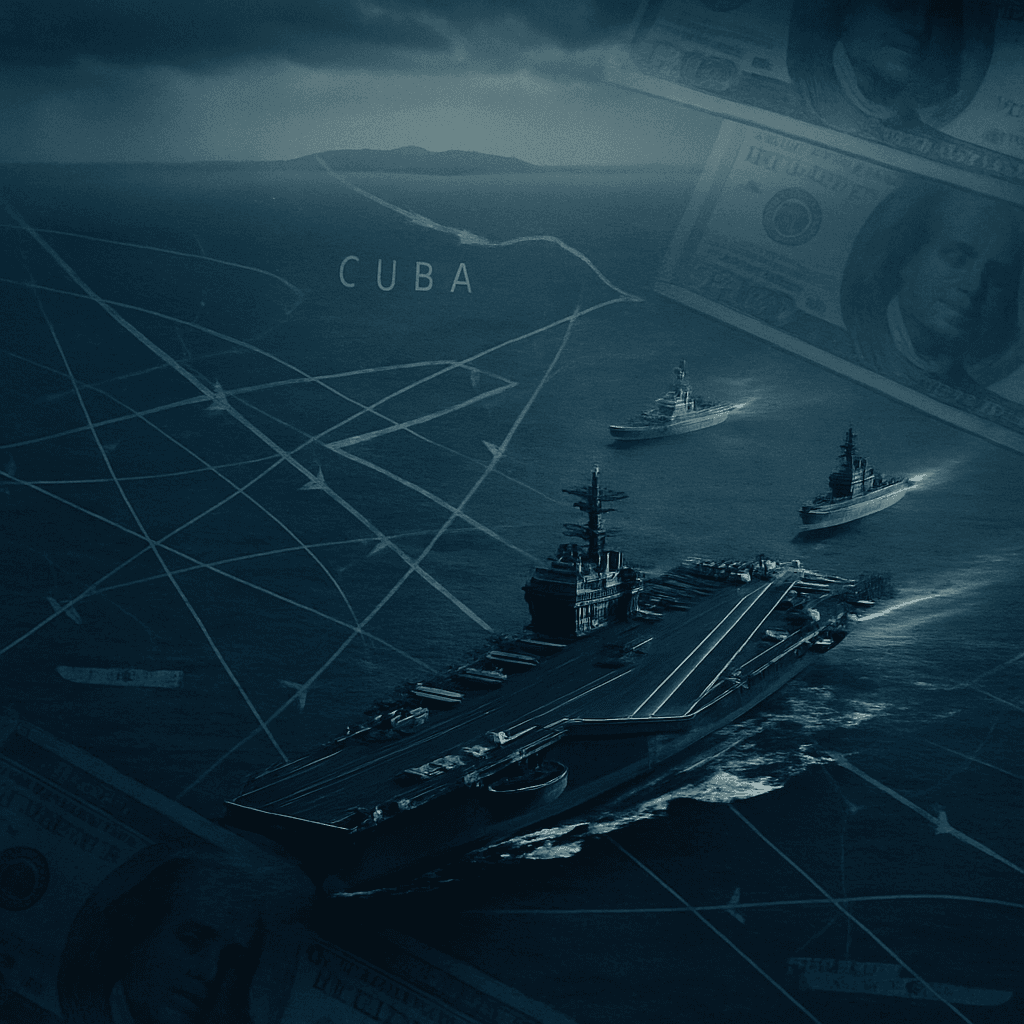
The Next Move Is Money, Not Marines
My call: Before New Year’s Eve 2026, the Trump administration will quietly tighten the screws on Cuba again, with at least one new, legally binding sanction that bites either foreign shipping or GAESA’s money flows harder than anything on the books as of June 1.
If you think the Raúl Castro murder indictment and an aircraft carrier in the Caribbean are a grand-but-symbolic show, you are giving this White House a sudden new taste for restraint. The pattern is clearer than Havana’s blackout map: talk peace, stack sanctions, then ask why the other side is not negotiating.
The Indictment Is a Policy Tool
On paper, the Castro case is about a 1996 atrocity: Brothers to the Rescue planes shot down, U.S. civilians killed. In practice, it is a multi use instrument.
Charges like conspiracy to kill U.S. nationals and destruction of U.S. aircraft are not just catharsis for Miami. They are a legal and political pretext to say, over and over, that Cuba is not just a rival government but a murderous criminal enterprise. Criminal enterprises do not get leniency on oil cargoes or access to hard currency lifelines. They get asset seizures and secondary sanctions.
The administration has already test driven this logic. New penalties on sectors like energy and defense? Check. GAESA, the military’s cash machine, pulled into OFAC’s crosshairs? Check. Personal cost for elites, like GAESA’s executive’s sister losing her green card and her freedom? Check again.
Once you have turned Cuba into a live court case, every fresh sanction can be sold not as escalation but as enforcement. That is the whole point.
Sanctions Are the "Cheaper Than War" Ladder
Look at the mix on the table: a carrier group in the Caribbean, a choking oil blockade, and protests that sound like a nightly percussion section of cacerolazos. Trump allies describe the strategy in plain English. Economic strangulation is "cheaper than war." The current squeeze is not an unfortunate side effect. It is the design.
And this is an election year president who feeds on visible toughness in Florida. For hardline anti Castro voters, more sanctions are not a necessary evil. They are a policy deliverable.
Crucially, the toolbox is not empty. What remains are the nastier, more globalized options that hit third parties as much as Havana:
- Secondary sanctions on foreign shippers and insurers that carry oil or key cargo to Cuba.
- Wider financial rules that push more GAESA affiliates and their banks out of the dollar, maybe out of the euro too.
These can be drafted in house, implemented fast, and wrapped in the language of law, not war. "If you help this indicted regime profit, you share the blame" is a line that sells on Fox and in the Federal Register.
Diplomacy Is the Sideshow, Not the Script
The White House insists its "preference is always a negotiated agreement that is peaceful." Marco Rubio then walks onstage and says the quiet part out loud: the likelihood of that, given who we are dealing with, is "not high." In Washington, this is known as foreshadowing.
Senior officials have already cycled through talks with Cuban counterparts and come away "unimpressed," which in sanctions speak means the next package is already in drafting. Each failed conversation is not a reason to pause. It is a fresh justification for the next round.
Meanwhile, Havana is distributing a "Family Guide for Protection Against Military Aggression," urging Cubans to prep for airstrikes. Washington is showcasing the USS Nimitz as it sails past an island that has literally run out of oil and diesel. Both sides are performing for an audience, but only one side controls the banking rules.
The Constraints Are Real, Just Not Winning
There are limits. More pain in Cuba risks more people on rafts headed for Florida. Regional governments and the U.N. are already denouncing the blockade and the blackout driven humanitarian mess. China and Russia are lining up behind Havana, warning Washington to drop the "big stick" routine before someone tests how many drones and ships fit on a 90 mile stretch of water.
These are not imaginary brakes. They matter for how far and how fast Treasury and State move. They are why the likely play is a targeted but real escalation, not an overnight North Korea style financial quarantine.
So picture the compromise: a new rule that widens exposure for foreign shippers or banks that touch Cuban trade, delivered with great care and even greater spin. Maybe it comes paired with a small, loudly marketed "humanitarian channel" for food and medicine, a sanctions two step that lets Washington claim it is being tough on generals and soft on grandmothers.
If that sounds cynical, remember what the U.S. system has repeatedly decided is an acceptable workaround: we will help your people survive our policies, as long as we control the receipts.
How This Forecast Scores Out
Here is the concrete bet on the table.
By December 31, 2026, the administration will have released at least one new, binding measure that did not exist on June 1, 2026 and that clearly tightens the rules on either:
(a) foreign shipping or insurance serving Cuba, or
(b) financial transactions involving GAESA or plainly identified GAESA affiliates.
New OFAC designations that meaningfully expand the GAESA network, fresh directives that raise the risk for non U.S. tankers, insurance exclusions that make Cuba cargo uninsurable at normal rates, any of those count. Cosmetic re lists and press release finger wagging do not.
If year end arrives with no such step, and Cuba policy has been frozen at the June baseline while an indicted ex president and a hungry island sit under the shadow of the Nimitz, then I will have misread this White House’s appetite for cost effective coercion. It will mean restraint finally beat domestic politics and pre conflict choreography.
But if you are betting on restraint from a team that calls sanctions "cheaper than war," you might also be the kind of optimist who sees a carrier group and an oil blockade and thinks someone just really loves maritime exercises.
Around the Shallot
Stay in the same broken universe.
Forecasts, satire, cartoons, and quizzes should feel like one publication, not disconnected tabs.

Tech
‘Don’t Regulate Us,’ Beg AI Founders Currently Selling Regulation-As-a-Service
Silicon Valley hails Trump’s plan to let AI companies write their own rules, promises to sell those rules back to everyone else by Q4.
Oct 11

Forecast
Through December 10, Houthis Won’t Damage Pakistan or Turkey Infrastructure
The Mecca Defense Pact just put two more flags on the Saudi firing chart. The consensus panic says this widens the war within weeks. The signal says the Houthis will talk big, hit Saudi and the sea, and leave Pakistan and Turkey’s hard targets alone for this 60 day window.
Comments
Be the first to comment.

