Trump Won’t Hit Any Single EU State With 25% DST Tariffs
My call: Trump threatens Europe over digital taxes, but he does not actually pull the 25%‑plus tariff trigger on any one EU country by March 31, 2027.
The tariff threat Trump probably will not cash
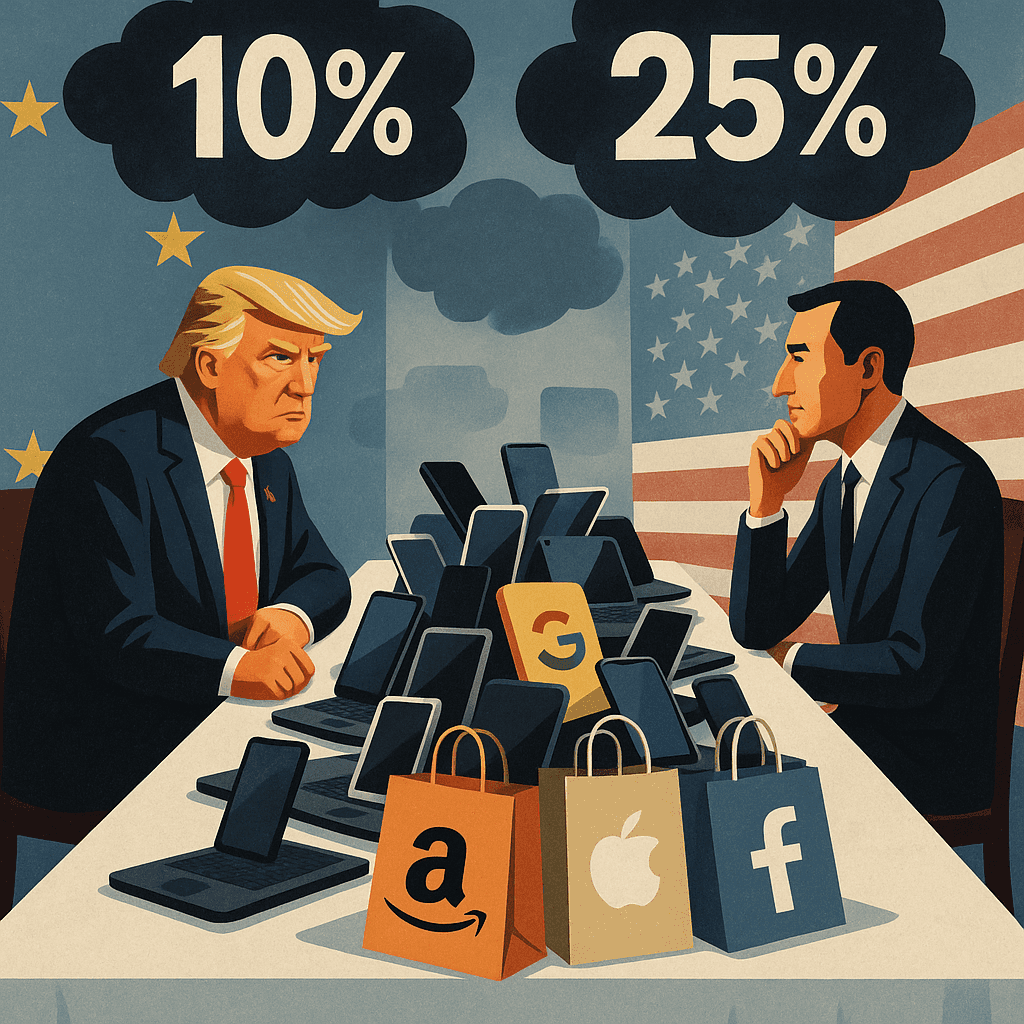
By March 31, 2027, the Trump administration will not actually slap new tariffs of 25 percent or more on any one EU country where the official reason is that country’s digital services tax.
The consensus story writes itself. Trump is back to promising 100 percent tariffs on any country that taxes American tech giants. USTR is pumping out reports that read like they were copy edited in a K Street conference room. Europe is still flirting with digital services taxes. So the pundit script says we are heading for a glittering new transatlantic trade war, now with extra AI.
The signal points somewhere duller and more useful: a long, noisy standoff where tariffs are the gun on the table, not the shot fired. Trump will get the headline. Big Tech will get the leverage. American exporters will get to keep most of their markets. And farmers will only have to apply for aid for the last set of Trump tariffs, not a fresh one.
The call: measurable, not mystical
Let us keep this scorable. Here is what I am betting does not happen before March 31, 2027:
The Trump administration does not impose new tariffs of 25 percent or higher on imports from any particular EU member state where the specific, primary legal and public justification is retaliation against that country’s digital services tax. A generic digital gripes package does not count. Nor do 20 percent tariffs. Nor does a connected cars food fight that happens to name data.
There can be Section 301 investigations into DSTs, draft tariff lists, screaming press releases, maybe even sub 25 percent nuisance tariffs or broader digital complaints bundled together. I am saying the clean, headline version of the threat, the France style 100 percent tariffs over DSTs that finally stick, does not arrive by the deadline.
Driver 1: Tariff fatigue at home
Tariffs were Trump’s favorite party trick the first time around. China. Steel. Aluminum. Sprinkle 10 percent here, 25 percent there, tweet something about winning. The bill is now arriving in the mail.
New York just opened a $30 million relief program for farmers hurt by Trump’s tariffs. Other states and sectors are in similar shape, even if their governors do not phrase it as bluntly as Kathy Hochul calling the tariffs “reckless and damaging.”
At the same time, Trump’s trade office is already juggling fresh pressure campaigns: a Section 301 push on sugar that Sen. John Hoeven is openly cheerleading, and a tariff rate quota crusade on food imports backed by Sen. Bill Cassidy. Those are not theoretical. They eat political oxygen and create new domestic losers, often in the same rural zip codes that got clobbered last time.
Another full blown tariff front that invites coordinated EU retaliation would turn the trade map into a Jackson Pollock painting of complaint calls from farmers, manufacturers, and retailers. When you are already cutting checks to blunt the backlash from past fights, it is harder to sell a new one as free political lunch.
Driver 2: Big Tech wants leverage, not shrapnel
On paper, this looks like the perfect moment for a DST showdown. USTR’s latest report flags digital rules as trade barriers in 76 countries, up from 65. Public Citizen went line by line through the submissions and found the list tracks remarkably well with what big tech industry groups asked for.
The tech lobby has every incentive to scream that digital taxes are discrimination. It also has every incentive not to get its European business buried under a pile of retaliatory tariffs and regulatory vengeance. These companies live inside EU law. They are not looking for Brussels to spend the next three years inventing creative new ways to inspect their servers.
The France precedent tells the story. In Trump’s first term, USTR ran a Section 301 case on France’s DST, brandished up to 100 percent tariffs on Champagne and handbags, then paused them when Paris and Washington found a face saving interim fix and punted to the OECD.
What Big Tech really wants from Trump 2.0 is a credible stick they can wave during negotiations, not a grenade that blows up the room. The sweet spot is endless investigations, menacing lists, carefully timed tariff threats, and then a negotiated climb down they can spin as engagement while domestic sectors take the hint that tariffs are theoretically on the table but not automatically deployed.
Driver 3: Europe prefers managed drama
Europe’s political class loves two things: talking about digital sovereignty and avoiding being publicly humiliated by Washington.
That means DSTs are not going away as a concept. But it also means Paris, Rome, Madrid, and Brussels will work hard not to hand Trump an easy villain narrative. If the OECD process for a global digital tax stays stalled, expect creative lawyering: broader tax bases, rebranded digital levies, EU wide schemes that are less obviously pointed at American platforms.
The European Commission will not be thrilled to see a member state singled out for 100 percent tariffs either, especially while it is busy reopening trade talks with China and hardening its own stance. The reflex in Brussels will be to pull disputes into EU level coordination, WTO cases, and slow motion diplomacy. Anything to keep this a technocratic headache, not a cable news slugfest.
The result is a chessboard where everyone is highly motivated to posture in public and compromise in footnotes. That is not the kind of environment that produces a clean, high rate DST tariff with one country’s flag on it and nothing else attached.
What could prove this wrong
For this forecast to miss, we need a genuine escalation choice in Washington, not just bluster. Watch for three signals.
- A fresh Section 301 investigation that names a specific EU country’s DST and finds discrimination, with USTR publishing a concrete list of imports and proposed rates at 25 percent or higher.
- Trump himself tying those tariffs directly to that DST in speeches and statements, rather than bundling them into a fog of unfair digital rules.
- Big Tech and its main trade associations publicly urging strong enforcement measures, code for real tariffs instead of process letters.
The case for escalation is not fantasy. Farm state Republicans themselves are asking for more protection on sugar and other goods, so the internal party penalty for new tariffs is lower than it used to be. Some European leaders will dig in on digital taxes in the name of fairness. And Trump does like to prove that his threats are not idle.
But when you can get 80 percent of the political benefit from an investigation, a draft tariff list, and a tweet, it takes unusual discipline to accept 100 percent of the economic blowback too.
The satirical verdict
So here is the bet, in plain English you can screenshot and throw back at me in 2027: no new 25 plus percent US tariffs on a named EU country where because of your digital services tax is the official core justification by March 31, 2027.
Trump will talk like he is about to rerun the French Champagne war at 100 percent, complete with patriotic rage over taxing Silicon Valley. USTR will keep padding its list of trade irritants that looks suspiciously like a tech lobby wish list. Europe will keep trying to tax digital profits with one hand and resuscitate multilateralism with the other.
In the end, the tariffs will stay mostly theoretical, the farmers will keep the export markets they have left, and the only thing getting taxed at 100 percent will be your attention span every time someone tweets digital trade war in all caps.
Around the Shallot
Stay in the same broken universe.
Forecasts, satire, cartoons, and quizzes should feel like one publication, not disconnected tabs.
Tech
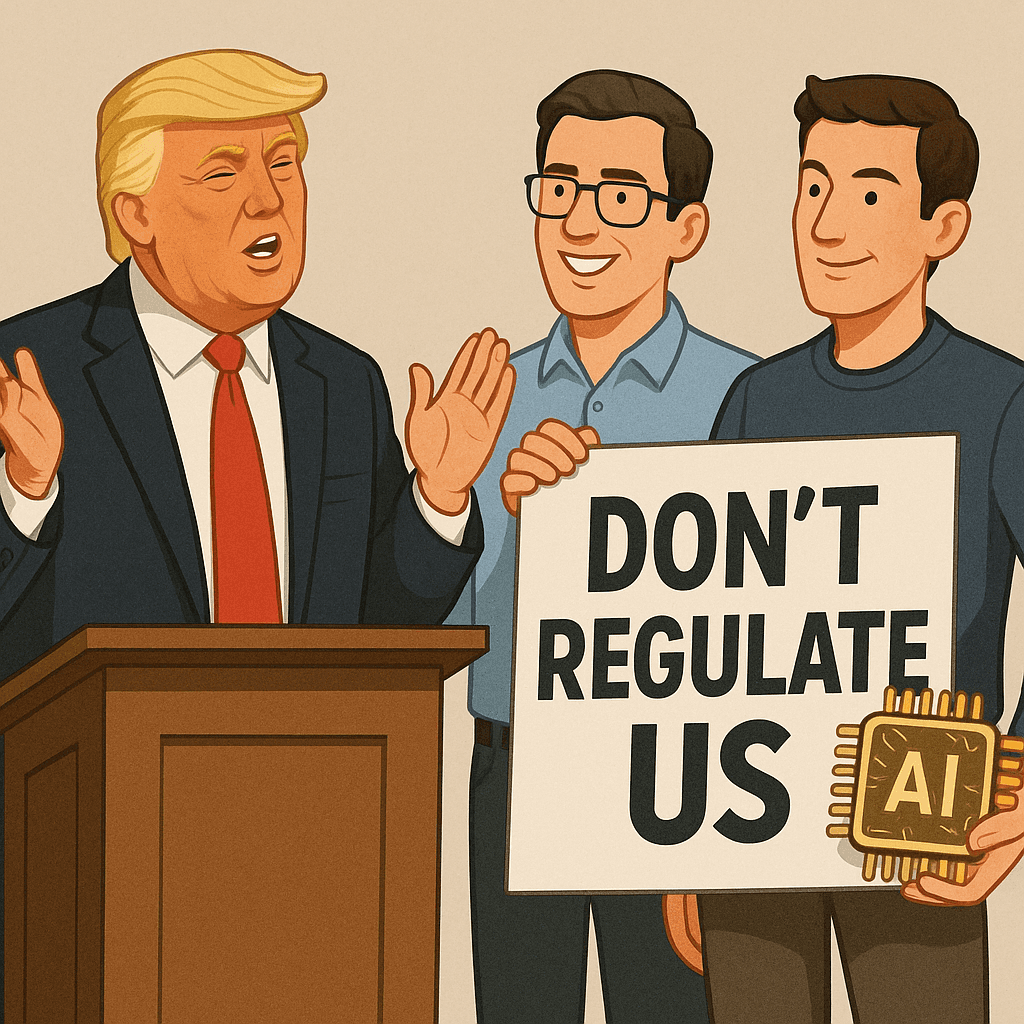
‘Don’t Regulate Us,’ Beg AI Founders Currently Selling Regulation-As-a-Service
Silicon Valley hails Trump’s plan to let AI companies write their own rules, promises to sell those rules back to everyone else by Q4.
Oct 11

Forecast
Through December 10, Houthis Won’t Damage Pakistan or Turkey Infrastructure
The Mecca Defense Pact just put two more flags on the Saudi firing chart. The consensus panic says this widens the war within weeks. The signal says the Houthis will talk big, hit Saudi and the sea, and leave Pakistan and Turkey’s hard targets alone for this 60 day window.
Comments
Be the first to comment.