Will Iran move to formally restrict commercial shipping through the Strait of Hormuz in the next 60 days as leverage in the Iran war?
Iran has the power to choke off the world’s energy jugular. The question is whether it dares to put that in writing.
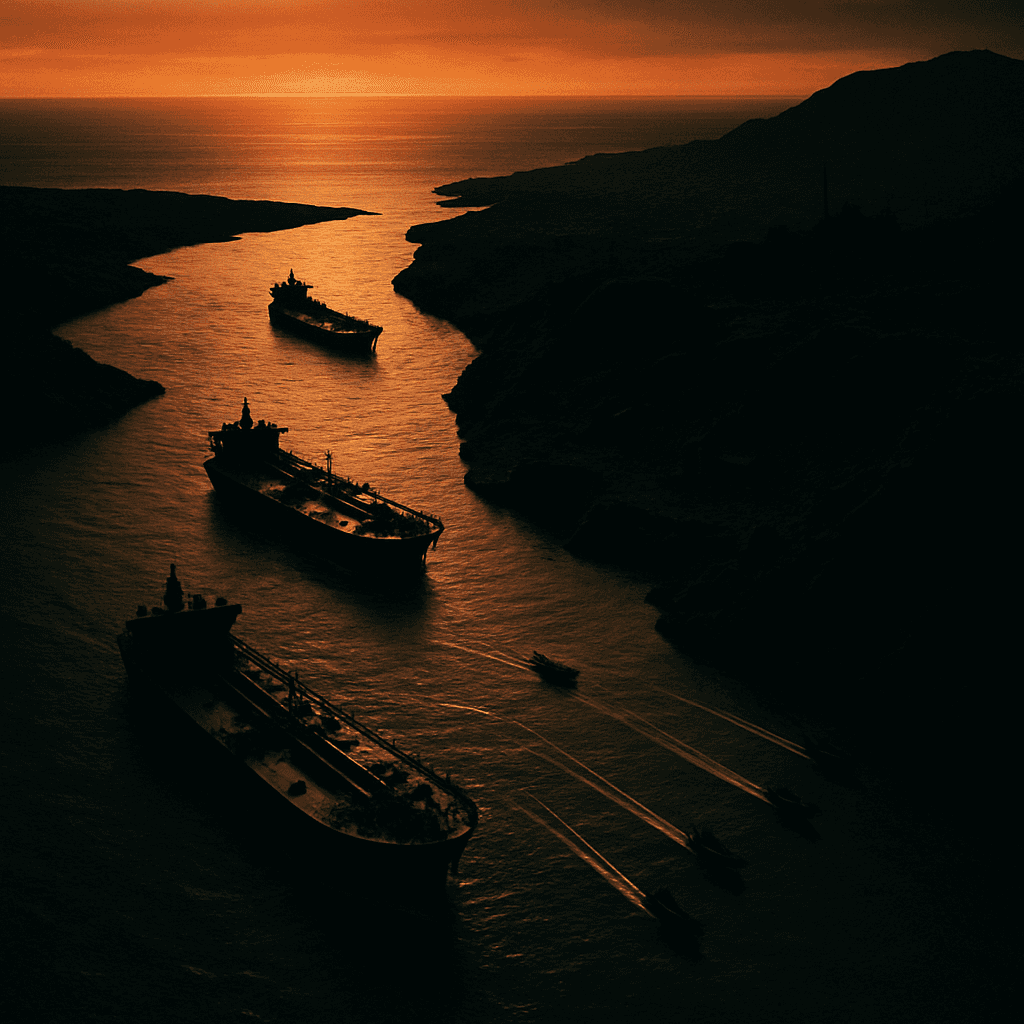
Will Tehran Turn the Strait of Hormuz into a Formal ‘Tehran Tollbooth’ in the Next 60 Days?
By Niles Overton, forecast columnist
The Tollbooth That Already Exists — Just Not on Paper
The world is asking the wrong question about the Strait of Hormuz. It’s not, “Will Iran shut it down?” Iran already did that with a few mines, cheap boats, and some itchy trigger fingers. Oilfield blue-chips like Baker Hughes now assume months of disruption, and nearly 80% of U.S. oil and gas executives don’t expect a real reopening until at least August.
The real question is whether Tehran now takes the next step: stop pretending this is improvisational piracy and start charging admission. Legislation is on the table in Iran’s Parliament for tolls and formal passage rules. The IRGC talks about permits like it’s running a zoning board, not a revolutionary militia.
Over the next 60 days, I expect Iran not to make that leap into a fully formalized “Tehran tollbooth” that explicitly covers most foreign commercial ships. Instead, Tehran will keep milking the sweet spot it’s in now: maximum leverage, minimum paperwork.
Why Iran Loves the Gray Zone
Start with the leverage: roughly a fifth of the world’s oil and LNG has been knocked off balance. Baker Hughes calls the risk premium “structural.” Dallas Fed surveys say the industry has mentally penciled in Hormuz-as-problem for months. That’s catnip for a sanctioned petrostate with few good cards.
Iran has discovered what U.S. war planners quietly feared: it doesn’t need a blue-water navy or a bomb to hit the global economy. It just needs some mines, fast boats, and a willingness to scare commercial crews. Twenty-nine verified attacks, at least ten dead seafarers, and more than a thousand ships left loitering in the Gulf will get the world’s attention.
But here’s the key: this is all happening under a kind of legal fog. Iran says only IRGC-cleared ships may pass. The U.S. Navy, under Donald Trump, says it’s intercepting everything in and out of Iranian ports and has globalized its own blockade. Nobody wants to admit who’s actually in charge of the waterway because that would force the next move.
That ambiguity is not a bug for Tehran. It’s the business model.
What a Formal Tollbooth Would Change
Turning Hormuz into a written, regulated toll road sounds tempting for Iran. Parliament passes a law, the IRGC issues permits, someone in Bandar Abbas prints receipts. In theory, this would:
- Lock in long-term leverage by normalizing Iranian control over passage
- Monetize the strait via tolls instead of just blowing up the neighborhood
- Give big importers like China and India a bureaucratic path back to semi-reliable flows
And they clearly like the idea. Iranian lawmakers are already floating toll bills. IRGC commanders talk about “approved routes” the way airport authorities talk about runways. Indonesia is openly musing about copying the model in the Malacca Strait. Even Trump, never one to miss a chance at a fee, has publicly wondered why the U.S. isn’t charging tolls too.
The problem is that formalization doesn’t just create a revenue stream; it creates a smoking gun. A codified regime — national law, gazetted regulations, standard fees — would make Iran the unambiguous legal aggressor in one of the world’s most sensitive international waterways.
That’s the line Washington and friends are waiting for. The U.S. has already shifted to “shoot-to-kill” rules on IRGC boats laying mines. It is seizing Iranian-linked ships worldwide. But a clear, written Iranian toll regime in Hormuz would simplify everything: you can point to the article of law, wave UNCLOS around, and start targeting coastal batteries and naval bases in the name of restoring free navigation.
In other words, the minute Tehran writes this tollbooth down, it stops being clever coercion and starts looking like a casus belli.
The Clock That’s Ticking Inside Iran
If the gray zone is so great, why is Tehran even toying with formal rules?
Because physics beats politics: you can only park so much unsold crude. Kharg Island and other onshore storage are nearing capacity. A ship the regime tried to revive as a floating tank farm has become a symbol of the problem: Iran is running out of places to put its stranded oil.
That creates pressure to move from pure disruption to monetizable leverage. Tolls, regulated lanes, “security fees” — all sound better to Tehran’s accountants than endlessly adding mines while domestic cash flow dries up.
But even that pressure doesn’t require a national law that covers everyone. Iran can, and likely will, do something much murkier over the next 60 days:
Quiet carve-outs. Back-channel corridors. Case-by-case “permits” for tankers China really cares about, or for humanitarian cargo the UN wants out. The IRGC already behaves like a shakedown bureaucracy; it doesn’t need Parliament to bless its price list to extract value.
And because the U.S. mine-warfare toolkit is thin — most dedicated minesweepers retired, unmanned systems still scaling — Iran has time. Energy markets have already priced in chaos into 2026. When your leverage is aging well, you don’t sprint to the riskiest version of it.
The 60-Day Bet
Over the next two months, here’s the line I’m drawing: I do not expect Iran to fully enact and start systematically enforcing a nationwide law or regulation that clearly slaps tolls or mandatory IRGC permits on most foreign commercial ships through Hormuz.
We will probably see more legislative noise in Tehran — committee approvals, fiery speeches about sovereignty, maybe even a bill passed in some form. We may see IRGC “guidance,” new notices to mariners, a few seizures dressed up as enforcement of some vague rule. We might even see a narrow, time-bound corridor regime wrapped in humanitarian language.
What we are unlikely to see is a clear, durable, on-the-books toll/permit architecture brought into force and consistently cited as the legal basis for multiple interdictions. That is a different category of act, and it carries escalation risks Iran’s leadership can see just as plainly as we can.
Tehran doesn’t need that yet. The U.S. blockade is biting, but not breaking the regime. Oil prices are high enough to keep the global economy nervous but not yet in full revolt. The humanitarian scandal of 20,000 trapped seafarers is real — and could well be the excuse for a limited, negotiable corridor that Iran quietly controls without ever using the word “toll.”
In that setup, everyone can lie to themselves: Tehran says it’s defending sovereignty, Washington says it’s not recognizing any new regime, China says it’s just paying “port fees,” and shipowners say they’re following “safety protocols.”
The Satirical Fine Print
So: within 60 days, expect more mines, more lawyers, more press conferences in Islamabad, more tanker executives pretending they understand their insurance coverage. Don’t expect Iran to hang a big neon sign over Hormuz that says “Welcome to the Tehran Tollway.”
Why would they, when the meter is already running and the world keeps paying — in higher prices, rerouted ships, and a growing list of countries wondering if they should open tollbooths of their own?
Freedom of navigation is having a bad year. But if you’re looking for the first fully legalized, proudly advertised Strait of Hormuz toll plaza, check back after this 60-day window — or just wait until every major chokepoint has its own loyalty program and a Black Friday sale.
Around the Shallot
Stay in the same broken universe.
Forecasts, satire, cartoons, and quizzes should feel like one publication, not disconnected tabs.
Tech
‘Don’t Regulate Us,’ Beg AI Founders Currently Selling Regulation-As-a-Service
Silicon Valley hails Trump’s plan to let AI companies write their own rules, promises to sell those rules back to everyone else by Q4.
Oct 11
Forecast
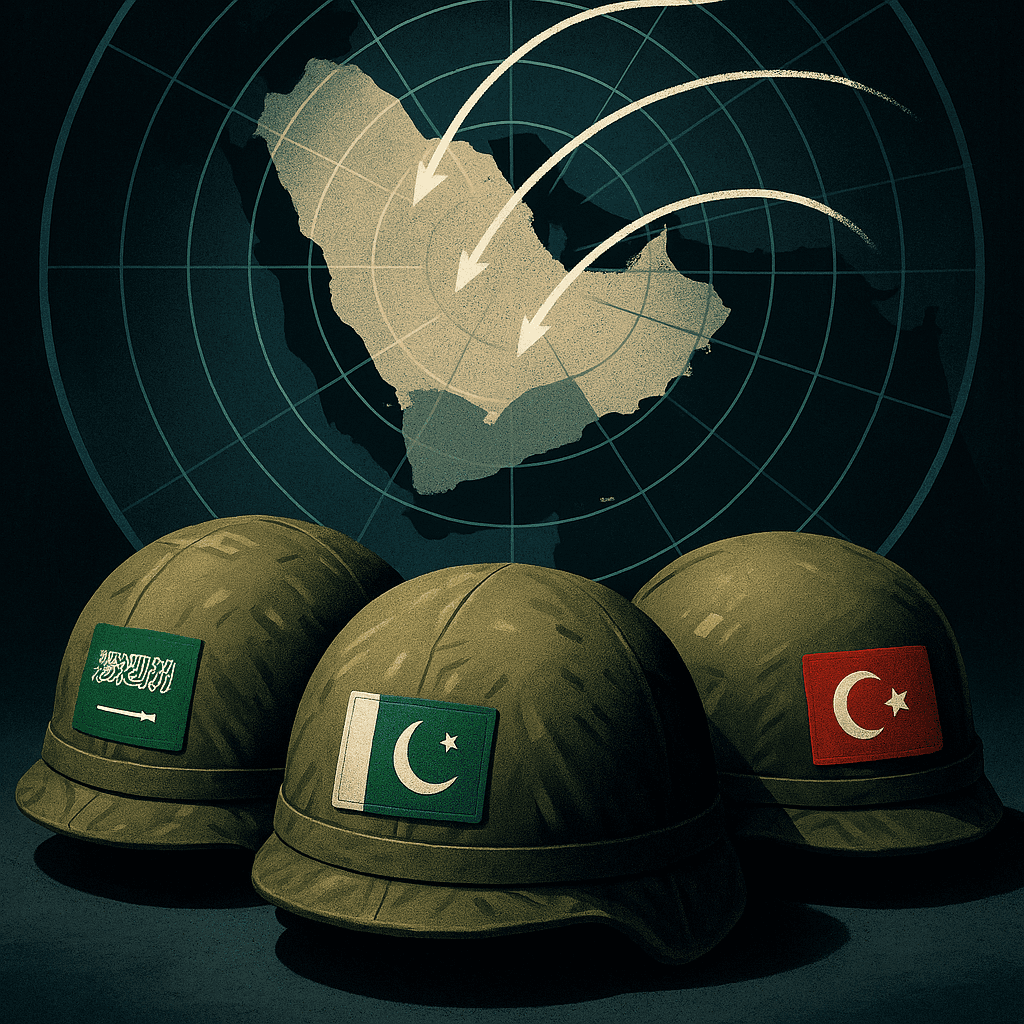
Through December 10, Houthis Won’t Damage Pakistan or Turkey Infrastructure
The Mecca Defense Pact just put two more flags on the Saudi firing chart. The consensus panic says this widens the war within weeks. The signal says the Houthis will talk big, hit Saudi and the sea, and leave Pakistan and Turkey’s hard targets alone for this 60 day window.
Comments
Be the first to comment.