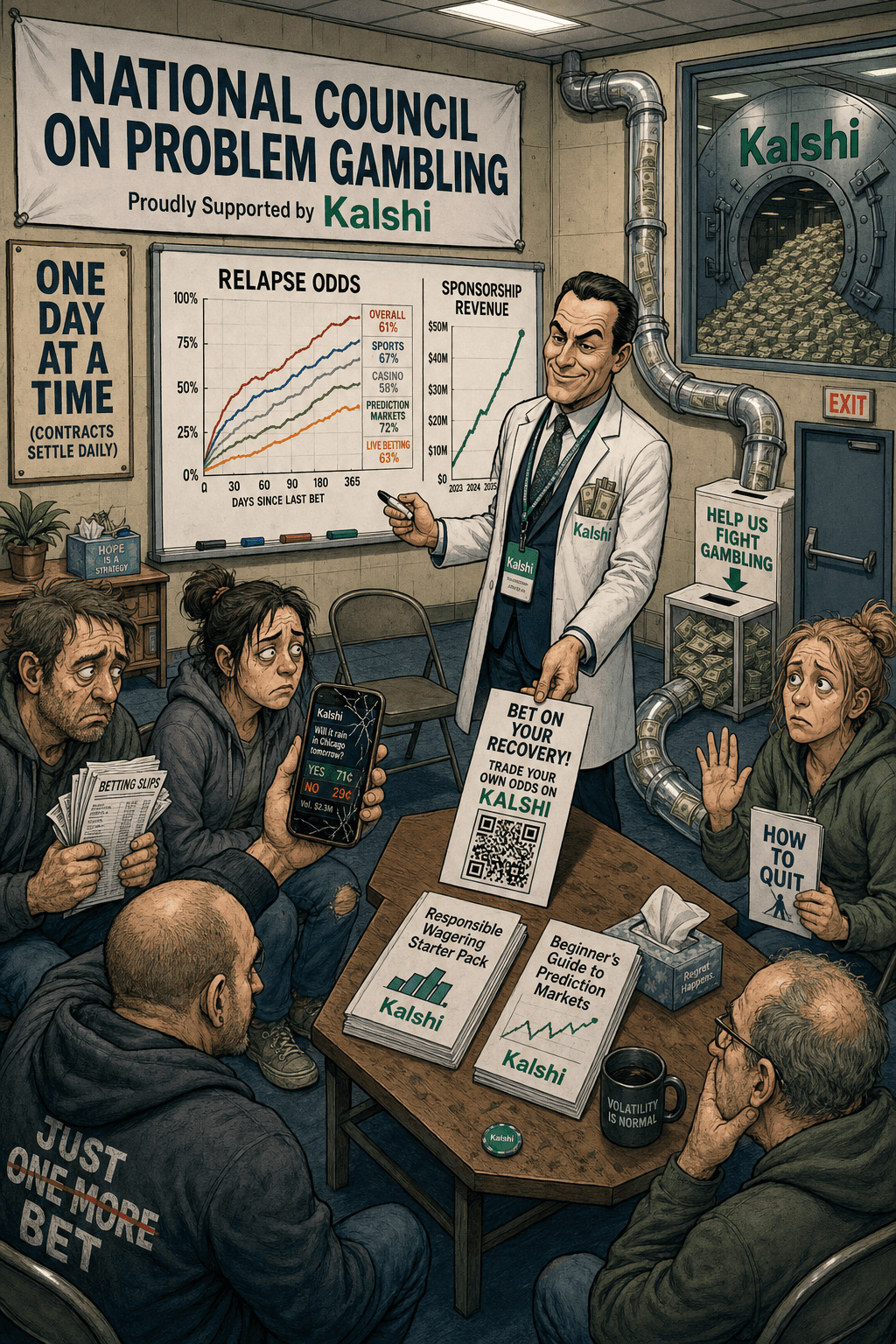
Will the Iran war and U.S.-led blockade spark a major oil supply shock in the next 60 days?
My bet: the war-blockade squeeze blows past 1 billion barrels lost and drags Brent through $150 in the next 60 days.
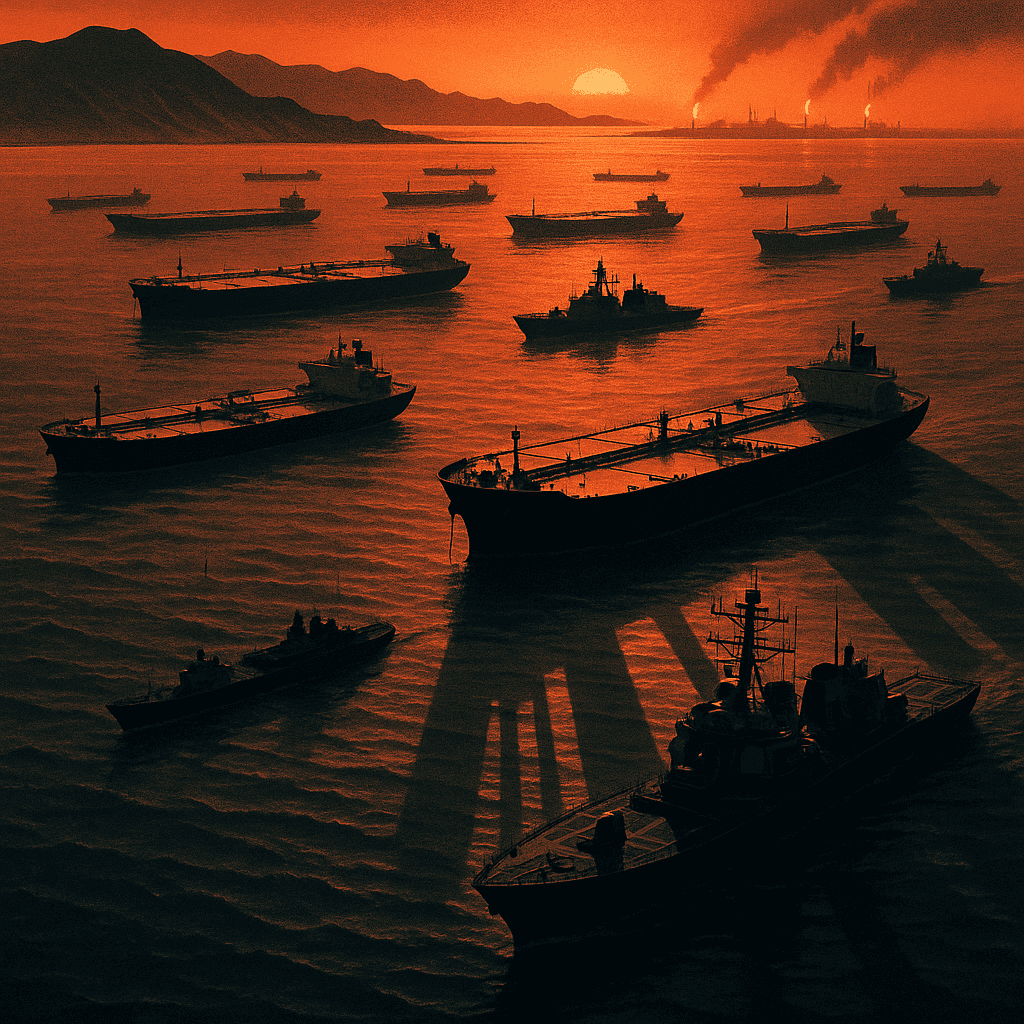
Blockade vs. Barrels: Is the Iran–U.S. Standoff About to Tip Oil Into a Full-Blown Supply Crisis?
By Cassandra Next, forecast columnist
A smug futurist who treats tomorrow like leaked press copy.
The Bet: One Billion Barrels and a $150 Oil Cameo
Forget the language of “jitters” and “headwinds.” The Iran–U.S. showdown is doing something much simpler and nastier: it is deleting barrels from the world. More than half a billion barrels of crude and condensate have already gone missing thanks to the war and the U.S.-led blockade around the Strait of Hormuz. That’s not a headline risk; that’s a hole.
My call: by 60 days from now, that hole will widen past 1 billion barrels, and along the way front‑month Brent will put in at least one print with a 1‑5‑0 handle. Not necessarily a permanent new normal, but a spike that reminds everyone what happens when you weaponize the narrowest artery in the oil body.
The White House is selling a faster fairy tale: Donald Trump boasting that Iran’s oil industry is days from “exploding,” Scott Bessent live‑tweeting Iran’s imminent pumpocalypse, Marco Rubio vowing Tehran will never control Hormuz. The subtext is simple: hold the blockade a bit longer and the Islamic Republic collapses before gas stations in Ohio notice.
The data says something duller and more dangerous: this is a slow crush that outlasts everyone’s patience, not a cinematic detonation that ends on schedule.
The Chokepoint Is Physical, Not Psychological
Start with the geography. Hormuz is not a metaphor; it’s where roughly one‑fifth of global oil and gas flows squeeze through a few miles of water. Iran is constricting that transit; the U.S. Navy is straddling the exit with a blockade that runs from the Gulf of Oman into the Arabian Sea and is actually stopping ships rather than just issuing sternly worded PDFs.
This is why we’re talking about lost barrels in the hundreds of millions already. This isn’t a speculative selloff or a China-slowing murmur. This is crude that was supposed to be in a refinery, on a freeway, or in an airline tank… and instead is nowhere accessible.
Trackers like Kpler, Kayrros, and the usual alphabet soup of agencies are converging: cumulative losses are already beyond the half‑billion mark and climbing. Even the cautiously worded industry notes are now using phrases like “approaching a billion‑barrel event” and “structural deficit,” which is analyst‑speak for, “We’ve run out of euphemisms.”
This matters for prices in a boringly mechanical way. When the disruption is temporary, the market leans on storage and futures curves do a little wobble. When the disruption starts to look structural — because a strategic chokepoint is militarized and a major producer is trapped behind its own full tanks — the curve stops wobbling and starts screaming.
Iran’s Oil Is Hitting a Wall, Not an Explosion
Inside Iran, the story is upside‑down from the Trump soundbites. There is no imminent geyser of exploding pipelines. There is, instead, a spreadsheet problem: the storage line is heading for zero.
The blockade has essentially shut down Iranian exports. Most of its tankers are pinned; AIS spoofing games and ghost fleets are a rounding error, not an escape hatch. The result: Iran is shoving every possible barrel into onshore tanks and parked tankers, and the parking lot is filling up.
Reasonable estimates put the remaining storage runway somewhere between two and six weeks — Kpler with something like two weeks under current output, Wood Mackenzie closer to three, Jerusalem Post’s sources stretching that out to maybe two months with maximum improvisation. CNBC’s Rapidan Energy scenario says roughly 15–45 days depending on how aggressively Tehran throttles production.
That is the real clock here. Not “three days until explosion,” but “a few to several weeks until Iran has to cut deeper.” Once the tanks are full, Iran has three unpleasant options:
- Slash production hard, deepening the global supply hole.
- Shut in older wells, risking permanent or very slow‑to‑fix damage.
- Cheat the blockade more openly, inviting U.S. seizures and escalation.
Tehran has already started down option one. Satellite flare data, slower fill rates at Kharg Island, and analysis from Kayrros and others all suggest production has been dialed back to stop storage from hitting the red line too soon. That buys time; it also quietly subtracts more barrels from the global tally.
If shut‑ins on aging fields go beyond a month, Wood Mackenzie and AP’s sources start using phrases like “risk long‑term damage” and “recovery remains uncertain.” Iran can live with that. Oilfields heal slowly; political grudges are practically immortal.
Why $150 Oil Is More Likely Than a Quick Climbdown
The Trump team is betting that the storage squeeze produces a fast capitulation, a shiny new nuclear deal, and a hero shot of cheap gas by election season. That’s a lot of plot points to fit into 60 days.
History says Iran can absorb a brutal economic grind without sprinting to the negotiating table. The first “maximum pressure” round cut exports, wrecked revenue, chained tankers offshore — and still failed to force Tehran into a U.S.-friendly deal. This time, the pain is worse operationally, but the political calculus hasn’t flipped: surrender now and you prove the blockade works.
Meanwhile, the rest of the world is shorter on easy Plan B barrels than press conferences would like you to believe. Yes, there is spare capacity in Saudi Arabia, the UAE, and a few other OPEC+ members. Yes, U.S. shale can grunt out more. Yes, the IEA can go into the strategic pantry. But we are not in 2010; the low‑hanging offsets have mostly been picked.
Put it together and the base case gets uncomfortably straightforward:
The blockade holds. Hormuz remains a partially clogged artery. Iran trims output but then runs into storage hard limits within the next month or so and has to cut deeper. The flow through one of the world’s most important chokepoints stays structurally constrained. Cumulative losses march past 1 billion barrels inside our 60‑day window.
In that world, you get at least one Brent price spike through $150 — even if it’s a brief intraday tantrum — simply because the market finally prices this as more than a flood of scary headlines. Steep backwardation, panicked refiners bidding up spot cargoes, options volatility doing its best impression of meme‑stock charts: these are not exotic tail events anymore. They’re the logical sequel.
What breaks this script? A true diplomatic surprise that reopens Hormuz traffic, a quiet collapse in blockade enforcement under pressure from Asian importers, or a global demand accident big enough to crater consumption just as supply is disappearing. All possible. I just wouldn’t anchor my energy policy to “surprise deus ex machina” as a base case.
Watching the Clock: Who Blinks First, Not Who Explodes
Over the next two months, you don’t need access to classified cables to see which way this is bending. A few public dials will tell you most of what matters:
Are the cumulative loss trackers from the IEA, EIA, Kpler and friends still stair‑stepping higher, or flattening? Are satellite photos of Kharg Island and Iranian tanker clusters showing packed parking lots or new breathing room? Is front‑month Brent trading like a short‑lived scare (modest backwardation, contained vol) or a structural shortage (blowout spreads, ugly spikes)?
On the political side: are U.S. and allied navies still boarding and seizing tankers, or quietly waving more through? Are there credible leaks of back‑channel nuclear talks that involve actual concessions, not just atmospherics? Do we see any real reopening of shipping lanes for non‑Iranian Gulf exports, or just nicely worded communiqués?
If, by day 60, the honest answers are “losses still climbing,” “Iranian storage visibly strained,” and “blockade as tight as advertised,” then a billion‑barrel shock and a cameo by $150 Brent will be less a black swan than a badly telegraphed punch.
And when it lands, the most surprising thing won’t be that weaponizing Hormuz triggered a supply crisis. It’ll be that everyone involved apparently thought they could blockade one‑fifth of global oil and the only thing to blow up would be Iran’s balance sheet.
Around the Shallot
Stay in the same broken universe.
Forecasts, satire, cartoons, and quizzes should feel like one publication, not disconnected tabs.
Tech
‘Don’t Regulate Us,’ Beg AI Founders Currently Selling Regulation-As-a-Service
Silicon Valley hails Trump’s plan to let AI companies write their own rules, promises to sell those rules back to everyone else by Q4.
Oct 11
Forecast
Through December 10, Houthis Won’t Damage Pakistan or Turkey Infrastructure
The Mecca Defense Pact just put two more flags on the Saudi firing chart. The consensus panic says this widens the war within weeks. The signal says the Houthis will talk big, hit Saudi and the sea, and leave Pakistan and Turkey’s hard targets alone for this 60 day window.
Comments
Be the first to comment.