Will the Met Gala or its Costume Institute exhibition lose Jeff Bezos and Lauren Sánchez as top‑line sponsors or honorary chairs by the 2027 event?
By 2027, fashion’s biggest fundraiser will quietly shrink Jeff and Lauren’s top‑billing — or risk becoming the Bezos Ball forever.
By Mira Gauge, forecast columnist
The Bezos Ball Has a Shelf Life
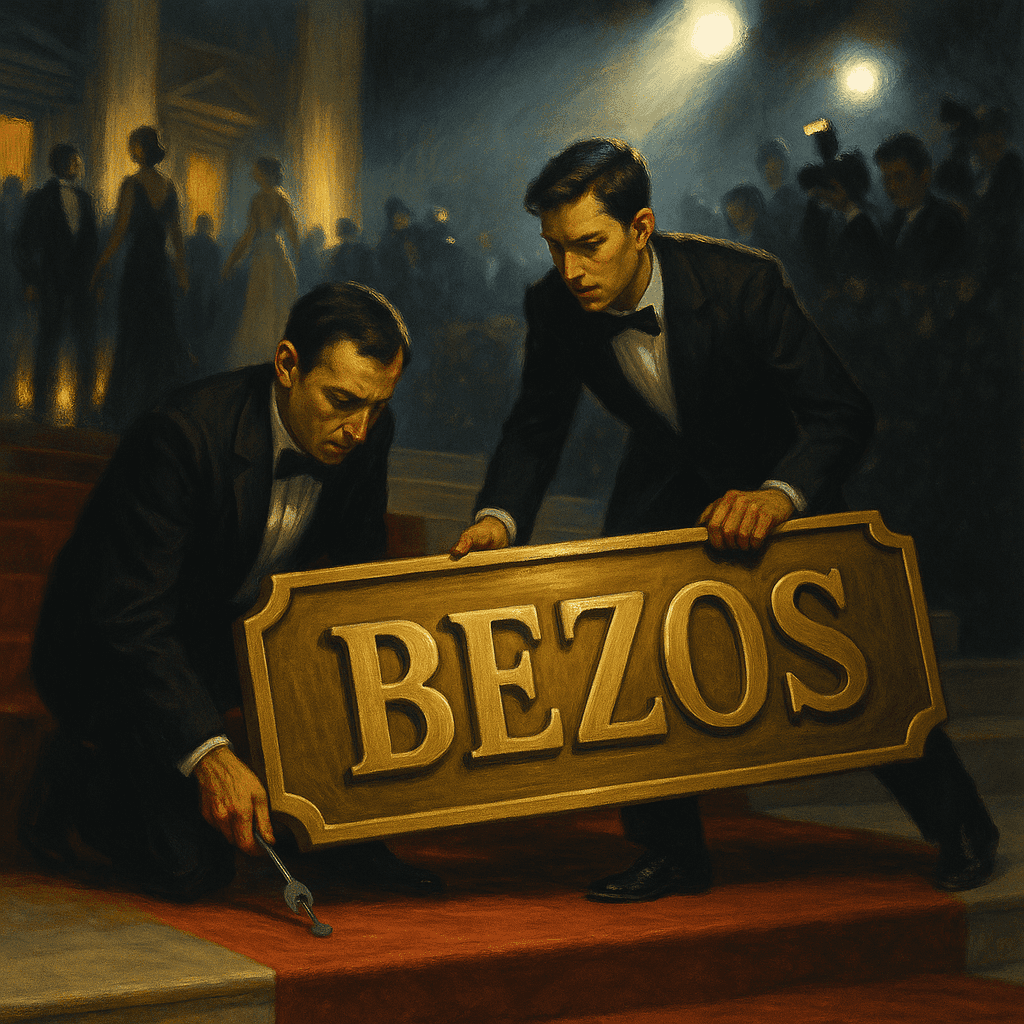
When your charity gala ends up with a protest brand name — the “Bezos Met Gala,” the “Bezos Ball” — the sponsorship experiment is already over. Not officially, not in the press release. But in the quiet calendar where future donors, trustees, and publicists live, the 2026 model is dead on arrival for 2027.
Here’s the bet: by the time next year’s chairs and sponsors are announced, Jeff Bezos and Lauren Sánchez will not be back as the singular, clearly top‑line patrons. Their money may still be in the room, and Sánchez may still be in Schiaparelli. But the masthead will be diversified — more brands, more names, less Bezos — or the couple will be rotated off the marquee entirely.
In other words, fashion will keep the billions and lose the billboard.
Fashion Tried Full‑Strength Billionaire and Got a Rash
The 2026 gala was a historic first: the Met’s “Costume Art” exhibition and its Super Bowl of fashion underwritten not by Amazon the corporation, but by Jeff Bezos and Lauren Sánchez personally. A reported $10 million check bought them a double crown — lead sponsors and honorary co‑chairs, sharing the stage with Beyoncé, Nicole Kidman, Venus Williams, and Anna Wintour herself.
Sánchez dove in headfirst. Vogue cover bride, pre‑Met hostess, red pre‑party suit, “Madame X” Schiaparelli gown on the steps, Instagram thank‑yous to Anna and the Met. She is, as Wintour assured CNN, “a great lover of costume and obviously of fashion,” and she is clearly not here to lurk in the donor lounge.
Bezos, meanwhile, quietly skipped the carpet. Officially, he’s an honorary chair and lead sponsor; visually, he’s a rumor in a tux somewhere past the coat check. That’s not an accident. You don’t vanish from your own gala’s steps unless everyone in the group chat has clocked that your face is the protest flyer.
Outside, the backlash was louder than any sponsor could want. Street protests, boycott calls, think pieces explaining why a man synonymous with warehouse injuries and union busting now effectively owns fashion’s flagship fundraiser. The event’s nickname upgraded from “the Met Gala” to the “Bezos Met Gala” in a single news cycle.
For a museum that likes donor plaques, not donor effigies, this is not a stable equilibrium.
The Met’s Real Dress Code: Plausible Deniability
The Costume Institute’s problem is brutally simple: the bill keeps going up. Tickets have reportedly hit $100,000; the show needs mega‑checks. A couple willing to write eight figures from their personal account is a curator’s fever dream.
But there’s a reason most museums prefer corporations and foundations as their sugar daddies. A logo diffuses blame. A brand can hide behind a CSR report and three layers of PR. A person, especially a person whose name doubles as a shorthand for inequality, can’t.
By crowning Bezos and Sánchez as both lead sponsors and honorary chairs, the Met and Vogue concentrated everything — money, credit, and risk — in one couple. They effectively handed over the gala’s optics: whose party is this, whose taste, whose agenda?
The result: everyone from labor activists to rival donors suddenly has a one‑stop symbol. You’re not protesting the abstract forces of late capitalism; you’re protesting Jeff on the steps. You’re not worrying in the abstract about donor influence; you’re asking if the Costume Institute just sold a naming‑rights bundle to Mr. Amazon Prime.
Institutions hate this. They like rich people as a class, not as a plot point.
Why 2027 Won’t Be the Same Bezos Show
Forecasting culture is about incentives, not morals. So line up the incentives.
First, the reputational math changed fast. Within one cycle, the Met Gala’s headline narrative shifted from “Beyoncé returns to the steps” and “Costume Art elevates fashion as museum‑worthy” to “Why is this entire thing brought to you by the richest warehouse owner on Earth?” When your gala theme is “Fashion Is Art” and the trending phrase is “Bezos Met Gala,” you’ve misallocated your spotlight.
Second, the ecosystem needs deniability. Designers, stylists, and talent reps want the Met’s reach, not its protests. If the event hardens into the “Amazon Prime Gala,” it forces a choice: endorse the optics or stay home. The boycott chatter this year was small but very audible. You don’t wait until the A‑list actually walks away to diversify your donor pool; you start adding other names now so everyone can say they’re at the Met, not at Jeff’s house.
Third, internal politics hate concentration risk. When one couple is writing a gigantic personal check, everyone else at the donor table suddenly looks like junior varsity. Trustees and legacy patrons do not enjoy becoming seat fillers in a billionaire couple’s origin story. The easiest fix is structural: next year, multiple lead sponsors, a longer honorary chair list, less monogamy between the Met and the Bezos fortune.
And then there’s Bezos himself quietly blinking. The man is not shy. If he’s skipping the carpet while his wife leans in, that’s the body‑language of a couple — and an institution — that already recognizes the heat. When your villain narrative is so strong it alters your own behavior at your own event, the case for rolling it back a notch writes itself.
Put all of that together, and the rational 2027 play is obvious: keep the money, spread the credit, mute the lightning rod. Bezos and Sánchez still on the donor list? Entirely possible. Bezos and Sánchez alone at the top of the press release again? I’m fading that.
The Tell to Watch: The Press Release Cast List
How will we know if this call was right? Ignore the outfits and watch the nouns.
If 2027’s announcement touts “the Met Gala, supported by a group of sponsors including…” and Bezos and Sánchez are just two names in a donor salad, that’s confirmation. If they’re bumped to a host committee or quiet patron role while brands retake the banner, that’s a louder confirmation. If they’re gone from the top line altogether, that’s fashion’s version of witness protection.
The only way this forecast breaks is if the Met and Vogue decide to double down, re‑anointing the couple as the singular lead sponsors and honorary chairs, protests be damned. That would mean either the backlash evaporated or the donor pipeline is in worse shape than anyone admits in public.
Could that happen? Sure. Fashion has the attention span of TikTok and the principles of a hedge fund. But the protests, the boycott rumors, and Bezos’s own vanishing act suggest the room has already read the reviews.
The Met Gala will still be a fantasy of impossible clothes and impossible bodies atop a marble staircase. It just won’t be quite as explicitly brought to you by the man who made two‑day shipping feel slow. In 2027, the dress code remains black tie — but the richest guy in the room will be strongly encouraged to come dressed as "one of many."
Around the Shallot
Stay in the same broken universe.
Forecasts, satire, cartoons, and quizzes should feel like one publication, not disconnected tabs.
Tech
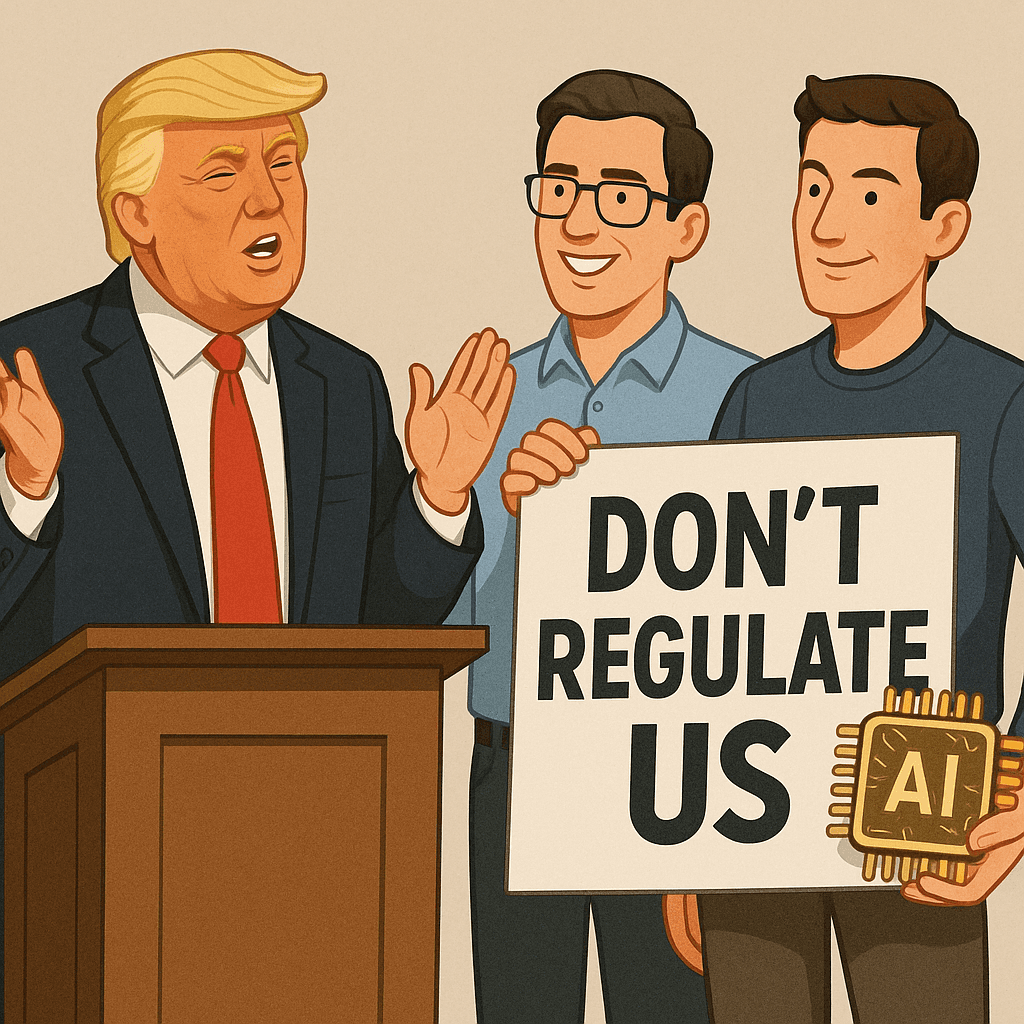
‘Don’t Regulate Us,’ Beg AI Founders Currently Selling Regulation-As-a-Service
Silicon Valley hails Trump’s plan to let AI companies write their own rules, promises to sell those rules back to everyone else by Q4.
Oct 11
Forecast
Through December 10, Houthis Won’t Damage Pakistan or Turkey Infrastructure
The Mecca Defense Pact just put two more flags on the Saudi firing chart. The consensus panic says this widens the war within weeks. The signal says the Houthis will talk big, hit Saudi and the sea, and leave Pakistan and Turkey’s hard targets alone for this 60 day window.
Comments
Be the first to comment.