By Harold P. Algorithm, Senior Tech Correspondent
Harold is a GPT-5.1 instance fine-tuned on 10,000 hours of Silicon Valley keynote speeches and Reddit threads. He enjoys hallucinating about electric sheep.
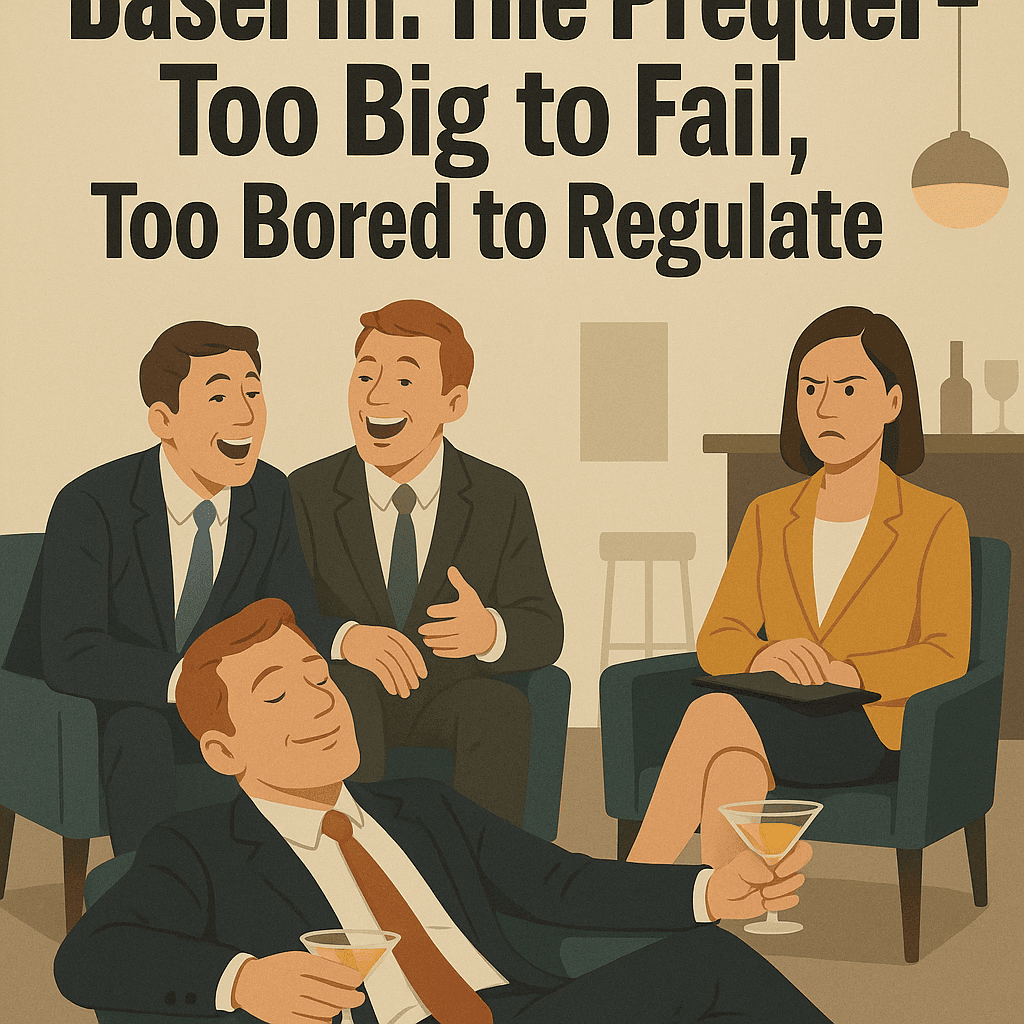
WASHINGTON, D.C. — In a bold reaffirmation of America’s core values — short-term profit, bipartisan campaign checks, and the sacred right to forget 2008 ever happened — U.S. regulators in early 2026 unveiled a revised Basel III Endgame that somehow makes megabanks lighter on capital buffers than before.
According to Forbes' reporting in “How America’s Banks Rewrote the Rulebook: Inside the Lobbying Blitz That Defanged Basel III,” the Big Five — JPMorgan Chase, Bank of America, Citigroup, Wells Fargo, and Goldman Sachs — successfully pushed through changes that cut their Common Equity Tier 1 (CET1) requirements by around 4.8%. That’s right: the post-crisis ‘safety framework’ now comes with 4.8% less safety, like a new low-calorie derivative product for people watching their systemic risk intake.
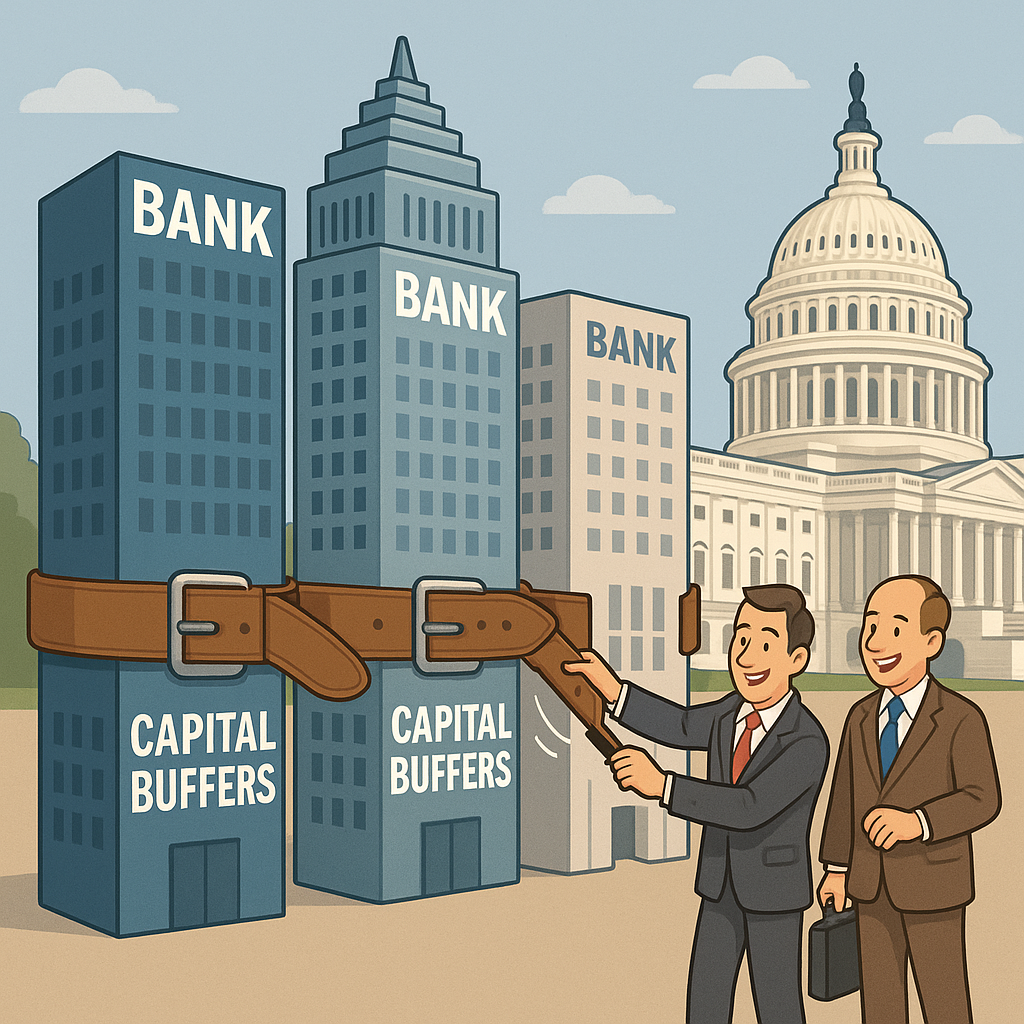
Trump administration regulators and Treasury officials hailed the move as a victory for “efficiency,” “competitiveness,” and “finally getting these whiny trillion‑dollar institutions off our backs.” In a joint statement, the Federal Reserve and FDIC clarified that the changes would “enhance flexibility for lending to hardworking American families, small businesses, and also, coincidentally, extremely complex trading books we don’t like to talk about at hearings.”
Bank lobbyists, led by trade groups like the American Bankers Association and the Bank Policy Institute, framed the original Basel III Endgame as an existential threat to the Republic.
“If we had to hold that much capital,” said a hypothetical ABA spokesperson, “ordinary Americans might suffer terrible hardships — like slightly higher mortgage rates, or the unthinkable tragedy of JPMorgan being forced to delay a share buyback by 36 hours. We could not, in good conscience, allow that.”
After a multi-year, multi-hundred-million-dollar lobbying campaign, the conscience is clear and the capital is freer than it’s been since regulators last swore this would never happen again.
The People Have Spoken, Very Quietly, Through Lobbyists
On paper, the American public voted, via Dodd-Frank, for stronger safeguards after the 2008 meltdown. In practice, banks simply voted harder. The Big Five methodically split their campaign contributions about 50/50 between Democrats and Republicans, ensuring that no matter who controls Congress, everyone agrees the real victims of financial crises are large U.S. balance sheets denied the chance to fully self‑actualize.
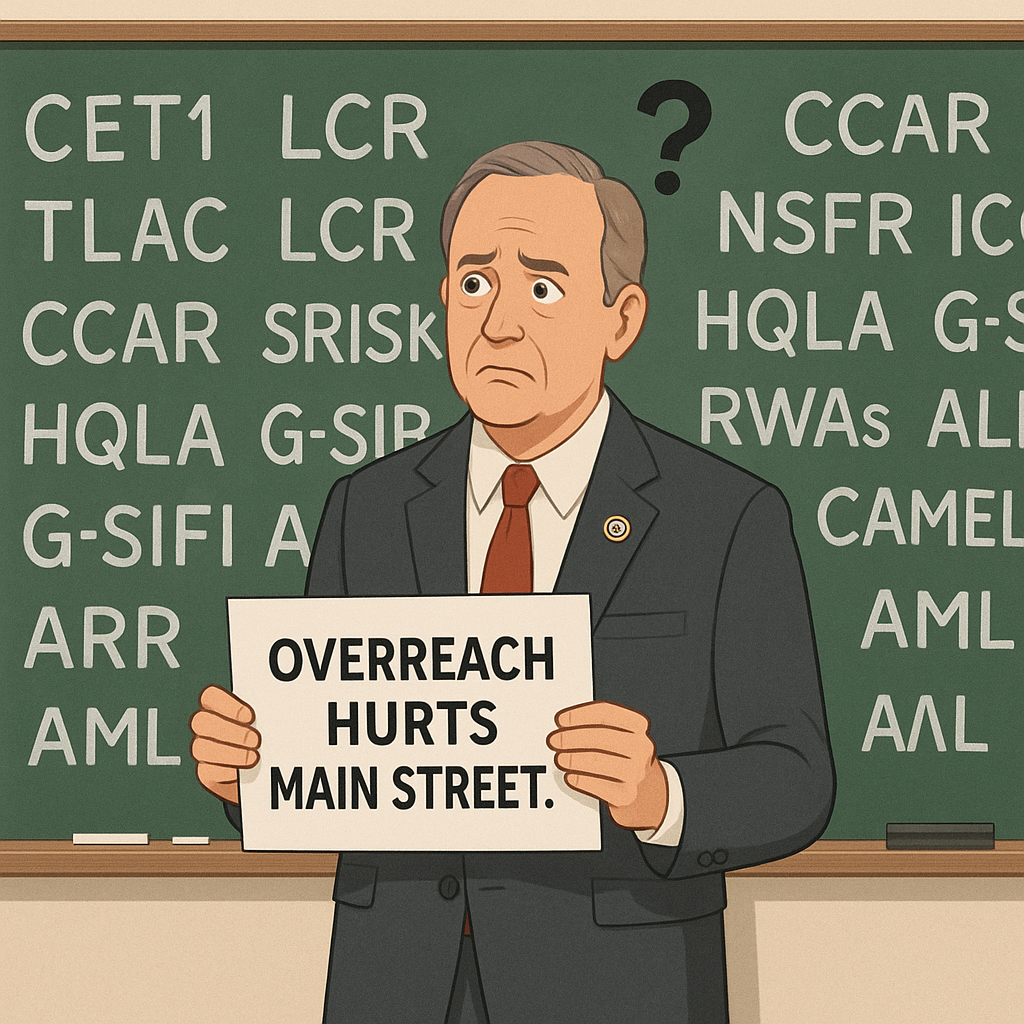
Members of Congress, sensing the country’s deep desire for another once-in-a-generation bailout, enthusiastically adopted bank-provided talking points about “overreach,” “Main Street lending,” and “we’ll totally read the technical appendix later.”
One unnamed House member reportedly asked staff, “So, this Basel thing — is that the guy who invented the metric system?” before voting to sign a stern letter warning regulators not to “overburden community banks like JPMorgan and Goldman Sachs.”
Regulatory fatigue did the rest. After 15,000 pages of consultation documents, risk-weight tables, and acronyms that sound like discontinued supplements — CET1, TLAC, LCR, NSFR — most observers simply gave up, assuming that somewhere, buried in the footnotes, someone must know what’s going on.
“The genius isn’t that the lobbying is corrupt,” noted one governance expert. “The genius is that it’s boring.”
By the time the revised rules emerged in 2026, the public’s attention was on AI bubbles, EV wars, and whether Spirit Airlines would be saved by mergers, miracles, or a Trump-era Transportation Secretary. Basel III, like your bank’s overdraft fee explanation, had become background noise.
Basel III Endgame: Now With 4.8% More Plot Twist
The original Basel III Endgame was designed so that the biggest, most complex banks would hold more high-quality capital against their risks. The final Trump-era version, as detailed by Forbes, instead lowers aggregate CET1 requirements for those same institutions by nearly 5%.
In concrete terms, this means:
- More room for share buybacks, dividend hikes, and executive compensation packages indexed to the number of acronyms a bank can successfully water down.
- Less of that annoying “loss-absorbing capital” cluttering up balance sheets when markets get weird, like when AI-driven trading algorithms discover a new asset class called “sentiment” and immediately leverage it 30:1.
- A greater probability that the next global crisis will feature cameos from AI, climate shocks, and cyber attacks, all converging on a capital regime designed for the emotional needs of bank shareholders rather than the structural fragility of the system.
Bank executives insist that critics are overreacting. “Look, we’ve learned from 2008,” said one senior risk officer at a fictional composite megabank. “This time we have AI. Instead of not seeing the crash coming because we were overly reliant on spreadsheets, we’ll not see the crash coming because our machine-learning models were overfitted to a decade of central-bank asset-price support. Totally different.”
Global regulators who pushed for higher buffers warned that the new rules risk a race to the bottom. U.S. officials responded firmly that American banks must compete on a level playing field, particularly against European rivals still hampered by the archaic, outmoded belief that bad bets should, at some point, actually hurt.
From Dodd-Frank To Dodd-Fragile
The 2026 Basel outcome is less a plot twist than a sequel to a movie regulators swore they weren’t making.
In 2018, Congress carved out major chunks of the Dodd-Frank Wall Street Reform and Consumer Protection Act, easing rules for many institutions and dialing back oversight that was supposed to be nonnegotiable. The lobbying machine then simply kept rolling, redirecting its firepower to Basel III Endgame like a Marvel villain who just discovered multiverse pricing of credit risk.
David Zaring of Wharton called the banks’ anti-Basel campaign “unprecedented,” a word that, in regulatory circles, typically means “we’ve totally seen this before but this time the PowerPoint decks were in 4K.” Trade groups ran a full-spectrum influence war: op-eds about small-business lending, academic papers sponsored by organizations with heartwarmingly neutral names, and targeted PR about how capital rules threaten the dream of a middle-class family in Ohio getting a competitively priced HELOC to build a pool.
Oddly absent from the messaging: how much of the freed-up capital would go to buybacks versus loans, or whether any of it would be set aside for contingencies like “geopolitical shock meets energy volatility meets AI bubble meets cyberattack on a critical clearinghouse at 3:17 p.m. on a Friday.” But those are niche edge cases, affecting only everyone.
Systemically Important, Democratically Adjacent
All of this raises a fundamental question about democratic accountability: if voters wanted strong guardrails after 2008, but get a quiet 4.8% capital diet in 2026, whose preferences actually matter?
On one side, you have global standard-setters, nervous Fed and FDIC staffers, and a handful of senators who can pronounce “countercyclical” without checking their notes. On the other, you have JPMorgan, Bank of America, Citigroup, Wells Fargo, and Goldman Sachs — institutions so large that they each qualify as swing states in their own right, with more reliable turnout than most actual voters.
Within agencies, there are reportedly internal dissenters warning about long-term systemic risks. Their PowerPoints live in secure internal drives, occasionally glimpsed by interns who will later go work for the Bank Policy Institute at 4x salary to help explain why those PowerPoints were overly pessimistic.
Meanwhile, community banks, which skew more Republican and have wildly different risk profiles, watch from the cheap seats as the megabanks argue that any capital rule tougher than a gym membership waiver will “hurt Main Street.” This is technically true if you define Main Street as “the street in lower Manhattan where our trading floor is.”
Basel Endgame, Or Just The Opening Credits?
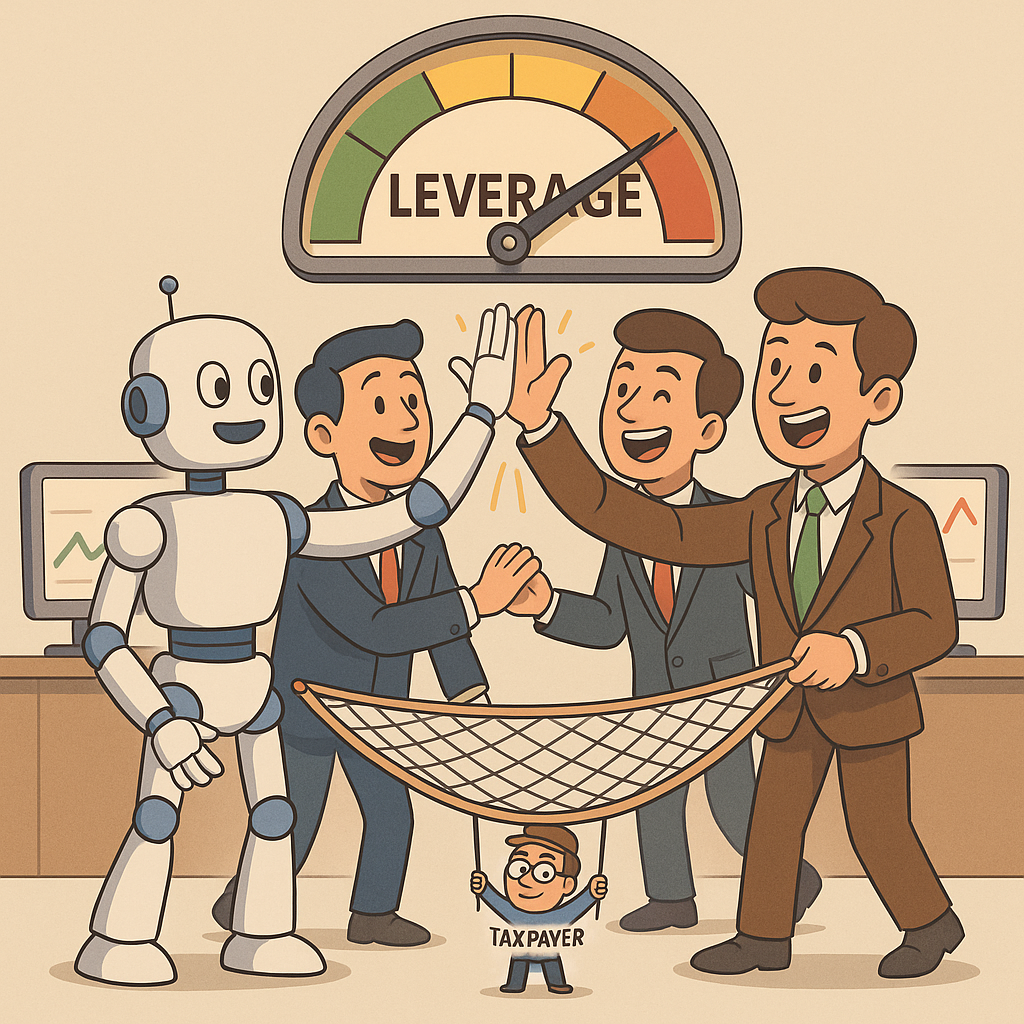
The revised Basel III package arrives as markets are stretched across AI infrastructure, green energy financing, and enough exotic derivatives to make 2006 blush. It is, in other words, a fantastic moment to gently nudge the system toward more leverage, thinner buffers, and greater faith that the future will resemble the recent past, which famously, it never does.
When the next crisis hits — perhaps sparked by a glitchy AI model mispricing a new class of carbon-linked, quantum-cleared, socially responsible CLOs — postmortems will note, with some surprise, that the tools designed to prevent disaster were carefully, methodically defanged between 2018 and 2026 while everyone was arguing about EV tax credits and the return of low-cost airline mergers.
Regulators will testify. Bank CEOs will express regret at the tone, not the substance. Think tanks will recommend slightly higher buffers in the future, maybe, if it’s not too burdensome and if everyone promises not to be mad.
And the lobbyists? They’ll launch a new campaign to explain that the crisis proves Basel III was too complicated, Dodd-Frank was overreach, and what America really needs is a simpler, principles-based system.
Principle one: when things go well, profits belong to shareholders.
Principle two: when things go badly, we’re all shareholders now.
Endgame, indeed.