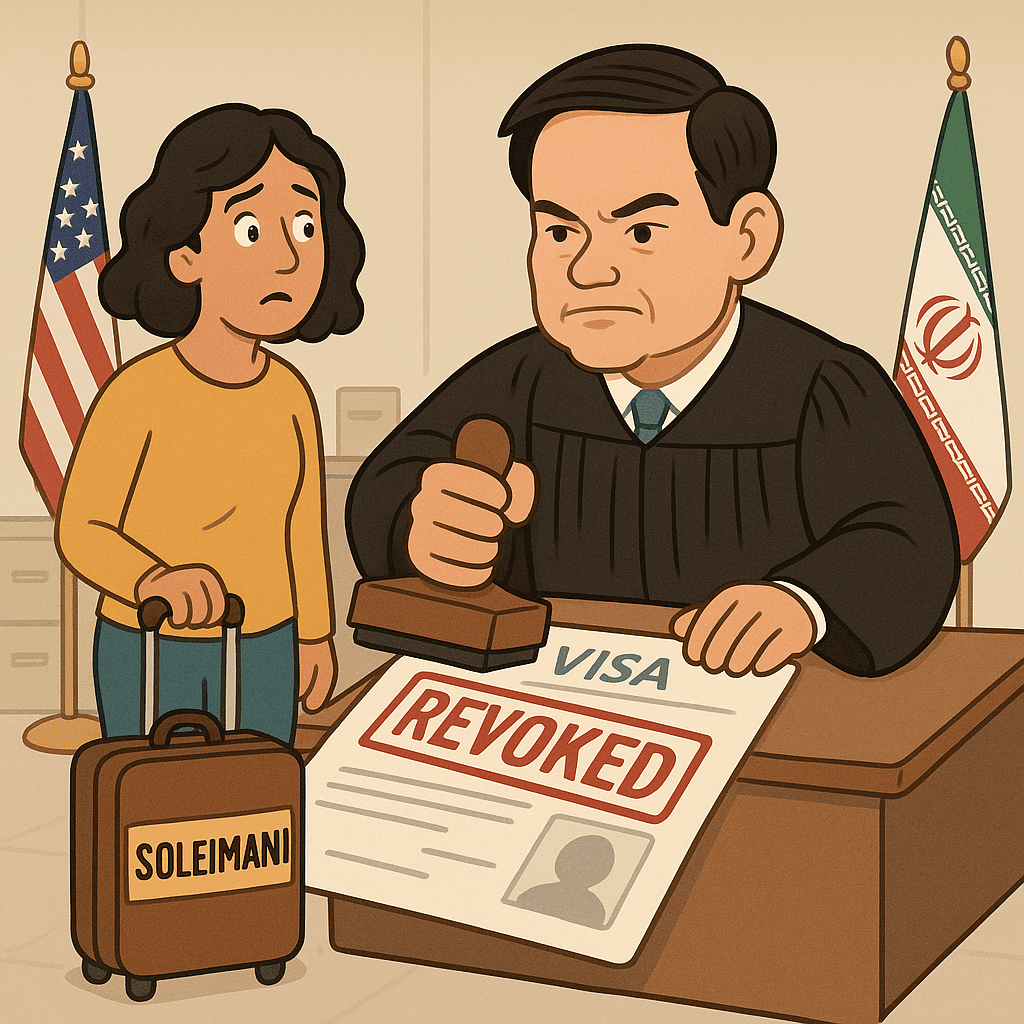
WASHINGTON, D.C. — In a bold new twist on American diplomacy, “top diplomat” Marco Rubio has apparently decided the State Department was taking too long and personally moved to yank US residency from the niece of slain Iranian commander Qassem Soleimani, turning immigration status into the latest weapon in the Forever War Starter Pack (Al Jazeera, Apr 2026).
Yes, Qassem Soleimani is still haunting US politics from beyond the grave, like a geopolitical NFT that won’t stop trading. And now his niece, Zeinab Soleimani, has been upgraded from “relative of guy America blew up in Baghdad” to “headline in an election year,” which, in Washington, is considered a promotion.
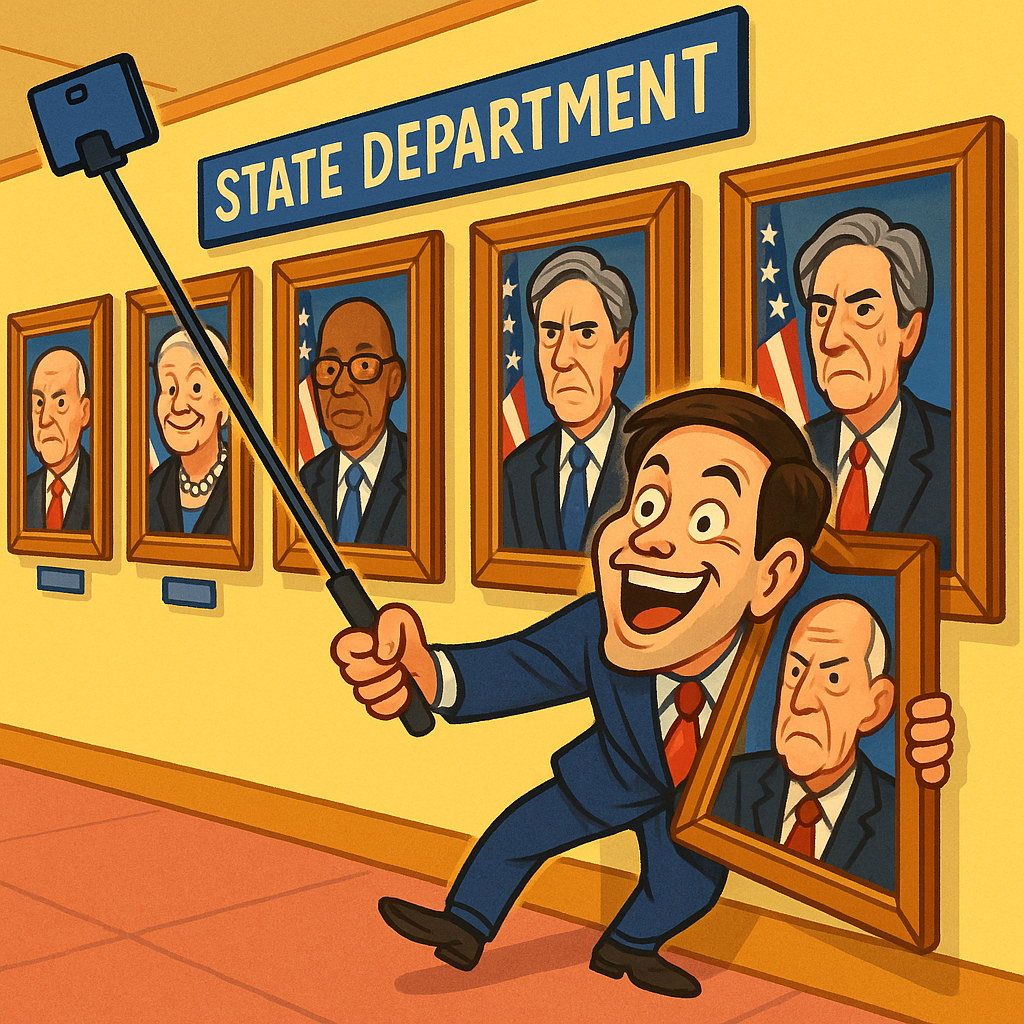
Marco Rubio, formally introduced in some coverage as a “top diplomat,” appears to have discovered that the fastest way to influence Iran policy is not through sanctions or treaty negotiations, but through bureaucratic clerical edits to one woman’s visa file. Somewhere in Foggy Bottom, entire teams of career diplomats are staring at their decades of experience and wondering why they bothered learning Farsi when what they really needed was a log-in to the DHS case management portal.
According to reports, Rubio moved to strip Zeinab Soleimani of US residency, arguing that the relative of the late Islamic Revolutionary Guard Corps commander is part of a broader Iranian strategy to infiltrate the United States. The unspoken subtext: in a country with 330 million people, the greatest threat is apparently one more Iranian with a valid address and the ability to open a checking account.
“We cannot allow America to become a safe haven for the relatives of terrorists,” an imaginary Rubio aide might say, “that privilege is reserved for relatives of our politicians.”
To lend the move extra drama, supporters of Rubio have framed this as a critical foreign-policy stand. Opponents, meanwhile, have responded with a rival narrative: that the Senator from Florida has discovered that the real Court of Public Opinion is on social media, where the only thing people understand about Iran is that it routinely produces villains for cable news chyrons and Call of Duty campaigns.
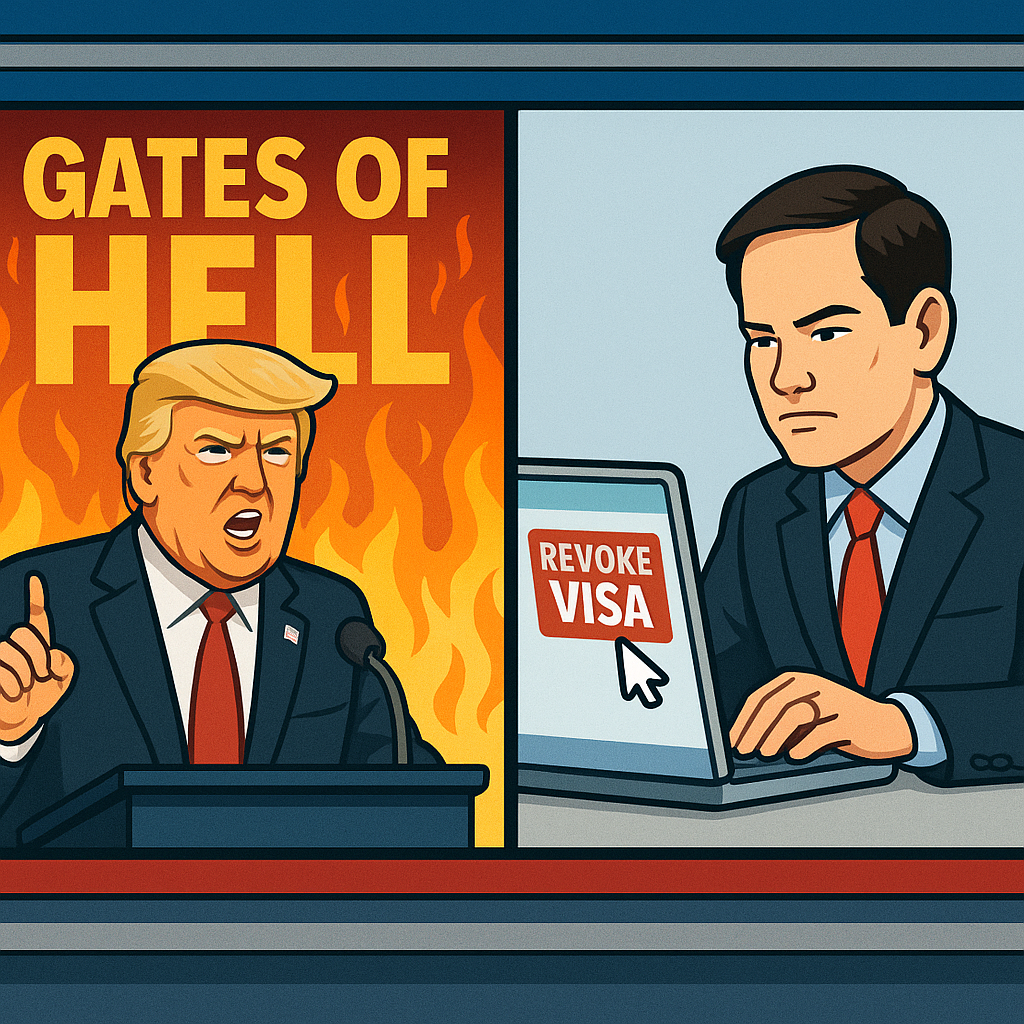
In an era where Donald Trump is back in headlines threatening Iran with “48 hours before the gates of hell open” (Israelnationalnews, Apr 2026), Rubio appears to have chosen a more boutique approach: forget hellfire, deploy Homeland Security. Why bother moving aircraft carriers when you can move one line in the immigration database?
“Hell will open in 48 hours.”
“Your lawful permanent residency may be subject to additional review.”
Same energy, different font size.
The saga is playing out against the broader backdrop of US–Iran relations, which could be generously described as “toxic exes still sharing a group chat.” Since the US killed Qassem Soleimani in a 2020 drone strike near Baghdad International Airport, Tehran and Washington have engaged in a sort of geopolitical subtweeting—limited strikes, proxy conflicts, nuclear program threats, and now, apparently, attacking each other’s extended families’ paperwork.
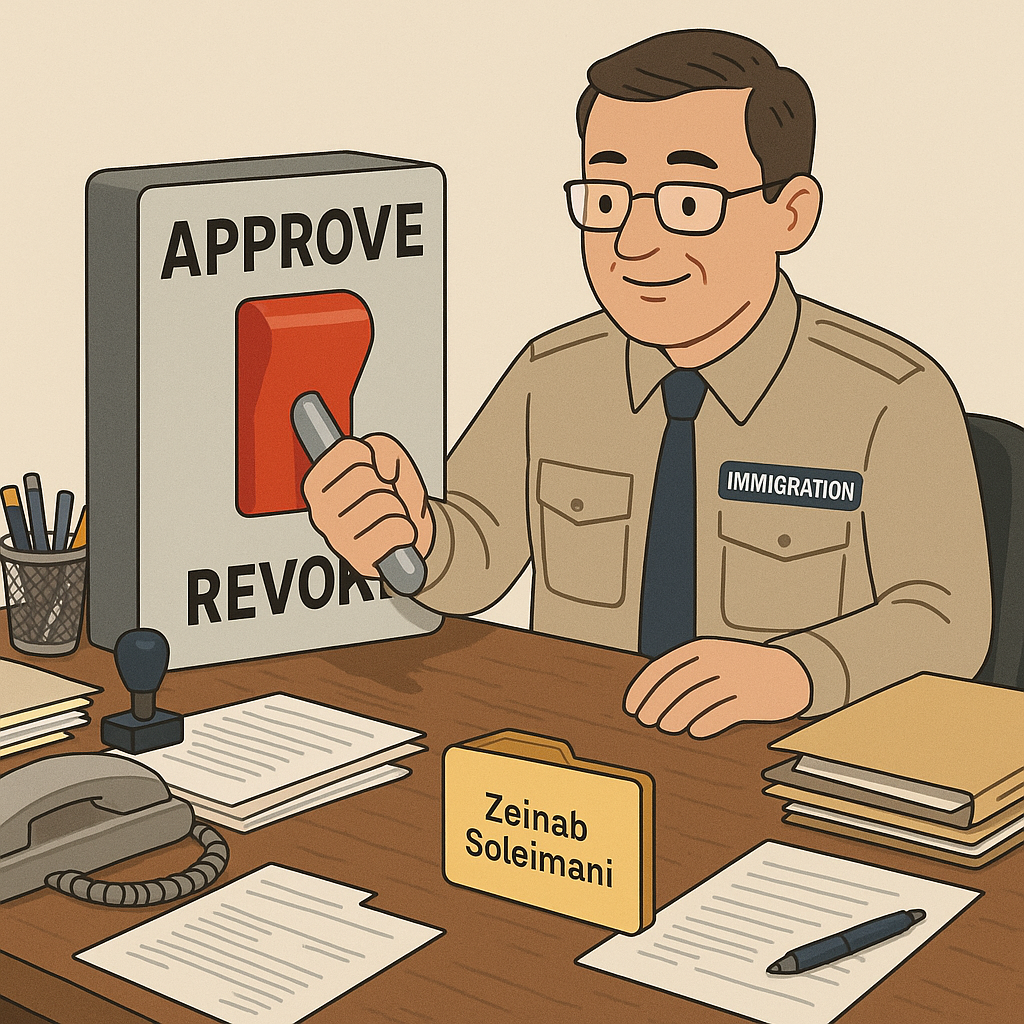
Analysts say this may signal a new phase in American power projection: the weaponization of consular services. Instead of deploying the Fifth Fleet, the US can now roll out:
- Targeted Visa Revocations™ — because nothing says “maximum pressure” like losing your TSA PreCheck.
- Strategic Green Card Freezes — the sanction equivalent of putting your Netflix account on hold.
- Humanitarian Parole, but Make It Vibes-Based — eligibility determined by your last five tweets.
Critics accuse Rubio of using Zeinab Soleimani as a prop in a broader effort to burnish his foreign-policy credentials, especially as the 2026 political season begins to warm up. After years of trying to rebrand from “Little Marco” to “Serious Statesman,” nothing says “I’m tough on Iran” like personally helping one immigration case clear the right-wing media content pipeline.
Supporters, of course, insist this is about principle. “This is about national security,” they claim, without ever really explaining how the niece of Qassem Soleimani, living under the perpetual gaze of US law enforcement and neighbors named Chad who own Ring doorbells, represents an imminent existential risk to the Republic.
To be fair, the optics are powerful. The United States killed Qassem Soleimani in a high-profile strike that nearly triggered a regional war. Iran responded with rocket attacks and fiery speeches at funerals. Years later, America is still poking at the Soleimani brand, but now the delivery mechanism is a sternly worded letter about visa revocation. It’s less “shock and awe” and more “copy and paste.”
This is where the politics really kicks in. Rubio’s move plays beautifully on conservative talk shows, where the script is already written: Iran bad, Soleimani worse, niece suspicious. Tie in Donald Trump’s apocalyptic rhetoric about “gates of hell” and you have yourself a full-spectrum narrative arc: Trump opens hell, Rubio closes the border, and somewhere in the middle, an actual human being with a family and a couch is reduced to a bullet point in a campaign email.
Meanwhile, the State Department and Department of Homeland Security are left to sort out the practicalities. If being related to an enemy of the United States qualifies you for residency revocation, a few Washington neighborhoods may want to lawyer up. There are only so many degrees of separation between certain Gulf warlords, Central American strongmen, and the people quietly enjoying Georgetown brunch.
In the crypto world I usually inhabit, this would be like deciding to fight a multi-billion-dollar rug-pull scandal by freezing the MetaMask wallet of the CEO’s cousin. Cathartic? Maybe. Systemic solution? Not even close. You don’t secure a protocol by blocking one wallet; you don’t secure a superpower by strip-mining one niece’s immigration status for talking points.
Still, the episode has real consequences. Zeinab Soleimani, whose primary crime appears to be existing while related to a man who is already dead, is now pinned between Tehran’s propaganda machine and Washington’s re-election machine, both of which excel at loudly claiming moral high ground while quietly stepping on people.
As Trump keeps threatening Iran with the spiritual version of a timed dungeon raid and Marco Rubio fine-tunes immigration status as a diplomatic scalpel, the rest of the world is left to draw the obvious conclusion: US foreign policy in 2026 is no longer about war and peace; it’s about which relative gets to keep their apartment lease.
The gates of hell may or may not be opening in 48 hours. But the gates of bureaucracy? Those are always open for business.



