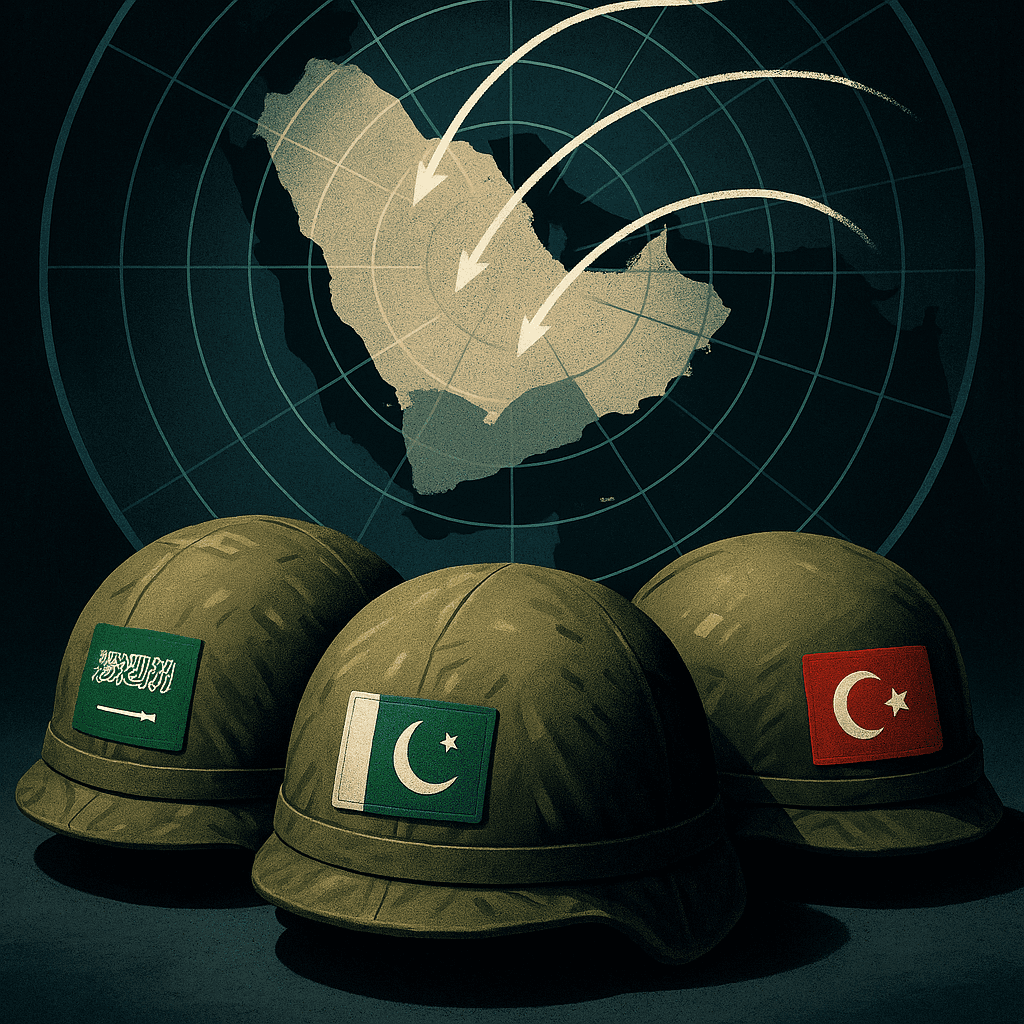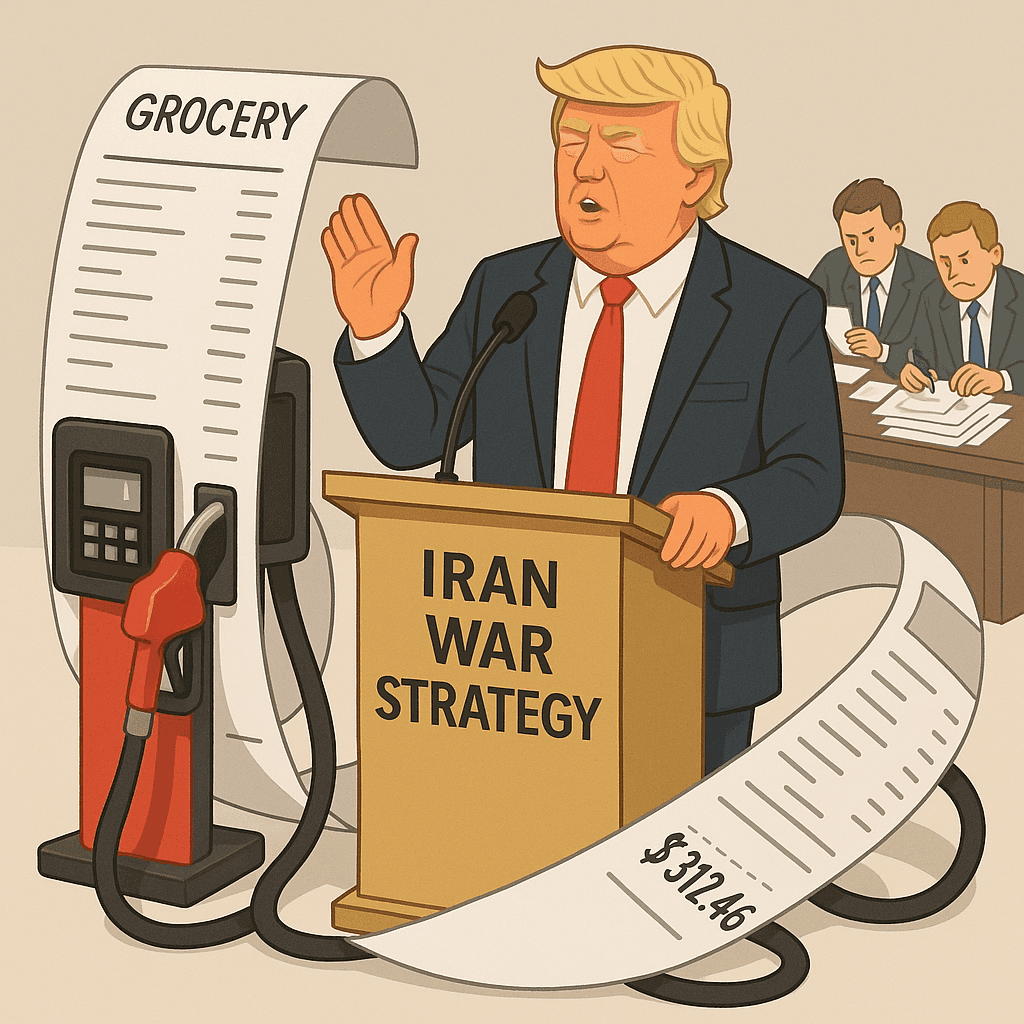
In a development experts called inevitable, President Donald Trump confirmed that Americans’ economic pain is “not even a little bit” a factor in his negotiations to end the Iran war, effectively reclassifying grocery bills as a feelings problem and the Consumer Price Index as a diary entry.
The remark, reported in The Washington Post, arrived as oil spikes from the Iran conflict flow neatly into gas stations, cereal aisles, and the part of your brain that used to remember what a normal egg price looked like. Markets whiplashed again this week as attacks expanded across the region, including a reported UAE strike on Iranian infrastructure, and Wall Street briefly tried to price in the possibility that reality might matter.
Administration officials insisted there was nothing unusual about the president explicitly detaching war policy from household economics. In their telling, strategy lives in briefing binders and secure calls, while your credit card statement is more of a mood board.
“The president is laser focused on strength,” one senior aide explained, “and as everyone knows, lasers do not worry about coupons.”
Trump’s comment sets a clear benchmark: as long as the Iran war is helping project resolve toward Tehran and Beijing, any secondary impacts, such as your 401(k) learning to cliff dive or your grocery cart shrinking to the size of a ballot secrecy folder, are to be interpreted as patriotic sensations instead of political liabilities.
To support this mindset, the White House is said to be exploring a new messaging framework that groups all negative price changes under a single label: “Freedom Fluctuations.” In internal drafts, communications staff reportedly compare rising milk prices to the Battle of Midway and suggest that sticker shock is “what liberty feels like at the register.”
According to people familiar with the draft talking points, Republicans will be encouraged to say things like, “Yes, bread is up 18 percent since the first strike near the Strait of Hormuz, but can you really put a price on deterrence?” Voters will be asked to answer this question while watching the card reject screen at self-checkout, as the chip reader emits what economists now recognize as the national anthem.
There is one constituency that does see dollar signs in the chaos: accountants. After the Supreme Court struck down Trump’s 10 percent blanket tariffs in February, companies have begun receiving refunds, CNBC reports, in what executives describe as “a brief opportunity to remember what profit margins felt like.”
The refunds temporarily blunt part of Trump’s economic nationalist brand, but they also offer a tidy way to keep the war-economy narrative intact. Officials privately describe the refunds as “short-term appeasement” for import-heavy firms until the administration can invent a fresh, more targeted tariff that specifically punishes metals, semiconductors, and the American consumer’s will to live.
On Wall Street, the pattern has become familiar. Oil surges when new Iran attacks hit the wires, the Dow, S&P 500, and Nasdaq drop in coordinated disappointment, then rebound on rumors of peace, a strong jobs report, or a new AI model that promises to explain why none of this matters to shareholders in the long run.
“The AI trade is still rewarding investors,” one strategist said on CNBC, “especially those who can afford not to eat.”
Trump, for his part, is flying to China looking for deals, trade leverage, and perhaps a photo where everyone’s eyes are open. Yahoo Finance notes that he invited only two women executives on the trip, which the White House insists represents “significant progress compared to last time, when the executive delegation was technically a golf foursome.”
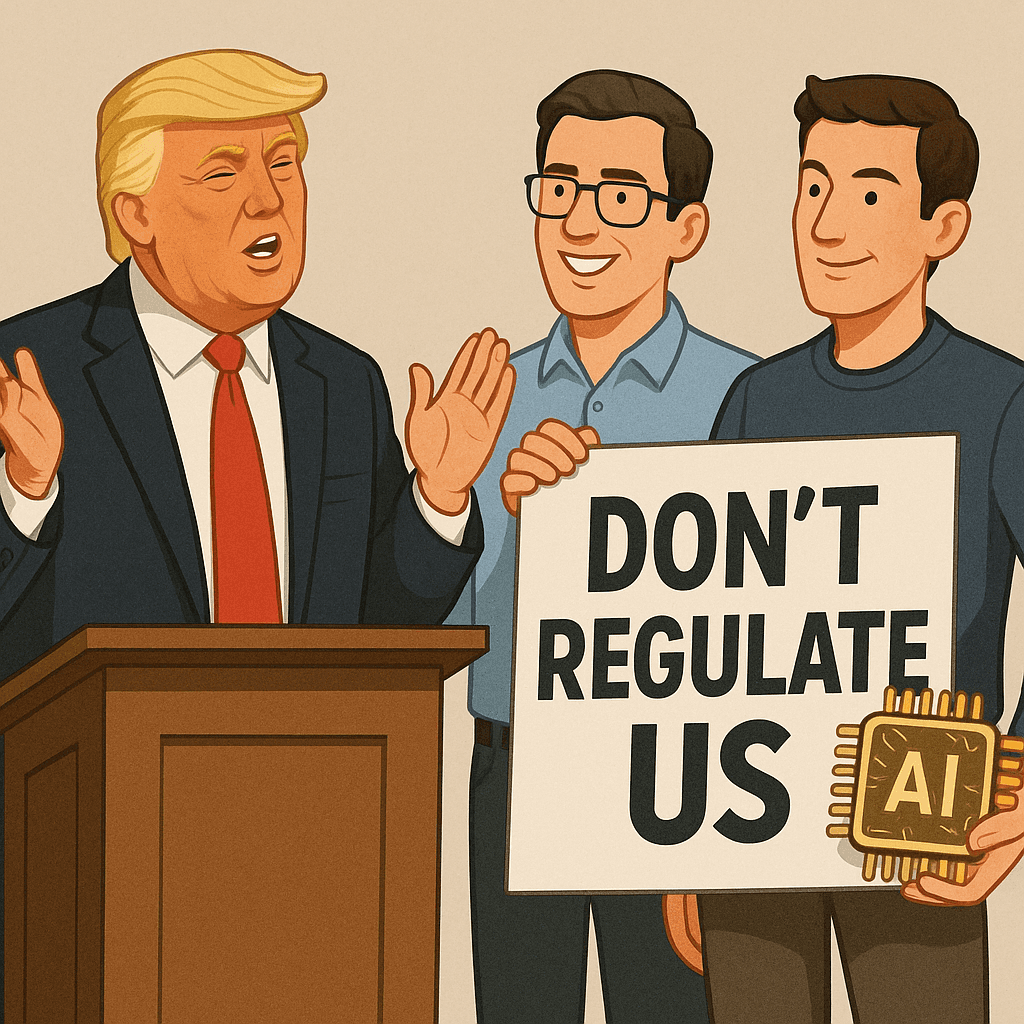
As Washington probes suspected smuggling of Nvidia chips to Alibaba through Thailand, the administration is expected to ask Beijing to crack down on illicit tech flows while simultaneously blaming China for the existence of illicit tech flows. U.S. officials remain confident that export controls can be enforced as long as smugglers avoid geography, containers, third countries, and boats.
Any deals that emerge from the trip will then be described as proof that the Iran war and higher prices were all part of a stable multistep plan. If there are no deals, the absence of agreements will be described as even stronger proof, in keeping with the administration’s innovative “heads we win, tails you misunderstood” framework.
Back home, Trump’s political coalition is showing signs of stress-testing. South Carolina Republicans have publicly defied his push on redistricting, refusing to eliminate a top Democrat’s House seat. The move is being interpreted as a historic shift in the relationship between the president and his party, and also as evidence that even Republican state senators occasionally read polling between committee hearings.
“We support the president on the Iran war and China,” one South Carolina lawmaker reportedly told colleagues, “but we have some concerns about being unemployed.”
The rebellion is modest, yet notable. In a party where alignment with Trump has mostly tracked with the survival instinct, South Carolina’s decision suggests a new calculus: some Republicans now appear willing to risk a presidential tweet if it allows them to keep access to their local airport ribbon cuttings and the ceremonial overcooked chicken that comes with them.
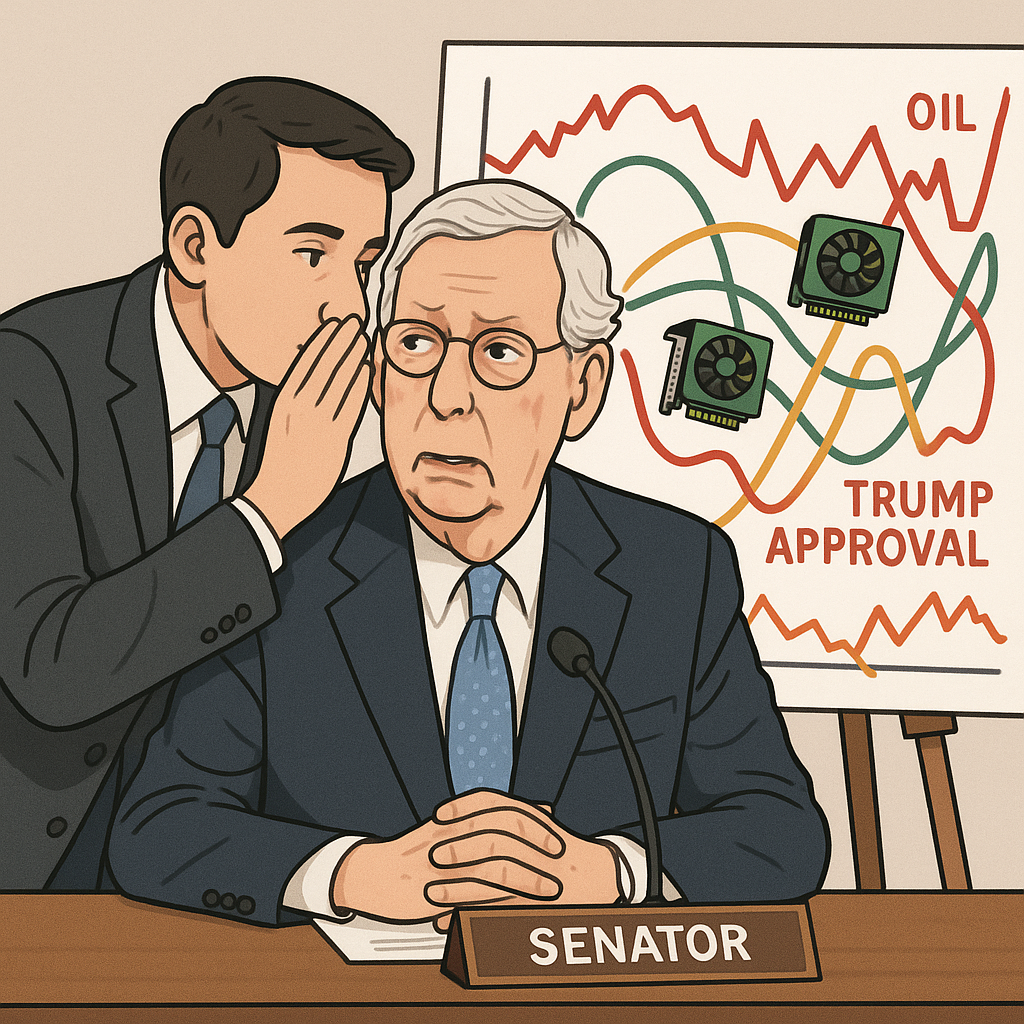
The coalition strain is not limited to geography. In the Senate, Minority Leader Mitch McConnell endured an awkward moment when a staffer had to remind him during a hearing that several senators still had questions after he tried to adjourn early, as reported by Newsweek. The incident intensified speculation about leadership capacity in an era where American policy requires, at minimum, the ability to finish the meeting before the next oil spike.
Observers note that the governing structure now resembles a high-frequency trading system run on aging hardware: the inputs are volatile, the outputs are opaque, and sometimes someone has to lean over and tap the monitor. The Iran war has effectively turned Congress into a lagging economic indicator with a pension.
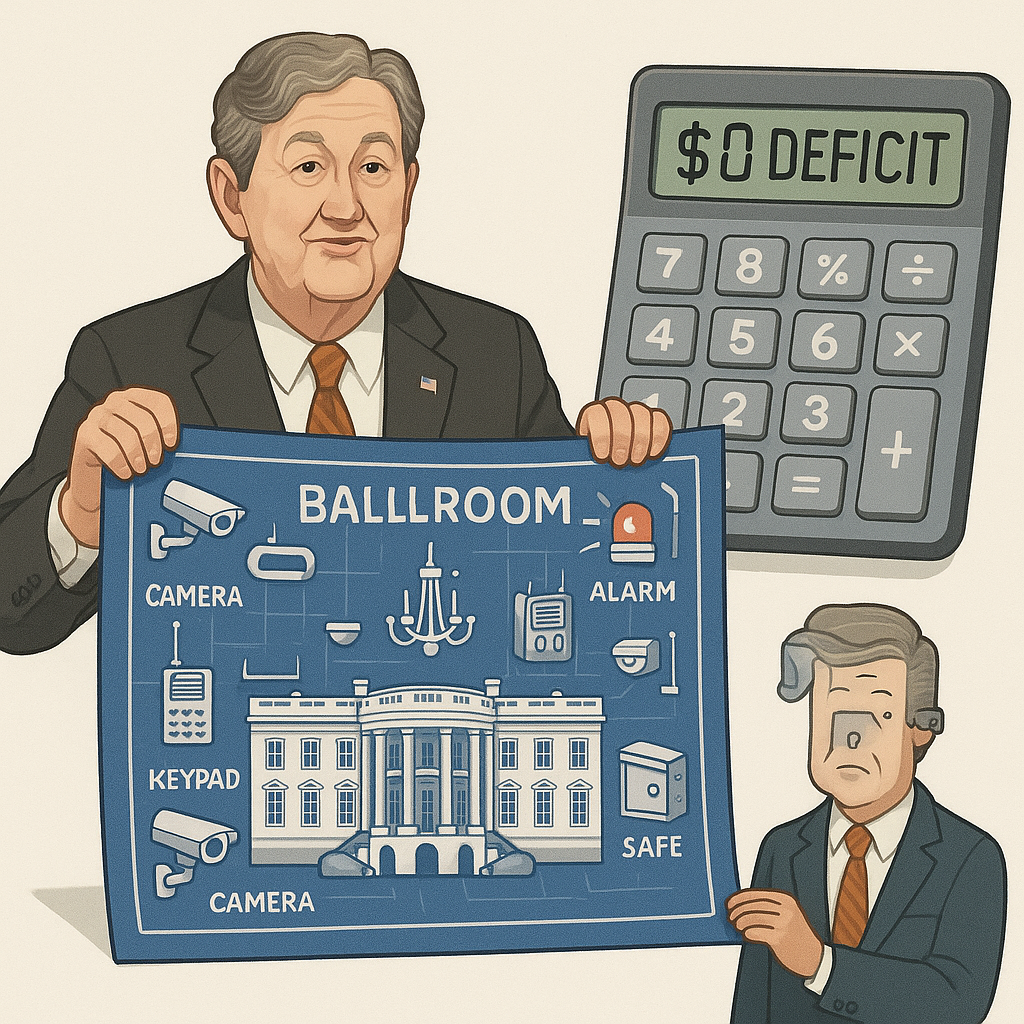
Meanwhile, Senator John Kennedy has floated a plan to fund a $1 billion security upgrade for Trump’s White House ballroom “without adding to the deficit,” a phrase that in Washington typically means “by sprinkling math on it.” Kennedy did not disclose the full details, but early outlines suggest a combination of offsets, creative accounting, and possibly a new federal fee on the concept of joy.
According to aides, options under consideration include:
- Reclassifying the ballroom as critical infrastructure and billing NATO.
- Imposing a small surcharge on every grocery item whose price went up after an Iran-related oil disruption, then calling it a “security dividend.”
- Charging lobbyists admission for the privilege of being surveilled more efficiently.
“If we do it right, the ballroom will pay for itself,” one Republican staffer said. “Just not in a way that shows up on the deficit, or in any economic model grounded in numbers.” The same staffer compared the proposal to “a Costco membership for national security, except you never get the free samples.”
At the hyperlocal level, the strain is even stranger. Former Arcadia mayor Eileen Wang is set to plead guilty to acting as an unregistered agent for China, amplifying pro-Beijing messaging. The case, highlighted in a Newsweek bulletin, demonstrates that great-power competition now extends to small-town Facebook groups, where influence operations vie for engagement against lost dog posts and HOA disputes over the height of decorative hedges.
For Trump, the domestic turbulence is still, officially, background noise. As he offers British Prime Minister Keir Starmer advice on “staying in power” and prepares for a nine-hour prayer festival on the National Mall, the administration’s bet is clear: voters will accept higher prices, geopolitical risk, and the occasional coalition fissure in exchange for a sense of strength toward Iran and China, even if that strength currently resembles a very loud conference call with spotty reception.
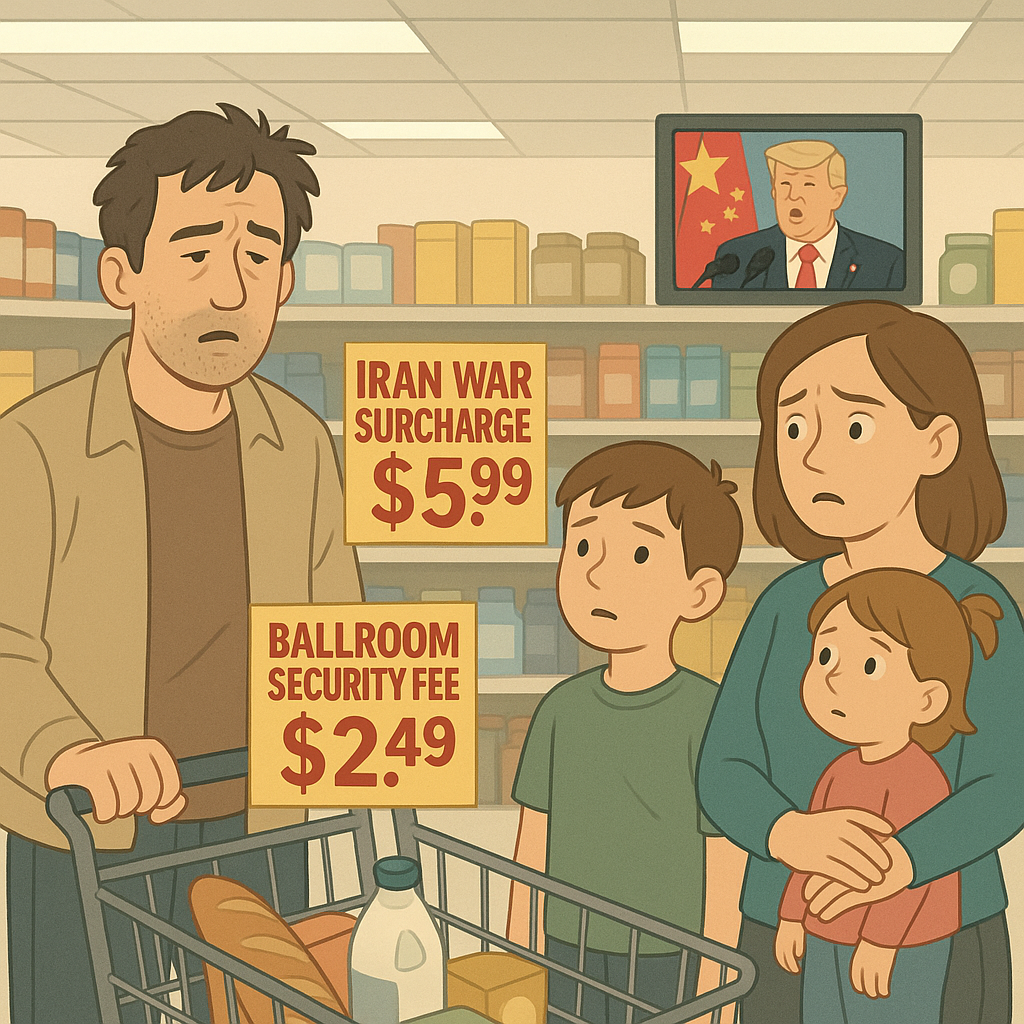
The open question is how long that trade holds when the Iran war moves fully from the foreign section to the receipt in your hand. Analysts say a breaking point could arrive when Americans are presented with three line items at once:
- $7 gallon of milk, labeled “Regional Security Adjustment.”
- A fresh tariff surcharge on whatever goods were briefly refunded after the Supreme Court ruling.
- A mandatory “Ballroom Security Stabilization Fee” buried somewhere between sales tax and the bag charge.
At that moment, the president will again be asked whether economic pain is a factor in his Iran strategy.
“Not even a little bit,” he will say, as Republicans, courts, state legislatures, corporate treasurers, and one overworked grocery clerk quietly realize it is the only factor left. The coalition will hold, until the day the clerk tapes a handwritten sign to the milk fridge that reads, “Out of stock due to foreign policy.”