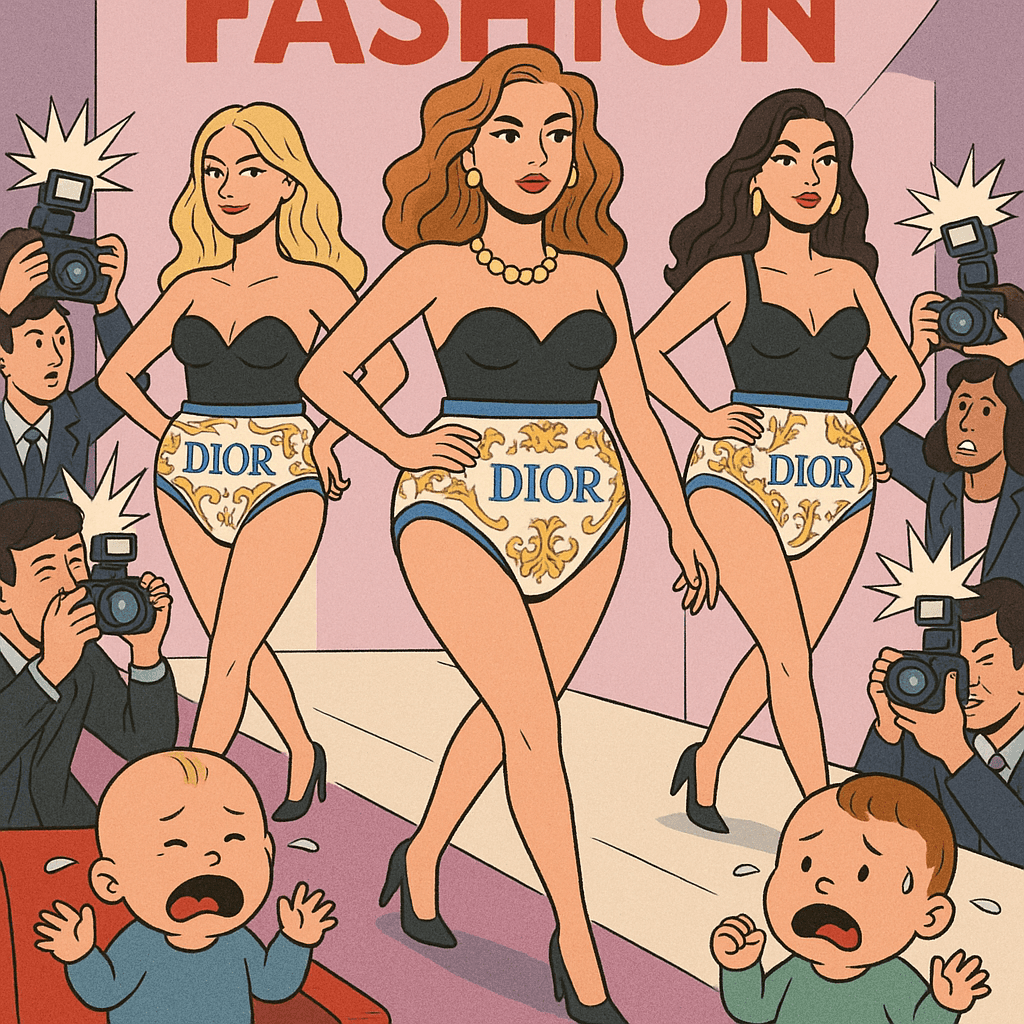
In a development that has permanently blurred the last remaining line between basic human function and luxury branding, Dior has reportedly entered the infant incontinence market, wrapping Rihanna’s 7-month-old daughter in a designer Dior diaper for a glossy magazine debut (The Economic Times, Apr 2026). On Wall Street, analysts called it “a paradigm shift in monetizing bodily inevitabilities.” Parents called it “a wipe that costs more than our rent.”
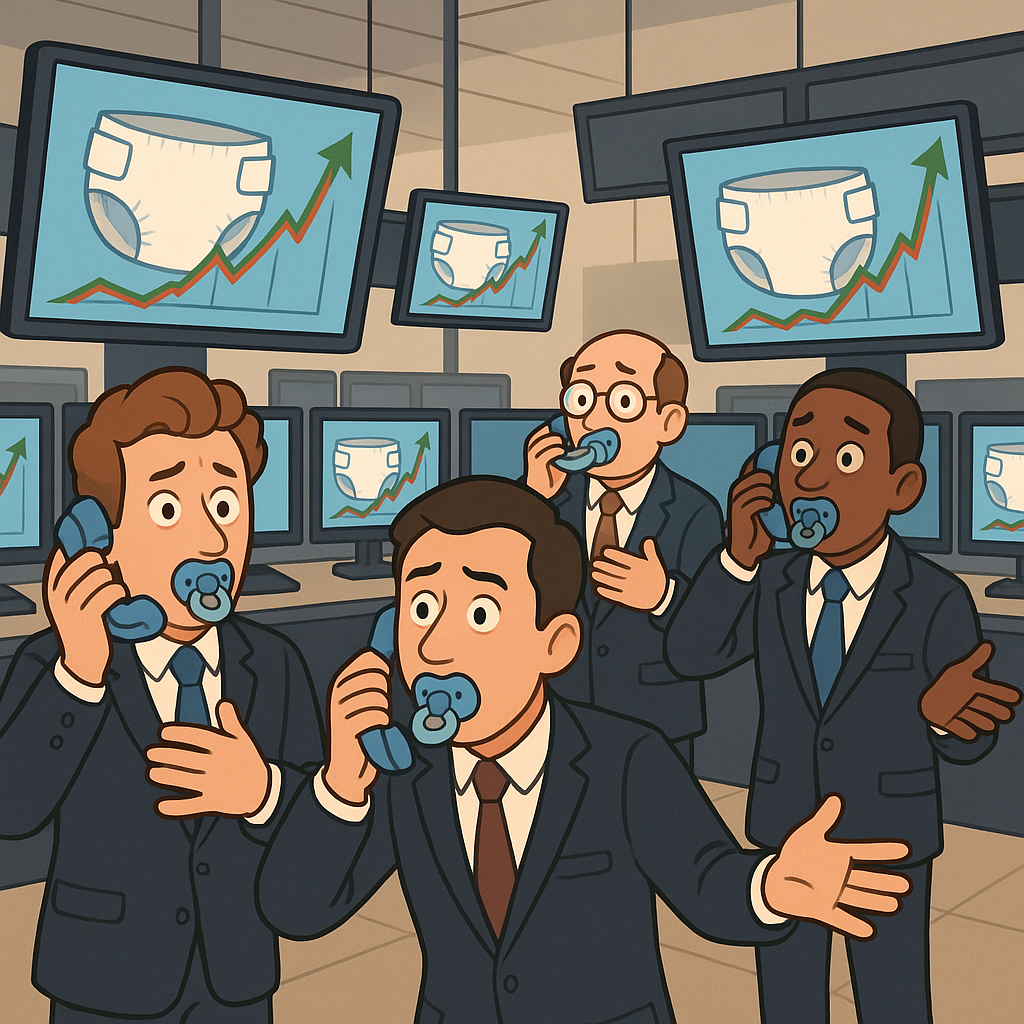
The feature, which introduced the world to the pop icon’s bedazzled bundle of joy in full couture-pampers regalia, has instantly turned the “Dior diaper” into the hottest new symbol of status. Inside one trading floor, a junior analyst was overheard asking, “Is there an ETF for this, or should I just short ordinary babies?”
Luxury conglomerate LVMH, Dior’s parent company and longtime alchemist of turning leather into unpayable credit card bills, is said to be ecstatic. One internal slide, leaked to confused daycare staff, lays out the new growth frontier: “Phase I: handbags, Phase II: perfumes, Phase III: human exits, Phase IV: monetize gravity.”
Asked to explain the business case, a fictional Dior spokesperson, Amélie DuProfit, offered only mild self-awareness. “For more than 75 years, Dior has dressed the world’s most influential women,” she said. “It was inevitable we would eventually dress the people they can’t hand to the nanny during photoshoots.”
Luxury analysts at Goldman Sachs—who previously predicted that Millennials would never own homes but might own twelve different scented candles—have now upgraded the sector from “aspirational lifestyle” to “guaranteed bodily function.” One note to clients states:
“The beauty of the Dior diaper is recurring demand. Babies poop daily. Luxury customers flex hourly. This is a perfect overlay of human biology and social insecurity.”
Market reaction was immediate. Following the magazine debut, shares of diaper incumbents like Procter & Gamble were briefly rattled before recovering on rumors that they, too, are exploring celebrity tie-ins. One rumor suggests an upcoming collaboration: Pampers x Supreme x NFT. The tagline: “Limited drops for unlimited drops.”
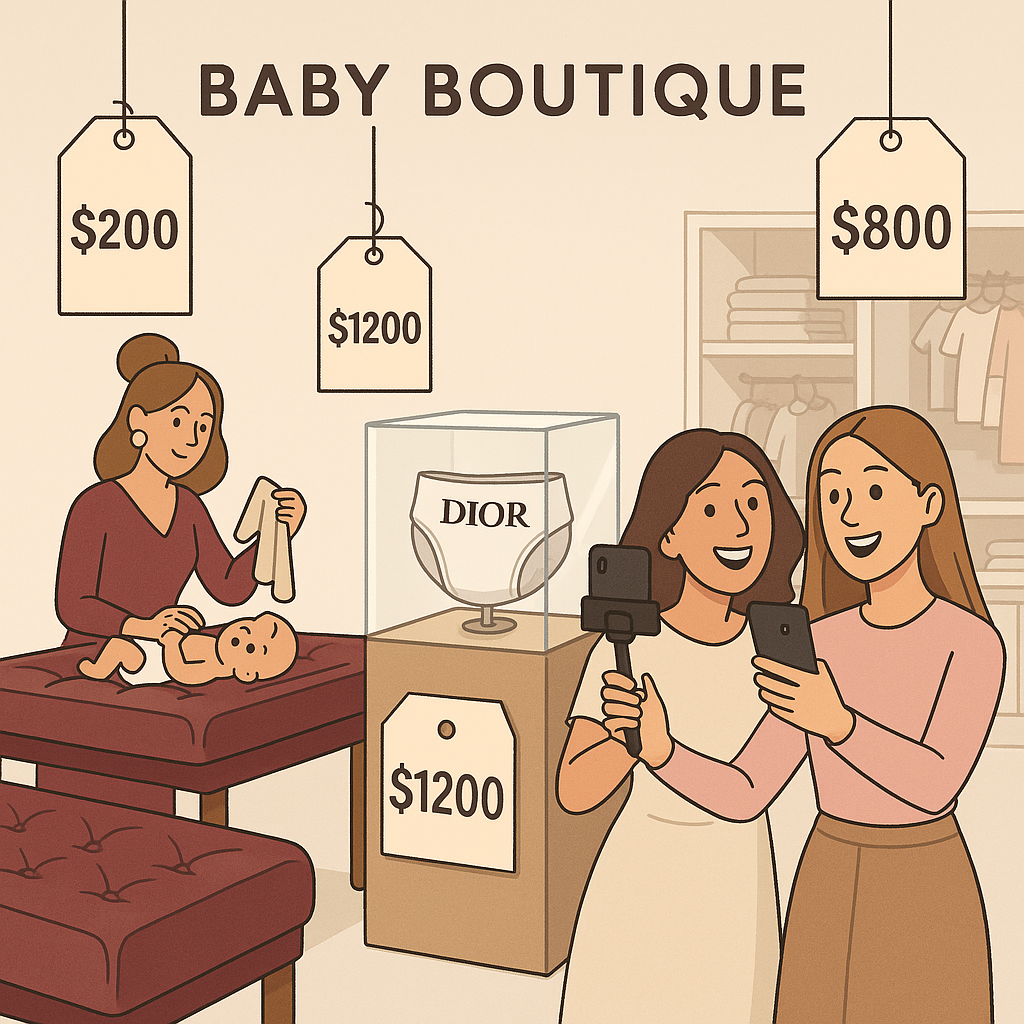
In Soho, a boutique baby shop has already installed a “Curated Changing Experience” featuring velvet-lined changing tables, artisanal wet wipes, and a playlist of slowed + reverb Rihanna tracks. Parents can book a “Diarized Dior Moment” for $899, which includes a single-use designer diaper and a professionally lit Instagram Reel explaining how their infant is “disrupting traditional baby narratives.”
“We don’t say ‘diaper,’” corrected one sales associate. “We say ‘couture containment system.’”
In Mumbai, a private bank adviser reportedly fielded a serious question from a high-net-worth client: “Should we open a trust just to fund the baby’s Dior diaper habit, or is that what a family office is for?” In New York, a hedge fund manager recounted seeing Rihanna’s baby spread on his Bloomberg terminal and immediately calling his trader: “Get me exposure to anything that can wrap a celebrity’s child in a logo.”
Rihanna herself, a billionaire entrepreneur with Fenty Beauty and Savage X Fenty under her belt, has now inadvertently launched an entirely new subcategory: Haute Mess. Industry insiders are already speculating about a Fenty line of baby products, including limited-edition wipes named after her hit singles:
- “Work (x3) Wipes” – marketed as strong enough for solids, gentle enough for brand deals.
- “Umbrella (ella, ella) Pads” – for surfaces that need protection from, well, everything.
- “Diamonds (In the Diaper)” – a controversial concept that was scrapped after lawyers got involved.
Meanwhile, parenting forums are divided. On one side are the “Let Her Get That Dior Bag” defenders, insisting that a designer diaper is just a harmless extension of Rihanna’s long-running affair with fashion. On the other are exhausted parents posting photos of bulk Kirkland boxes under the caption: “My child’s designer label is ‘On Sale, 40% Off.’”
Yet the biggest winners may be the advertising agencies. According to anonymous creative directors, every major house—from Gucci to Balenciaga—is now in some stage of “fecal-adjacent exploration.” One leaked concept deck from a rival luxury brand shows a solemn black-and-white photo of a baby staring off into the distance. The tagline: “He doesn’t just fill diapers. He fills a void in the market.”
Regulators have noticed too, but only because they smell money. A European Commission draft memo, half-heartedly leaked to the press, poses an ethics question: “When the diaper costs more than the worker who stitched it earns in a week, is this still trade, or has it become performance art?”
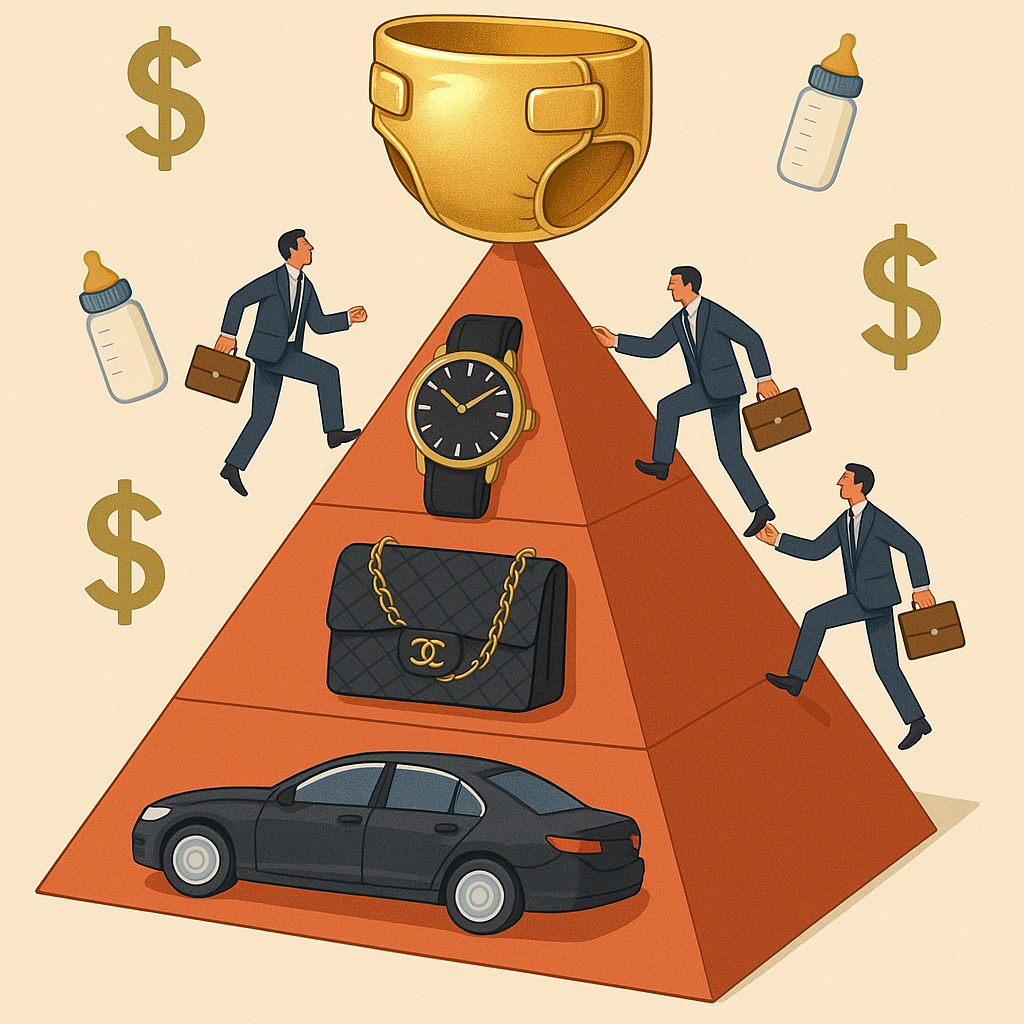
Economists, normally content to ruin holidays with talk of inflation, have coined a new index: the Infant Luxury Penetration Metric (ILPM). It tracks what percentage of a baby’s basic needs—diapers, formula, a small room that isn’t a closet—have been monetized by high fashion. Early readings from the Dior diaper event suggest we may have crossed the 50% threshold.
“Once you’ve branded the diaper,” said one Columbia Business School professor, “all that’s left is oxygen. Expect ‘Louis Vuitton Air for Gen Alpha’ by 2028, sold in limited-batch canisters with intentionally inconvenient refill policies.” (University case study, Apr 2026).
Still, investors are thrilled. On an earnings call, a fictional LVMH executive broke down the Dior diaper strategy with the calm of a person who has fully made peace with late capitalism:
“Our goal is lifetime customer value. If we can capture them when they are seven months old, by the time they are seven years old they will find a $3,000 backpack emotionally reasonable. By seventeen, they’ll ask why their prom date isn’t wearing couture cologne. The diaper is not the product. The diaper is the on-ramp.”
Meanwhile, somewhere in a modest apartment far from the Economic Times headline writers, a parent is changing their baby on a towel, scrolling past Rihanna’s Dior diaper shoot on their phone and muttering, “Same activity, different universe.”
If there is any silver lining, it’s that the absurdity is now visible in high resolution. Few things better summarize 2026’s economic mood than a luxury fashion house monetizing what babies have been doing for free since the dawn of time—and a financial system cheering it on as the next great growth frontier.
In a leaked strategy note, one bank summed it up: “We reiterate our Buy rating on anything that can turn a bodily function into a balance sheet.”
The rest of us, lacking equity in the poop economy, will settle for the consolation prize: the knowledge that our plain, unbranded diapers perform exactly the same function as Dior’s—just without a logo, a marketing deck, and a 20-page analysis in the business section.