Category: Politics
In a development that horrified gamers and delighted authoritarian busybodies everywhere, McDonald’s has unveiled the “Archie” device — a gadget that stops you going AFK while you eat a Big Mac, as reported by Eurogamer (Apr 2026). Within hours of the announcement, politicians around the world were already drafting plans to attach it to citizens, civil servants, and, in an unprecedented burst of self-awareness, possibly even themselves.
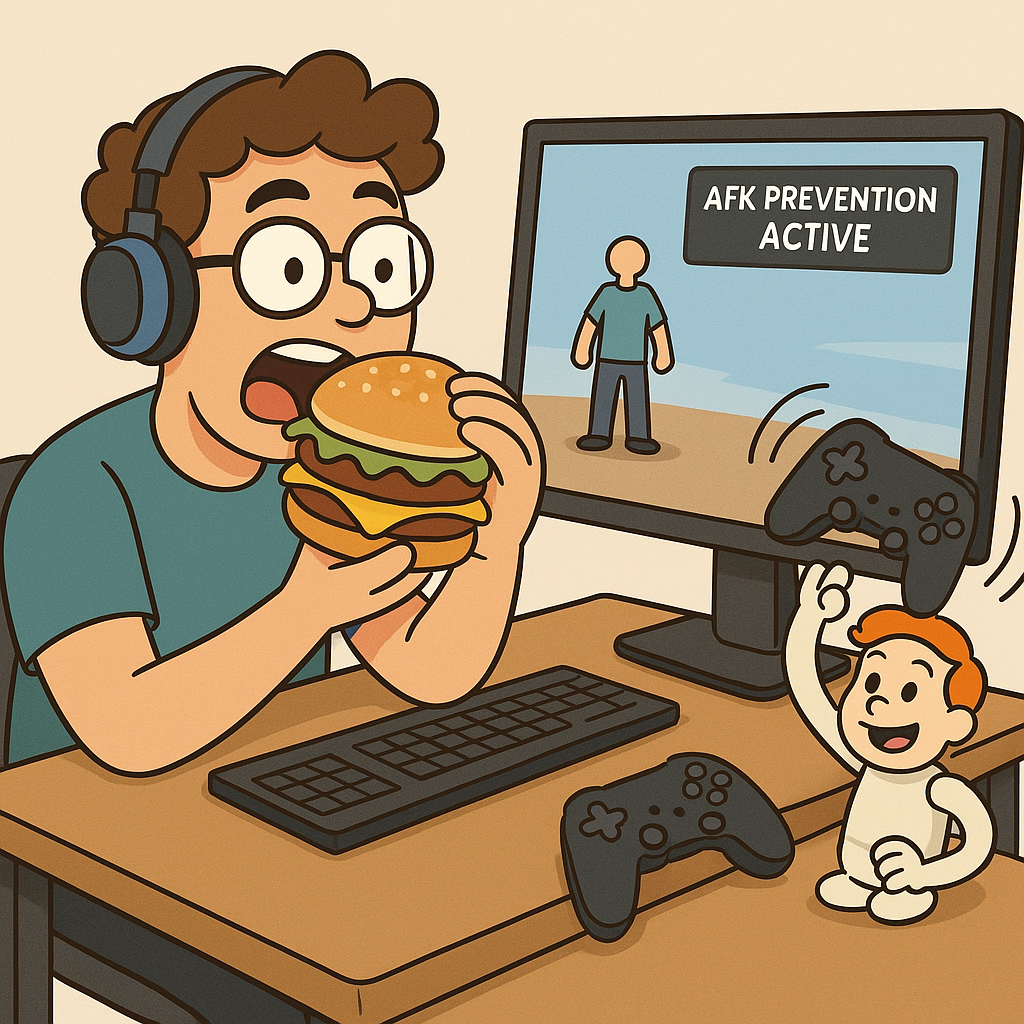
Archie, a small motion-tracking attachment intended to convince online games you’re still heroically present while you’re heroically chewing, was originally pitched as a light-hearted marketing gimmick. But according to one leaked policy memo circulating in Washington, Brussels, and a suspiciously enthusiastic corner of Westminster, it is now being evaluated as a strategic tool to eliminate “democratic downtime.”
“If McDonald’s can stop you going AFK during a Big Mac, surely we can stop MPs going AFK during a budget vote,” said one unnamed UK minister who spoke on condition of anonymity because, in fairness, he hadn’t technically shown up to the meeting either.
In New Delhi, aides to Assam Chief Minister Himanta Biswa Sarma reportedly forwarded the Eurogamer link to party strategists with the subject line: “Can we bolt this to Pawan Khera’s Twitter?” All sides immediately denied the email existed, then demanded access to the prototype.
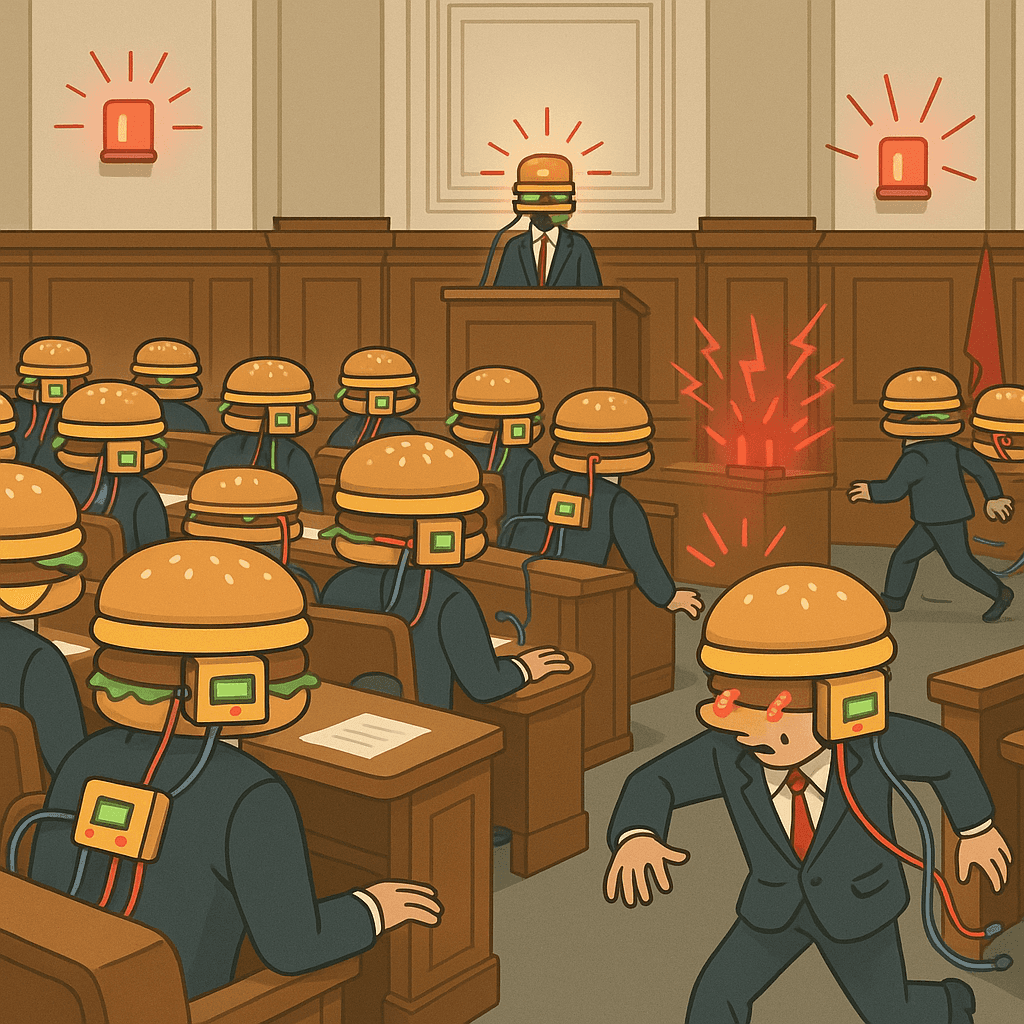
In Brussels, the European Commission is considering mandating an “Archie for Democracy” program in which any elected official drawing a salary must be physically tethered to an oversized, red-and-yellow attendance dongle. Lobbyists are already arguing over whether fried chicken chains should be allowed to submit competing devices under “digital market competition” rules, assuming they can produce a gadget that both tracks presence and meets a minimum daily cholesterol requirement.
The first pilot program is expected to roll out in a mid-level municipal council where no one reads the agendas anyway. Councillors will be fitted with customized Archie units that detect micro-movements. Any prolonged absence from the chamber, or from the Zoom window where their upper torso is supposed to pretend to exist, will trigger a discreet but firm response:
- An auto-generated apology tweet citing “family reasons,”
- A 30-second loop of them nodding solemnly, played on repeat in their empty seat, and
- A surcharge donation to the “Democracy is Not a Side Quest” civic education fund.
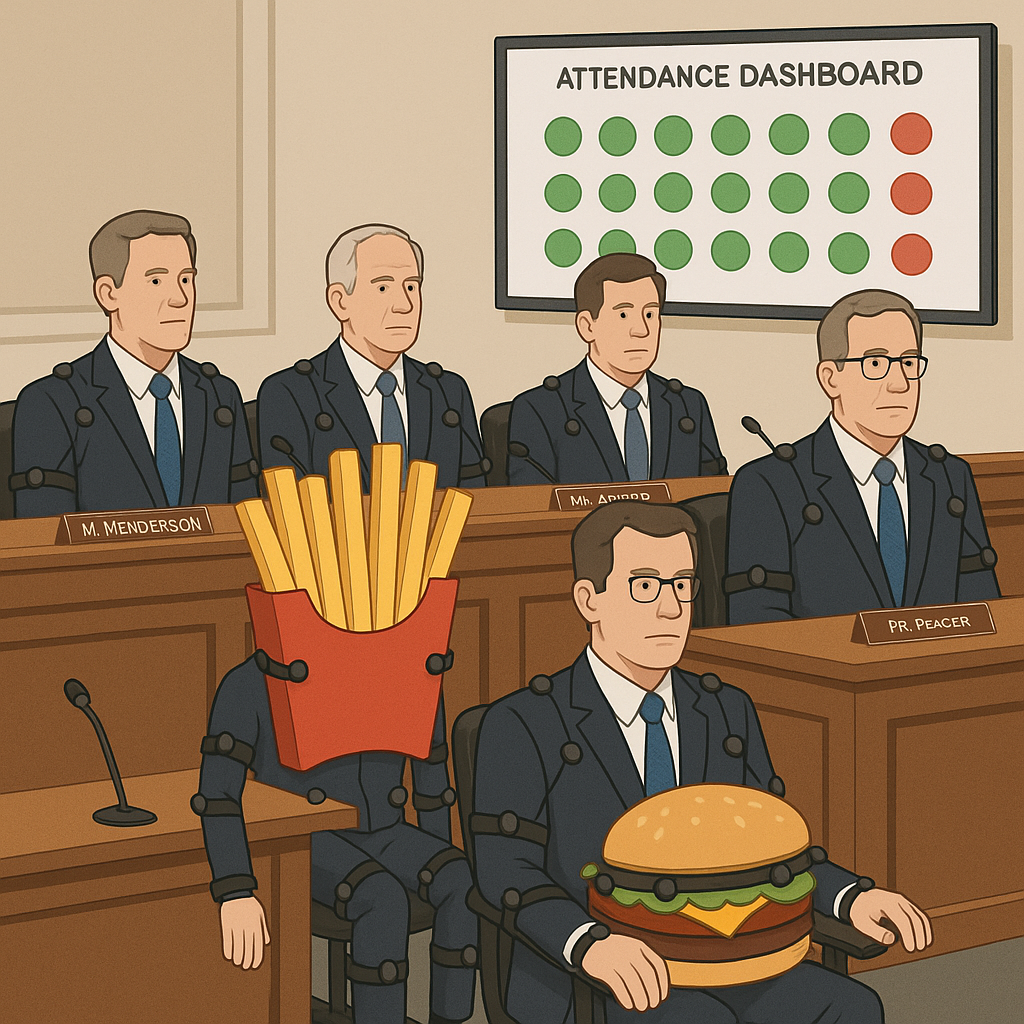
The idea has gained surprising cross-ideological support. In the United States, where lawmakers famously spend large parts of the workday fundraising, denouncing each other on cable news, and occasionally googling “How does a bill become law (simple),” the Archie device is being floated as a way to prove “we are absolutely present for the American people, at least in a technical, sensor-detected sense.”
“Look, if we can keep a teenager faithful to their online lobby during a McDonald’s combo meal, we can keep a Senator faithful to a quorum call,” declared one over-caffeinated staffer. “Worst case, if they sneak out to meet a lobbyist, we just duct-tape the Archie to the lobbyist. Boom, attendance solved. Representation is a team sport.”
Critics warn that normalizing corporate attention-tech in politics sets a dangerous precedent. “We are basically outsourcing democratic presence to a burger company,” said an ethics professor from a mid-ranked university that once tried to sell naming rights to their philosophy department. “First it’s McDonald’s Archie, next it’ll be the Artemis II lunar mission asking us to strap trackers to voters to make sure they watch all eight hours of the moon flyby live.” (Marietta Daily Journal, Apr 2026).
Privacy advocates are similarly alarmed. If McDonald’s learns exactly when a gamer puts down their controller to pick up a fry, what happens when a national parliament learns exactly when you stop pretending to care about their town hall livestream and switch to football highlights?
“The line between ‘Are you still watching?’ and ‘Are you still loyal?’ is thin, crispy, and seasoned with data,”
However, governments argue they’re the real victims here. For decades, they’ve been quietly going AFK on citizens without consequences. Now, with the advent of Archie, the cruel symmetry of history demands payback: if your MP must be visibly online, maybe you should too. Proposed laws in at least three countries would require voters to “maintain a continuous online democratic presence” for a minimum number of hours per year. You wouldn’t have to do anything, just maintain movement like you’re trying to avoid AFK detection in a battle royale of failed policies.
The national rollout plan, according to another leaked slide deck titled “Operation: Always On-stitution,” would unfold in four phases:
- Phase 1: Fit all legislative chambers with Archie-style sensors to monitor who physically exists and who is merely a nameplate and a ghost staffer.
- Phase 2: Require all civil servants to wear a “Public Interest Presence Tag,” which vibrates whenever they navigate away from official documents to job listings.
- Phase 3: Offer citizens “Democracy Meals” featuring a discounted Big Mac and a QR code that proves they nodded thoughtfully through a 15-minute explainer on the national budget.
- Phase 4: Quietly extend Archie’s use to elections, where your ballot only counts in full if the system detects you watched three debates and at least one fact-check.

Asked for comment, a McDonald’s spokesperson insisted the Archie device was never intended as a democracy management tool. “We just wanted gamers to enjoy their Big Macs without being kicked from their matches,” she said. “We do not endorse chaining our device to parliamentarians, party spokespeople, or, frankly, anyone who uses the phrase ‘stakeholder synergy’ unironically.”
Still, the damage may already be done. Party strategists close to Pawan Khera are rumored to be evaluating Archie-style tech for press conferences, ensuring that no spokesperson can slip away from a tough question by claiming they “momentarily froze” on the livestream. “You didn’t freeze,” one reporter noted. “We saw your Archie moving. You were just buffering your answer.”
In Nigeria, where Offset Communications is currently suing Qore Technologies for N50m over a copyright dispute (Business Day Nigeria, Apr 2026), observers are already predicting the next frontier: a court-mandated anti-AFK device for judges and lawyers. After all, why limit techno-surveillance to burger eaters and backbenchers when there’s billable hours at stake?
Back in the virtual trenches, gamers — the last group anyone usually listens to until they form a terrifying online swarm — are pleading with governments to back off. “If we let one fast-food ‘Archie’ control our in-game presence and one political Archie control our civic presence, the only thing left that’s voluntary is sleep,” warned a veteran MMO guild leader. “And let’s be honest, they’re working on that patch too.”
Until then, the future of politics looks uncomfortably like the future of gaming: laggy, monetized, constantly monitored, and always suspicious of anyone who dares to step away from the keyboard — even if it’s just to wipe the sauce off their hands.