Bangladesh Won’t Join the Mecca Joint Defence Pact by 2027
My call: Through 2027, Dhaka flirts with the Mecca Joint Defence Pact but stops short of signing up to fight Pakistan’s wars.
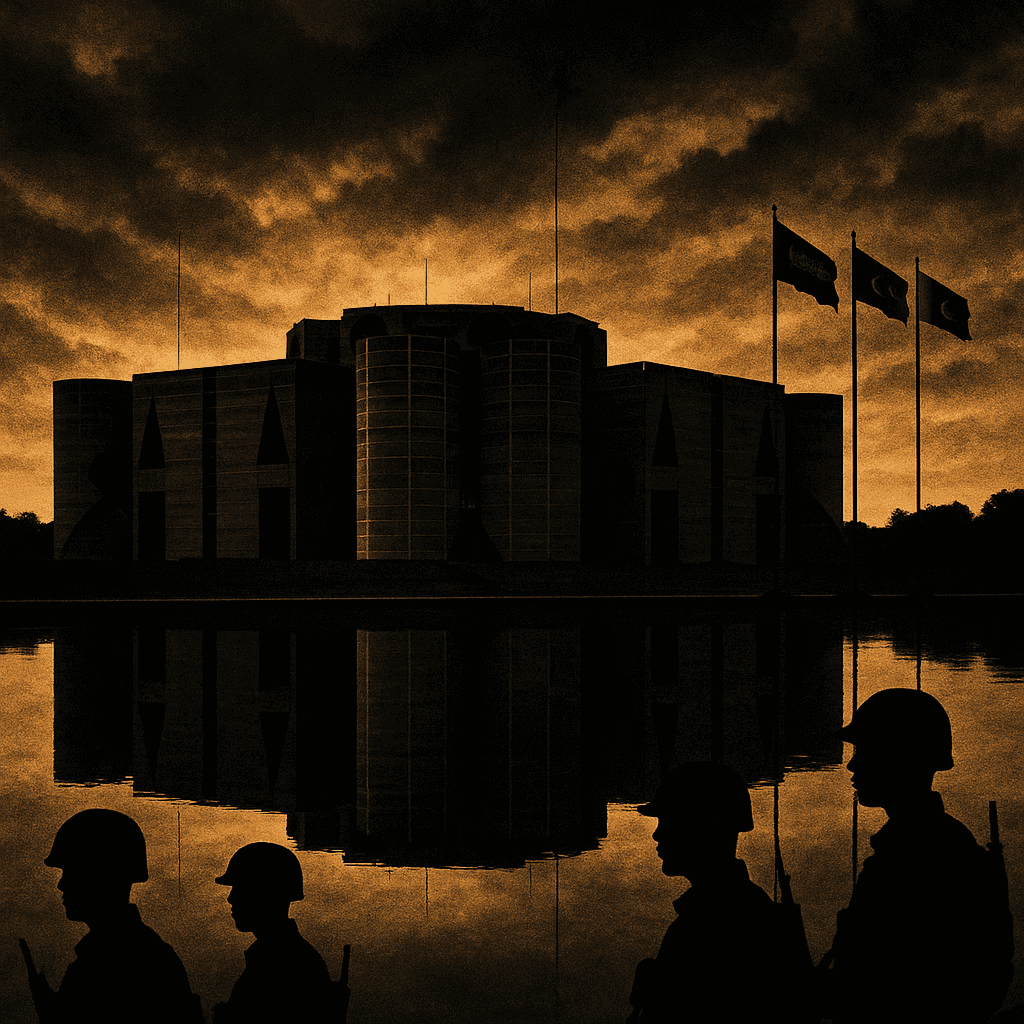
Bangladesh does not join the Mecca Joint Defence Pact as a full, treaty‑bound member before December 31, 2027. It will circle the club, pose for the photos, maybe pick up an observer pass, but it will not sign an Article‑5‑style commitment to treat an attack on Pakistan or Saudi Arabia as an attack on itself.
Dhaka is already talking like it has one foot in the door. Foreign Minister Khalilur Rahman says there is "no risk" in joining, calls the pact an internal matter of the "Muslim family," and insists nobody else should be concerned. Translation: India, please pretend not to see the giant new security architecture moving in next door.
The consensus whisper is that Bangladesh is sliding toward the pact and India can only watch. The signal points the other way. You do not share a 4,000‑kilometre border with India and then casually sign up for a mutual defence treaty that includes Pakistan.
The pact, the pitch, and the problem
The Mecca Joint Defence Agreement, signed on August 7 by Saudi Arabia, Türkiye and Pakistan, is not a charity. It has a NATO‑style clause: an attack on one is an attack on all. The Istanbul meeting on August 31 starts turning that from brochure copy into command structures.
For Riyadh, Ankara and Islamabad, early expansion is the proof of life. A Muslim‑world defence pact looks a lot more serious once it has fresh recruits beyond the founding trio. Bangladesh, with its 170 million people and Gulf‑dependent workforce, is a prime candidate.
On paper, the pitch to Dhaka is strong:
- Gulf protection for millions of Bangladeshi workers and the remittances they send home.
- Access to Saudi and Turkish investment and energy on friendlier terms.
- Military training, arms, and prestige from standing beside heavyweight Muslim powers.
The problem is the fine print: collective defence. Once Bangladesh is in, a Red Sea missile crisis or a Gulf flare‑up is no longer a distant headline. It is a treaty question. What does Dhaka do if Pakistan and India stumble into a limited clash and Islamabad wants its Mecca partners to "show solidarity" in the Arabian Sea?
Bangladesh's whole foreign policy since independence has been built on not having to answer that kind of question with a legal yes.
India is not a spectator, it is the terrain
The selling line in Dhaka is that joining the pact is an internal Muslim family matter and "no one else" should be concerned. This is performance, not analysis. India will not ask permission to be concerned. India is the surrounding geography.
Even under Prime Minister Tarique Rahman, with relations fraying, India is still Bangladesh's main overland lifeline: trade routes, transit to the Northeast, daily border security, and basic stability on a frontier that has a habit of getting ugly when neglected. You cannot ship your garment exports or keep insurgents in check on Gulf air corridors alone.
Dhaka may dislike New Delhi right now. That is emotion. Dependence is infrastructure. Ties are strained over pushed‑back migrants and the awkward reality of Sheikh Hasina living in India, demanding extradition drama in both capitals. None of that removes the map.
If Bangladesh became a full Mecca‑pact member, India would read it as a hostile alignment that formally embeds Pakistan and Gulf militaries around its landmass. New Delhi has tools: transit, power exports, tariff decisions, quiet security cooperation, and the kind of bureaucratic punishment that never appears in press releases but clogs every truck at the border.
Would India cut itself off from Bangladesh entirely? No. Would it make Dhaka pay a price visible enough to scare other neighbours off similar ideas? Very likely. The Tarique government might stomach a rhetorical scolding. It is in no position to welcome a logistics migraine.
Dhaka's favourite posture: spiritually aligned, legally unavailable
Bangladesh has a reliable instinct in great‑power games: smile, join the photo, avoid the treaty. It has danced with India, China, the US and the Gulf that way for years, picking up ports, training, loans and weapons while avoiding hard blocs.
The Mecca pact tempts the Tarique government because it solves a different problem: legitimacy optics at home. Being seen as part of an assertive Muslim security club distinguishes him from Sheikh Hasina's era and flatters parts of the Islamist and nationalist base.
That is why the rhetoric is so warm so early. "Positively consider." "No risk." "Internal matter of our Muslim family." The phrases are not written for Indian diplomats. They are written for domestic television.
The institutional Bangladesh that actually has to fight wars and manage crises is less romantic. The military has enjoyed training and kit from almost everyone. It has no obvious reason to subordinate its choices to a Saudi or Pakistan led command structure. Technocrats in finance and commerce know how fragile export access and energy lifelines are. Their instinct is to hedge, not to plant a flag.
That is the likely compromise: Dhaka edges closer, but on its own paperwork. Expect more bilateral security MOUs with Saudi Arabia and Türkiye. Expect Bangladeshi officers in joint drills that are technically not Mecca drills, just "friendly exercises hosted by a pact member." Expect invitations to ministerial meetings as a "guest country" or "partner state."
All of this lets the government claim solidarity with the Muslim family while preserving the non‑alignment fig leaf: we are cooperating, not committing.
Why the pact also plays it soft
The other half of this forecast sits in Riyadh and Ankara, not Dhaka. Saudi Arabia and Türkiye have discovered the same thing as every other ambitious security architect. It is easy to design an alliance that looks bold on paper. It is harder to explain to India why it is good for business.
Both have deep economic stakes with New Delhi, especially in energy and big‑ticket contracts. Officially encircling India with a Pakistan inclusive defence ring that adds Bangladesh by 2027 is a great way to invite a counter move: deeper Indian security ties with other Gulf capitals, more aggressive courtship of Iran, or quiet support for rival groupings that split the Muslim world's security market.
So the Mecca pact has an incentive to fuzz the edges. It can create observer tiers, "partner" programs and issue based cooperation tracks that show expansion without triggering a crisis. Offering Bangladesh a flexible affiliation is smarter than forcing a binary choice that drags India into the room.
If the pact is tested by a real conflict before 2027, this caution only grows. A messy first deployment will make Dhaka more skittish, not less. A clean, limited success might lower perceived risks, but not enough to erase India from the map or non alignment from Bangladesh's muscle memory.
What would prove this wrong
To bust this forecast, watch for three kinds of signal.
First, blunt language. If Dhaka moves from "positively consider" to "we intend to accede" on a public timeline, that is a regime betting that India will blink. Second, explicit carrots. A giant, branded Gulf package tied directly to membership, from labour guarantees to refinery deals, could outweigh technocratic caution. Third, a visible green light from the Bangladeshi military. If the generals start praising the pact by name, the institutional brakes are off.
So far, none of that is on the table. What we have is flattery toward the Gulf, annoyance toward India, and a long national habit of keeping treaties at arm's length.
The satirical close
By the end of 2027, expect Bangladesh to have attended plenty of Mecca pact family dinners, to have posted the group photos, and to have liked every announcement on social media. Just do not expect it to sign the marriage contract.
In Dhaka's foreign policy, as in many families, "no risk" still means keeping your own house, your own keys, and your own exit route if Uncle Pakistan starts a fight.
Around the Shallot
Stay in the same broken universe.
Forecasts, satire, cartoons, and quizzes should feel like one publication, not disconnected tabs.

Tech
‘Don’t Regulate Us,’ Beg AI Founders Currently Selling Regulation-As-a-Service
Silicon Valley hails Trump’s plan to let AI companies write their own rules, promises to sell those rules back to everyone else by Q4.
Oct 11

Forecast
Through December 10, Houthis Won’t Damage Pakistan or Turkey Infrastructure
The Mecca Defense Pact just put two more flags on the Saudi firing chart. The consensus panic says this widens the war within weeks. The signal says the Houthis will talk big, hit Saudi and the sea, and leave Pakistan and Turkey’s hard targets alone for this 60 day window.
Comments
Be the first to comment.

