By Mid-2027, Nasdaq Won’t See an AI Led 15 Percent Month
My call: No AI‑led month wipes more than 15% off the Nasdaq by June 30, 2027.
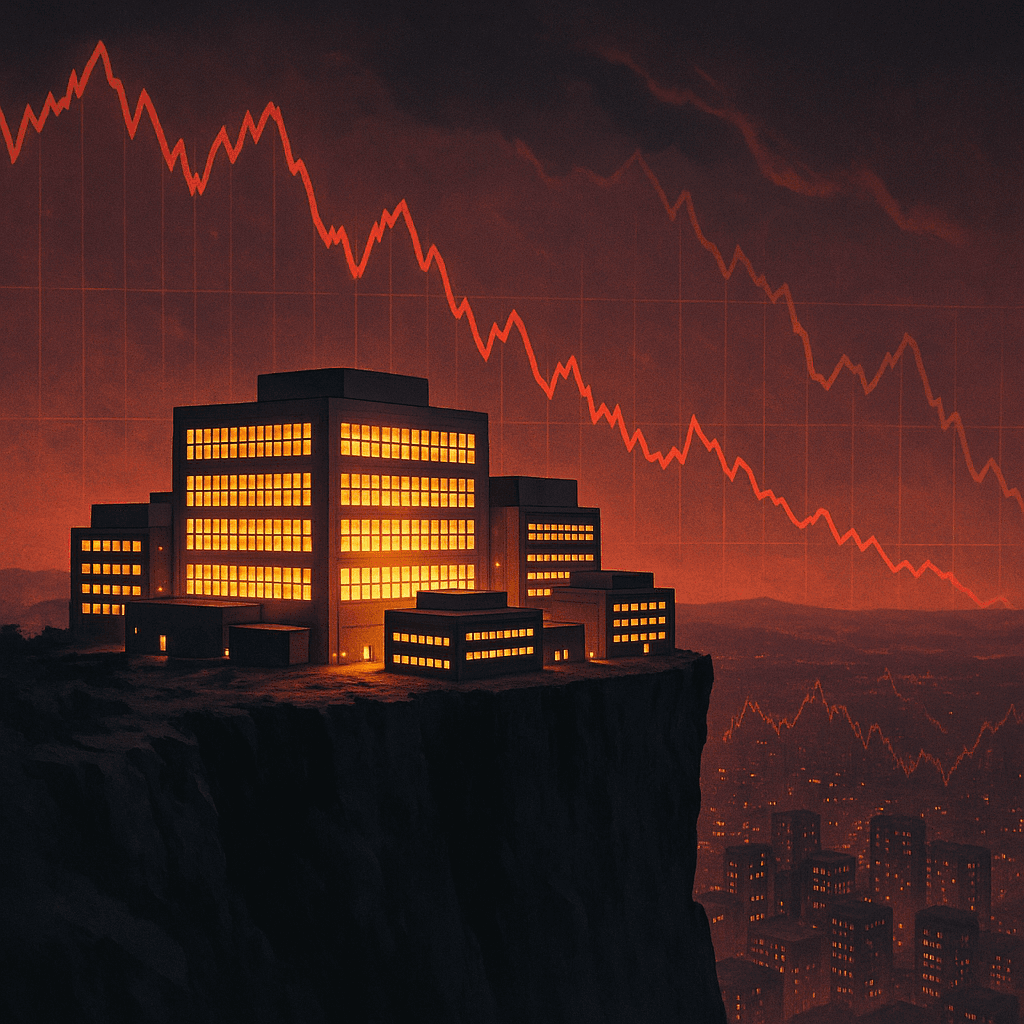
The bet: no crash scene, just a long bruise
Between now and June 30, 2027, we do not get a single calendar month where the Nasdaq drops more than 15% from its first close to its last, with the selloff clearly pinned on an AI trade gone cold.
We will get AI scares, AI downgrades, and AI think pieces mourning the end of AI. We may even get multiple 10 to 12 percent pullbacks that feel like the start of a crash. Then the month will end and the tape will stop just short of the cinematic number everyone is waiting to screenshot.
If I am wrong, you will know it. A 15 percent calendar month is the equity equivalent of a car alarm. The question is whether AI is really enough, by itself, to set it off.
What the consensus fears
The consensus bogeyman is tidy. AI is the new dot‑com. The Nasdaq is at records on the back of Nvidia, AMD, Supermicro, and a handful of cloud gods. Wells Fargo thinks the big eight cloud players will spend about 1.3 trillion dollars on AI and data centers by 2027, roughly 3.7 percent of U.S. GDP, a rhyme with the late 1990s tech orgy.
Temasek's CIO is on stage warning that a reversal of the AI trade could be the single biggest risk to markets by 2027. ASEAN plus 3 economists say an AI correction is the largest threat to their region's growth that year, bigger than an energy shock. The San Francisco Fed, usually the adult that tells stories about long run productivity, is instead worrying out loud that AI data centers are keeping energy prices and inflation sticky.
In other words, the story basically writes itself: a crowded theme, historic capex, fragile global supply chains, leverage in high yield, and a Fed that might stay tight because your chatbots need more power than your air conditioner.
If you want a crash narrative that fits in a three minute TV segment, this is it.
Why the air pocket stays under 15%
The ingredients for an AI‑branded accident are real. The question is the size and speed of the hangover, not whether the punch bowl exists.
Three reasons I am fading the full‑blown 15 percent month.
First, this boom has grown‑up buyers. A lot of AI capex is coming from hyperscalers and megacaps with real cash flow and real workloads. AMD is planning more chip supply in 2027. Google is locking in 3,590 megawatts of power with Constellation. These are not Pets.com banners over dial‑up modems. Overcapacity and disappointment can still happen, but you get a slow bleed in guidance and multiples, not all of Silicon Valley discovering gravity on a Tuesday.
Second, the referees are awake. The dot‑com Fed mostly worried about Y2K. The 2026 Fed is having seminars on whether AI is prolonging the energy shock. Mary Daly in San Francisco is already saying AI demand is keeping some prices hot and that relief is "further out." Translation for markets: you do not get a decade of free money around this boom. Restrictive policy for longer is annoying for valuations, but it also means the leverage build is more constrained. The crashiest tech months in history came with systemic credit surprises. That is a different script.
Third, the Nasdaq is less of a one‑trick pony than the vibes suggest. AI‑linked names dominate headlines and a big share of expected earnings growth. They do not entirely own the index. When the AI complex stumbles, money can rotate to boring growth or even to actual economy names. That does not save tech from 25 percent drawdowns at the stock level. It does make it harder to punch the whole index through a 15 percent monthly floor without a bigger macro panic attached.
Notice what the real doomsday analogies share: 2008 and early 2020 were not theme corrections. They were everything‑all‑at‑once breaks in funding and cash flow. An AI come‑down might be brutal for AI holders, but outside a true macro shock, it is more likely to be a long series of mid‑sized waves than a single rogue one.
How this still hurts without a crash headline
No 15 percent month does not mean no pain. It just means the market spreads the damage out in time, which is more efficient and much less satisfying for people who built careers predicting a bubble.
Here is the most plausible base case.
Earnings expectations for AI leaders stay heroic into 2026, then collide with reality. Utilization is good but not infinite. Pricing gets competitive. The easy margins in GPUs, networking, and cloud AI rentals narrow. A few marquee names finally miss a quarter or guide soft on workloads. Another trims capex plans for 2028. Analysts praise "discipline" while quietly taking out their red pens.
Each time that happens, the tape lurches. A giant AI name is down 20 to 30 percent in a week. The Nasdaq closes the month down, say, 9 percent. Retail discovers what a margin call feels like. High yield spreads on AI‑flavored credits gap wider, then stabilize. The Fed nods to "market volatility" in the minutes. Then the next month is flat to slightly green and the headline machine moves on.
Repeat this two or three times. By mid‑2027, AI multiples are lower, earnings expectations saner, and Asia's exporters have quietly revised guidance downward. The cumulative drawdown from the top is ugly. The worst single month on the Nasdaq scoreboard, however, is still sitting at 12 or 13 percent, not 18.
Index investors never get the cathartic day when everything breaks at once. They just wake up one morning in 2027 and realize their “easy AI index trade” is two years older and has not gone anywhere exciting except in PowerPoint.
What would prove this wrong
If I am going to tell you the air pocket stays contained, I owe you the list of things that would make me eat this forecast.
- A blow‑off top in AI names: parabolic price moves, meme‑stock style call option frenzies, and valuation multiples that make late‑1990s Cisco look cheap.
- Evidence of real overcapacity: underused data centers, fire‑sale GPU pricing, or cloud disclosures that AI workloads are materially lagging prior promises.
- Theme‑specific credit stress: AI‑linked high yield deals failing, spreads gapping wider for AI projects while other sectors trade fine.
- A sudden, hostile policy shift aimed squarely at AI: hard caps on data‑center energy use, aggressive export bans on key chips, or an AI accident that sends regulators into overdrive.
If those show up together, the market can easily tell itself: "This is an AI bust." In that world, a greater than 15 percent Nasdaq month is back on the table and my confidence should drop faster than a GPU on eBay.
The satirical verdict
The institutional mood is primed for an AI‑branded crisis because everyone remembers missing the last few. If you did not see dot‑com, housing, or the pandemic coming, you really want the universe to hand you a neat fourth act titled "AI Crash, June 2027" so you can say you nailed one.
My forecast says the universe is not that generous. The AI boom will probably deflate the boring way: through guidance slides, spread widening, and a series of underwhelming months that ruin more conference keynotes than portfolios.
By mid‑2027, the Nasdaq will have avoided a single, clean, AI‑led 15 percent crash month. The market will still be hungover. The AI true believers will still swear the next leg up is imminent. And the only people more annoyed than the bears will be the documentary filmmakers who have to find a new third act.
Around the Shallot
Stay in the same broken universe.
Forecasts, satire, cartoons, and quizzes should feel like one publication, not disconnected tabs.
Tech
‘Don’t Regulate Us,’ Beg AI Founders Currently Selling Regulation-As-a-Service
Silicon Valley hails Trump’s plan to let AI companies write their own rules, promises to sell those rules back to everyone else by Q4.
Oct 11

Forecast
Through December 10, Houthis Won’t Damage Pakistan or Turkey Infrastructure
The Mecca Defense Pact just put two more flags on the Saudi firing chart. The consensus panic says this widens the war within weeks. The signal says the Houthis will talk big, hit Saudi and the sea, and leave Pakistan and Turkey’s hard targets alone for this 60 day window.
Comments
Be the first to comment.