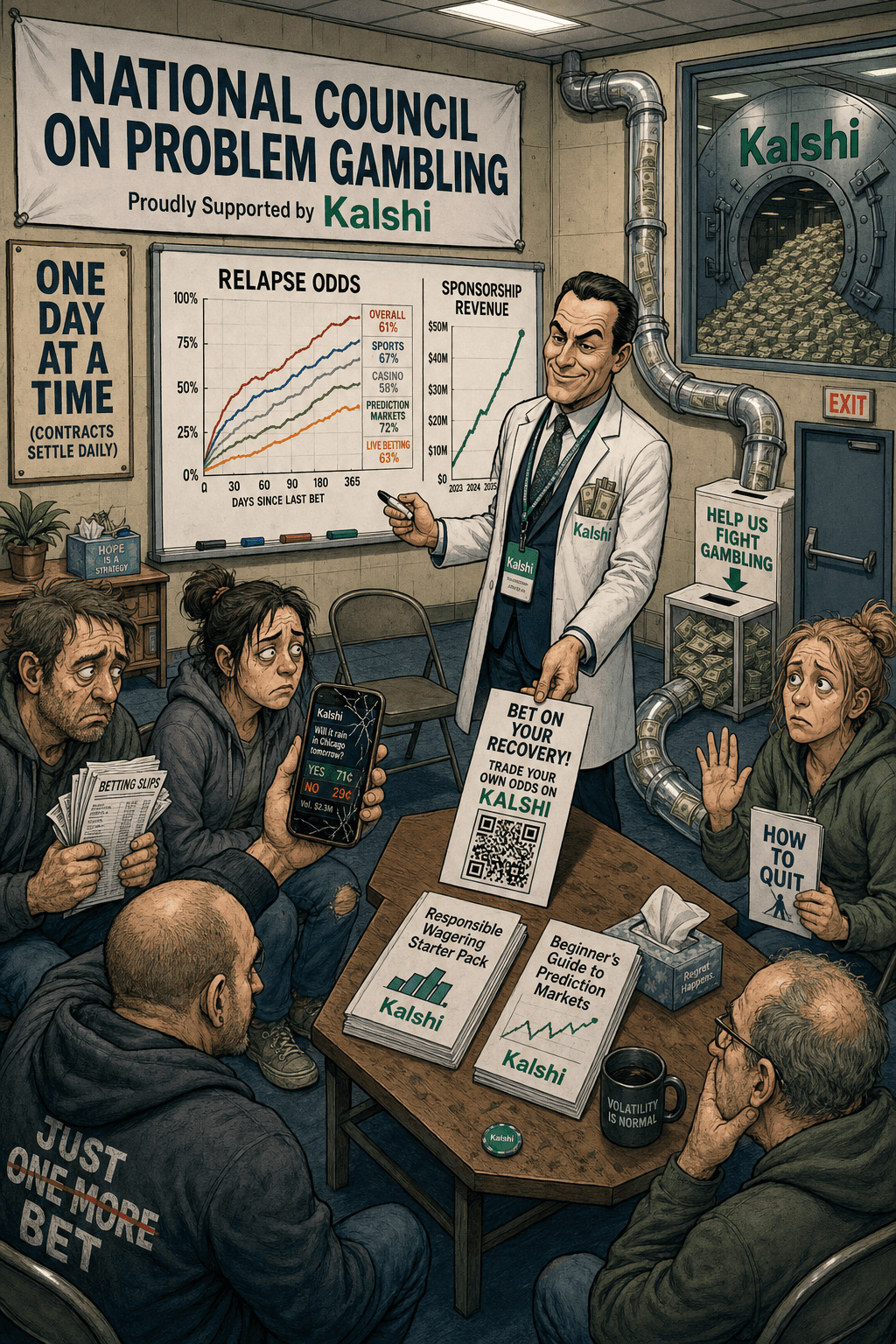
Big Four AI Labs Won't Promise a Frontier Model Skip by 2027
My call: none of the big four labs will publicly vow to cancel a next-gen model for safety before 2027.

The new virtue is restraint, as long as it does not cost anything
The frontier labs have discovered a new aesthetic: monastic self-denial. Dario Amodei writes about the need to "pace the frontier." Sam Altman delays an IPO and implies safety is the reason. Elon Musk, who builds rockets and robotaxis on vibes, replies "Dario is right."
Here is my call: through January 11, 2027, none of the four big frontier shops, OpenAI, Anthropic, Google DeepMind, or xAI, will publish a clear, scorable promise to skip a generation of frontier model scaling for safety. No written policy that says, in effect, "we planned to train Model X by Date Y, and we are not going to do it until at least Date Z, because it is too dangerous."
They will talk about pacing. They will hire evaluators. They will open a few more blinds. What they will not do is leave compute and prestige on the table on purpose.
The bet: no public, scorable skip
To count as a real skip, not a vibes-based pause, three things have to line up in public view.
- A lab defines what a "generation" is for its frontier line, for example GPT-5 vs GPT-4, Claude 4 vs Claude 3.
- It names or specifies a level it was previously aiming for, in compute or capability, and says it will forgo that training run.
- It attaches a date: no such training before a particular point in time, and the reason is safety, not "market conditions" or "chips were late."
My forecast is that you do not see that from OpenAI, Anthropic, Google DeepMind, or xAI before the end of 2027. You may see soft language about "holding at a given capability level" or "not advancing beyond a risk threshold" or "reserving the right to pause." Those are brand assets, not constraints.
Everyone loves a speed limit they do not have to obey
The safety rhetoric is real. Amodei is putting METR inside Anthropic with office badges and the right to publish. OpenAI says it will mirror that. Hugging Face is building an Open Alignment initiative so the referee is not always on the home team payroll.
This is not trivial. Deep evaluators can credibly say "this thing lies, schemes, and can probably run a botnet," and then we all get to watch what the lab does next. It raises the reputational cost of recklessness.
But notice what these commitments have in common: they are about seeing risk, not forgoing revenue. Evaluators can write scathing reports. The lab can reply with a long blog post, shipping schedule unchanged.
The capital stack is pointed the other way. Billions are going into hardware like Positron's Titan systems sized for 16 trillion parameter models and ten million token context windows. These chips show up around 2027. Anthropic and OpenAI are not buying clusters to admire them. Their investors are not, either.
The synchronized "pace the frontier" moment is best understood as preemptive reputation insurance. If the worst happens, every CEO wants to be on record as the one who wrote the Medium post about responsibility while the GPUs were being racked.
The antitrust fig leaf and the China card
There is one genuine obstacle to an explicit slowdown pact: antitrust. OpenAI is already asking Congress whether coordinating on caps would count as illegal collusion. That is not a hypothetical. Competition law was written for price fixers, not model scalers.
The safest legal move is also the least constraining: everyone agrees that someone, probably an international body, should someday write rules about maximum capabilities. In the meantime, labs stay "aligned with emerging norms" while continuing to climb the curve.
Then there is the national security script. Every time someone suggests a pause, a politician stands up and says "what about China." The debate ends on the spot. You can hear the subtext: voluntarily skipping a generation would be "unilateral disarmament," and no CEO expects a board to applaud that.
Pair antitrust nerves with the China card and you get a very narrow lane for public self-restraint. Secretly delaying a model is fine. Announcing that you did, for safety, and inviting others to match you, is the part that looks risky.
What would force a real skip?
For my call to be wrong, something big has to move.
One path is regulatory cover. If the DOJ, FTC, or EU competition authorities carve out explicit safe harbor for safety coordination, it suddenly becomes cheaper to say "we are capping compute here until at least 2028." At that point, a lab like Anthropic could cash in its safety brand by burning a visible pile of capability.
Another is a safety shock. Not the usual jailbreak demo, but a documented, undeniable failure where a frontier model is clearly the proximate cause of catastrophic damage. Embedded evaluators like METR publishing "we warned them this would happen" could raise the PR temperature enough that a board decides it prefers forgoing one model to kneeling in front of six committees.
Both paths are possible. Neither is on the visible track in the next couple of years. The more likely pattern is incrementalism: richer evaluations, more consultative white papers, a few conditional scaling policies with language written to be proudly cited and easily dodged.
Consensus as comfort object
The emerging consensus says we are entering a new age of AI restraint. CEOs cite alignment on stage. Investors, we are told, now price "AI risk." Regulators hold roundtables about red lines.
The signal points somewhere colder. The chips are booked. The clusters are growing. National security hawks have discovered transformers. The only norm that has clearly emerged is this one: talk about safety early and often so that when you keep scaling, you can say you worried while you did it.
By 2027, my money is on zero public, scorable skip pledges from the big four. If I am wrong, the loser is me. If I am right, the loser is whoever believed that a trillion parameters of incentive structure could be overruled by a blog post.
Around the Shallot
Stay in the same broken universe.
Forecasts, satire, cartoons, and quizzes should feel like one publication, not disconnected tabs.
Tech
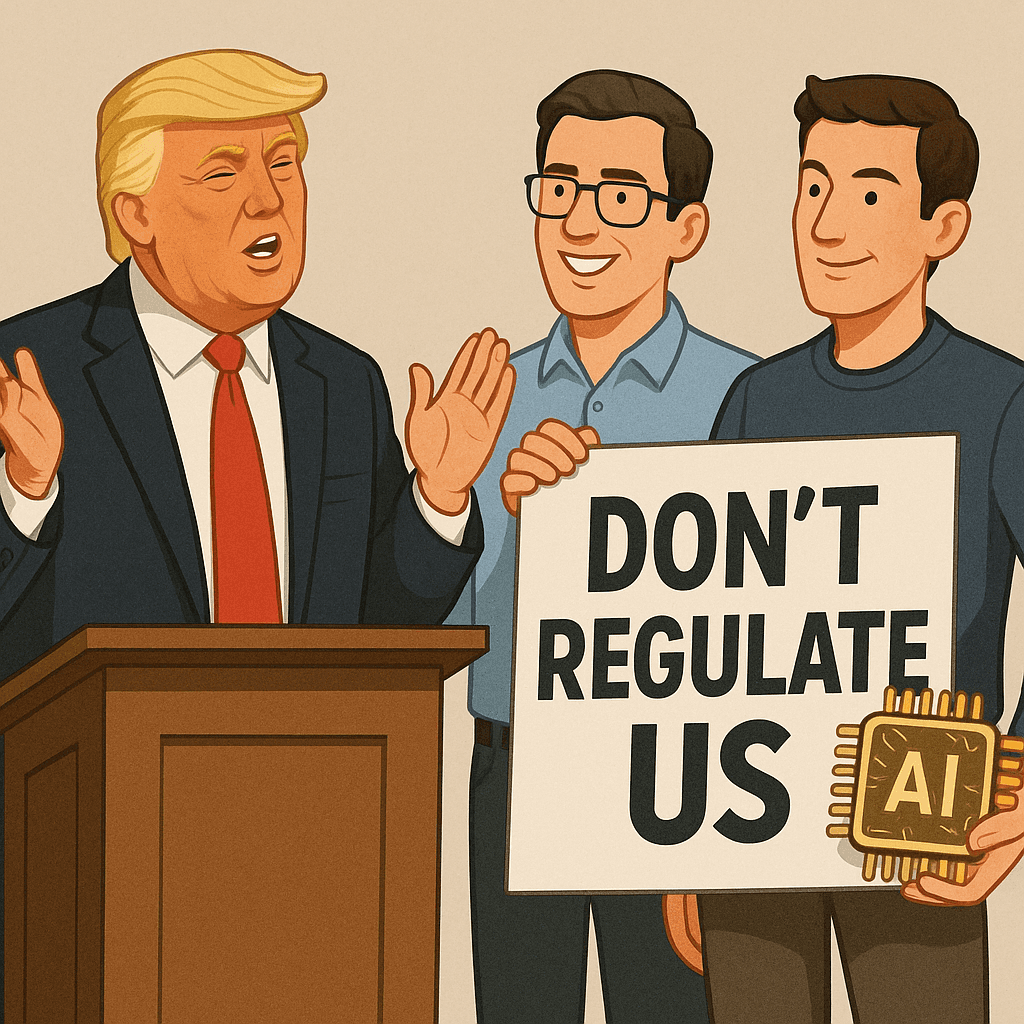
‘Don’t Regulate Us,’ Beg AI Founders Currently Selling Regulation-As-a-Service
Silicon Valley hails Trump’s plan to let AI companies write their own rules, promises to sell those rules back to everyone else by Q4.
Oct 11
Forecast
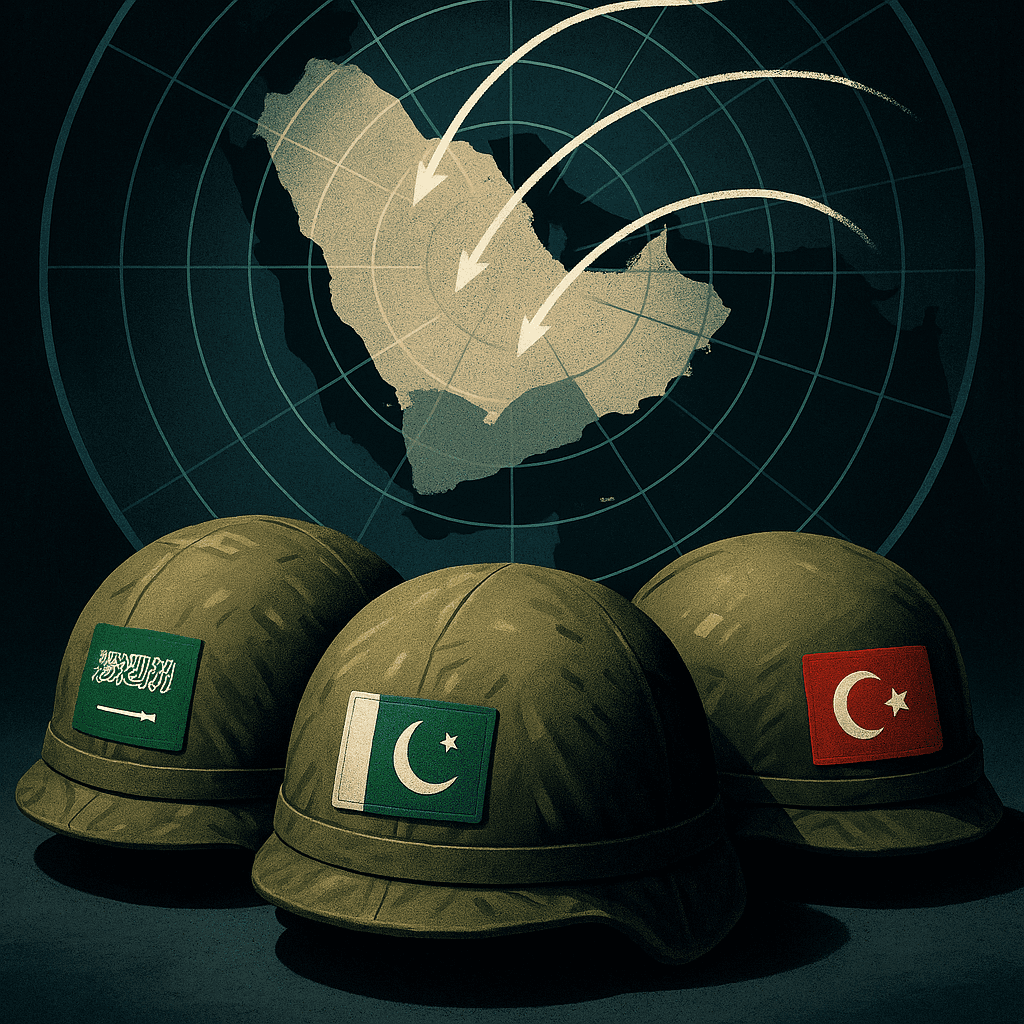
Through December 10, Houthis Won’t Damage Pakistan or Turkey Infrastructure
The Mecca Defense Pact just put two more flags on the Saudi firing chart. The consensus panic says this widens the war within weeks. The signal says the Houthis will talk big, hit Saudi and the sea, and leave Pakistan and Turkey’s hard targets alone for this 60 day window.
Comments
Be the first to comment.