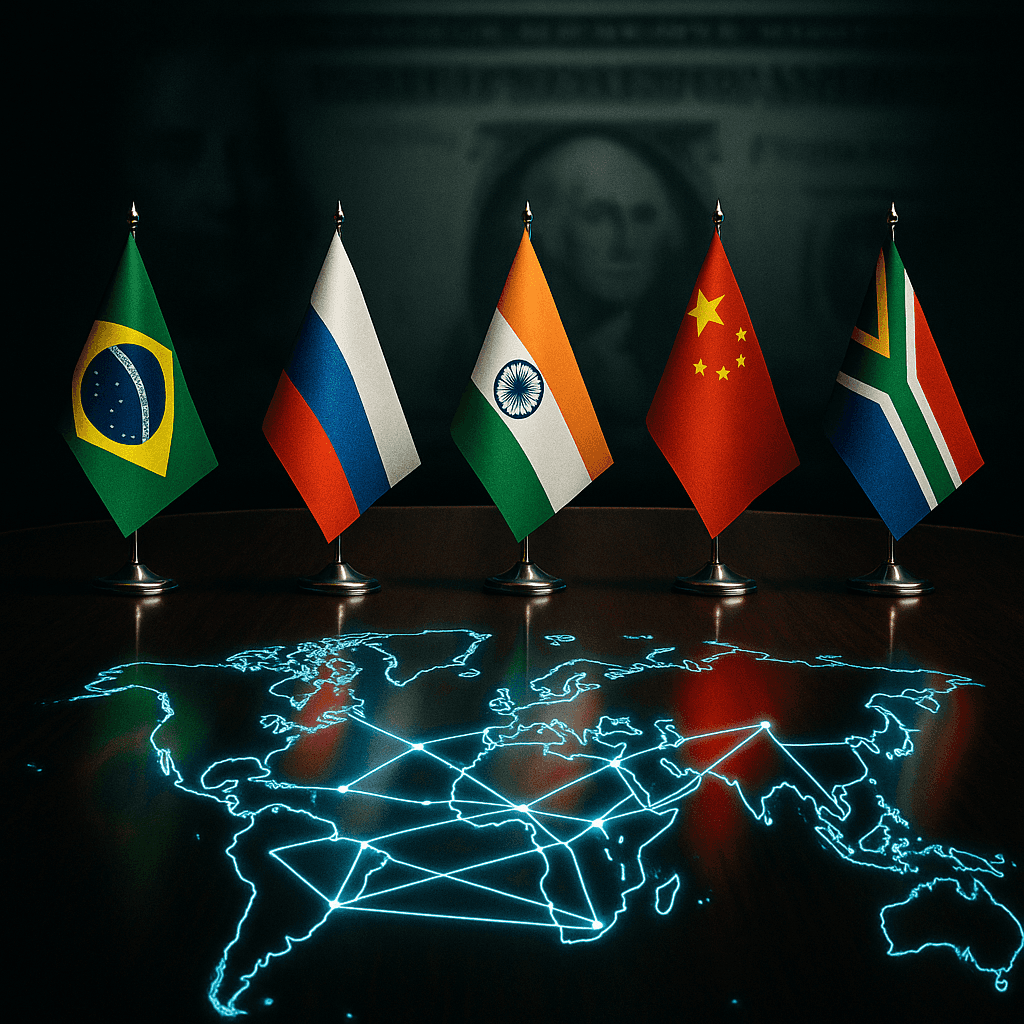
BRICS Leaders Will Approve A Dated CBDC Or Payment Pilot
Within 90 days of the New Delhi summit, BRICS leaders sign off on at least one dated CBDC or fast‑payment interoperability step. No shared currency, just shared plumbing.
The bet: no BRICS euro, just BRICS pipes
The headline act going into New Delhi is fake. There will be no BRICS euro, no shiny new reserve currency unseating the dollar, no historic leap into a shared central bank. The interesting thing is what happens instead, down in the fluorescent basements where civil servants argue about message formats and which country has to buy the ugly backup data center.
My call: within 90 days of the New Delhi 2026 summit, BRICS leaders will put their names on at least one concrete, time‑stamped step to link their payment systems or central bank digital currencies. Think a pilot corridor, a test rail, or a technical task force with a deadline, not another vague sentence about “enhancing use of national currencies.”
It will be framed as cost‑cutting and efficiency, not as a declaration of war on the greenback. The story in Delhi is not regime change for the dollar. It is plumbing upgrades for everyone else, installed by committees with acronyms long enough to qualify as minor infrastructure projects on their own.
From ‘BRICS currency’ to ‘please read the footnotes’
The common currency idea is catnip for TV panels and Telegram channels. It is also dead. The members have incompatible macro regimes, capital controls, and a toxic mix of mutual suspicion and border disputes. You do not build a monetary union on that. You barely build an airport lounge.
The adults in the room quietly pivoted a while ago. The 2025 Rio declaration talked about “interoperability between BRICS payment systems.” India spent the year after turning that sentence into homework. The Reserve Bank of India has pushed a formal proposal onto this summit’s agenda: link BRICS central bank digital currencies and real‑time payment systems for cross‑border transfers.
That is the tell. When central bankers start arguing about standards and corridors instead of slogans, you are out of vibes territory and into implementation. The question in Delhi is not whether. It is how specific they are prepared to be in public, and how many verbs they can use before someone from a foreign ministry demands everything be replaced with the word “encourage.”
Why the pipes get built
The drivers line up too neatly for this to stay at the level of poetry.
First, sanctions. Russia and Iran are living stress tests of what dollar dependence can do to a middle‑income economy. Tehran’s finance team went into the pre‑summit meeting with a shopping list: local‑currency use, alternative payment systems, domestic financial messengers, and explicit CBDC cooperation. The final statement from BRICS economy ministers and central bank governors was approved “by consensus.” No one stood up to say, actually, we like SWIFT just fine.
Second, India’s agenda. Delhi wants insulation from U.S. financial pressure without losing its Wall Street access or its Quad invitations. Payment interoperability is the sweet spot: it reduces friction inside the bloc, looks boringly technical to Washington, and avoids mugging the dollar in the headlines. You can call it “hedging” and still ring the Opening Bell next month.
Third, the New Development Bank has raised the stakes. Its new strategy targets 40 to 50 percent of financing in local currencies, up from about 30 percent. That is not a press‑release flourish. To move that much volume, you need actual rails that can clear and settle in something other than dollars without generating a mess of stranded balances.
Finally, the technology exists. India’s UPI already moves billions of transactions domestically. Brazil’s Pix is a real‑time payments workhorse. Central banks across the bloc are running CBDC pilots. Interlinking two or three systems for a controlled cross‑border experiment is no longer science fiction. It is a calendar decision.
What ‘concrete’ looks like in central‑bank speak
For this forecast to land, the summit has to cough up more than adjectives. The communiqué needs at least one verifiable, time‑bound step on payments or CBDCs. That probably looks like one of three things.
- A named CBDC interoperability pilot between at least two BRICS members, with a target launch date.
- A BRICS technical task force mandated to deliver a CBDC or fast‑payment interoperability roadmap by the next summit or a specific quarter.
- A defined “payment corridor” linking national fast‑payment systems, again with a deadline attached.
This is the path of least resistance. It gives Russia, Iran and friends something to point to when they talk about “resilience” to Western pressure. It lets India claim a tangible win as host, without announcing a dollar funeral. It is cautious enough for Brazil and South Africa to support without inviting a sanctions side‑eye.
Notice what is missing. No shared BRICS currency. No explicit dollar replacement. The political cost of saying “we will run an experiment between UPI and Pix by mid‑2027” is tiny. The cost of announcing “we are building a sanctions‑proof, anti‑dollar bloc” is not.
Where this could still stall
The risk to this call is not that BRICS discovers a sudden love of the dollar. It is that the members cannot agree on whose pipes and whose rules.
India and China distrust each other’s tech stacks. Security agencies flinch at opening domestic payment infrastructure to potential surveillance or disruption from a rival. Brazil and South Africa have lawyers who remind them, gently, that Washington reads communiqués too.
The obvious compromise is to hide the sharpest edges. You take the confrontational branding out, you talk about lowering transaction costs, and you kick the detailed governance fights down to central bankers and standards bodies. The thing to watch is language. If the final text sticks to verbs like “explore” and “encourage” without a single date, then someone panicked in the drafting room and this forecast dies.
There is also a very BRICS problem no one likes to linger on: trade imbalances. Local‑currency settlement sounds great until one partner ends up sitting on a pile of money it cannot spend. India learned this the hard way with rupee‑ruble trade. Any serious corridor plan has to be matched with swap lines or some mechanism to recycle excess balances. That makes the plumbing project harder and the communiqué fights uglier.
The quiet way empires get trimmed
If this forecast is right, New Delhi 2026 will look underwhelming to anyone expecting a dramatic de‑dollarisation moment. No new symbol for currency traders to meme, no big line in the sand.
The impact is slower and duller. You build a handful of working payment corridors. You raise the share of NDB loans that never touch New York. You give sanctioned and sanction‑nervous governments just enough optionality that every future Treasury sanctions package bites a little less.
The dollar will not get toppled in Delhi. It will just discover, a few years from now, that while it was busy starring in everyone’s speeches, the exits quietly got their own QR codes.
Around the Shallot
Stay in the same broken universe.
Forecasts, satire, cartoons, and quizzes should feel like one publication, not disconnected tabs.

Tech
‘Don’t Regulate Us,’ Beg AI Founders Currently Selling Regulation-As-a-Service
Silicon Valley hails Trump’s plan to let AI companies write their own rules, promises to sell those rules back to everyone else by Q4.
Oct 11
Forecast
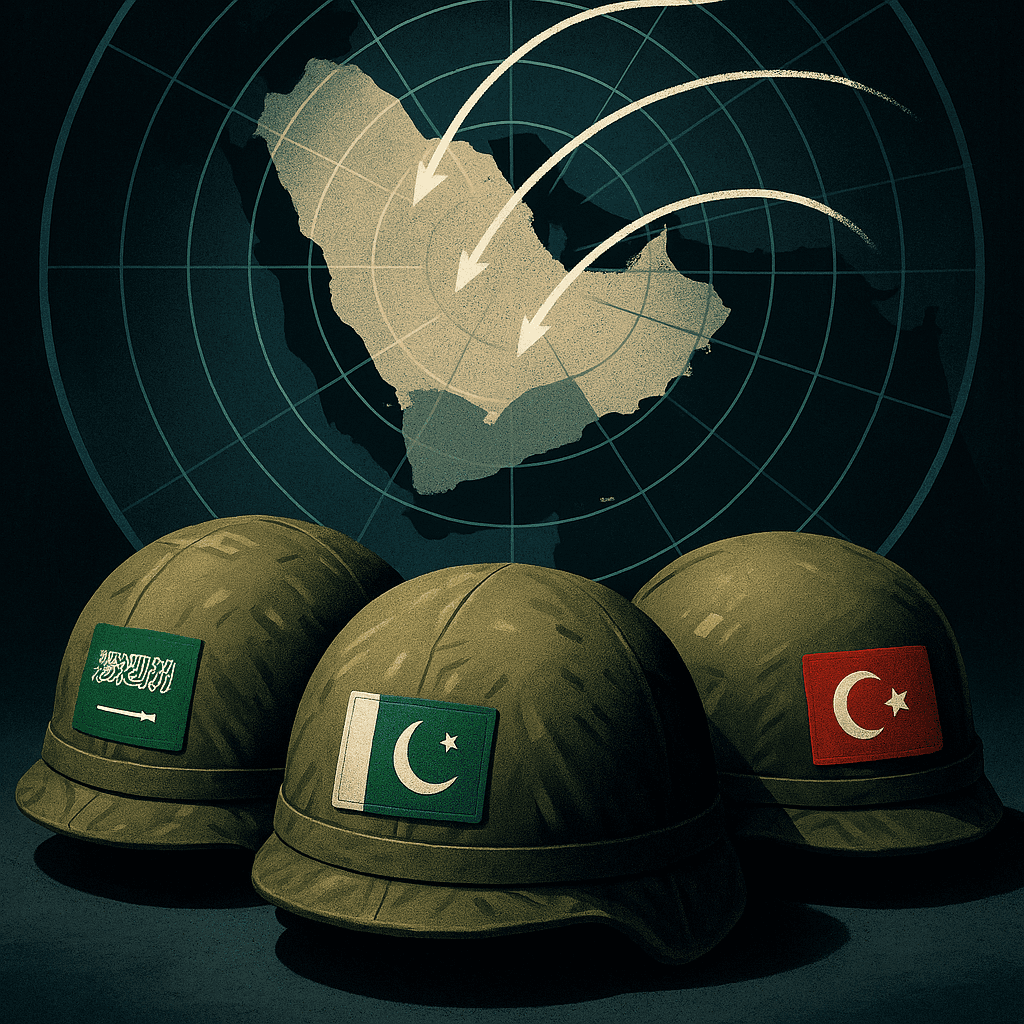
Through December 10, Houthis Won’t Damage Pakistan or Turkey Infrastructure
The Mecca Defense Pact just put two more flags on the Saudi firing chart. The consensus panic says this widens the war within weeks. The signal says the Houthis will talk big, hit Saudi and the sea, and leave Pakistan and Turkey’s hard targets alone for this 60 day window.
Comments
Be the first to comment.