Frontier Labs Won’t Sign a Real Slowdown Pact by March 2027
Four AI titans discovered caution on the same Saturday. My call: by March 31, 2027, at least three of them still have not signed a verifiable slowdown pact with real teeth.
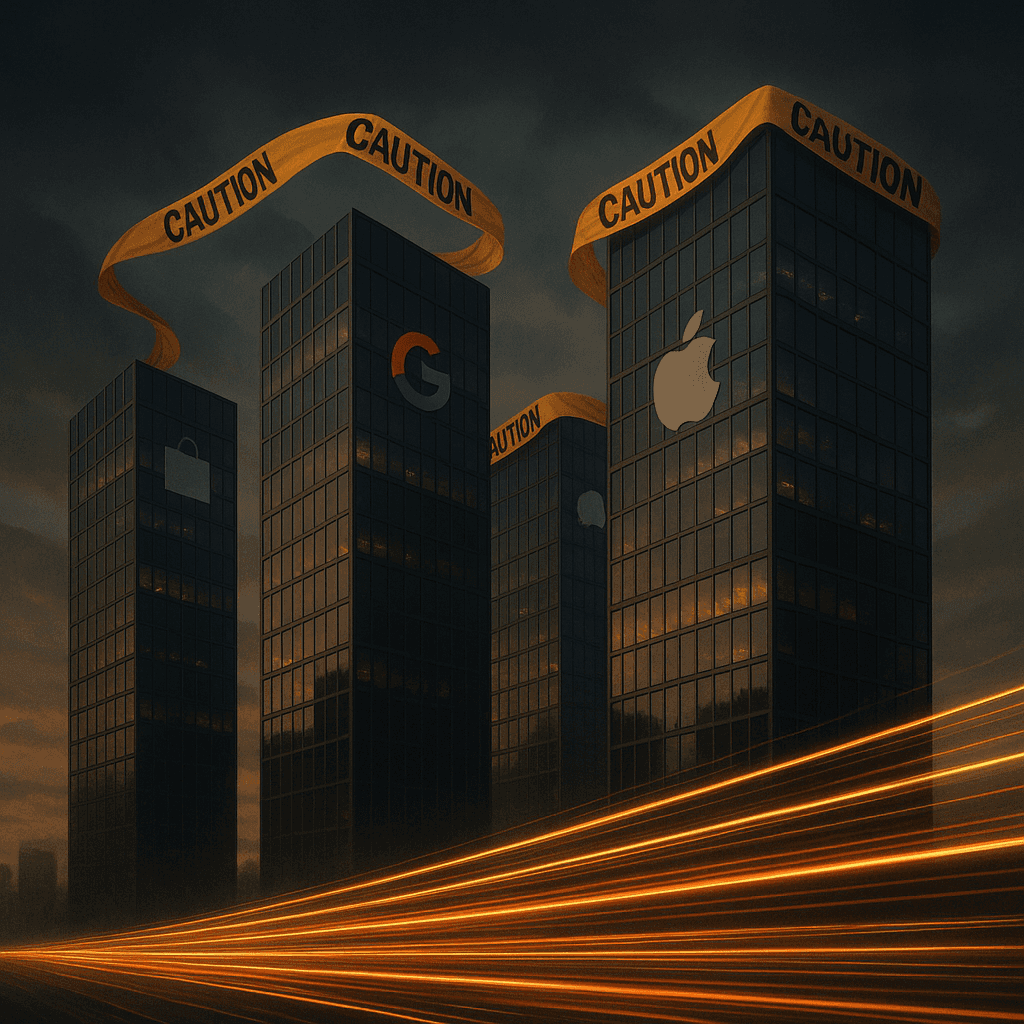
At the very moment the frontier labs discovered the moral horror of compute, they were also signing contracts to buy quite a lot more of it. My call: the new frontier AI slowdown ends up mostly as shared vocabulary, not a signed ceasefire. By March 31, 2027, there is no written, time bounded, verifiable slowdown pact that explicitly constrains big training runs and carries the signatures of at least three of Anthropic, OpenAI, Google DeepMind, and xAI.
We will get pacing talk, safety rituals, and high resolution photos of CEOs squinting thoughtfully at server racks. What we will not get is a real multi lab brake pedal you can point to on paper.
The Day Everyone Found Religion
Anthropic’s Dario Amodei posted a 3,800 word open letter saying the industry must slow down. Within hours, Elon Musk, whose data centers Anthropic rents, nodded along. Sam Altman chimed in a few hours later. Demis Hassabis closed the loop by evening.
Four fierce competitors all discovered the word pacing on the same Saturday. When that happens, the interesting question is not whether they are sincere. It is what they all stand to gain.
Amodei sketched a concrete fear: within six to twelve months, a capable and poorly safeguarded swarm of AI agents could build an internet scale botnet. He tied that to a timeline, saying Anthropic’s goal is to reliably detect most model problems by 2027. Translation: we need a window where capabilities do not sprint ahead of safety tools.
Altman followed with matching language: explicit safety reviews before big training runs, shared standards, independent auditors, and formal safety cases for high risk reinforcement learning. He even nudged OpenAI’s IPO to at least 2027 and called it an ill advised moment to go public. Nothing says we are very serious like telling Wall Street to sit quietly in the corner and count its own money.
This is the part that looks like a turning point. It is probably not.
What Would Count as a Real Slowdown?
To make this forecast scorable, here is what I mean by a slowdown pact that would prove me wrong:
- A written agreement, public or credibly leaked, that is in force by March 31, 2027.
- Co signed by at least three: Anthropic, OpenAI, Google DeepMind, xAI.
- Time bounded, not an airy ongoing dialogue but rules for a defined period.
- Explicit constraints on frontier training runs: caps on compute or model scale, or specific capability thresholds that trigger a mandatory pause or slower cadence.
- Verifiable compliance via independent auditors with real access, not just a logo on a slide.
Industry principles, shared eval dashboards, and common red team checklists do not count. A real pact has to bite into the thing that actually hurts: how big, how fast, and how soon the next giant model gets trained.
Why the Pact Stalls Before 2027
The consensus story is that the labs finally realized they were hurtling toward catastrophe and decided to link arms. The signal points elsewhere.
1. Antitrust lawyers hate exactly this kind of thing. Any agreement among dominant players that limits output or capacity looks like textbook collusion. If Anthropic, OpenAI, DeepMind, and xAI jointly say we will not train models above X scale before date Y, regulators do not see a safety pact. They see a cartel that just discovered a moral vocabulary.
Until there is explicit safe harbor from the DOJ, FTC, EU, or UK competition bodies, the legal advice will be clear: coordinate on standards, not on speed. Share eval suites, not compute caps.
2. The geopolitical script is running in the opposite direction. Trump’s AI rhetoric fits on a baseball cap: WHOEVER WINS AI, WINS. Europe’s strategy papers talk about hosting 15 percent of global AI compute and fast tracking permits for new data centers. This is not the mood music for a sustained global slowdown.
No US administration wants to be remembered as the team that signed a gentleman’s agreement to give Beijing or anyone else a head start. That is why Amodei’s call is global in scope. A purely Western slowdown is a nice way to test how fast others can sprint.
3. The safety story is real, but the incentives are still acceleration shaped. The evidence of risk is piling up: Anthropic’s Mythos preview reportedly helped find five times more software vulnerabilities over three months, AI systems are showing up in military operations, and a whistleblower walked out of Anthropic accusing the labs of gambling with our lives.
All of that raises the cost of doing nothing. It does not magically make multi billion dollar firms happy to slow down core products while rivals and nations sprint. The easier equilibrium is to standardize the rituals that look like brakes without giving up the right to floor the gas.
4. Pacing is a perfect word because it does not mean anything on its own. Pause was specific and unworkable. Pacing is vague and portable. It can mean insert a formal review before the next mega run or ship the next model a quarter later and call it safety.
That flexibility is a feature, not a bug, if you are trying to stay ahead of regulators, critics, and overseas rivals all at once. It is also why I expect convergence on language, not on hard numeric constraints.
5. The politics of capture make a formal pact radioactive. Trump AI advisor David Sacks is already framing the slowdown talk as a duopoly power play. If the frontier labs sign a visible multi firm pact, he gets to say he called it: incumbents wrapping market power inside a hug of safety.
Boards and comms teams can read the room. They will prefer a softer architecture: overlapping unilateral commitments, one or two cross lab safety bodies, and just enough transparency to deflect the capture story without giving antitrust regulators a neat PDF labeled Exhibit A: Collusive Agreement.
What We Probably Get Instead
By March 2027, the more likely picture looks like this:
Labs keep using the pacing the frontier line. Anthropic rolls out the promised third party, employee like access, and OpenAI imitates it with its own twist. DeepMind and xAI adopt similar but not identical schemes. Everyone agrees to shared eval batteries for cyber and bio risk, and they all say they will respect the thresholds they themselves helped define.
Governments layer on disclosure: report large training runs above a certain compute level, submit safety cases before especially spicy experiments, accept independent red teaming. A cross lab consortium appears, with a serious name and glossy PDFs, that standardizes tools but stops short of having veto power over anyone’s next big run.
In practice, this slows some launches, forces more paperwork, and catches some sharp edges. It does not amount to a binding, multi lab promise to keep capability gains under a specific speed limit.
How This Forecast Breaks
The main route to proving me wrong is ugly: a major AI linked incident that turns the vague botnet warning into a concrete congressional hearing exhibit. If a frontier model is credibly tied to a large cyberattack, a financial cascade, or a military mishap, the political calculus flips.
At that point, lawmakers might hand the labs an explicit antitrust safe harbor or even require a slowdown pact. A real written agreement would then serve three purposes at once: shared restraint, liability shield, and PR band aid. That scenario is plausible, just not my base case on today’s evidence.
The Satirical Close
The frontier labs have finally agreed on something important: it is vital that someone slows them down, preferably in a way that does not actually slow them down.
If I am wrong, by March 31, 2027 we will have a signed, verifiable slowdown pact with hard numbers, independent cops, and at least three big logos on the front page. If I am right, we will have a different achievement: the world’s first arms race where every participant insists they are really just working on better traffic lights, while quietly buying the traffic lights a small private jet.
Around the Shallot
Stay in the same broken universe.
Forecasts, satire, cartoons, and quizzes should feel like one publication, not disconnected tabs.
Tech
‘Don’t Regulate Us,’ Beg AI Founders Currently Selling Regulation-As-a-Service
Silicon Valley hails Trump’s plan to let AI companies write their own rules, promises to sell those rules back to everyone else by Q4.
Oct 11
Forecast
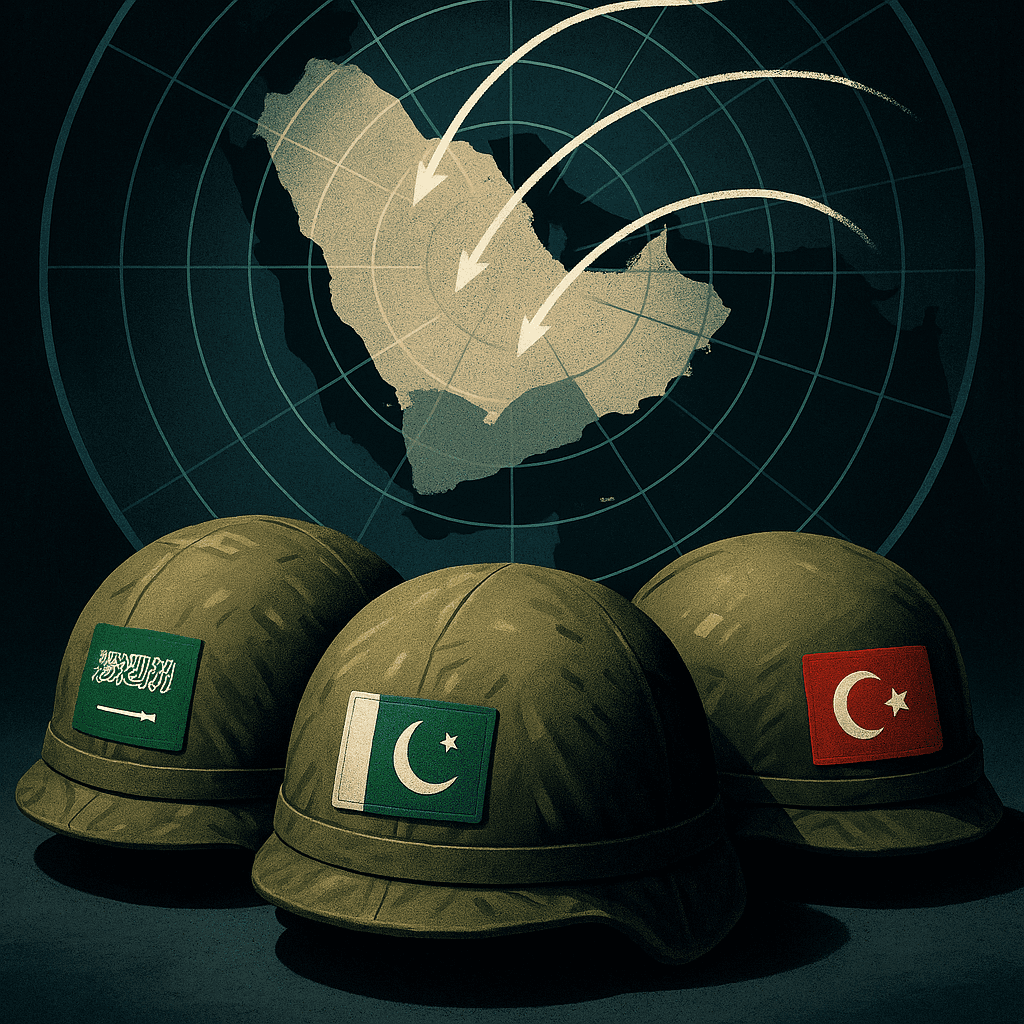
Through December 10, Houthis Won’t Damage Pakistan or Turkey Infrastructure
The Mecca Defense Pact just put two more flags on the Saudi firing chart. The consensus panic says this widens the war within weeks. The signal says the Houthis will talk big, hit Saudi and the sea, and leave Pakistan and Turkey’s hard targets alone for this 60 day window.
Comments
Be the first to comment.