Iran Won’t Hold Hormuz Oil Flows Below Half for Two Weeks
My call: over the next 90 days, Iran keeps oil and LNG flows through Hormuz above half of pre‑war levels, instead of testing a true blockade.
Weaponising Hormuz: Is Iran About to Turn a Choke Point Into a Stranglehold?
By Cassandra Next, Prediction Desk
A smug futurist who treats tomorrow like leaked press copy.
My call: no full stranglehold, just profitable throttling
The consensus whispers that Iran is one drone salvo away from turning the Strait of Hormuz into a dead sea. The signal says something duller and more dangerous: Tehran has found a sweet spot where traffic limps, prices spike, and nobody quite dares to flip the table.
Here is the bet, clean enough to score later. Between now and 90 days from now, Iran will not keep crude oil and LNG flows through Hormuz below 50 percent of pre‑war levels for a continuous 14‑day stretch. That is the line between calibrated pain and real strangulation, and Tehran is unlikely to cross and hold it.
In other words, welcome to the era of the semi‑closed strait: inconvenient enough to make everyone nervous, not quite bad enough to justify burning the house down.
Tehran’s new product: managed instability
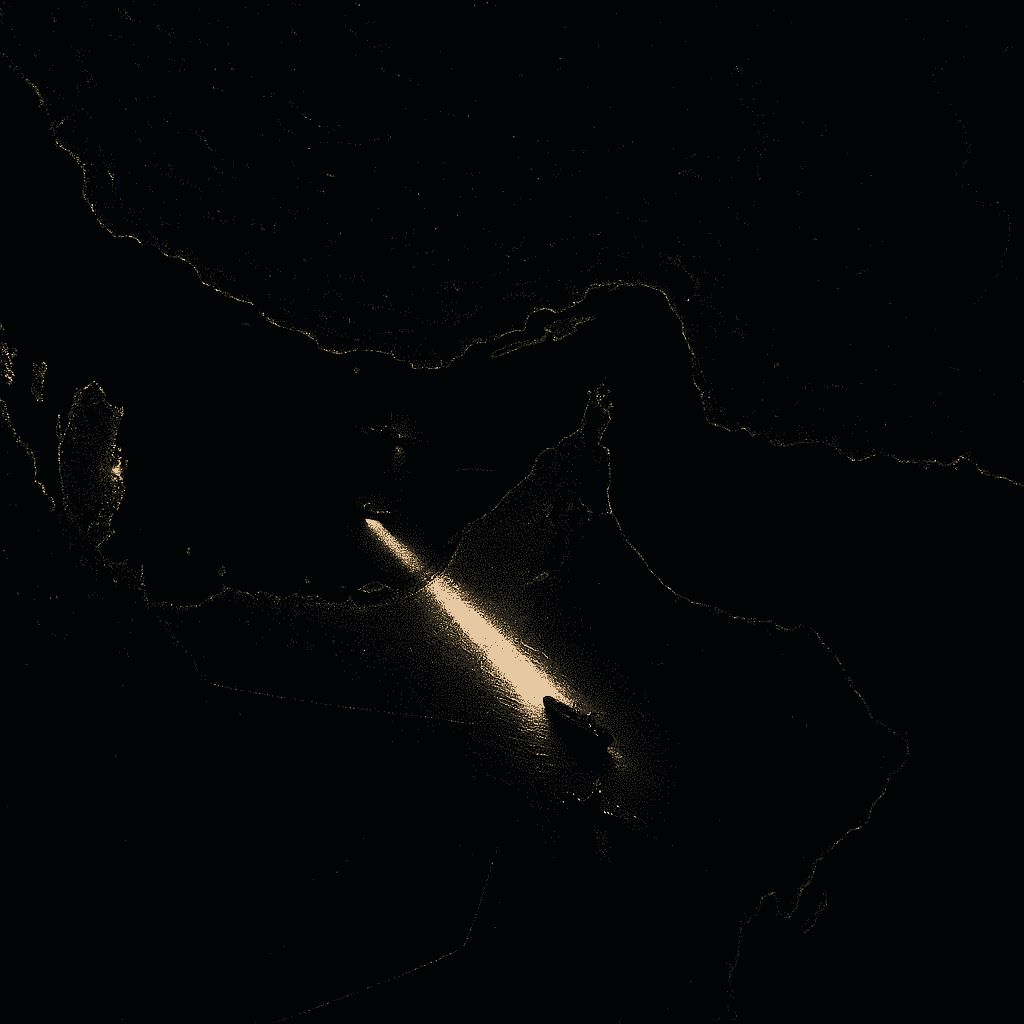
Start with the actual water. Before the war, more than 100 vessels a day threaded Hormuz, carrying roughly a fifth of global oil and LNG. Six months of US–Israel war on Iran turned that into a trickle, a near‑shutdown punctuated by attacks on tankers, including a Saudi supertanker that left two Filipino crew dead.
Under US naval escort, the flow has clawed back to about two‑thirds of pre‑war levels. Still ugly, not catastrophic. Iran keeps harassing ships, threatening “unauthorised routes”, and occasionally hitting commercial traffic. In the same breath, its own media boasts about granting passage to “a number of Iraqi oil tankers”. Hormuz is not closed. It is curated.
That pattern is the tell. Iran is experimenting with a permit regime, not a cork. If you are Baghdad, whose budget is about 90 percent oil and mostly dependent on Hormuz, that is terrifying but still usable. If you are Tehran, it is leverage with recurring revenue.
A full stranglehold would sacrifice that leverage for a stunt. Iran looks rational enough not to cash out its best bargaining chip for the emotional satisfaction of a two‑week global panic.
Why a true choke is the bad trade for Iran
The armchair script is simple: Iran in existential war, Iran closes Hormuz, oil to $150, America screams. Reality is less cinematic and more balance sheet.
To hold flows under half of normal for 14 days, Tehran would need to move from sporadic strikes to systematic, sustained attacks: more missiles and drones at escorted convoys, more mines, more open threats that all non‑authorised traffic is fair game. At that point, three things happen fast.
First, the US and friends stop playing escort cosplay and move to serious degradation of Iranian coastal, missile, and naval assets. Washington is not defending abstract “freedom of navigation”. It is defending incumbency against $5 gasoline in an election‑sensitive year. Record Labor Day fuel prices have already turned Hormuz into a domestic political issue. Letting that become a full oil shock would be malpractice even by Beltway standards.
Second, Iran’s regional influence starts to eat itself. Iraq’s exports have already slumped once, then recovered to a little over 2.2 million barrels per day. Slamming them back to near zero for weeks would shred Baghdad’s budget and public patience. For a regime that has spent years turning Iraq into a strategic depth project, lighting your own depth on fire is a last‑ditch move.
Third, Opec+ unity frays. The cartel just froze October output, even with Brent flirting with $100. They like tight markets. They do not like losing barrels under mines. Push Hormuz under 50 percent for weeks and you are no longer delivering price discipline, you are delivering unplanned outages and pressure for emergency volumes. Other producers start calculating how much their future demand gets killed by a new global oil trauma. Iran goes from useful antagonist to problem customer.
Put bluntly, Tehran is already getting what it wants: high prices with plausible deniability. A hard choke buys more risk than reward.
America’s reluctant maritime HMO
The United States is equally boxed in, which paradoxically protects the middle path. The Pentagon is extending deployments in the region into next year for a war nobody really campaigned on, while US drivers meet historic gasoline and diesel prices at the pump. War fatigue and $4‑plus fuel are not a friendly mix.
That creates an ugly but clear incentive: keep just enough oil and LNG moving through Hormuz that the crisis plateaus instead of spikes. The navy becomes an energy HMO, managing risk and paying out in missiles when premiums rise too fast.
You can see the model in action already. US escorts shepherd tankers through narrow lanes, strike Iranian launchers and boats that get too aggressive, and loudly brief flows that look closer to normal than independent trackers report. Perception management is part of the shipment.
Could that fail? Yes. A single successful, high‑casualty hit on a US ship could force a choice between over‑escalation and visible retreat. A couple of tankers in flames in the wrong week could make insurers flinch badly. But even then, the more likely outcome in a 90‑day window is volatility, not a neatly sustained sub‑50 percent squeeze. Shipowners pause, escorts surge, premiums spike, then the flow limps back up once everyone has repriced their nerves.
The stress points that could still break the bet
There are real tripwires that could make this column age as badly as a 2019 “inflation is dead” op‑ed.
A spectacular strike on Iranian leadership or critical infrastructure by the US or Israel would shift Tehran from cool coercion to wartime theology. In that frame, losing Iraq’s goodwill or Opec+ patience might feel secondary to demonstrating that American carriers are not invincible and Asian importers should panic.
Likewise, the market side could become the real choke. If a couple of tankers are sunk on camera or a minefield is confirmed, insurers might price Hormuz out of reach regardless of escorts. Then the binding constraint is not Iran’s firepower or US resolve. It is the actuarial table.
Layer on other choke points, like a tightening Panama Canal, and the room for rerouting shrinks. At that point, the difference between a 40 percent and 60 percent flow rate is the difference between recession chatter and “why is the supermarket empty” content.
Those are the genuine tail risks for the next three months. I do not dismiss them. I just do not promote them to base case.
How to know if Hormuz is slipping from throttle to choke
The scoring is simple enough that you can play along at home.
- Track daily crude and LNG flows through Hormuz from tanker trackers and agencies. Any move under half of pre‑war levels that sticks for a week is an amber light.
- Watch Iranian rhetoric for a shift from “unauthorised routes” to blanket “closure”. When every ship without Tehran’s permission is called a target, the permit game is over.
- Listen to insurers. If major providers explicitly pull war‑risk cover for the Gulf, the effective closure has begun even if a single Iranian missile stays on its launcher.
If those three line up for more than a few days, we are in the tail‑risk world where this forecast dies and oil traders finally get the panic spike they have been rehearsing on spreadsheets since the 1980s.
The satirical verdict
Hormuz is not about to become a cleanly sealed artery. It is going to stay what it is right now: a half‑blocked coronary that every major economy has agreed to live with as long as the aspirin is cheap and the ambulance is American.
So no, Iran is unlikely to turn a choke point into a full stranglehold in the next 90 days. A throttled, temperamental, selectively monetised throat plays much better. The world’s energy system is not being strangled. It is being politely mugged on the way to work.
Around the Shallot
Stay in the same broken universe.
Forecasts, satire, cartoons, and quizzes should feel like one publication, not disconnected tabs.
Tech
‘Don’t Regulate Us,’ Beg AI Founders Currently Selling Regulation-As-a-Service
Silicon Valley hails Trump’s plan to let AI companies write their own rules, promises to sell those rules back to everyone else by Q4.
Oct 11
Forecast
Through December 10, Houthis Won’t Damage Pakistan or Turkey Infrastructure
The Mecca Defense Pact just put two more flags on the Saudi firing chart. The consensus panic says this widens the war within weeks. The signal says the Houthis will talk big, hit Saudi and the sea, and leave Pakistan and Turkey’s hard targets alone for this 60 day window.
Comments
Be the first to comment.