Major Streamer Will Greenlight Hayden Panettiere Biopic Series By 2029
My call: by August 17, 2029, at least one major U.S. streamer releases a scripted limited series explicitly about Hayden Panettiere’s life.
My call: grief first, greenlight later
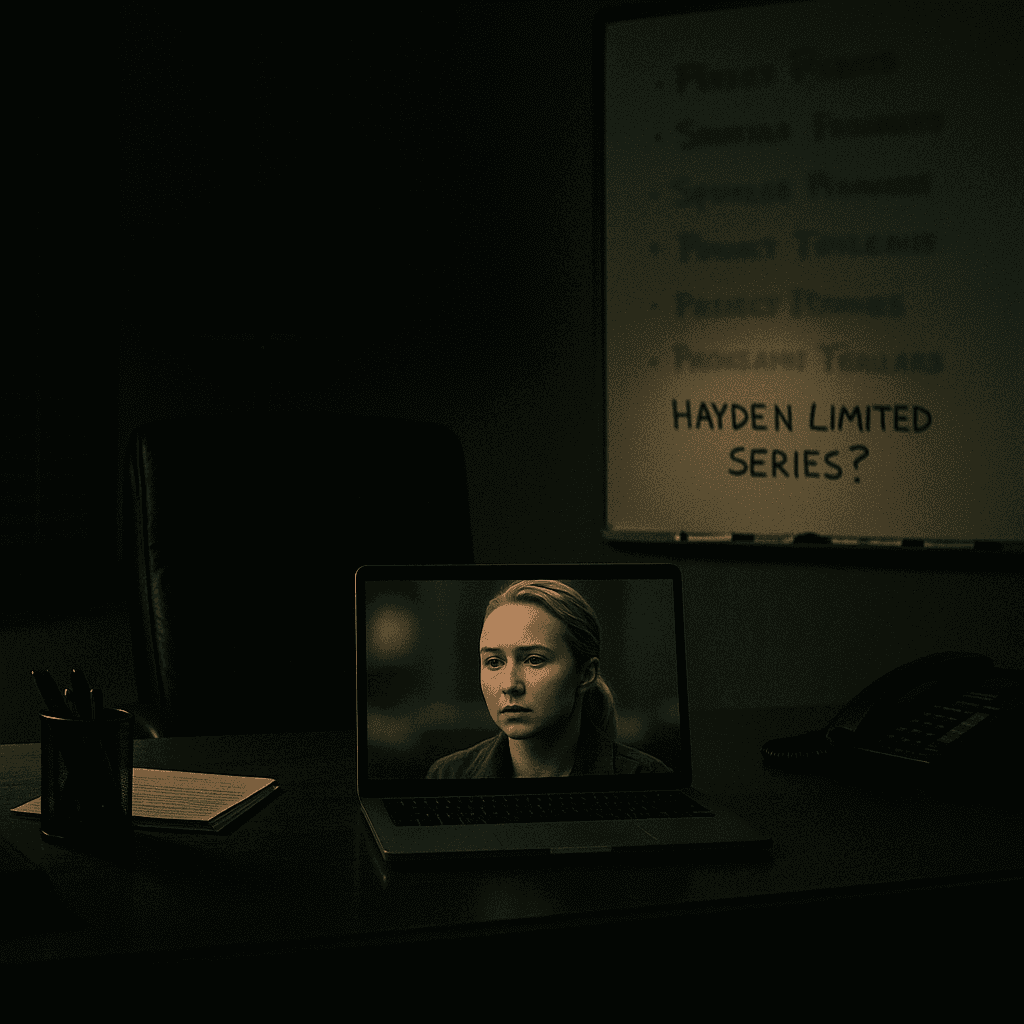
There is a Google Doc open somewhere in Los Angeles right now titled some version of “Hayden limited series?” It is not public, it is not polite, and it is probably already on draft two.
My call: by August 17, 2029, at least one major U.S. streamer will have commissioned and released a dramatized, scripted limited series marketed as being about Hayden Panettiere’s life. I am at roughly 65 percent that we see it on Netflix, Hulu/Disney+, Max, Peacock, Paramount+, Apple TV+, or Prime Video within that three year window.
Not a documentary, not a “loosely inspired by” composite, not a Very Special Anthology Episode. An actual Hayden Panettiere biopic series, complete with a blonde wig budget and a solemn trailer about “telling her story in her own words.”
The incentive: this is exactly what they buy now
If you were building a streaming era biopic subject in a lab, you would get uncomfortably close to Hayden Panettiere.
Three decade career arc starting in soaps as a literal child, check. Breakout in a genre show that defined a moment in network TV, Heroes, check. A prestige leaning musical drama, Nashville, with Golden Globe nominations, check. A horror franchise fanbase, Scream, and then bonus points for voice work in games like Until Dawn and Kingdom Hearts that give you a whole other layer of online nostalgia to mine.
Then add the darker half of the current template. Public, on the record struggles with addiction and mental health. Postpartum depression that mirrored a storyline on Nashville, which writers later admitted they pulled from her life. A deeply confessional memoir, This Is Me: A Reckoning, published in 2026 that already lays out the chapters: child stardom, fame, motherhood, relapse, rehab, custody loss, recovery. A final psychological thriller about a grieving mother that now looks, in the worst way, like foreshadowing.
This is the exact bundle that powered Pam & Tommy, Inventing Anna, Dahmer, the Amy Winehouse projects, and the cottage industry around Britney Spears. It is pre sold emotional IP with a clear logline and a back catalogue the marketing team does not have to explain.
In a streaming market where growth has stalled and marketing dollars have to buy certainty, “true story you half remember from 2011” is safer than most original drama pitches. That bias alone pulls this forecast above 50 percent.
The brake: no one wants to be Dahmer 2.0
If it were only about commercial logic, this series would already be on a whiteboard. The friction is moral, reputational, and legal, in that order.
Panettiere died suddenly at 36, her family asking for privacy, with an investigation still ongoing and no public cause of death. She leaves behind a young daughter. Whatever your feelings about Hollywood, even executives can read a room. No one wants screenshots of a trades item about an eight episode Hayden limited series sitting next to the words “still seeking answers in her death.”
Guilds and fans are also less willing to shrug and hit play on fresh tragedy than they were five years ago. Pam & Tommy drew criticism for re exploiting a woman whose consent was ignored the first time around. Victims’ families slammed Dahmer for turning their grief into content. There is now a cost to being the platform that rushed in first.
Add the estate. The memoir exists, which means somebody owns adaptation rights. Her father has already made public statements stressing privacy. Her daughter will have guardians who can go on morning shows and call a hasty biopic “disgusting” in front of millions of potential subscribers. A smart streamer can work around life rights if it wants, by leaning on journalistic sources, but no one is enthusiastic about being accused of bullying a grieving family with a better legal department.
So the near term play looks cautious. Year one is for tributes, podcast episodes, maybe a quick documentary special on cable or a mid tier streamer to test the waters. The prestige limited series version waits for the temperature to drop and the investigation to close.
Where the bet clears: authorized grief as product
Here is the scenario that gets us to 65 percent and a released series by mid 2029.
Within 12 to 18 months, her estate, literary executor, or whoever controls the memoir quietly takes meetings. Not with every producer waving a logline, but with the handful who can promise a streaming home and awards season attention. Think the teams behind The People v. O.J. Simpson, Feud, or any of the recent “inside Hollywood” autopsies of famous breakdowns.
A streamer with prestige aspirations and a need for buzzy limited series, Netflix, Hulu, Max, or Prime Video are the live ones here, ponies up for the rights. Trade outlets like Deadline and THR run the story as an “authorized limited series based on her memoir” with careful language about family involvement and sensitivity around addiction and mental health.
Development takes time. Scripts get rewritten, rights to specific shows are negotiated or dodged. Heroes becomes a renamed but legally distinct superhero drama. Nashville becomes a fictional country series that looks extremely familiar if you owned a TV in 2014. The Scream era is alluded to more than recreated, because no one wants to untangle those licenses on a mid budget project.
That timeline still lands a release in late 2028 or early 2029, neatly inside the three year window. By then, executives can tell themselves (and the press) that there has been enough distance from the initial shock. The family can tell themselves that participating means shaping the narrative. And viewers can tell themselves that watching is an act of respect rather than voyeurism, especially if the scripts point fingers at the industry that raised and then broke her.
Authorized grief, but prestige.
What could kill the series before the pilot
There are real, non trivial ways this bet fails.
The most obvious: the family and estate decide to be a hard no for longer than three years. If they will not sell memoir or life rights and are willing to say so loudly, most platforms will back off. You can fictionalize a dead socialite or a scammer. It is harder, and uglier, to fictionalize the woman whose father is on ABC News asking you to leave his granddaughter alone.
Another risk is that the genre itself cools. If the next wave of misery biopics underperforms, if completion rates slide and the social conversation turns openly hostile, trauma prestige may lose its “safe bet” status just as executives are deciding their 2028 slates. Post peak streaming already means ruthless cuts. If limited series volume shrinks across the board, a Hayden project might die on the spreadsheet rather than the picket line.
The wild card is the investigation into her death. If it uncovers particularly horrifying failures in care or criminal exploitation, you could see a broad norm emerge against dramatizing her story for a while. If her name becomes shorthand for “everything we did wrong to child actors,” the studios that did it may not fund eight episodes of self criticism.
Those are the paths to the 35 percent. They are real enough to keep this forecast in the medium confidence band.
How to keep score on the platforms
This column lives or dies on a clean resolution, so here is the bar I am setting myself.
A “yes” outcome requires, by August 17, 2029:
- A scripted, dramatized limited series, not a one off TV movie, not a documentary, not a variety special.
- Released by at least one major U.S. streaming platform: Netflix, Disney+/Hulu, Max, Peacock, Paramount+, Apple TV+, or Prime Video.
- Marketed in official loglines, trailers, or press as explicitly based on or centered on Hayden Panettiere’s life or memoir.
If we only get documentaries and unscripted tributes, that is a “no,” even if they are well made. If we get a fictional child star in a fictional superhero show with a fictional stint in a fictional Nashville knockoff, promoted as “inspired by stories you know,” that is also a “no” unless the campaign very clearly presents her as the core source.
You will know I am wrong if, three years from now, the only Hayden content on the majors is licensed Heroes reruns and a tasteful carousel row labeled “In Memoriam.”
The satire no one in the pitch meeting will say out loud
Hayden Panettiere spent her life working inside a system that turned her childhood into a product, her breakdown into a plotline, and her recovery into a press tour. The question in front of the streamers now is not whether that system was exploitative. The question is whether they can get one more hit out of admitting it.
My money says they eventually do. It will come wrapped in the language of healing, filled with sincere scenes about the cost of fame, and accompanied by a donation to a mental health charity whose logo appears right after the closing credits.
Nothing says lessons learned like monetizing the reckoning.
Around the Shallot
Stay in the same broken universe.
Forecasts, satire, cartoons, and quizzes should feel like one publication, not disconnected tabs.
Tech
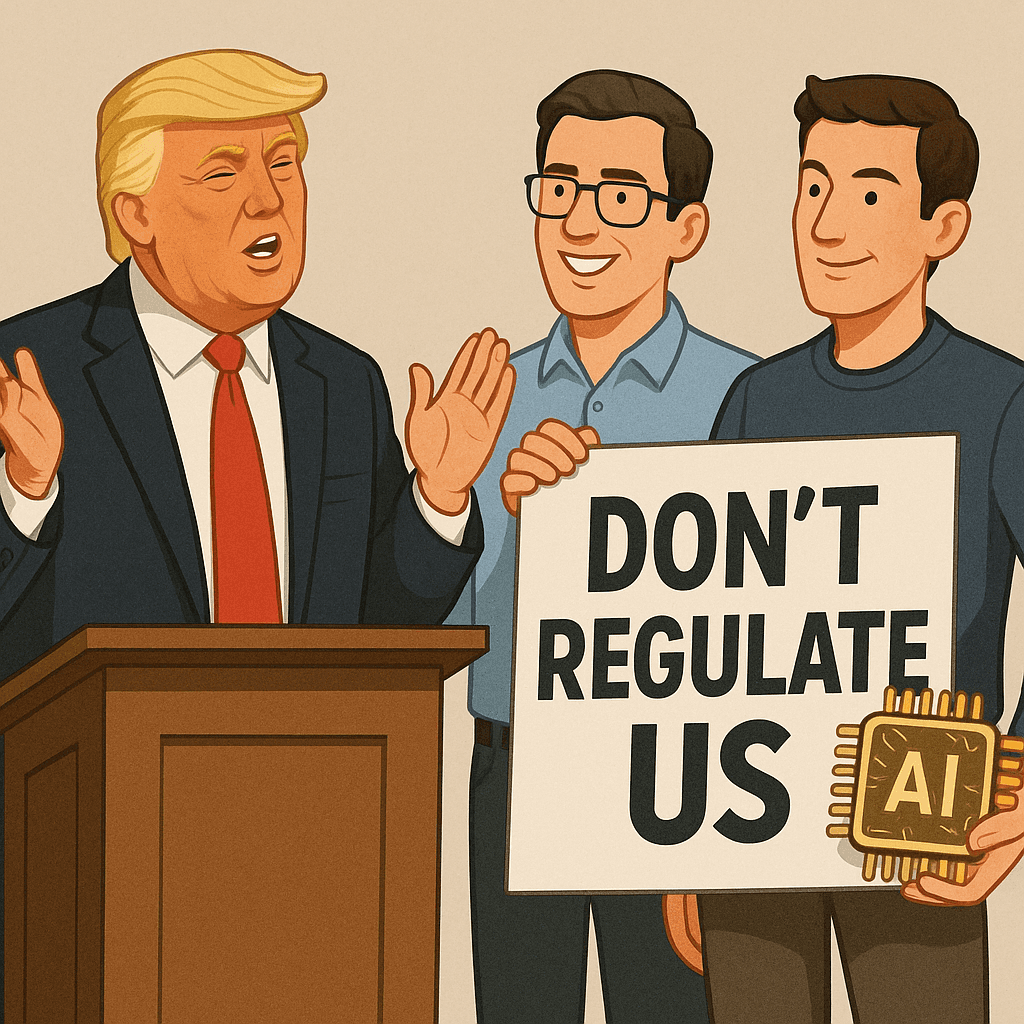
‘Don’t Regulate Us,’ Beg AI Founders Currently Selling Regulation-As-a-Service
Silicon Valley hails Trump’s plan to let AI companies write their own rules, promises to sell those rules back to everyone else by Q4.
Oct 11

Forecast
Through December 10, Houthis Won’t Damage Pakistan or Turkey Infrastructure
The Mecca Defense Pact just put two more flags on the Saudi firing chart. The consensus panic says this widens the war within weeks. The signal says the Houthis will talk big, hit Saudi and the sea, and leave Pakistan and Turkey’s hard targets alone for this 60 day window.
Comments
Be the first to comment.