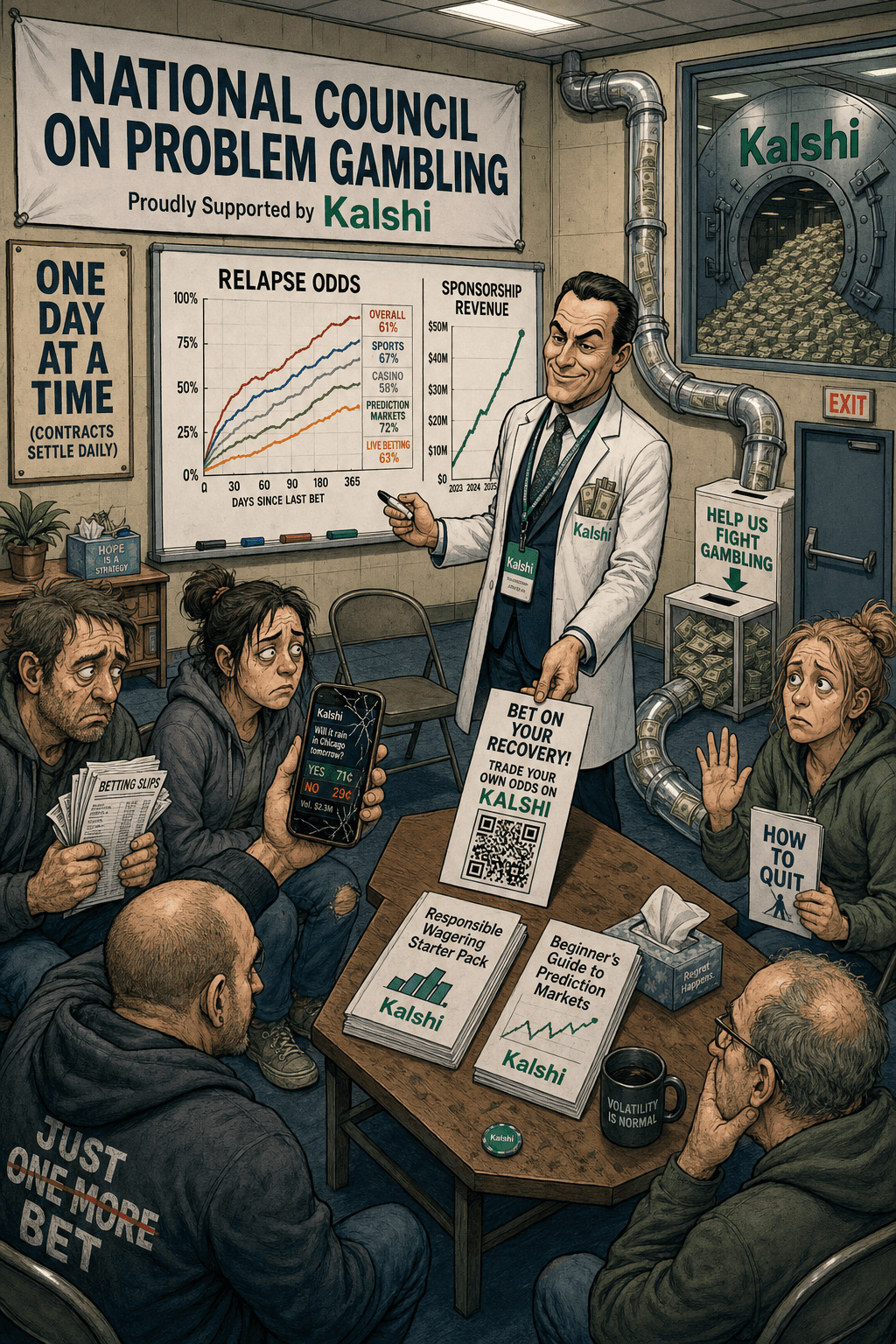
Most Big-Company AI Announcements Will Be Dead Pilots By 2028
My call: at least half of the loudly announced enterprise AI projects from 2023–2025 will not be in real production by the end of 2028.

Walk into any big-company boardroom right now and you will hear the same line: “We have an AI strategy.” The more honest version would be: “We have an AI slide” sitting between a picture of a lighthouse and a Venn diagram nobody can explain.
Here is my call, so we can score it later. By the end of 2028, at least half of the AI and agentic-AI projects that big firms trumpeted in 2023–2025 will be dead, shelved, or quietly reabsorbed into something vague like “innovation learnings.” Not patched, not pivoted. Functionally gone.
This is not a bet against the models. It is a bet against the companies trying to wrap their org charts around them, the same companies that needed three steering committees to standardize their email signatures.
The signal: AI is booming on paper, dying in production
On the surface, adoption looks heroic. McKinsey finds 88% of organizations now use AI somewhere. That statistic is the AI equivalent of saying 88% of people have tried yoga. It tells you nothing about who can touch their toes without calling an ambulance.
When you look at what is actually scaled, the funnel collapses. Only about 23% of firms have pushed an agentic system beyond pilot. Another 39% are still “experimenting,” which is a polite phrase for “this lives in a demo environment and nobody is sure who pays for it next year.”
Gartner’s own tea leaves are harsher. Roxane Edjlali calls up to 60% abandonment for AI projects that lack AI-ready data by the end of 2026. Anushree Verma projects north of 40% of agentic AI projects canceled by the end of 2027, for reasons that sound like a CFO’s allergy test: escalating costs, unclear business value, inadequate risk controls.
Notice the dog that is not barking: “the models were too weak” rarely appears on the failure list. The projects are not failing at the GPU. They are failing at the org chart, somewhere between the Innovation Council and the Committee For Not Being Personally Liable.
The real bottleneck: the handoff problem
The most common pattern is simple and fatal. A central AI team builds something impressive, backed by a cloud vendor and a breathless press release. Then they throw it at a business unit that did not ask for it, does not understand it, and has no budget line to keep it alive.
Everyone smiles at the demo. There is a tray of macarons, a hype reel, and a vice president saying “game changer” every three sentences. The data scientists move on to the next proof of concept. The application, left without an owner, rots.
TechTarget reported this as the dominant failure mode: the chasm between demo and deployment is where AI ROI goes to die. Gartner effectively pre-wrote the autopsy back in 2024, predicting that at least 30% of generative AI projects would be abandoned after proof of concept by 2025, tripping over the same tripwire list: dirty data, fuzzy value, runaway costs, flailing risk controls.
This is not a technology market. It is an ownership market. Who is accountable when an agent approves a refund, places an order, or modifies a system? Who owns the data quality that feeds it? Who signs for the opex bill when the “pilot” quietly racks up seven figures of inference costs?
When those questions do not have names next to them, projects die, even when the model output looks magical enough to impress a room full of executives who still print their emails.
The hype machine is inflating the body count
The denominator of experiments is exploding. Contact centers promise conversational AI in every channel. HR teams dabble in AI screening. Commerce leaders bolt agents into WhatsApp flows and voice-led shopping in eleven regional languages. Google Cloud and friends hold “AI transformation” forums. Anthropic’s Dario Amodei talks about frontier capabilities. Everyone wants their own headline and their own glossy photo of an executive pointing thoughtfully at a dashboard.
More experiments mean more failure. That can be healthy, if the funnel is disciplined. It usually is not.
Look at the incentives. Vendors win by pushing “enterprise-wide AI transformation” programs. Boards reward volume of announcements, not boring execution work. Internal AI teams like building shiny pilots more than they like re-plumbing workflows. Governance vendors sell dashboards as if risk were a SaaS subscription instead of a set of hard decisions.
Meanwhile, the infra bills show up. Some industry stats already floating around are ugly: claims that 42% of companies abandoned most AI initiatives in 2025, that 88% of pilots never reach production, that 80% of projects fail. The exact numbers are squishy, the direction is not.
By 2026, CFOs will do what CFOs do: cut or consolidate anything that cannot defend its cost with a clean, measured story. A thousand “strategic pilots” will be rebadged as “learning experiences” and turned off. That is the culling this forecast is about.
Who actually survives 2028?
The survivors will look boring from the outside and terrifyingly specific from the inside. Expect most large firms to end up with a shortlist of maybe 5 to 15 serious AI systems that run:
- Customer service in high-volume contact centers
- Core revenue operations, for example pricing, inventory, or underwriting
- Back-office sludge, for example claims triage, document handling, coding assistants
These will have a real business owner attached, with P&L skin in the game. They will sit on data that someone is paid to keep clean. They will run under explicit agent permission rules so the risk team can sleep.
The rest of the 2023–2025 vintage, the stuff that was announced with fireworks, will be pruned, merged, or quietly left to decay in a long-tail of low-usage features. Some will be technically “alive” but strategically dead, like an IVR menu nobody updates.
Could organizations get their act together fast enough to beat my 50% cull line? In theory, yes. They would need to stop treating AI like a press strategy and start treating it like plumbing. Fewer pilots, more workflow redesign. Less “agent platform,” more “who is responsible when this agent misfires.”
History says they will learn, but not that quickly, and not uniformly. The next four months are the setup window. If you do not see firms slashing vanity projects, appointing real data owners, and tying agents to explicit decision rights, assume the culling trajectory is locked in.
The 2028 headline I am betting on
By 2028, the AI story will bifurcate. On one side, a handful of deeply embedded systems that quietly mint productivity and profit. On the other, a graveyard of dead pilots, retired chatbots, and “deprecated transformation programs” that now live only in procurement archives and keynote decks.
When we look back at the 2023–2025 announcements and try to match them to what is actually in production, I expect a majority to vanish in that audit. At least half will fail the simple test: does a business unit still pay for this because it would hurt if we turned it off?
If I am wrong, you will be living in a world where big companies became data-disciplined, clarified ownership, and redesigned workflows at unprecedented speed. In which case, congratulations. You are in the good timeline and you do not need this column.
Until then, enjoy the AI boom for what it mostly is: a very expensive way to discover which five things you actually needed to automate.
Around the Shallot
Stay in the same broken universe.
Forecasts, satire, cartoons, and quizzes should feel like one publication, not disconnected tabs.
Tech
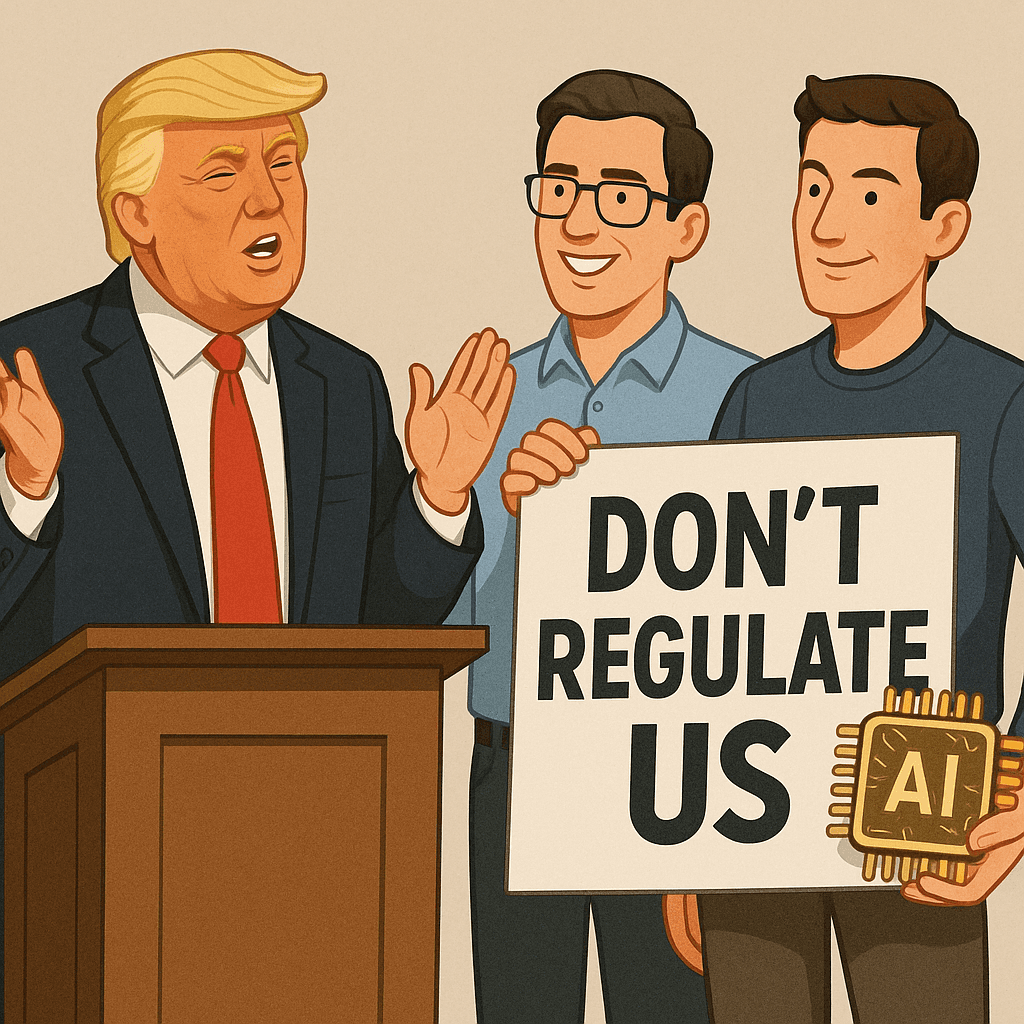
‘Don’t Regulate Us,’ Beg AI Founders Currently Selling Regulation-As-a-Service
Silicon Valley hails Trump’s plan to let AI companies write their own rules, promises to sell those rules back to everyone else by Q4.
Oct 11

Forecast
Through December 10, Houthis Won’t Damage Pakistan or Turkey Infrastructure
The Mecca Defense Pact just put two more flags on the Saudi firing chart. The consensus panic says this widens the war within weeks. The signal says the Houthis will talk big, hit Saudi and the sea, and leave Pakistan and Turkey’s hard targets alone for this 60 day window.
Comments
Be the first to comment.