Nvidia Will Deliver 30% Plus Revenue Growth In Its Next Two Prints
My call: Nvidia clears 30% year‑over‑year revenue growth for the next two quarters. The AI chip boom is still outrunning the circuit breakers.
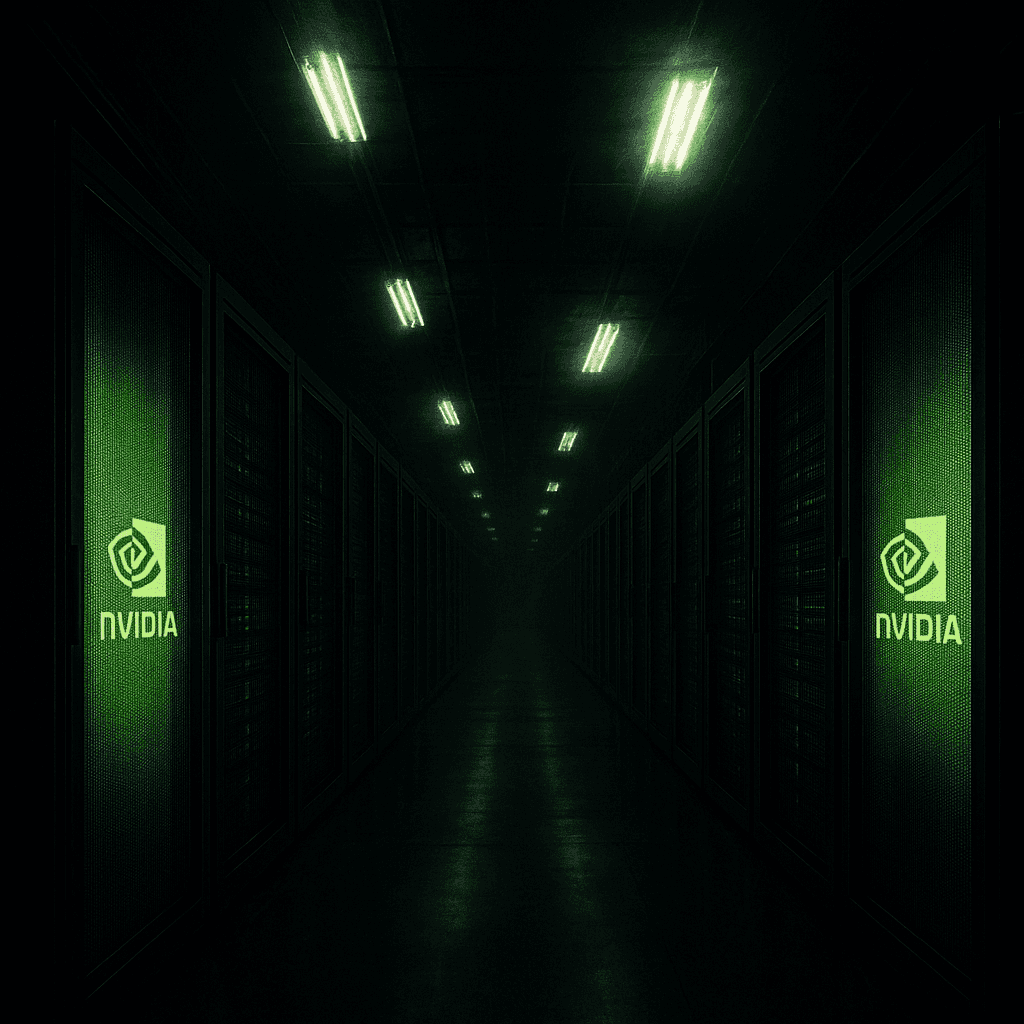
Everyone suddenly discovered physics.
For a year, AI was a vibes economy. GPUs went straight from Nvidia to PowerPoint decks, and nobody asked what happens when your new model pulls power like a steel mill in a lightning storm.
Now we have photos of data centers cooking their own electrical gear, reports of AI workloads blowing past uptime assumptions, and utilities quietly wondering when the cloud plans to buy an actual grid.
So here is the bet.
My call: Nvidia will post at least 30% year‑over‑year revenue growth in each of its next two earnings reports. Company‑wide, not just data center. If either quarter comes in under 30%, this forecast loses.
The consensus story is that physical limits, budget discipline, and hyperscaler DIY chips are about to humble the AI chip boom. The signal still says the opposite: the boom outruns the bottlenecks for at least one more lap.
The Fuel: Capex Mania Has Not Hit The Brakes
Start with the people actually wiring money to Nvidia.
JPMorgan now pegs AI‑related capex near $900 billion this year, up roughly 85% from last year, on its way to about $1.2 trillion next year. This is not a hobby. It is the capital budget of a new industrial revolution, written as a GPU purchase order.
The same note that pushed the S&P 500 target to 8,000 points straight at hyperscaler spending and AI monetization. Google, Amazon, and Microsoft did the thing everyone demanded. They showed stronger cloud growth, fatter AI backlogs, and better cash flow visibility. In investor language, that is permission to keep burning money on infrastructure.
Boards do not cut the centerpiece of their growth story four months after it finally starts to pay off. They might get choosy on price or mix, they do not flip from "AI is our future" to "actually, never mind" before Nvidia's next two calls.
The Pipeline: Upstream Is Still Red‑Lining
If you want real‑time telemetry on AI hardware, you watch TSMC and the substrate crowd. They get paid slightly before Nvidia gets to brag.
TSMC just posted 44.7% year‑on‑year revenue growth for July, already running ahead of a full‑year target it raised a month ago, and explicitly crediting AI chips. That is not a plateau. That is what an engine at full throttle looks like.
PCB and substrate makers like Unimicron and Kinsus are reporting record monthly sales on AI server demand. These are the people who notice when a cycle is slowing because their customers suddenly stop begging for every available slot in the factory.
Instead, orders are still stacked. You do not get TSMC running hot, substrates sold out, and Nvidia growth under 30% in the same quarter unless there is a massive inventory misread. That shows up as cancelled orders and panicked guidance, and we are not there yet.
The Constraint: Power Is A Problem, Not A Demand Story
Here is where the skeptics are right: the physics finally matter.
AI workloads spike power draw in violent, unpredictable ways. Economic Times reports electrical infrastructure in data centers getting damaged by these surges, with uptime assumptions breaking. The Uptime Institute and others have been quietly ringing this alarm. The grid was built for steady factories, not a global swarm of stochastic parrots.
Nvidia is not blind to this. Dion Harris, who runs hyperscale infrastructure solutions there, has been explicit. Blackwell was not just a big chip. It was co‑designed with companies like Schneider Electric and Mainspring Energy for power delivery, cooling, and overall system behavior. Nvidia is now in the power business whether it likes it or not.
The key point: power issues slow deployments, not purchase orders, at least at first.
Hyperscalers lock in GPU capacity years ahead. If the grid is late, they move sites, lean on on‑site generation, or slip some racks to the next quarter. They do not spontaneously decide that LLMs were a mistake because the transformer yard needs an upgrade.
Within a 120‑day window, power is much more likely to show up as sweating facility managers and creatively phrased guidance than as a hard cap on Nvidia's revenue line.
The Pushback: ROI Discipline And DIY Chips
There are two adult objections to this call.
First, ROI. The party line for 2023 was "we will figure out monetization later". Later is now. Investors want proof that GPU spend drives actual revenue, not just nicer conference demos.
The latest earnings season offered enough proof to keep the party going. AI features are stabilizing cloud growth, pushing up attach rates, and in some cases letting providers raise prices without a revolt. That is not mass profitability, but it is enough for CFOs to keep the GPU hose open for a few more quarters.
Second, hyperscalers are clearly trying to wean themselves off single‑vendor dependence. Google has TPUs, AWS has Trainium and Inferentia, everyone loves to name‑drop AMD in public. Over a three to five year horizon, that dents Nvidia's share.
Over two earnings reports, it does not.
Internal accelerators mostly backfill incremental demand that did not exist before AI hype. They still coexist with Nvidia clusters that are oversubscribed. The real test for share loss is when utilization stops being a constraint and price suddenly matters. Today, scarcity is still the business model.
The Risk: What Would Break This Forecast
For this call to be wrong, you need at least one of three things to hit surprisingly fast:
- A sharp macro shock that forces boards to slash capex broadly, including AI, inside the next four months.
- An ugly Blackwell ramp, with technical or supply issues big enough to push revenue into later quarters.
- A non‑AI pothole at Nvidia, like a sudden drop in gaming or automotive, that drags consolidated growth under 30% even while data center stays on fire.
These are not fantasy risks. They are just more 2027 than 2026.
Retail investors are already getting tactical. Schwab notes they want AI names like Nvidia, but on sale. That means the stock will overreact to any hint of a miss. A 28% growth print with cautious guidance would be treated like a crime scene.
But for the metric we care about here, the top‑line growth rate, backlog and upstream data still dominate.
The Call: Two More Blowout Quarters Before Gravity
So we pin it down.
Forecast: By the time Nvidia has reported its next two quarterly earnings, each of those quarters will show at least 30% year‑over‑year growth in total company revenue.
The drivers are simple enough for a napkin:
Hyperscaler AI capex is still rising fast, Nvidia has overlapping Hopper and Blackwell cycles, TSMC and the substrate chain are printing near‑parabolic AI numbers, and early AI monetization is strong enough to keep the spend flowing. Power constraints and ROI scrutiny are very real, but they are early in the S‑curve. They clip the wings of the next phase, not the next print.
If I am wrong and Nvidia posts two sub‑30% quarters in a row, that is not just a bad trade. It is evidence the AI buildout hit physical and financial limits much sooner than the supply chain is currently pricing. In that world, the trillion‑dollar AI capex dream starts to look less like a supercycle and more like a very expensive GPU‑of‑the‑month club.
Until then, tomorrow's earnings story still reads like leaked press copy from the future: power outages, local protests, regulatory hearings, and Nvidia quietly reporting that yes, revenue is up another 30%.
Around the Shallot
Stay in the same broken universe.
Forecasts, satire, cartoons, and quizzes should feel like one publication, not disconnected tabs.

Tech
‘Don’t Regulate Us,’ Beg AI Founders Currently Selling Regulation-As-a-Service
Silicon Valley hails Trump’s plan to let AI companies write their own rules, promises to sell those rules back to everyone else by Q4.
Oct 11
Forecast
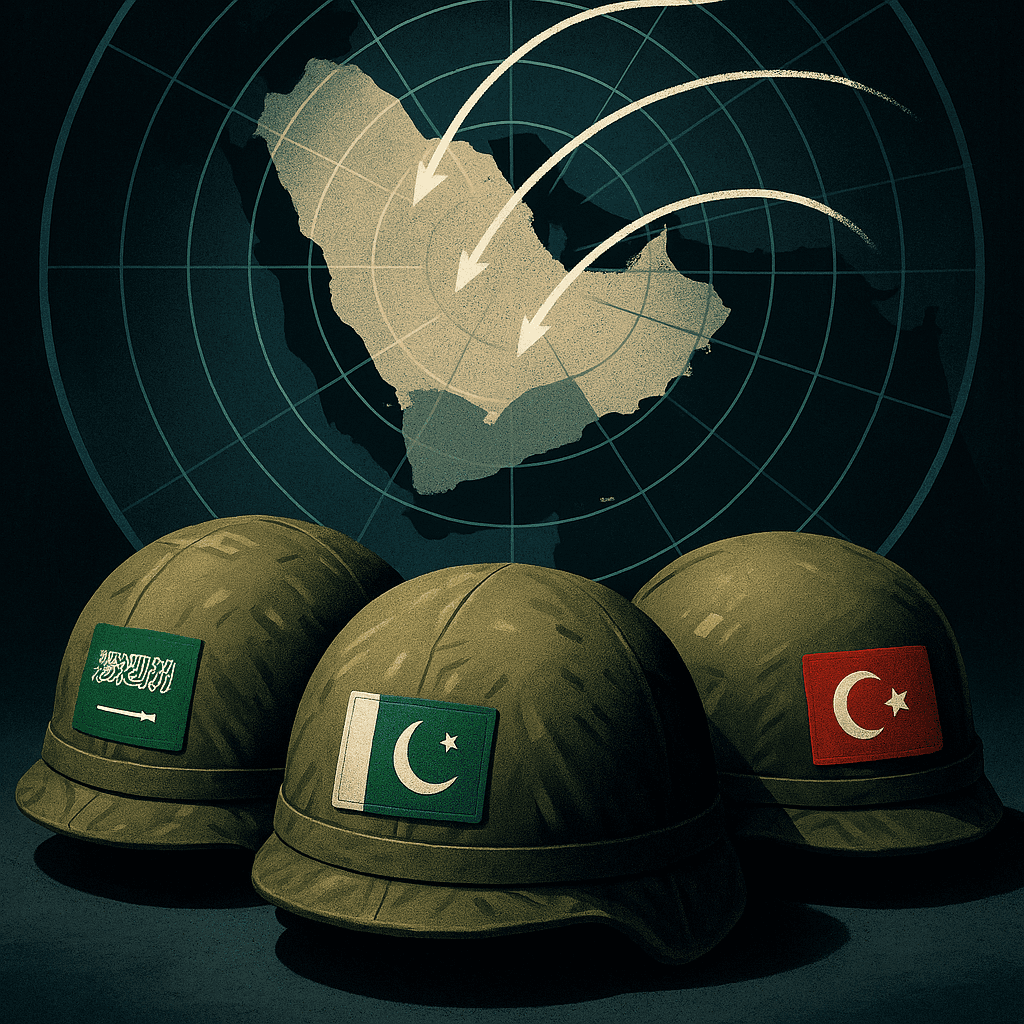
Through December 10, Houthis Won’t Damage Pakistan or Turkey Infrastructure
The Mecca Defense Pact just put two more flags on the Saudi firing chart. The consensus panic says this widens the war within weeks. The signal says the Houthis will talk big, hit Saudi and the sea, and leave Pakistan and Turkey’s hard targets alone for this 60 day window.
Comments
Be the first to comment.