Nvidia Will Extend Its AI Data Center Supercycle Past 2026
My call: Nvidia clears 50% data center growth on August 26 and the market walks away believing the AI build‑out still has years, not quarters, left.
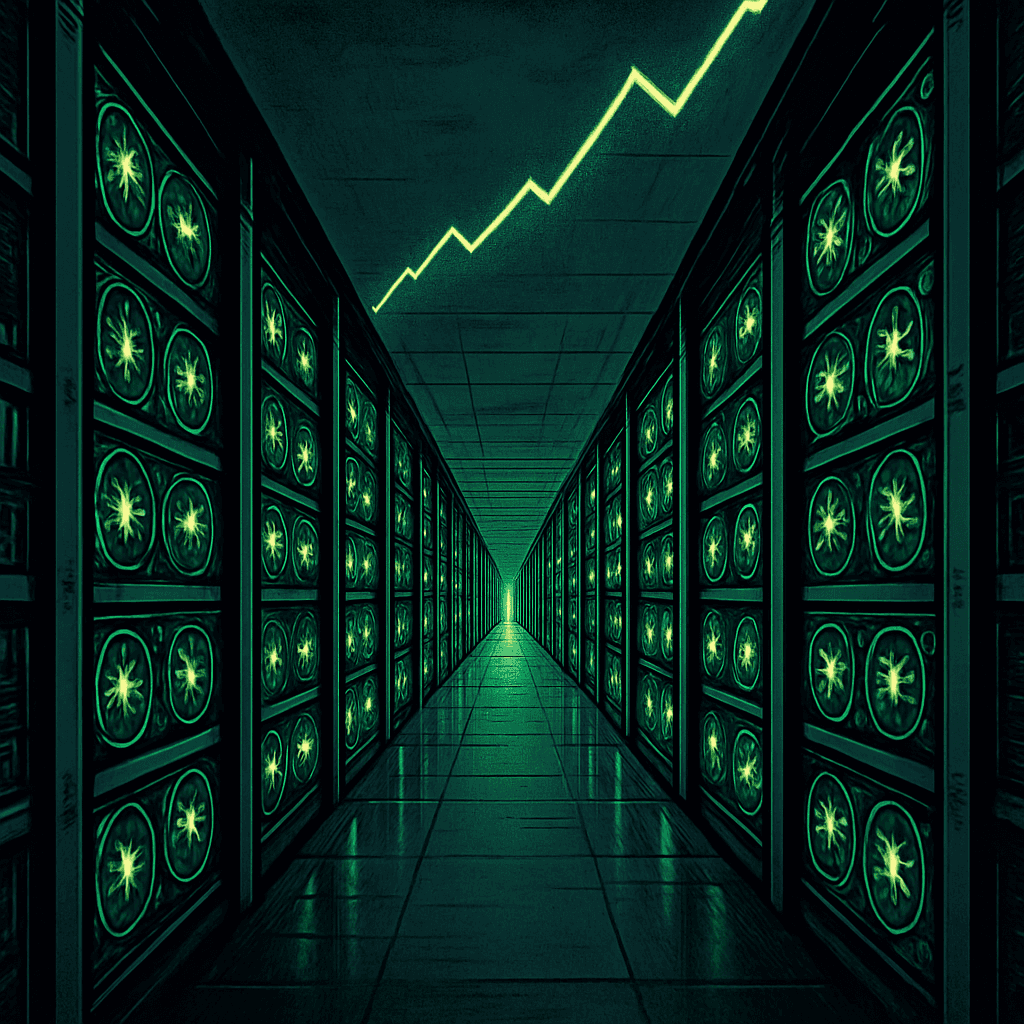
The quarter that is supposed to finally disappoint
The consensus keeps waiting for the come‑down quarter, the one where Nvidia blinks and the AI capex binge looks mortal. My call: August 26 is not that quarter.
Nvidia walks into Q2 FY2027 earnings with guidance that would have sounded like a typo three years ago: 91 billion dollars in revenue, 75 percent non‑GAAP gross margin, a data center business that already posted 75.2 billion dollars last time and grew 92 percent year on year. Prediction markets are basically betting the over on everything that matters, especially data center revenue clearing 80 billion.
Here is the test I am putting on the board, so you can score this column later: Nvidia’s August 26 report will show data center revenue at least 50 percent higher than the same quarter last year, and the guidance plus CEO sermon will keep 40 percent plus growth into FY2028 as a live base case. Commentators will argue about valuation. They will not, in the 24 to 48 hours after the call, converge on "this was the peak of AI infrastructure demand."
The data center is the whole story now
Nvidia is no longer a gaming chip company that happens to sell into the cloud. It is the cloud. Last quarter, 75.2 billion of its 81.6 billion dollars in revenue came from data centers. Networking inside that segment grew 199 percent. At this point, if you are not buying Nvidia to bet on AI infrastructure, you are basically collecting Jensen Huang jackets.
The bar is high, but not absurd relative to the recent trend. An 85 percent total revenue jump last quarter and 92 percent data center growth set a baseline where "only" 50 to 60 percent year‑on‑year feels like a comedown. Wall Street has politely penciled in another explosion. Prediction markets have stopped being polite and are at 95 percent odds that data center clears 80 billion in the quarter.
When everyone expects fireworks, the usual script is: the company delivers, the stock sells off, and pundits declare it the top. That is the consensus comfort object here. The reason I think it fails is that the upstream and downstream signals are still behaving like an early‑cycle boom, not a late‑cycle blowoff.
Follow the money, not the vibes
Start upstream. Hon Hai, which literally screws Nvidia’s AI servers together, just posted a 54 percent sales jump tied to AI demand. Samsung’s chip profits surged by a factor of 250. You do not get that kind of number without a brutal, system‑wide capacity build‑out. Supply chains do not spend like this if they think hyperscaler orders vanish next year.
Then move down the stack. Palantir called its commercial pipeline "otherworldly" and raised guidance. Cloudflare lifted its profit outlook on AI‑driven traffic. These are the kids standing downstream from the GPU firehose. If there were serious signs of demand digestion, you would expect less rapture in their earnings calls.
Hyperscalers themselves keep upgrading capex. Banks that tried to model 20 percent growth keep discovering 50 percent instead. One major house estimates that roughly a quarter of hyperscaler capex now effectively goes straight to Nvidia. The only part of the ecosystem not thrilled is AMD investors, who just learned that "catching up to Nvidia" was more of a storyline than a schedule.
That AMD miss is actually a tell. If this were a mature, slowing market, you would see a gentle sharing of spoils as customers diversify. Instead, you see one vendor’s forward AI outlook underwhelm while Nvidia’s implied numbers stay feral. Winner‑take‑most is still the operating system.
What has to be true for this to be the peak?
For August 26 to go down as the peak, at least one of three things has to show up in the numbers or the call.
- Data center growth drops close to the floor of 50 percent, with a weak explanation.
- Guidance implies a clear step down to sub‑40 percent growth into FY2028.
- Management starts talking about "digestion" or "front‑loaded demand" instead of "AI factories."
None of those line up with how Nvidia is currently behaving. The board just signed off on an 80 billion dollar buyback and a big dividend hike. That is not what you do if you think your core market is about to discover gravity. Jensen Huang is still on television describing "the largest infrastructure expansion in human history," not a nice little upgrade cycle.
The most credible bear case is not that this quarter flops. It is that guidance finally acknowledges some normalization in 2027 and beyond, especially if hyperscalers start talking more loudly about utilization instead of square footage. A softer next‑quarter guide, or hints of order pushouts, would not break the AI story. It would just clip the wings of the "permanently double" fantasy.
But even that scenario still looks like 40 percent type growth, not 10 percent. As long as Nvidia talks in multi‑year "AI factory" contracts and admits no meaningful price pressure in its 74 to 76 percent margin range, this is not a topping pattern, it is a really expensive on‑ramp.
The China wildcard that is not in the deck
One subtle point: guidance assumes zero China data center compute revenue. That is a special kind of conservative, given how much illicit demand is probably sitting across the border, refreshing export‑control PDFs.
This matters for the thesis. If Beijing and Washington surprise everyone with a friendlier regime, you get upside without it having been in the story. If they tighten further, you lose a market Nvidia has already modeled as gone. Either way, the August print is mostly a referendum on the rest of the world’s appetite for AI factories, not on who gets to buy which H‑numbered chip in Shanghai.
What will make this call wrong
To mark this column to market: the call fails if Q2 data center growth lands under 50 percent year on year, or if guidance and tone push most serious post‑earnings analysis to describe the quarter as the likely high‑water mark for AI infrastructure demand.
I do not see that in the tape. I see a supply chain still straining, hyperscalers still upgrading budgets, downstream firms still giving giddy AI speeches, and Nvidia itself acting like its moat is filling with cash, not crocodiles. Markets may still sell the news, because markets are drama queens, but price action is not the same thing as a cycle turning.
When the AI infrastructure boom finally does peak, it will look ugly: sub‑40 percent data center growth, margin compression, customers openly playing vendors against each other, and Jensen Huang spending more time explaining mix than destiny. August 26 is not that episode. It is one more season renewal for the show in which everyone complains GPUs are too expensive while buying every one they can get.
If there is a bubble here, it is not in Nvidia’s earnings. It is in the hope that this quarter will mercifully make everyone stop talking about AI.
Around the Shallot
Stay in the same broken universe.
Forecasts, satire, cartoons, and quizzes should feel like one publication, not disconnected tabs.

Tech
‘Don’t Regulate Us,’ Beg AI Founders Currently Selling Regulation-As-a-Service
Silicon Valley hails Trump’s plan to let AI companies write their own rules, promises to sell those rules back to everyone else by Q4.
Oct 11

Forecast
Through December 10, Houthis Won’t Damage Pakistan or Turkey Infrastructure
The Mecca Defense Pact just put two more flags on the Saudi firing chart. The consensus panic says this widens the war within weeks. The signal says the Houthis will talk big, hit Saudi and the sea, and leave Pakistan and Turkey’s hard targets alone for this 60 day window.
Comments
Be the first to comment.