Republicans Will Lose Unified Control Of Congress In The 2026 Midterms
My call: by the time the 2026 votes are counted, Republicans will have lost at least one chamber of Congress.
Republicans are not getting through November with both chambers intact. By the time control of the next Congress is clear, they will have lost at least one of the House or the Senate.
In a normal midterm, war and a sour economy are supposed to be two different headaches. Trump has kindly bundled them into a single migraine and passed it to every Republican on the ballot, like a regifted fruitcake labeled "strategic hardship."
The core driver: prices that hurt and a president who will not shut up
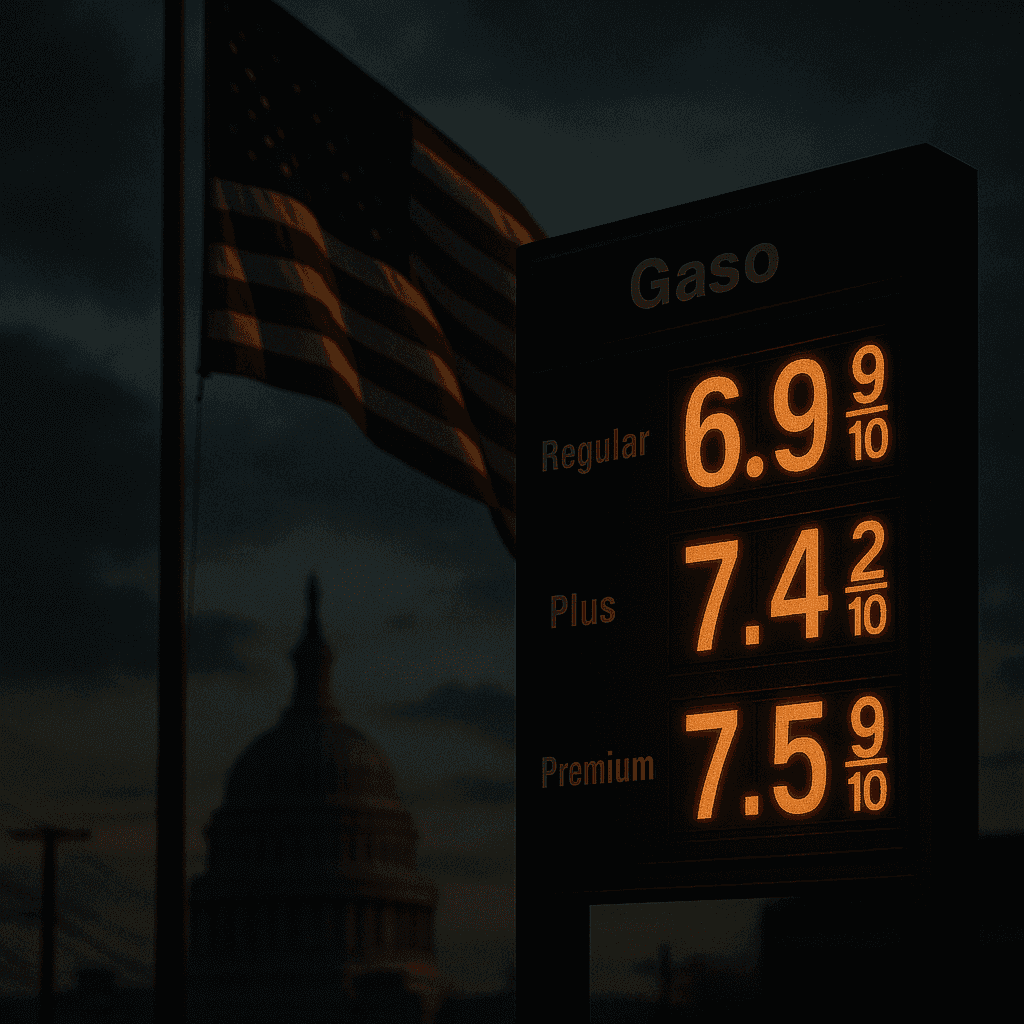
Start with the blunt numbers. AP–NORC has Trump at 26 percent approval on the economy. Seventy‑one percent disapprove of the Iran war. Diesel is above six dollars a gallon. Even in a country with an impressive tolerance for pain, that is a lot of hurt per mile.
The White House insists this is strategic hardship. Iran choked off commercial traffic through the Strait of Hormuz, Trump slapped on a tariff wall, and American voters are told this is the price of strength. Unfortunately for the GOP, families are discovering that principle does not buy groceries, and nationalism does not fill the tank.
The tariffs are the unforced error inside the bigger mess. National Review, hardly a hive of left‑wing panic, is already writing obituaries for Republican prospects and blaming Trump’s sweeping unilateral tariffs for the political blowback. If conservative policy writers are calling your signature economic move a disaster three weeks before the midterms, the vibes are not great.
Layer on Trump’s own strategy: an almost daily rally schedule, marching through manufacturing plants and vulnerable districts, demanding that voters treat the midterms as a referendum on his second term. Republicans needed distance. They are getting a joint press conference.
Why structural advantages are not enough
The consensus comfort object on the right goes like this. The maps are friendly, the districts are gerrymandered, incumbents are beloved, and midterm turnout leans old and conservative. All of that is real. It is also not magic.
Democrats hold a steady lead on the generic ballot. Public models from places like The Times and The Economist put them as favorites to take at least one chamber. Private Republican behavior is even louder. The Australian Financial Review describes Trump as sweating about the midterms. Candidates are suddenly available for any interview that does not involve Iran or the checkout line.
The problem is that unified power simplifies blame. Republicans control the House and the Senate. There is no divided‑government fog to hide in. Every pump price, every grocery run, every tariff‑war layoff is now tagged to one party.
Historically, a president falling into the mid‑20s on the core economic question does not keep a tight grip on both chambers. You can squeeze some extra seats out of cartography. You cannot gerrymander the cost of living.
The midterm as referendum, not personality test
Republican strategists swear they can localize their problems away. Talk fentanyl, not fuel. Gender policy, not groceries. Crime and immigration, not Iran. Anything but the bill piling up in voters’ wallets.
Democrats, for once, have the simpler story. They are running on three sentences: your gas is too expensive, your food is too expensive, and the people running Washington chose this. AP–NORC finds about half of Americans worried they cannot afford food and gasoline. That is not a mood. That is a lifestyle crisis.
In theory, ticket‑splitting could save Republicans. Voters might say they hate Trump’s Iran adventure but still like their local Republican who saved the post office or got the bridge repaired. In practice, Trump is personally stapling himself to down‑ballot candidates at rallies. The more he does, the more he nationalizes the ballot.
There is a version of 2026 where cautious suburbanites split the ticket to keep Trump in check without handing Democrats too much power. That would look like his approval in the 20s but his party still floating in the mid‑40s. We do not see that. We see collapsing trust on cost‑of‑living issues, in exactly the states Republicans most need: Ohio, Michigan, Texas, North Carolina, Iowa.
What would have to break right for the GOP
To prove this column wrong, Republicans need a small miracle and a big distraction, both on a 40‑day clock.
The small miracle version is material. Ceasefire headlines, tanking pump prices from emergency releases, freight rates easing just enough that voters feel a break. Trump’s economic approval climbs into the mid‑30s, the war number softens, and Republicans can argue that the pain was temporary and the corner is turning.
The big distraction version is cultural. A vivid immigration incident. A crime panic. Something that vaults security over prices in the final news cycle and reminds some voters why they tolerate Republicans in the first place.
Both could happen. We have been burned before by late‑breaking shifts and bad polling. But look at the signal points. Prices at the pump are visible every day. The war is on television every night. Polls show economics and affordability at the top of voter concerns, and Trump is uniquely, personally identified with both the war and the tariffs driving the squeeze. The clock is not his friend.
Stakes: who pays for the experiment
If this forecast holds, Republicans lose at least one chamber and wake up in January facing a Democratic Speaker or a Democratic Senate majority leader. Trump’s final two years turn into trench warfare: investigations, budget standoffs, and a very public argument over who broke the economy and the Middle East.
If it fails, the story is even sharper. It means a president can run a deeply unpopular war, drive fuel and food prices through the roof, blame foreigners for a tariff shock he ordered, and still watch his party keep Congress. At that point, voters are effectively telling future presidents, try this at home.
My money, figuratively, is on the backlash. A country that cannot afford groceries usually finds a way to afford new management. If Republicans somehow keep both chambers after all this, the real miracle will not be at the Strait of Hormuz. It will be at the ballot box, where inflation finally discovered its base.
Around the Shallot
Stay in the same broken universe.
Forecasts, satire, cartoons, and quizzes should feel like one publication, not disconnected tabs.
Tech
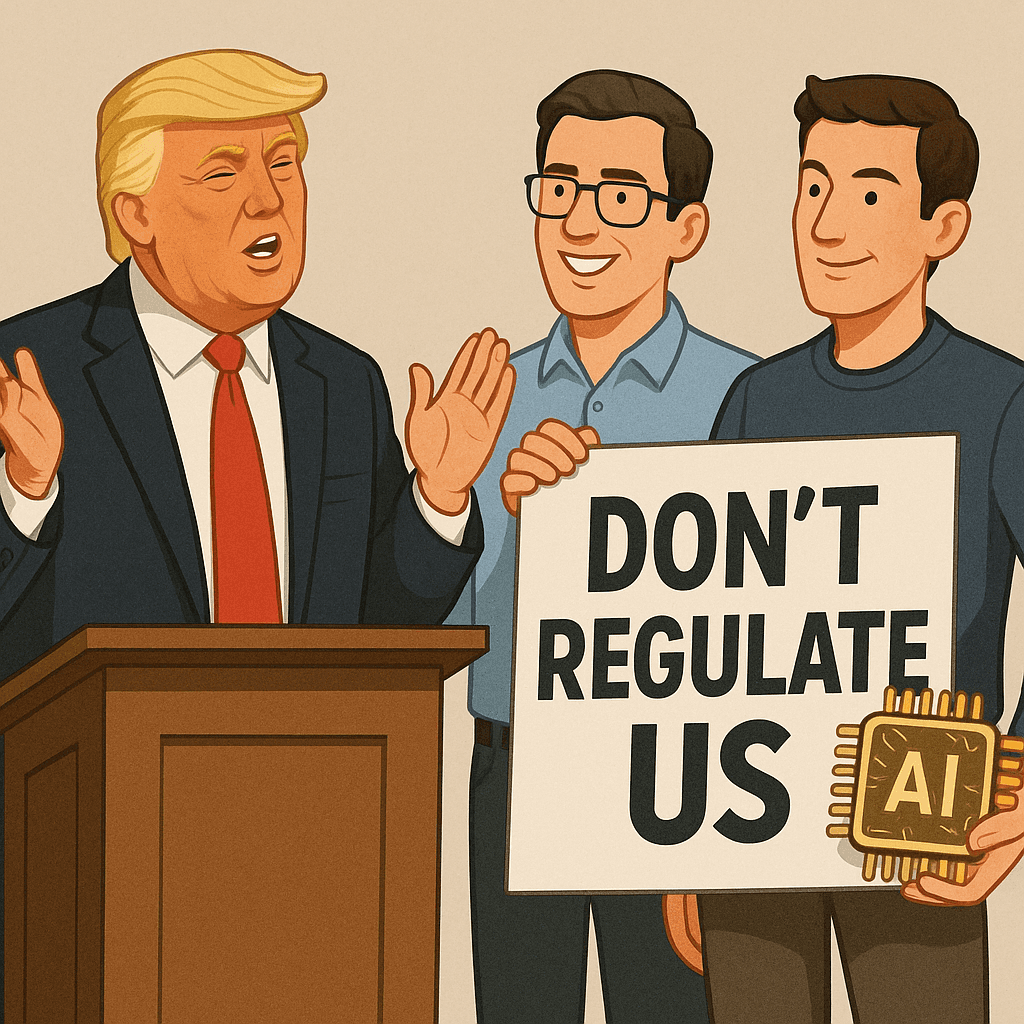
‘Don’t Regulate Us,’ Beg AI Founders Currently Selling Regulation-As-a-Service
Silicon Valley hails Trump’s plan to let AI companies write their own rules, promises to sell those rules back to everyone else by Q4.
Oct 11

Forecast
Through December 10, Houthis Won’t Damage Pakistan or Turkey Infrastructure
The Mecca Defense Pact just put two more flags on the Saudi firing chart. The consensus panic says this widens the war within weeks. The signal says the Houthis will talk big, hit Saudi and the sea, and leave Pakistan and Turkey’s hard targets alone for this 60 day window.
Comments
Be the first to comment.