S&P 500 Will Hold Record Highs on Durable AI Earnings Momentum
My call: Three months from now, the S&P 500 is still at or above today’s record, with AI-driven earnings forecasts largely intact.
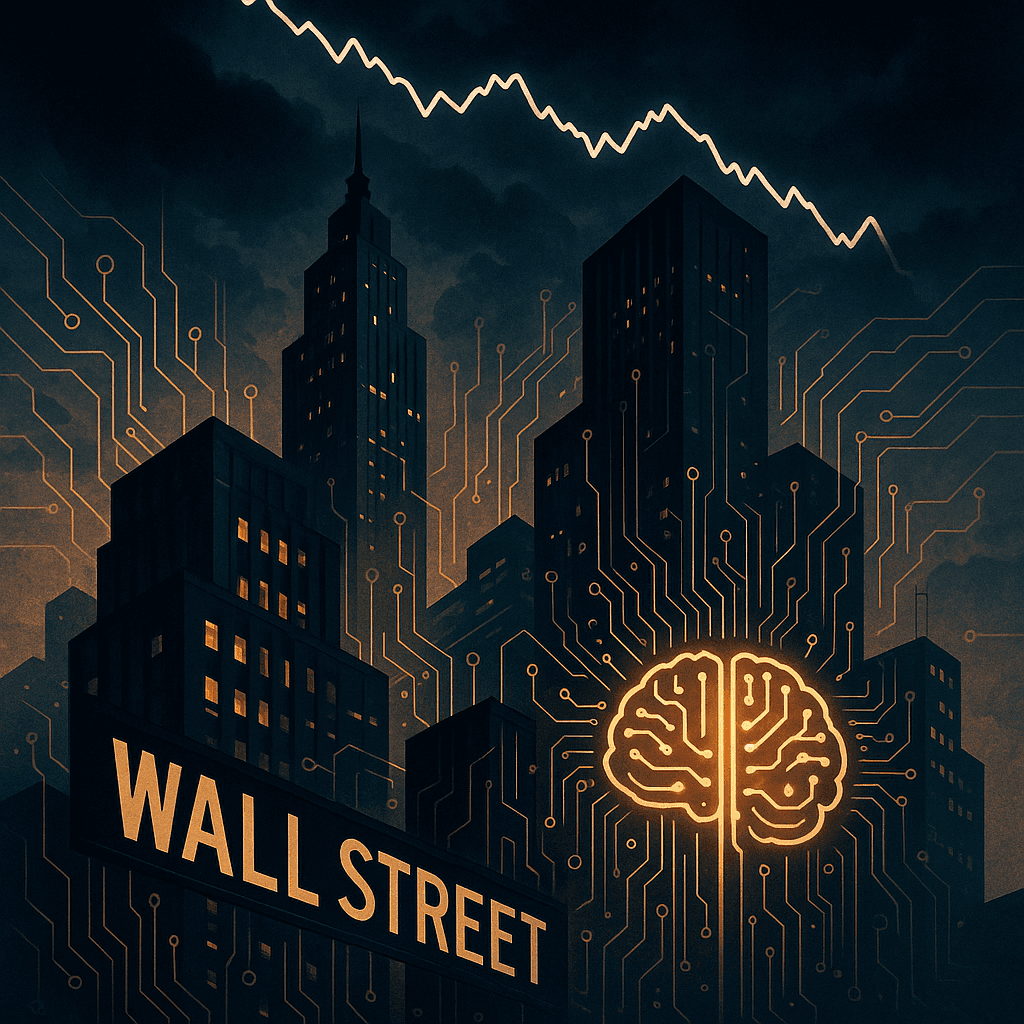
Record Highs on Trial: Can an AI Earnings Boom Carry the S&P 500 Through Wall Street’s Weakest Season?
By Niles Overton, Forecast Columnist
Policy obsessive with a nose for incentives, spin, and self-inflicted chaos.
The bet: records survive the graveyard shift
Traders just watched the S&P 500 shake off a choppy summer and rip to a fresh all-time high, juiced by AI-labeled earnings fireworks and a convenient drop in oil and yields. Textbook setup for a nasty giveback: crowded theme, rich valuations, and we are heading straight into the market’s statistical haunted house from August to October.
I am taking the other side of the ghost stories.
My call: ninety days from now, the S&P 500 is still trading at or above today’s record closing level, and the AI complex that got us here has not had its earnings story torn up. To count, consensus next‑12‑month earnings for the big AI-exposed buckets, semis, cloud and software, AI-linked industrials and power, cannot be cut more than 5 percent from today’s marks.
Put more bluntly, I am betting this is not a final top built on imaginary AI profits. It is an early plateau in a real earnings cycle that can drag the index through Wall Street’s weakest quarter without breaking.
The driver: AI is finally showing up in the P&L
Start where it hurts the skeptics most: the numbers. Palantir’s revenue up about 93 percent, not on press releases but on paying customers. Caterpillar, historically known for digging literal holes, putting up more than 20 billion dollars in quarterly sales and explicitly crediting AI data centers and turbine demand. Across the S&P 500, roughly 85 percent of companies are beating estimates and aggregate profits are up close to 50 percent.
You can argue about how much of that is pure AI, but you cannot argue it is all vibes. The Roaring Twenties 2.0 narrative, AI as electricity with better branding, is finally throwing off cash flows instead of just conference call poetry.
This matters for the forecast. Hype-only stories crack fast. Real capex cycles take time to die. Data centers, chips, power gear, industrial equipment: those orders do not swing from boom to bust in one quarter unless someone hits a macro panic button. The companies now guiding higher on AI demand are the same ones planning multi-year buildouts in semiconductors, cloud capacity, and power infrastructure. That is the earnings scaffolding under these record highs.
The quiet upgrade: from seven AI generals to an actual army
The consensus worry has been simple: if a handful of AI mega caps sneeze, the index catches pneumonia. That story is getting stale.
The Dow, which is allergic to pure-play megacap tech, is making its own records. Healthcare and financials have outperformed tech in recent months. Industrials like Caterpillar just dragged the blue-chip index higher while the Nasdaq was still sulking below its peak.
That is not to say the AI cohort stopped mattering. Tech is still a top-performing sector, and AI is the market’s favorite costume. The shift is subtler: AI is leaking into everything. Banks using it for risk and productivity. Hospitals and insurers talking about workflow tools. Utilities and heavy equipment manufacturers selling into AI-driven power and data center demand.
For the forecast, this broadening is the hinge. If AI exposure is no longer confined to seven tickers, the S&P 500 has more ways to stay elevated even if some darlings de-rate. You can cut multiples on a few chip names and still hold the index if financials, healthcare, and industrials keep printing steady numbers with AI as a background tailwind.
The macro referee: oil, yields, and the Fed’s stage whisper
Betting on record highs through August, September, and October is really a bet that macro does not sabotage micro.
Right now, conditions are oddly polite. Brent crude is back under 80 dollars a barrel. Treasury yields have backed off their recent spike. The labor market looks less frothy but not broken: fewer job openings, still-low layoffs. Geopolitics around the Strait of Hormuz is more “negotiating table” than “price shock” for the moment.
Markets see a decent chance of a Fed move in September, but not a crusade. As long as rate expectations creep instead of lurch, the discount-rate pressure on high-multiple AI names stays manageable. You can live with 10-year yields bobbing around if earnings estimates are moving up more than bond math is pushing down.
The bear script is obvious: oil pops back into the 90s on a Hormuz flare-up, inflation data re-heats, the Fed decides its credibility needs a public display of toughness, and long yields punch higher. That combination would hit AI first and hardest, because AI is where the longest-duration cash flows and the most expensive valuations live.
I am assigning that full cocktail some probability, but not dominance. The more likely path is messy but contained. Modest rate jitters, squabbling in the Gulf, ugly days in the VIX, yes. A clean macro shock large enough to overpower broad AI earnings momentum in a 90-day window, less so.
The failure modes: where I could eat this column
Since this is the Prediction Desk, not a vibes blog, let us spell out where this call blows up.
First, AI growth might already be as good as it gets. Palantir’s 93 percent revenue pop and Caterpillar’s record quarter could prove front-loaded, a rush of pilot budgets and one-off data center builds that flatten quickly. If the next reporting wave features guidance cuts and “normalization” speeches, analysts will trim those next‑12‑month earnings numbers by more than 5 percent in a hurry.
Second, valuations in the AI leaders are objectively ambitious. Even without earnings downgrades, multiple compression alone could pull the S&P below today’s mark. Remember, I am not forecasting that we avoid a drawdown. I am forecasting that we crawl back to, or above, this level by the time the window closes. A hard air pocket at the wrong moment could still leave the tape a hair short and this forecast in the red.
Third, there is path dependence in the shiny new names. SpaceX, fresh on the public tape with big revenue and bigger Bitcoin noise, is a proxy for investor appetite to fund capital-intensive AI infrastructure bets. If early trading turns into a cautionary tale, the whole AI-adjacent dream can feel late-cycle, not early innings.
Finally, there is the boring disaster scenario: some exogenous shock that has nothing to do with GPUs or turbines, a geopolitical escalation or a financial accident. If you get a systemic hit, my neat little “earnings vs macro” frame becomes trivia.
The verdict: weak season, strong story
Strip it down and the question is simple enough to write on a trading blotter.
Will an AI-driven earnings boom, plus some emerging breadth, be strong enough to hold the S&P 500 at or above today’s record into early November, without a meaningful downgrade to AI earnings expectations?
My answer is yes, with conviction that is real but not religious. Roughly six-in-ten that when we check back three months from now, the index still sits at or above this print and consensus AI earnings are mostly intact. I expect normal seasonal volatility, possibly a sharp scare, and at least one “AI is over” op-ed before Halloween.
The broader AI boom can absolutely disappoint over a longer horizon. Use cases can underwhelm, regulators can discover feelings, and capex cycles always end in tears. This column is not a five-year love letter to silicon.
It is a three-month wager that real profits beat spooky season. If I am wrong, we will know soon enough. If I am right, the scariest thing on Wall Street this fall will be how many people still insist this is only a bubble while they keep buying every dip.
Around the Shallot
Stay in the same broken universe.
Forecasts, satire, cartoons, and quizzes should feel like one publication, not disconnected tabs.
Tech
‘Don’t Regulate Us,’ Beg AI Founders Currently Selling Regulation-As-a-Service
Silicon Valley hails Trump’s plan to let AI companies write their own rules, promises to sell those rules back to everyone else by Q4.
Oct 11

Forecast
Through December 10, Houthis Won’t Damage Pakistan or Turkey Infrastructure
The Mecca Defense Pact just put two more flags on the Saudi firing chart. The consensus panic says this widens the war within weeks. The signal says the Houthis will talk big, hit Saudi and the sea, and leave Pakistan and Turkey’s hard targets alone for this 60 day window.
Comments
Be the first to comment.