TikTok and YouTube Will Cut Looksmaxxing From Ad‑Revenue Programs
My call: by June 1, 2027, at least two of TikTok, Instagram, and YouTube will formally demonetize looksmaxxing content in their rulebooks, then pretend it is about safety, not scandal.
The bet: the hammer keeps streaming, the ads tap out
My call: by June 1, 2027, at least two of TikTok, Instagram, and YouTube will quietly write looksmaxxing into the fine print as no‑ads territory, then keep most of the content online anyway.
The consensus story today is tidy. One looksmaxxing celebrity, Braden “Clavicular” Peters, gets charged in Massachusetts with raping a teenage girl after plying her with alcohol at his family’s Cape Cod home. There is a separate civil rape suit, a battery arrest, an alligator shooting charge, a live‑streamed overdose. The industry line writes him off as a uniquely cursed goblin. Fix the goblin, save the feed.
The signal says something harsher: the goblin was an ad format. Platforms will not ban the format. They will stop sharing the money.
From incel lore to the dictionary to the police report
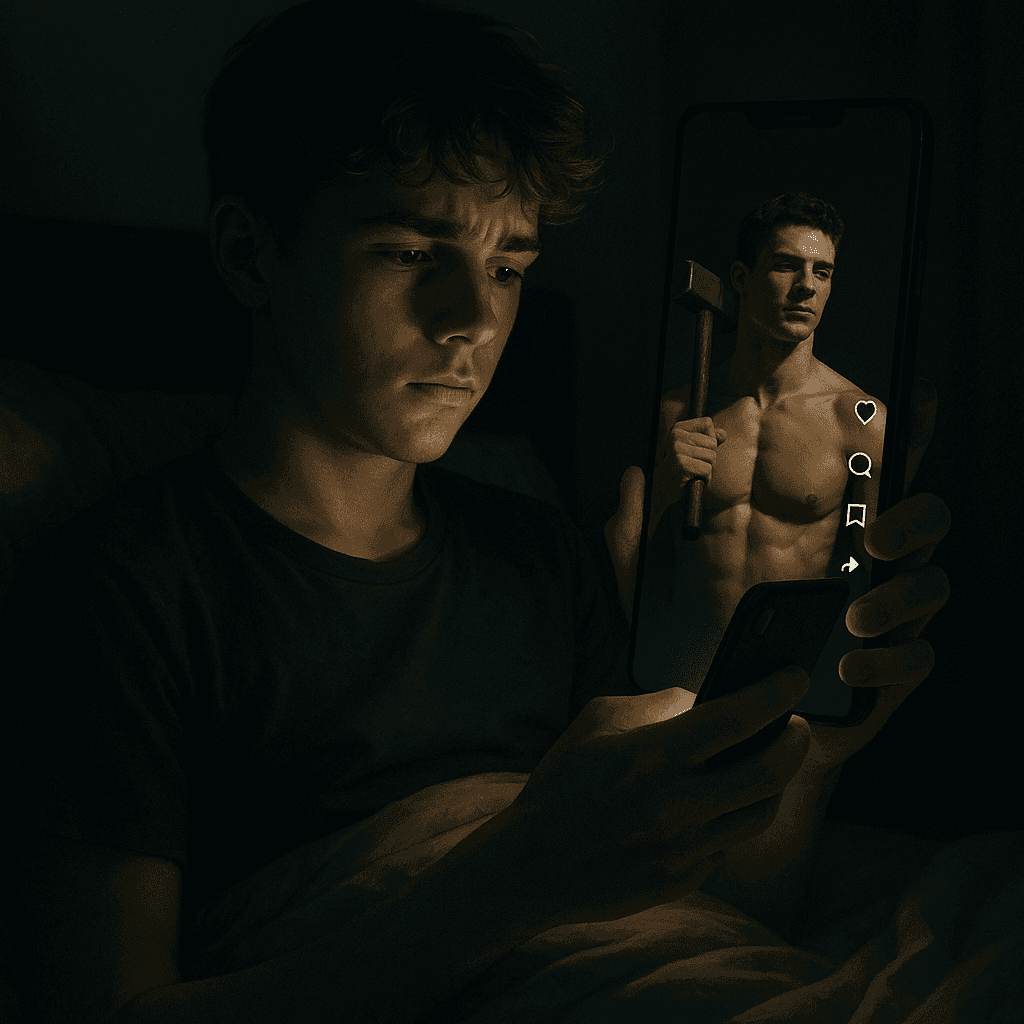
Looksmaxxing began as incel fan fiction about mathematically optimizing your face. It graduates to TikTok where teenage boys watch men take hammers to their cheekbones and call it “self‑improvement.” It gets a Merriam‑Webster definition that reads like a liability disclosure: “sometimes extreme or dangerous measures” including “bone smashing.” It walks fashion runways. It is, in other words, a lifestyle vertical.
Then Peters is charged with rape and drugging a minor in Massachusetts, while a civil suit from Aleksandra Mendoza alleges he raped her when she was 16 after recruiting her as a potential “female face of looksmaxxing.” Prosecutors name the charges. The coverage names the trend. NBC, AP, local stations, everyone repeats the same three words: “looksmaxxing influencer Clavicular.”
That phrase is the problem. It does not just link one man to a crime. It links a monetized category to a risk profile. Platforms can live with predators. They cannot live with traceable predators whose behavior maps neatly onto a branded content niche that buyers can search in their dashboards.
Why platforms move from vibes to written rules
Platforms already have all the tools to squeeze this ecosystem without naming it. They can age‑gate, throttle recommendations, bury videos under generic “dangerous challenge” policies. They love mushy categories because mushy categories do not show up as exhibits in court.
So why do I think they will cross their own line and write “looksmaxxing” into the public policies anyway?
First, the legal drumbeat will not let the term fade. Peters’ criminal case in Massachusetts will meander: hearings, motions, maybe a trial. The civil case will drip discovery. Every procedural blip will refresh the headline formula: “Looksmaxxing influencer faces…” The longer that repeats, the harder it is for a comms team to claim this is a random lifestyle blogger who happened to drink in Cape Cod.
Second, the experts have already filed the paperwork. When a dictionary defines looksmaxxing as sometimes “extreme or dangerous,” and medical types describe bone smashing, crash diets, and supplement stacks for teenage boys as self‑harm adjacent, platform safety people hear: congratulations, this now belongs in the same risk bucket as cutting videos and Tide Pod challenges.
Third, advertisers hate surprises more than they love jawlines. Agency brand‑safety teams live to build exclusion lists. Once the Peters story saturates trade press and there are screenshots of bone smashing tutorials next to soda ads, the agencies will add “looksmaxxing” and “bone smashing” right beside “incel” and “Red Pill” in the “never again” column. At that point, platforms have two options. They can let each buyer quietly block those terms, losing impressions in a messy, fragmented way. Or they can preempt it with a clean policy line: this category is not eligible for revenue share.
Guess which one is easier to explain in an earnings call.
Fourth, regulators want a systemic villain. Youth mental health bills in U.S. states, the EU’s DSA risk reports, FTC and AG investigations, they all look for repeatable patterns where recommendation algorithms feed teens content tied to self‑harm and gendered violence. Looksmaxxing is almost lab‑engineered for that narrative. A labeled trend. Heavy teen male audience. Links to misogynistic manosphere ideology. A marquee case that allegedly involves grooming through DMs and influencer promises.
When the next hearing asks, “Do you monetize looksmaxxing content shown to minors,” it helps to be able to answer, “Per our public policy update on page 7, no we do not.”
The line they will actually draw
The future is not a purge. It is paperwork.
The likely move looks like this: TikTok and YouTube (with Instagram close behind) update their monetization or “advertiser‑friendly” guidelines sometime before June 2027. They either name looksmaxxing outright or fold it into a new bullet that spells out “extreme self‑alteration practices such as bone smashing” as ineligible for revenue sharing and premium ads. It slots under existing self‑harm, dangerous acts, or hate content sections.
The language will be gentle enough to sound boring. Something like, “Content that promotes extreme or dangerous physical self‑alteration, including certain looksmaxxing practices, is not eligible for ad revenue share.” There will be a blog post with stock photography of serene teens and a sentence about “supporting positive body image.”
Crucially, most of the videos stay up. Creators still post jawline hacks and masculinity rants. The platform still gets engagement, data, and the option to serve limited or house ads. The difference is that the high‑octane stuff no longer earns a share of the money for the people on camera.
The formal rule also gives them cover to make Peters himself radioactive. Once the legal saga hits a sufficiently noisy stage, expect permanent bans or explicit demonetization notices for his channels, justified as both “offline harm” and “repeated violations of dangerous self‑harm and sexual conduct policies.”
What could make this forecast wrong
There is a world where I eat this column. It looks like this:
- Peters takes a quiet plea or the cases stall, so the media cycle moves on before policy teams can sell a new category to leadership.
- Advertisers decide their own blocklists are enough and never demand a platform‑level label. Quiet throttling does the job, no one needs to say “looksmaxxing” in a PDF.
- The trend dissolves into generic fitness content, all “facial yoga” and “glow up,” so any attempt to define it narrowly becomes unenforceable.
Platforms love ambiguity. If they can smother looksmaxxing under existing rules without naming it, they get deniability and flexibility. My argument is that the combination of criminal charges, a civil suit, medical concern, and advertiser panic will make ambiguity more expensive than a single ugly sentence in a monetization document.
The future, sponsored by nobody
By mid‑2027, I expect at least two of the big three to have an explicit policy hook that says, in corporate Esperanto, “jawline martyrdom is bad for brand safety.” Looksmaxxing will not vanish. It will fragment, euphemize, and flee to Kick and fringe sites that are happy to launder trauma through tip jars.
On the majors, the looksmaxxers will rebrand as “holistic male improvement mentors,” complain about censorship, and keep posting. The platforms will collect the engagement and the data. The advertisers will sleep a little better.
It is the perfect compromise for the creator economy: everyone stays, no one heals, and for the first time in years a teenage boy can break his own cheekbone on camera without accidentally selling you a toothbrush.
Around the Shallot
Stay in the same broken universe.
Forecasts, satire, cartoons, and quizzes should feel like one publication, not disconnected tabs.
Tech
‘Don’t Regulate Us,’ Beg AI Founders Currently Selling Regulation-As-a-Service
Silicon Valley hails Trump’s plan to let AI companies write their own rules, promises to sell those rules back to everyone else by Q4.
Oct 11

Forecast
Through December 10, Houthis Won’t Damage Pakistan or Turkey Infrastructure
The Mecca Defense Pact just put two more flags on the Saudi firing chart. The consensus panic says this widens the war within weeks. The signal says the Houthis will talk big, hit Saudi and the sea, and leave Pakistan and Turkey’s hard targets alone for this 60 day window.
Comments
Be the first to comment.