Trump And Iran Will Sign A Narrow Islamabad Ceasefire Memo
My call: Trump and Iran will sign a thin Islamabad memorandum that pauses the war and reopens Hormuz, without touching the nuclear file, before the Évian G7 is over.
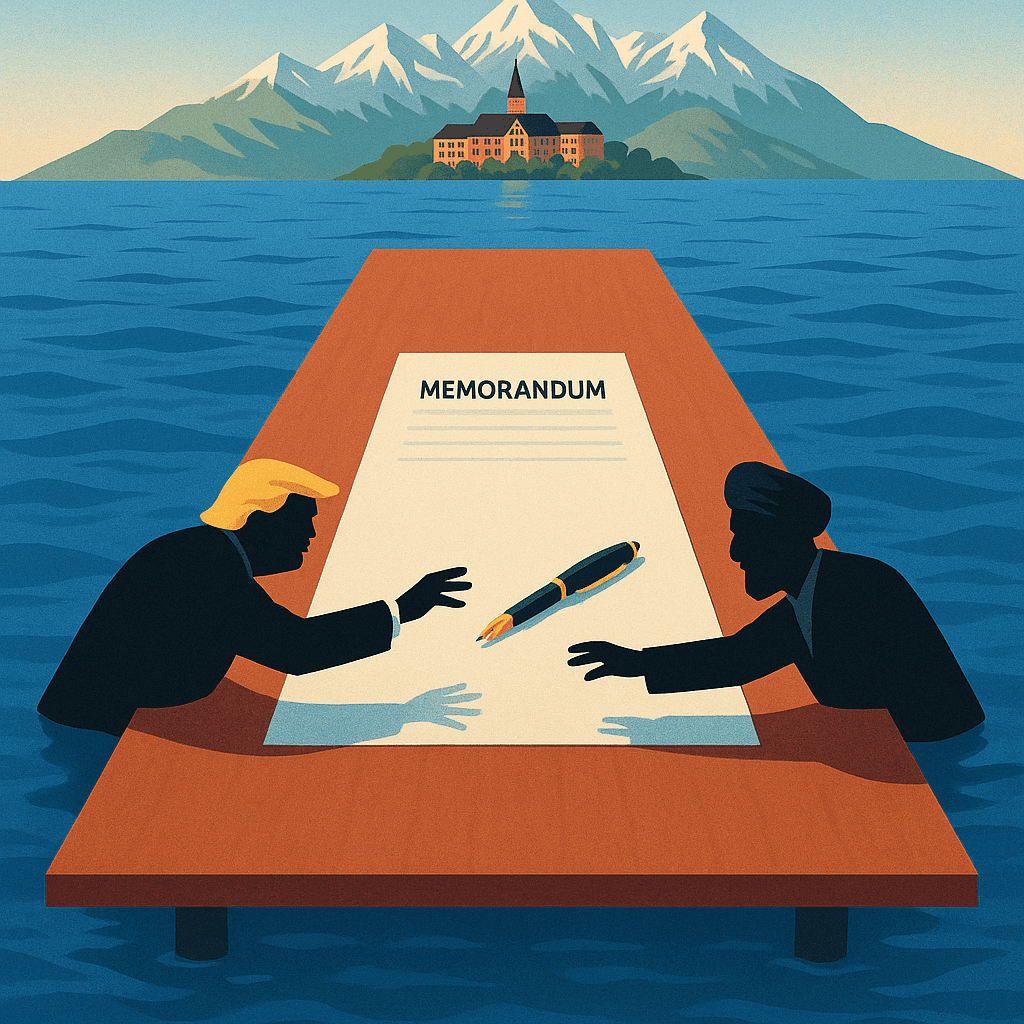
The Call: A Real Memo, A Fake “End of War”
Trump says a “great settlement” with Iran is basically done. Iranian officials say, calm down, not on Sunday, maybe in “the coming days.” Pakistan cheerfully promises an electronic signing in 24 hours. Israel says, politely, that Trump has screwed them.
My call: by the time the G7 in Évian-les-Bains wraps, the United States and Iran will have signed a formal Islamabad memorandum of understanding. It will lock in at least a 60-day ceasefire and a path to reopen the Strait of Hormuz, and it will very deliberately kick the nuclear file to later talks.
This is not a prediction about durable peace. It is a prediction about signatures on a PDF while leaders pose next to bottled water and riot police.
Why A Deal Lands Before The Évian Lights Go Out
Start with incentives. Trump is walking into a global summit on his 80th birthday weekend with a war he promised to “end beautifully,” an oil chokepoint still mined, and a schedule that includes G7 leaders, Middle Eastern partners and a Versailles dinner with Macron. If a president could manifest a signing ceremony by sheer ego, this one would.
He has already declared victory in outline. The White House is selling a 14-point framework: Iran reopens Hormuz within roughly 30 days, the U.S. suspends hostilities, reconstruction money and some sanctions relief float in, and the nuclear issue becomes season two. Vice President JD Vance and envoy Steve Witkoff have been pre-cast as the Geneva photo extras.
On the other side, Iran is war tired and cash starved. The Strait of Hormuz handles about 20 million barrels of oil a day. Keeping it closed is leverage, but also self-harm, and the leadership is heading into the July funeral ceremonies for Ayatollah Ali Khamenei. You do not want a full U.S. shooting war peaking as elites are jockeying around the casket.
Foreign Minister Abbas Araghchi posts that an agreement has “never been closer.” Spokesman Esmail Baghaei says it is not happening tomorrow, but “in the coming days” is on the table. Pakistan’s Shehbaz Sharif is already drafting his thank-you tweet. Everyone with a podium is, in their own way, rehearsing for an announcement.
The Islamabad Memo: Thin, Fast, And Nuclear-Free (For Now)
Strip away the spin and the first-phase deal is not complicated.
- A written memorandum, the Islamabad memo, that establishes a renewable 60-day ceasefire.
- Commitments and timelines to de-mine and reopen Hormuz, with G7 navies invited to bring their robots.
- Some language on U.S. restraint and economic sweeteners for Iran.
- An explicit carve-out: no binding nuclear concessions in this document.
Baghaei has already said it out loud. At this stage, no nuclear discussion. That is not a bug, it is the feature that makes a quick signing possible. You can close a narrow war-only memo in days. You cannot, in days, redesign the architecture of uranium enrichment and regional deterrence with Israel screaming from the hallway.
Which is, by the way, exactly what Israel is doing. Senior officials are telling reporters that the agreement is bad for Israeli interests, that it rewards Iranian pressure, and that, quote, “Trump screwed us.” Netanyahu is not invited to Trump’s G7-side meetings with Qatar, the UAE and others. When your closest regional ally thinks you just cut a side deal with its main enemy, you do not linger on the nuclear chapter. You punt it.
Summit Theater, Real Stakes
Summits are built to produce paper. The Évian G7 has already been framed as the venue where Western allies talk demining plans for Hormuz. Britain and France are signaling they are ready to help once someone, somewhere, agrees Iran will not shoot at their minesweepers.
They also need clarity. Insurance markets and oil traders are not soothed by vibes. They are soothed by dated documents with signatures, even if the verification annex is more wishful than watertight. A thin ceasefire MOU is enough for G7 leaders to say, we are supporting implementation, here are the ships.
The alternative is a summit that opens with Trump having just canceled a strike, Iran still capable of closing Hormuz overnight, and everyone improvising crisis language while they were hoping to argue about tariffs. G7 planners hate that scenario almost as much as they hate last-minute agenda items labeled “to be confirmed.”
Pakistan helpfully offers an electronic signing. No Geneva red carpets, just secure lines and a PDF. That is the low-friction path when you want a deal in days not weeks. And it neatly splits the difference between Trump’s taste for ceremony and Tehran’s taste for not looking like it flew in to smile with him.
What Could Blow This Up
There are honest ways for this forecast to be wrong that do not involve everyone secretly wanting war.
Diplomatic deadlines slip. The technical annex on demining might not be ready. Iran may dig in on reconstruction or sanctions language once the domestic critics wake up. Trump might decide, 12 hours before wheels up, that the text does not look “great” enough on Fox and yank it for a rewrite.
There is also the spoiler risk. Any incident at sea, any rocket from an Iranian proxy that hits the wrong radar, any Israeli operation that crosses an invisible line, and suddenly the politics in Tehran or Washington flip. The same officials tweeting “never been closer” can, within one news cycle, tweet “conditions no longer exist.”
But notice who is not actually threatening to walk right now. Iran is cautiously hopeful. The U.S. is already talking demining logistics at the G7. Pakistan is too far out on the limb to quietly climb back down. The regional oil states are planning around reopening, not permanent closure. The market is trading a near-deal, not a near-collapse.
The Stakes: Oil, Optics, And A Reusable Crisis
If the memo gets signed on this timeline, the immediate effect is simple. Oil markets exhale. Shipping insurance quotes come down a notch. Navies start sweeping mines instead of each other’s radar.
The deeper consequence is less reassuring. A thin, reversible ceasefire that reopens Hormuz without touching the nuclear file is structurally fragile. It teaches everyone a lesson: closing the world’s most important oil chokepoint is a powerful way to extract concessions and photo ops. You can expect that tactic to return in future seasons.
Inside the region, Gulf leaders will take note that Washington can do a big bilateral with Tehran, then invite them in later to help clean up the mines. In Tehran, hard-liners will take note that a couple of months of controlled brinkmanship produced American concessions and Israeli fury. In Washington, Trump will take note that you can call a 60-day ceasefire the “end of the war” and millions of voters will happily round up.
And when the nuclear talks finally arrive, every side will insist that this little Évian-era memo was the easy part.
Satirical verdict: Expect a signed Islamabad memo by G7 close that pauses the war, schedules the minesweeping and leaves the hard stuff for later. In other words, the Strait of Hormuz will reopen for tankers long before anyone reopens the file named “reality.”
Around the Shallot
Stay in the same broken universe.
Forecasts, satire, cartoons, and quizzes should feel like one publication, not disconnected tabs.
Tech
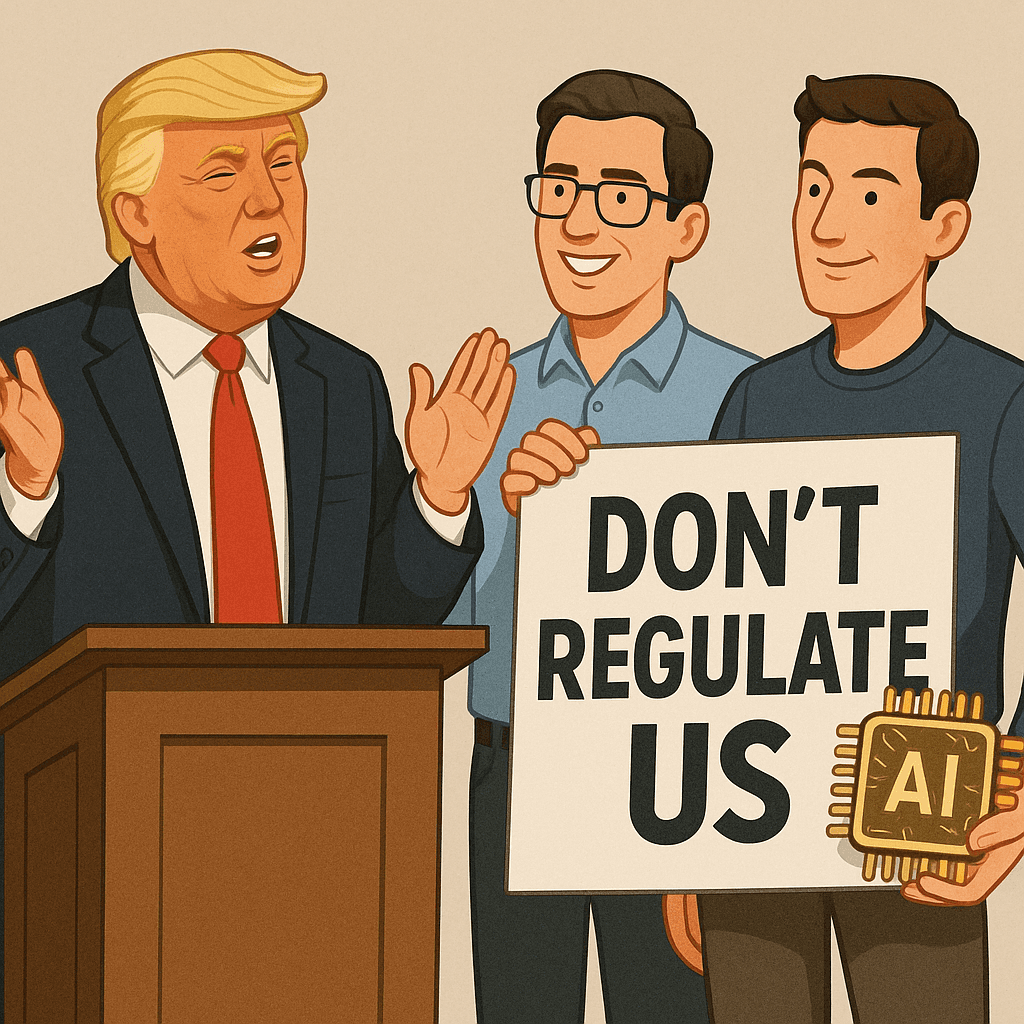
‘Don’t Regulate Us,’ Beg AI Founders Currently Selling Regulation-As-a-Service
Silicon Valley hails Trump’s plan to let AI companies write their own rules, promises to sell those rules back to everyone else by Q4.
Oct 11
Forecast
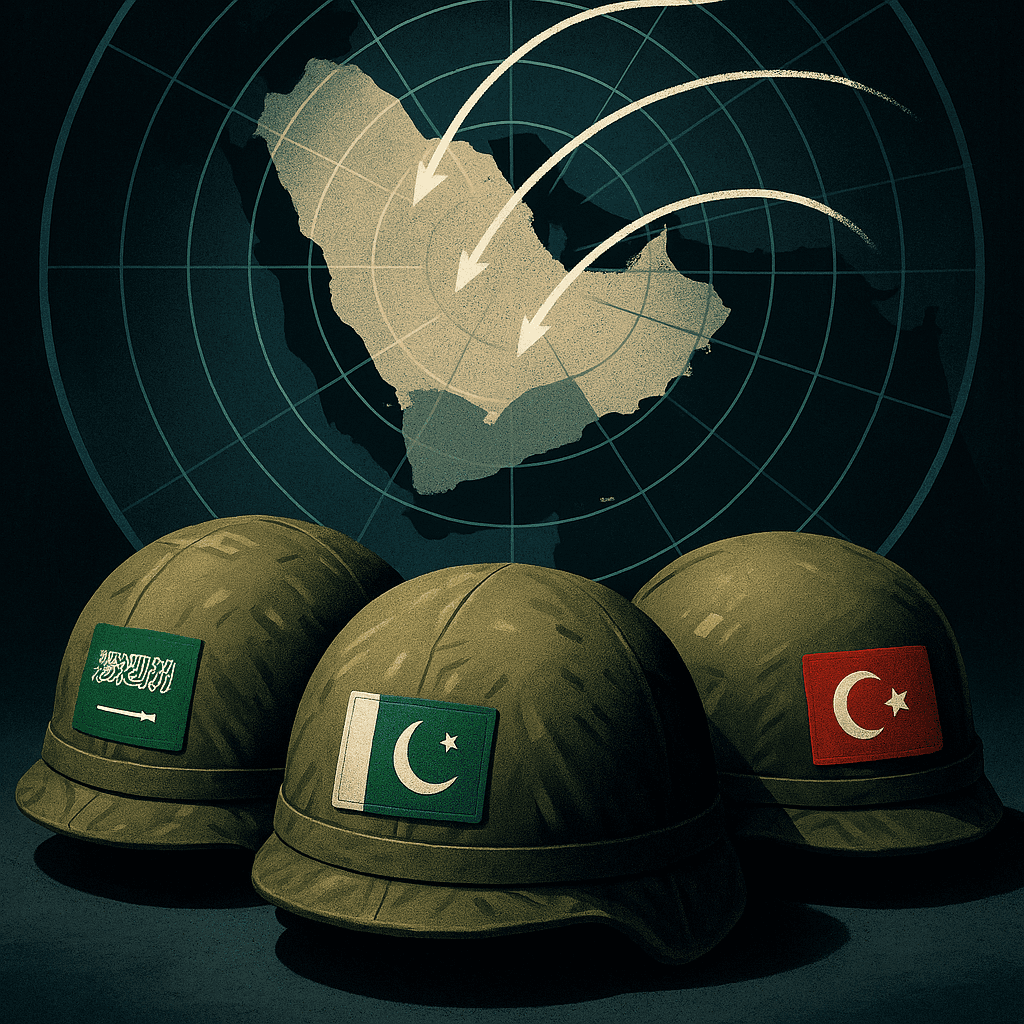
Through December 10, Houthis Won’t Damage Pakistan or Turkey Infrastructure
The Mecca Defense Pact just put two more flags on the Saudi firing chart. The consensus panic says this widens the war within weeks. The signal says the Houthis will talk big, hit Saudi and the sea, and leave Pakistan and Turkey’s hard targets alone for this 60 day window.
Comments
Be the first to comment.