U.S. Won't Launch New Gulf Combat Deployment Within 60 Days
My call: Washington keeps bombing from afar, not marching in with a new Gulf war footprint.
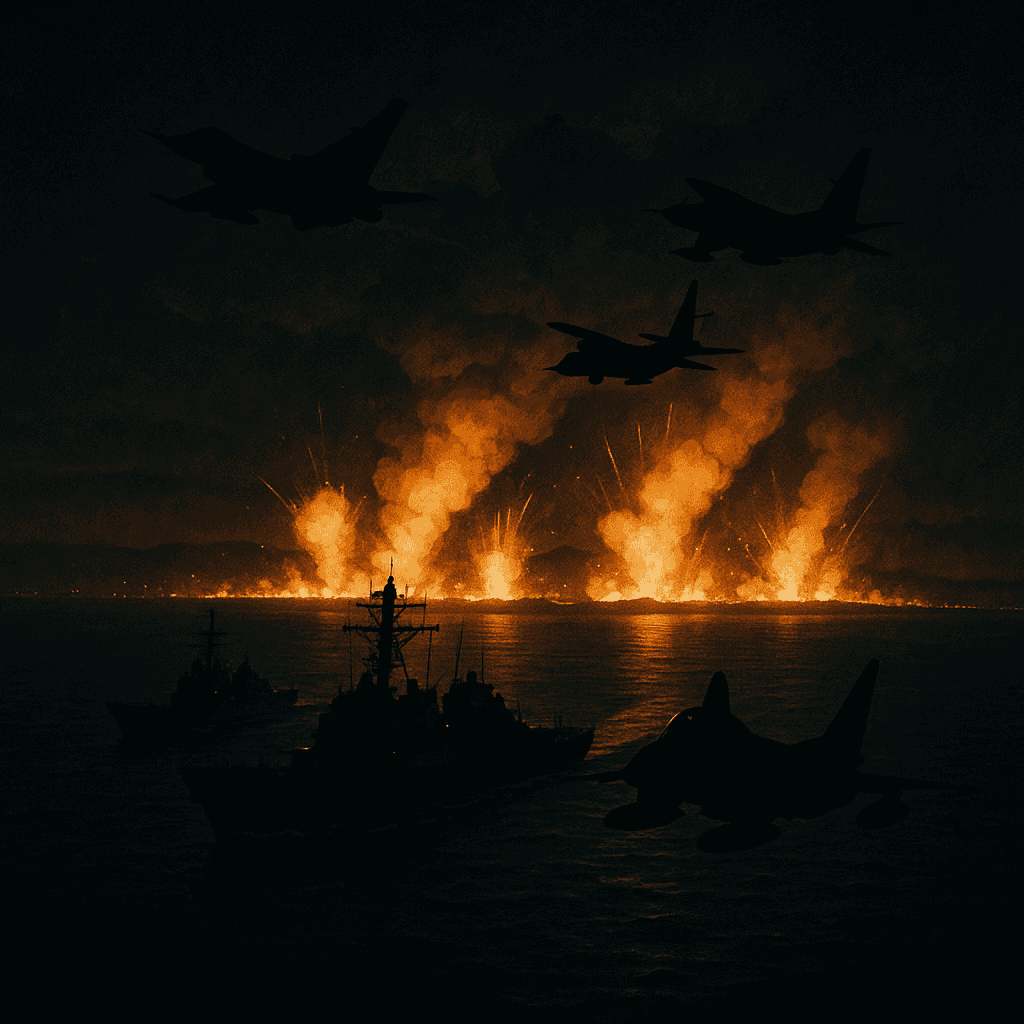
Over the next 60 days, I expect Washington to keep this fight in the air and at sea, not on the ground. No new carrier armada rolled out as a named campaign, no 5,000 troop combat surge into Bahrain or Kuwait with its own logo and patch.
The footage already looks like a war: U.S. jets hitting Iranian air defenses on consecutive nights, CENTCOM touting disabled tankers, Iranian missiles and drones launched toward Gulf bases, Israeli strikes lighting up Beirut. The old ceasefire language has vanished. Yet the White House still leans on words like "limited," "busy tonight," and "they'll pay a price," rather than "new operation," "campaign," or "mobilization."
This is not restraint so much as political accounting. Both sides have settled into a level of sustained violence they believe they can manage. A big, labeled deployment would break the story they are trying to sell.
The Forecast Line: What Counts as a Gulf War "Flip"
To make this scorable: by day 60, I expect no public move that looks like a fresh Gulf war footing. Specifically, no Pentagon announcement that:
- sends at least one additional U.S. carrier strike group or amphibious ready group into the Gulf or Arabian Sea as part of the Iran crisis, and
- adds 5,000 or more new U.S. ground troops to Gulf bases, framed as a response to these clashes.
Normal rotation changes do not count. Quiet dribbles of air defense batteries do not count. A war, in this sense, is something they are willing to name on camera.
Why the Fireworks Stay Over the Horizon
Many observers assume that one more bad night will push Trump into a large, visible surge. The signals point to something less dramatic and more cynical.
First, Washington is already getting what it wants from the sky and sea. The U.S. has hit Iranian radars, air defenses, communications nodes, and blockade runners without a major visible buildup. Existing basing in Bahrain, Qatar, and elsewhere, plus one carrier group and bombers within reach, is enough to punish, harass, and degrade.
Trump's pattern is not a single "shock and awe" moment, it is a steady promise to "hit them again tomorrow." That is the logic of a subscription style air campaign, not a one time invasion.
Second, Iran is retaliating carefully stupid, not catastrophically stupid. Ballistic missiles toward Bahrain and Kuwait that mostly get intercepted or fall short. Drones swatted out of the sky. Threats to close the Strait of Hormuz, plus periodic disruption, but not a sustained, near total shutdown.
Tehran is making noise, proving it can hurt shipping and scare allies, while steering away from the one scenario that would almost force a U.S. surge: dozens of Americans killed in a single strike, or Hormuz shut in a way that sends oil above $100 and keeps it there.
Third, markets have priced a grind, not an explosion. Oil is up but below panic levels. Ratings agencies are revising global outlooks to "deteriorating," not "doomsday." Traders have filed this under a familiar heading: messy, inflationary, but survivable. If Wall Street believed a major Gulf war deployment was imminent, you would not see this mix of shrug and risk premium.
As long as the economic pain feels chronic rather than sudden, the political incentive in Washington is to keep the fight compartmentalized. A large visible deployment creates large visible blame.
Fourth, allies want protection, not a billboard for occupation. Bahrain and Kuwait want U.S. cover against those Iranian missiles. They do not want nightly footage of new American brigades landing at their airports, along with protests on the ground and awkward questions in parliament.
So you get what you see now: U.S. jets and drones overhead, small increments of air defense crews, logistics staff, and likely some additional special operators quietly raising the total. Enough to say "we are here," not enough to admit that "here" now sounds like 2003.
Fifth, the drone attrition problem is a logistics story, not a deployment story. Iran and the Houthis have been destroying MQ 9 Reapers at an uncomfortable pace. That hurts intelligence and targeting. It does not, by itself, justify an armored buildup.
The Air Force can respond with more manned sorties, creative basing, and a higher maintenance bill, instead of an armored division. CENTCOM planners like big buffers, but they also know a big buffer comes with a big headline.
The Tail Risks That Break My Bet
There are ways this forecast fails, and they are not subtle.
If Iran or a proxy lands the nightmare hit, a missile into a crowded U.S. barracks or a command center with double digit American dead, the ceiling on restraint shatters fast. Trump's line shifts overnight from "hit them very hard" to "we are sending more troops to protect our people and allies." In that world, you get an extra carrier or amphibious group and a named operation before the 60 days are up.
Iran could also decide that its best bargaining chip is worth cashing in and move toward a real Hormuz squeeze: mined shipping lanes, days long effective closures, insurance markets in meltdown. At that point the pressure from energy markets, Gulf capitals, and U.S. voters who just discovered what the Strait of Hormuz is would all point in the same direction: secure the chokepoint, and do it loudly.
Then there is Israel. Netanyahu's objectives are intentionally maximalist: regime collapse in Tehran, the nuclear program dismantled, Hezbollah shattered. If he pushes far enough into Iranian territory or the IRGC high command, Tehran's clean line of "this is about the Americans, not you" could snap. A broad Iranian response aimed at U.S. assets or Gulf infrastructure would leave Washington choosing between accepting humiliation or deploying at scale.
Any of these would break my call. They are not the base case. They are the floor that keeps everyone stepping carefully.
How You Will Know If I Am Wrong
Watch for three kinds of signals.
Force posture. A fresh carrier strike group or amphibious ready group publicly ordered into the Gulf or Arabian Sea "in response to Iranian aggression," not as a routine swap. Pentagon briefings that cite specific units and missions, not just general deterrence.
Boots and law. Clear confirmation that 5,000 or more additional U.S. troops are heading to Gulf bases in combat roles, along with any attempt at an Iran specific or Gulf specific authorization for the use of military force, or even hearings that talk about a new "campaign." When the lawyers get involved, the fiction of a casual air war starts to fade.
Hormuz and casualties. A shift from "disruption" to "partial closure" that lasts for days, or a single attack with a conspicuous U.S. body count. Markets will move as fast as the press office does.
The Long Grind Is the Policy
Forecasts like tidy story arcs: ceasefire, crisis, then either war or peace. What we have instead is a third option that policymakers like and publics misread: war as a managed service.
U.S. jets hit Iranian systems at night, Iranian missiles harass Gulf bases in return, Israel runs its own track in Lebanon and beyond, and traders nickname it "the long grind" while they adjust inflation expectations. Everyone claims to want an end state. No one wants to pay the upfront cost it would take to get there.
So I do not expect a big, shiny new Gulf deployment by day 60. I expect something duller and more corrosive: a war that is too large to ignore and too carefully structured to fully acknowledge.
In 2003, Washington sold the region a war it said would be quick and decisive. In 2026, it has upgraded to a premium version: a war you never have to admit you bought.
Around the Shallot
Stay in the same broken universe.
Forecasts, satire, cartoons, and quizzes should feel like one publication, not disconnected tabs.

Tech
‘Don’t Regulate Us,’ Beg AI Founders Currently Selling Regulation-As-a-Service
Silicon Valley hails Trump’s plan to let AI companies write their own rules, promises to sell those rules back to everyone else by Q4.
Oct 11
Forecast
Through December 10, Houthis Won’t Damage Pakistan or Turkey Infrastructure
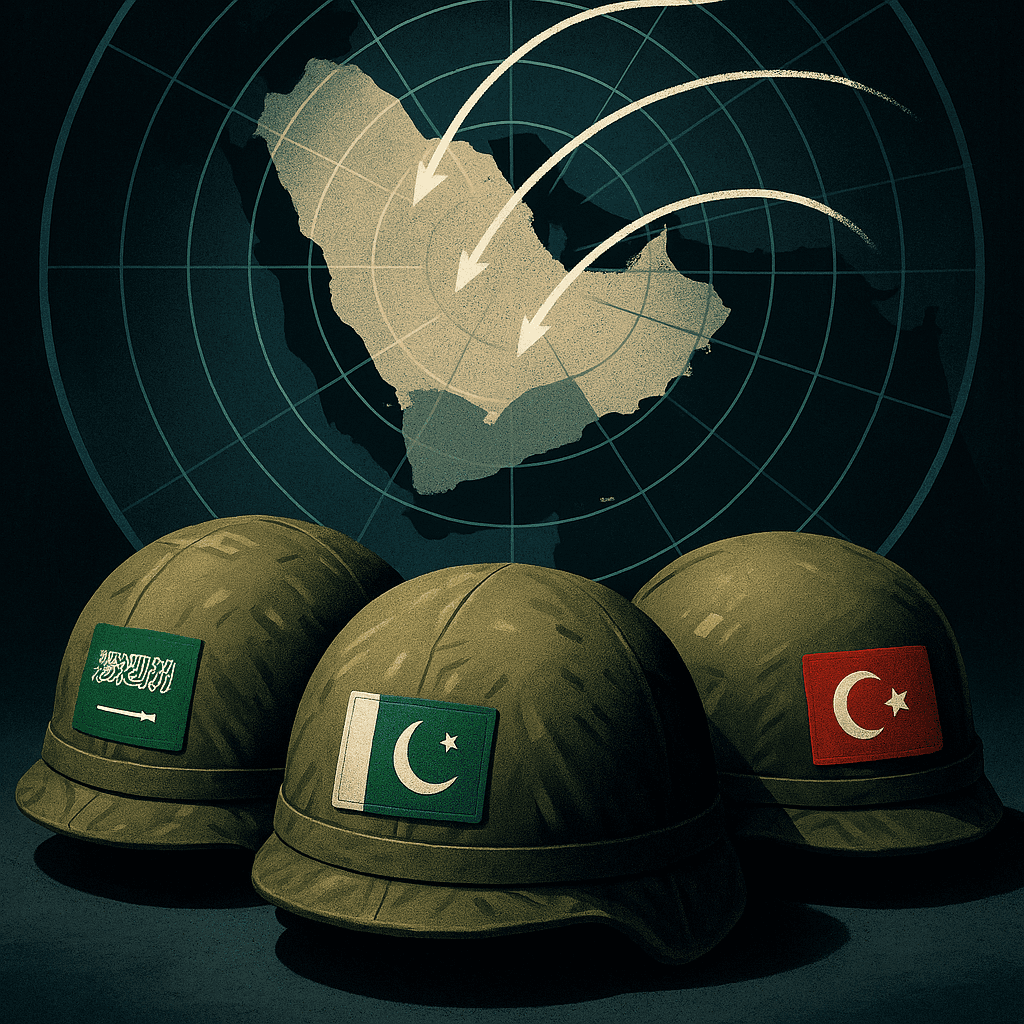
The Mecca Defense Pact just put two more flags on the Saudi firing chart. The consensus panic says this widens the war within weeks. The signal says the Houthis will talk big, hit Saudi and the sea, and leave Pakistan and Turkey’s hard targets alone for this 60 day window.
Comments
Be the first to comment.