US and EU Regulators Will Delay Structural Moves on Nvidia–Hugging Face
My call: in the next 120 days, US and EU enforcers huff and puff but stop short of swinging the wrecking ball.
The bet
Here is the line I am drawing on the floor: between now and about four months from today, no US or EU regulator will actually pull the trigger on blocking Nvidia’s $13 billion acquisition of Hugging Face or announce binding structural conditions that would reshape the deal.
They will posture, threaten, and convene panels about the future of open AI. They will not yet walk into court and say: this merger does not happen unless Nvidia gives up real ownership or carves Hugging Face away.
If I am wrong, you will know. There will be an FTC or DOJ complaint with Nvidia’s name on it, or a European Commission decision that reads like a prewritten obituary for the transaction. I am betting you do not see that within 120 days.
What Nvidia is really buying
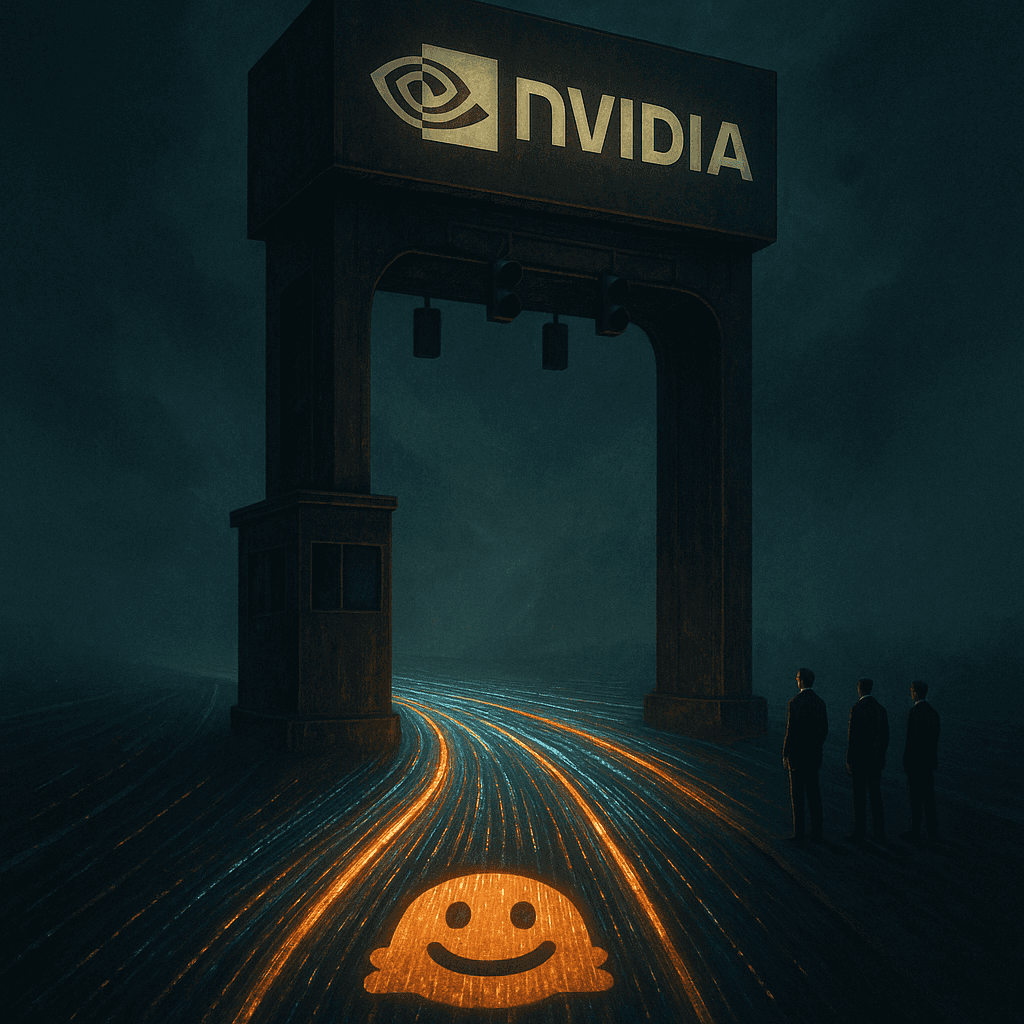
Nvidia is not spending $13 billion for a cute French brand and a hugging logo. It is buying the default lobby of the AI world, complete with flickering fluorescent lights and the faint smell of burned GPUs.
Hugging Face is where more than 18 million developers and over 200,000 companies go to find, test, and deploy AI models. More than 3 million models and half a million datasets live there. It is not just a GitHub for transformers. It is the map, the mall, and the information desk that always tells you the food court is "just around the corner" while quietly handing you a Nvidia-branded tray.
Nvidia already owns the highway under that mall. If you want to train or run big models at scale, you are usually renting time on Nvidia silicon. The company is throwing off something like $200 billion in free cash flow by 2027, so this deal barely shows up as a line item. It is strategic in the pure sense: move from being the toll collector under AI to also running the main storefront where everyone chooses what to build.
Their promise is soothing. Hugging Face will stay “genuinely neutral,” they say, just with an “exceptionally good” path for people who pick Nvidia hardware. In practice, that is all you need. Make your lane so obviously convenient that neutrality survives as governance branding while dying as an economic fact.
Why the regulators will bark, not bite, yet
The consensus hot take is that regulators will finally crack down on AI consolidation. The signal points somewhere more boring. Complex, vertical, AI flavored mergers move slowly, especially when the theory of harm is new.
Three things keep the wrecking ball in its cradle for the next four months.
First, clocks. The companies are talking about closing in the first half of 2027. That is an engraved invitation to regulators to take their time. Between initial notifications, Phase II style investigations in Brussels, and the US arguing over who even gets the case, 120 days is the warm up stretch, not the sprint finish.
Second, the legal theory is squishy. Everyone gets that letting the dominant AI chip vendor own the main model commons smells like trouble. Turning that smell into a courtroom story is harder. Prices on Hugging Face are mostly zero. Access is wide. The harm lives in subtle steering: defaults for Nvidia runtimes, better placement for Nvidia optimized models, smoother deployment to Nvidia partner clouds. That is catnip for economists and poison for judges who still like simple price and output charts.
Third, the politics want headlines, not handcuffs. In Europe, French Economy Minister Roland Lescure is already calling the deal a wake up call about sovereignty and capital. In the US, AI gatekeeper anxiety is the new bipartisan hobby. The cheap way to feed that mood is to announce reviews, float scary phrases like vertical foreclosure, and leak that you are asking hard questions. The expensive way is to file a lawsuit you might lose, on a novel AI theory, in less than four months.
Regulators are not dumb. They have watched courts smack down overreaching tech cases. They will want a thick record on how Nvidia already influences software stacks, how dependent enterprises are on Hugging Face, and whether rival chips are actually being frozen out, not just nervously tweeting.
The signals to watch while nothing happens
No formal block in 120 days does not mean quiet. It means the drama lives in process milestones rather than verdicts.
Expect a few obvious beats:
- The European Commission opening an in depth probe, with a press release that reads like a sternly worded diary entry about AI gatekeepers.
- The FTC or DOJ confirming they are reviewing the deal and maybe hinting that cloud and chip rivals are filing complaints.
- Nvidia and Hugging Face publishing flowery neutrality charters, promising non discriminatory access and multi chip support, while quietly showcasing how amazing the Nvidia path is for developers.
Developers will start to notice little nudges: a default runtime here, an optimized for Nvidia badge there. AMD and Intel will brief anyone who will listen about being boxed out. None of that forces a regulator into early structural remedies. It just loads the file.
If you want one clean tell that my call is in trouble, look for a senior official at DG COMP or the FTC to say the quiet part aloud: that ownership of the model hub itself is unacceptable and that only structural separation will do. That kind of sentence usually shows up much closer to a charging decision than day 90.
Who wins if the toll road goes through
In the short term, developers win. They get cheaper credits, smoother deployment, more one click integrations. Choosing Nvidia will feel less like picking a vendor and more like deciding not to swim upstream.
Nvidia wins twice. It strengthens its lock on AI compute and positions Hugging Face as the friendliest on ramp to that lock. Even if regulators later slap on behavioral remedies about ranking and access, the default patterns will already be set.
Regulators get something too: a showcase case study about how they bravely investigated the AI future. They can always bring the structural drama later, once the theories are polished and the PowerPoints are court ready.
The loser, if my forecast holds, is the idea that the AI commons should sit meaningfully outside any one trillion dollar stack. That question will be decided, but not on a four month news cycle. It will be decided after Nvidia has already started painting lane markers on the Hugging Face highway.
So yes, Nvidia is trying to turn Hugging Face into its AI toll road. The regulators will eventually argue about how high the tolls can go. For the next 120 days, they will be busy scheduling the hearing to discuss forming the committee to study the problem.
Around the Shallot
Stay in the same broken universe.
Forecasts, satire, cartoons, and quizzes should feel like one publication, not disconnected tabs.
Tech
‘Don’t Regulate Us,’ Beg AI Founders Currently Selling Regulation-As-a-Service
Silicon Valley hails Trump’s plan to let AI companies write their own rules, promises to sell those rules back to everyone else by Q4.
Oct 11

Forecast
Through December 10, Houthis Won’t Damage Pakistan or Turkey Infrastructure
The Mecca Defense Pact just put two more flags on the Saudi firing chart. The consensus panic says this widens the war within weeks. The signal says the Houthis will talk big, hit Saudi and the sea, and leave Pakistan and Turkey’s hard targets alone for this 60 day window.
Comments
Be the first to comment.