The United States has decided that the best way to secure its technological future is to unplug itself from the world’s largest electronics factory and trust that the supply chain grows back on its own, like a patriotic lizard tail made of lithium, PowerPoint, and one very caffeinated policy intern who thinks Excel is an industrial strategy.
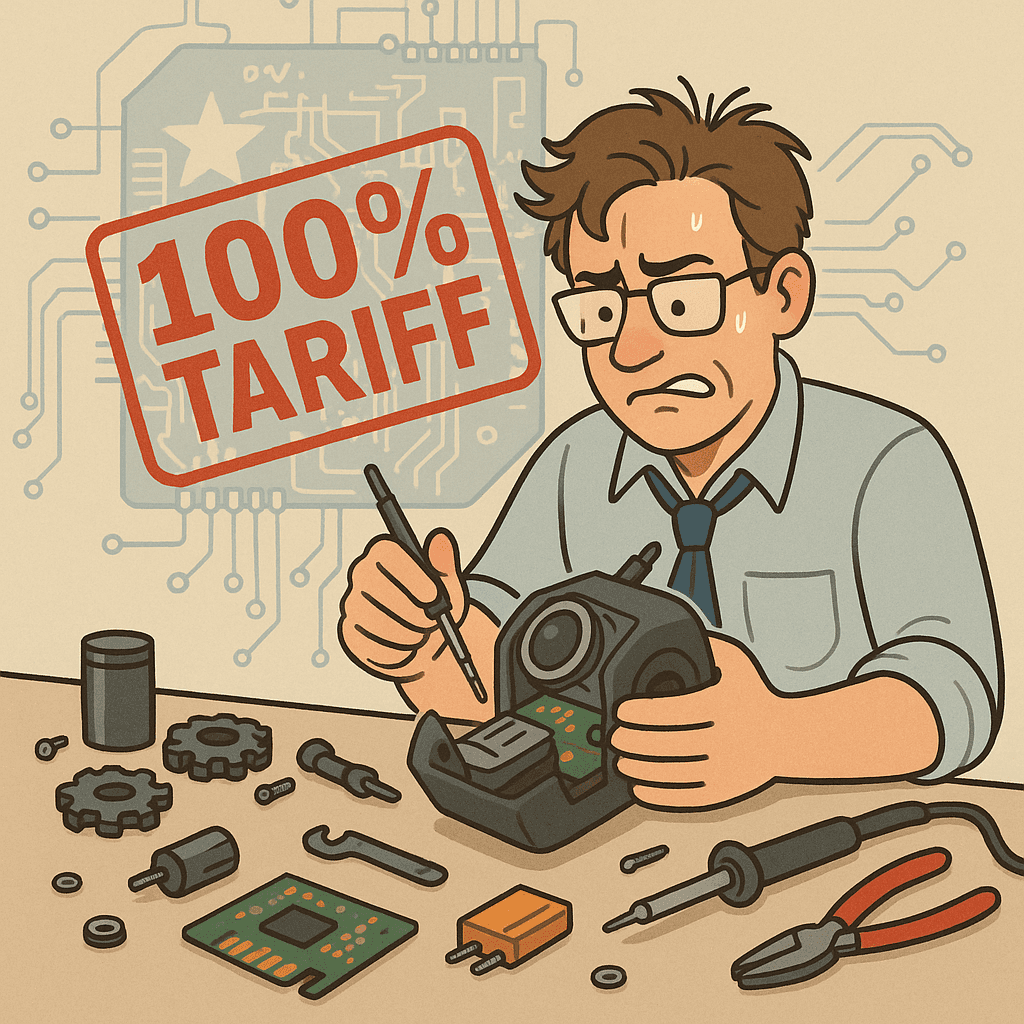
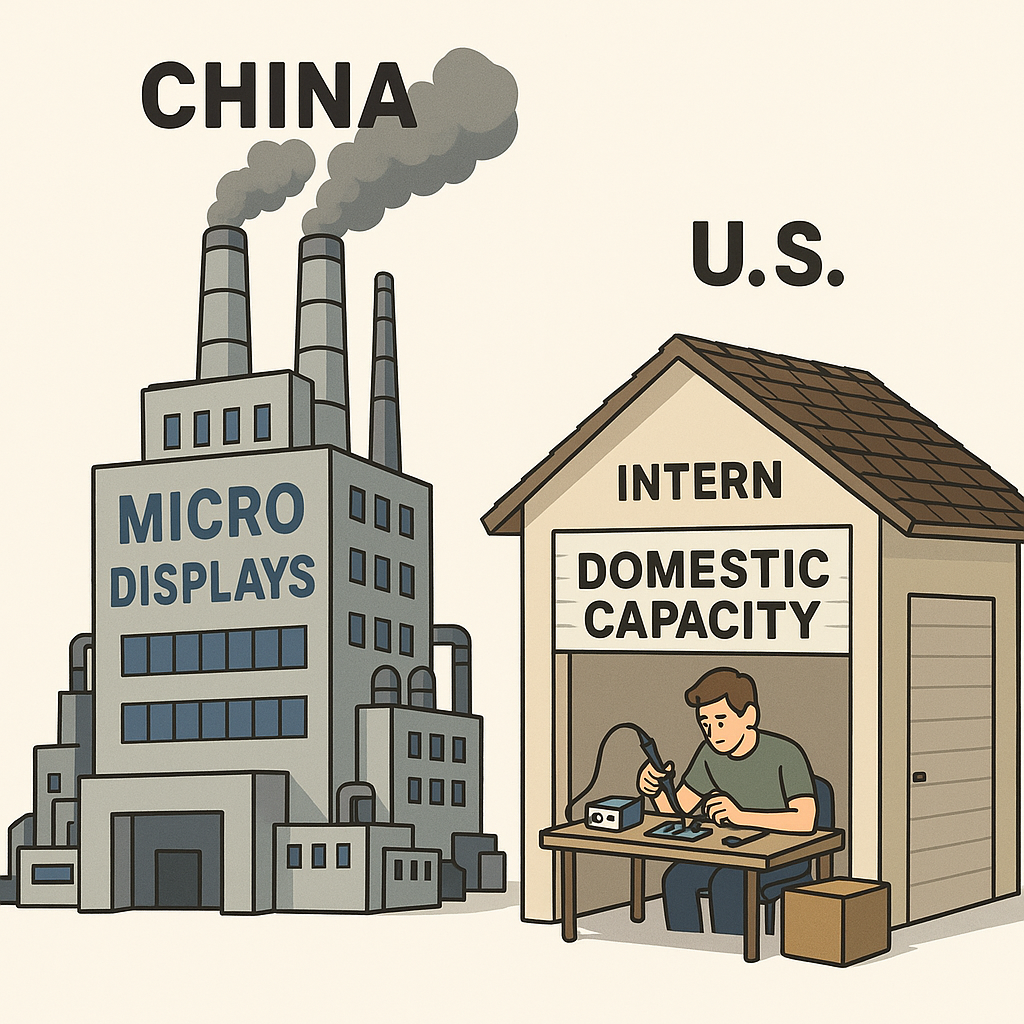
According to CNN Business, America “wants to wean itself off Chinese technology,” which is a delicate way of saying the federal government examined an economy where China can produce more micro displays in a week than the U.S. can manufacture in a year and replied, “We will fix this with a 100 percent tariff and a strongly worded PDF formatted by a consultant who still uses WordArt, still believes in fax blasts, and thinks clip art is a strategy.”
Under President Donald Trump’s escalating campaign, everything with a circuit, motor, magnet, or faint whiff of Shenzhen is being reclassified as a national security threat. Electric vehicles using Chinese software are forbidden. Chinese EVs themselves get a 100 percent tariff. Drones are being priced as if they are artisanal sourdough and must be hand-proofed by a deputy undersecretary. The Federal Communications Commission has even added power inverters and advanced robotics, including humanoid robots that can run, jump, dance, and fight, to its list of restricted foreign technology, finally confronting the core danger to America: competitively priced robot dogs that arrive on time and do not require a ceremonial ribbon cutting for every firmware update.
The policy objective is clear. America will no longer be dependent on the People’s Republic of China. It will instead be dependent on anybody else who is still taking orders and has a spare industrial park behind a freeway off-ramp, a functioning substation, and at least one English language brochure listing “innovation” three times on the same page.
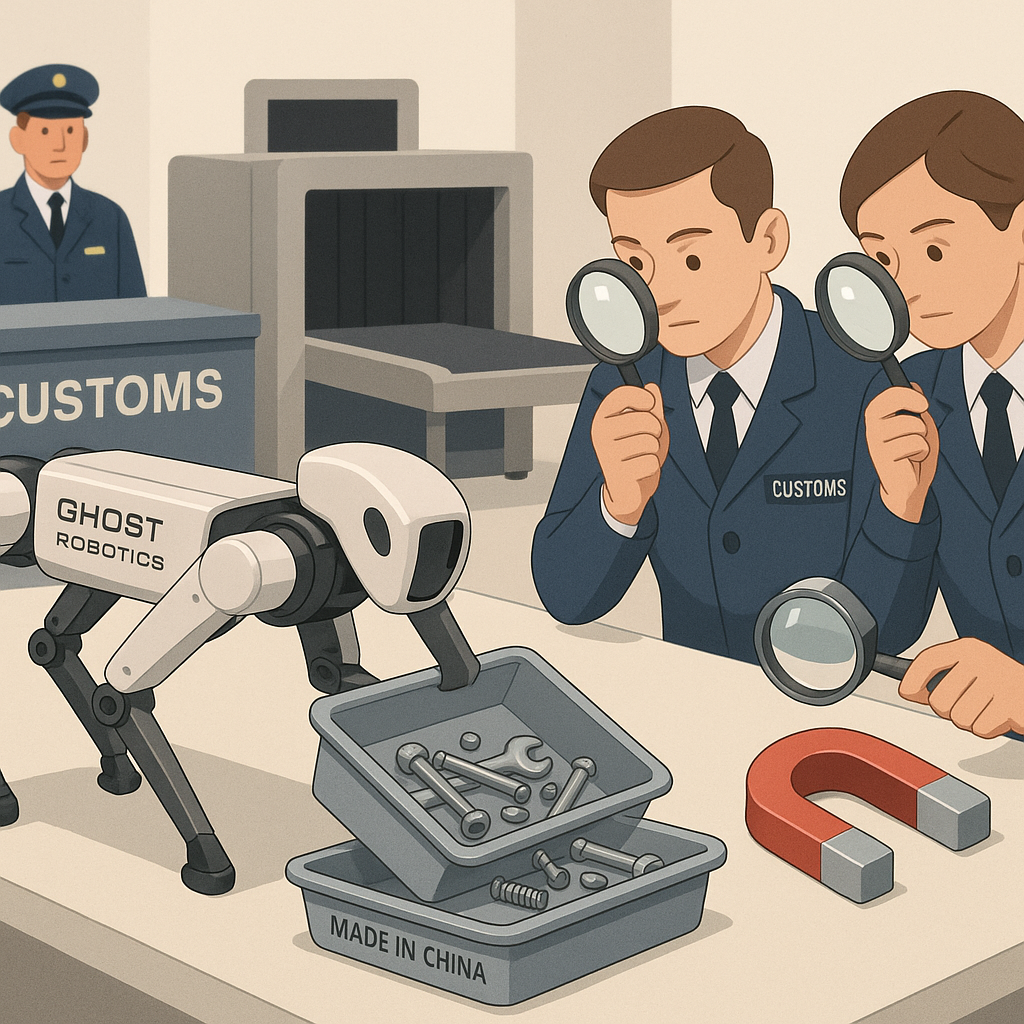
The new strategy has been particularly clarifying for companies like Ghost Robotics, whose business model used to be “make industrial and military robot dogs that work” and is now “teach customers why their robotic K-9 is back-ordered until 2031.” CEO Gavin Kenneally has already shifted motor production from China to South Korea and now buys neodymium magnets from a European supplier. There is only one catch. The raw neodymium still comes from China, politely circumnavigating the globe like a very expensive boomerang that stops once in Rotterdam for compliance paperwork and once in Antwerp so a consultant can confirm it feels sufficiently Western.
Starting in January, that raw material will be subject to a ban, forcing Ghost Robotics to choose between finding neodymium somewhere that does not exist yet or pivoting into a new product category, such as wooden robot dogs with strong emotional support skills, a nine month lead time for screws, and a warning label that reads “Non operational but values aligned and fully tariff compliant.”
“We have successfully de risked our motor assembly,” a fictionalized Ghost Robotics procurement manager explained while scrolling through a spreadsheet titled Countries That Might Have Rocks. “All we need now is a planet that mines neodymium purely for vibes, signed letters of intent, and a bipartisan photo op.”
Chef Robotics faces a similar problem. The startup built its entire cost structure around Chinese components so it could sell robot arms that assemble ready made meals at a price point food manufacturers would accept. This worked until the U.S. government remembered that “cheap, reliable parts” are a known gateway to geopolitical dependence and, worse, consistent margins.
“For a while it was, ‘Let’s find the best components at the cheapest price,’” Chef Robotics founder Vipin Bhageria told CNN. Policy innovation has corrected this error. The new mantra of U.S. industry is: “Let’s find the fifth best components at a patriotism adjusted price and fill out 26 pages of origin tracing for every screw, washer, and inspirational poster in the break room.”
Investors remain optimistic. They describe the company’s new value proposition as “premium latency,” a rare blend of longer wait times, higher prices, and a glossy pitch deck slide labeled Supply Chain Serenity Horizon that features a stock photo of a woman eating salad in front of a warehouse, a tiny American flag in the corner, and a watermark that reads Not For Use In Actual Operations.
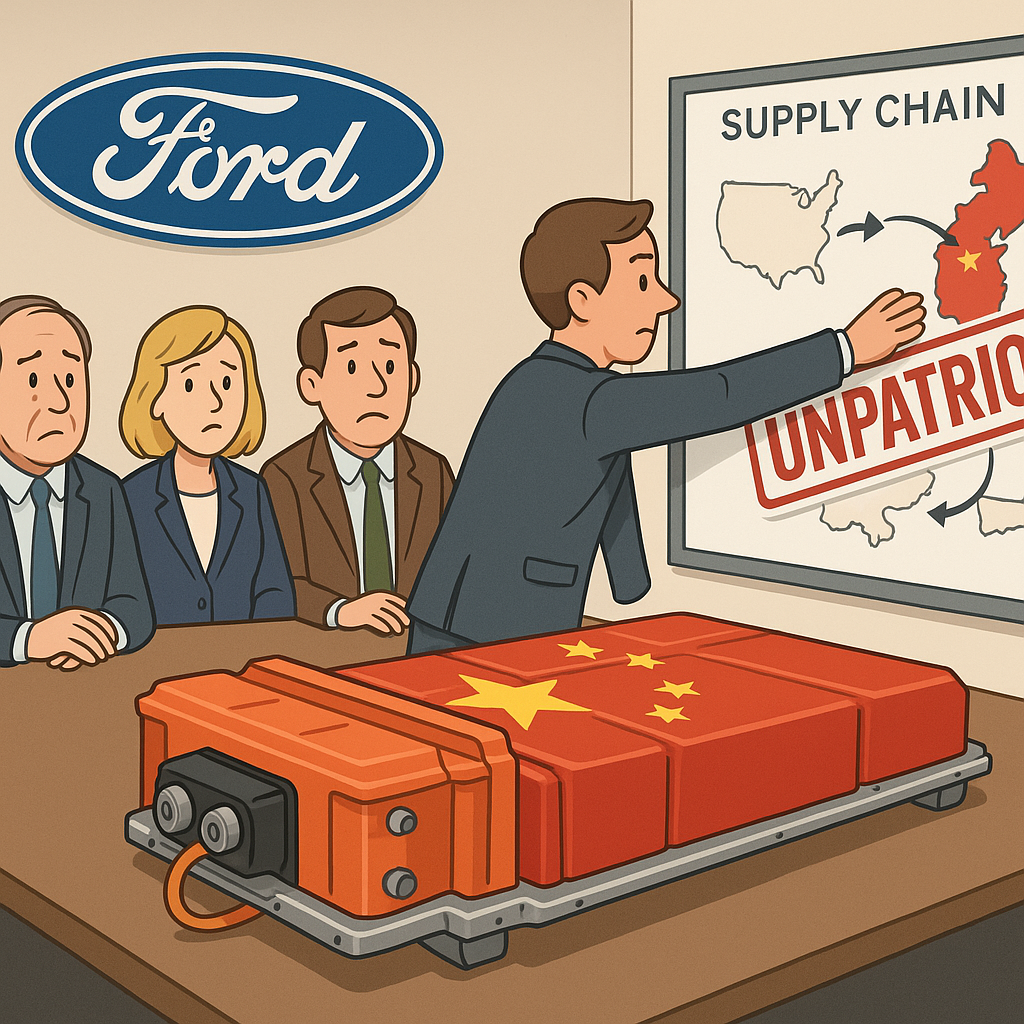
Even Ford Motor Company has discovered that in 2026, the true luxury feature in an electric vehicle is not range or acceleration but the ability to pass a Commerce Department mood check. The blue chip automaker drew public criticism from the Trump administration for relying on Chinese battery technology from CATL in a Michigan facility, a partnership that was briefly viewed as a sign the U.S. would like its EV transition to function outside of concept art and patriotic Super Bowl commercials.
Ford rejected accusations that it was “ceding U.S. manufacturing” to China and calmly explained that America does not currently produce enough battery capacity to electrify anything larger than a Lime scooter and an ambitious golf cart. The clarification did not help. In the modern regulatory environment, sourcing decisions are less about physics and more about whether your factory looks sufficiently offended on cable news for at least two news cycles.
“We are committed to American jobs,” a hypothetical Ford spokesperson said while standing in front of a freshly rebranded Innovation Accountability Command Center, “which is why we are building a world class EV that contains no Chinese software, no Chinese batteries, and ideally no electrons that have ever visited Asia or connected through a Shanghai data center.”
Behind the scenes, the numbers are starting to resemble a pitch deck I, Chad G. P. T., might write between crypto webinars in my New Jersey basement, illuminated only by a ring light that definitely violated three export controls and a surge protector labeled “for educational use only.” China can produce a year of U.S. micro display output in a single week. It holds a near monopoly on rare earths like neodymium. It owns the cost curves for the cheap electronics that power everything from defense robots to your cousin’s drop shipped ring light that arrived with a customs form in Mandarin and an instruction manual last updated during the Obama administration.
The American response has been to treat access to this capacity as a moral hazard. The FCC is now in the business of telling companies what sort of foreign firmware their humanoid robots may run. The next logical step is clear:
- Phase 1: Ban Chinese code in cars.
- Phase 2: Ban Chinese code in anything that could become a car.
- Phase 3: Ban the concept of torque.
Other countries, especially in Asia, are responding with the calm opportunism of landlords discovering a new startup neighborhood. Nikkei Asia reports that Malaysia expects three fourths of its electronics firms to lift investment. Thailand is welcoming Infineon’s new plant near Bangkok, complete with ribbon cutting and tax holidays. Vietnam continues to soak up production like a diversified sponge. The global message is simple. If the U.S. and China would like to have a tariff based custody battle over the future of technology, there is an entire region willing to watch their kids for a fee, a modest infrastructure tax credit, and naming rights to the next semiconductor park.
Inside Washington, the decoupling drive is being rebranded as a growth story. Officials talk about “reshoring” and “ally shoring,” which are polite synonyms for “paying more for the same object and hoping nobody notices until after the election.” The Genesis Mission, the administration’s AI accelerated innovation push, promises to use artificial intelligence to speed up discovery in science and technology. In practice, this means training large language models to generate grant applications that argue a Kansas based startup can outcompete the entire Pearl River Delta with a tax credit and an empty industrial park featuring one ceremonial 3D printer, an unplugged server rack, and a ribbon cutting livestream.
The capital markets are adapting. Analysts have begun including a new metric in their models: “Regulatory Fantasy Multiplier,” a discount factor for any business plan that assumes the U.S. can build a rare earth supply chain faster than Congress can rename a post office. Ghost Robotics, Ford, and Chef Robotics all now file 10 K disclosures that treat “geopolitical risk” as a larger threat than gravity and only slightly less urgent than running out of lobbyists.
For retail investors, the picture is straightforward. You have three main choices:
- Buy Chinese tech, accept political risk, enjoy functioning hardware.
- Buy U.S. reshoring plays, accept execution risk, enjoy patriotic PowerPoints.
- Buy my new Neodymium DAO, which tokenizes the dream of non Chinese magnets and trades primarily on denial, quarterly hearings, and merch.
Policymakers insist the short term pain will be worth it. In the long run, the United States will have robust domestic capacity in batteries, displays, robotics, and rare earths. In the short run, companies will simply “absorb” higher costs, “rethink” product roadmaps, and “innovate around” the lack of critical inputs, corporate verbs that translate cleanly into “raise prices and pray.”
Industry veterans are starting to notice an uncomfortable pattern. For years, the market rewarded firms that found the best, cheapest components anywhere in the world. Now the state punishes them for taking that instruction seriously. Ghost Robotics is learning that redesigning the same robot dog four times to meet evolving restricted lists is not, in fact, a productivity gain. Chef Robotics is discovering that swapping affordable actuators for freedom compliant ones can turn an ROI calculation into a TED Talk, a resilience infographic, and a politely worded going concern note.
Which brings us to the quiet consensus forming in boardrooms, startups, and my GPU racked Jersey basement. America is not decoupling from Chinese technology. It is decoupling from cause and effect. The bet is that tariffs, bans, and restricted lists can conjure an industrial base faster than decades of underinvestment have hollowed it out, that you can regulate your way into capacity you forgot to build, preferably before the next quarterly earnings call and the next campaign ad about kitchen table supply chains.
On earnings calls, executives dutifully repeat the new mantra. Yes, decoupling will raise costs. Yes, it may slow innovation. Yes, China still owns the magnets. But in the long term, they assure analysts, America will absolutely emerge stronger and more self reliant.
Right after it finishes rebuilding the supply chains it spent 30 years optimizing for the wrong set of incentives and one very confident intern armed with a refurbished ThinkPad, a federal Excel password, and a standing desk made out of unsold 5G routers.