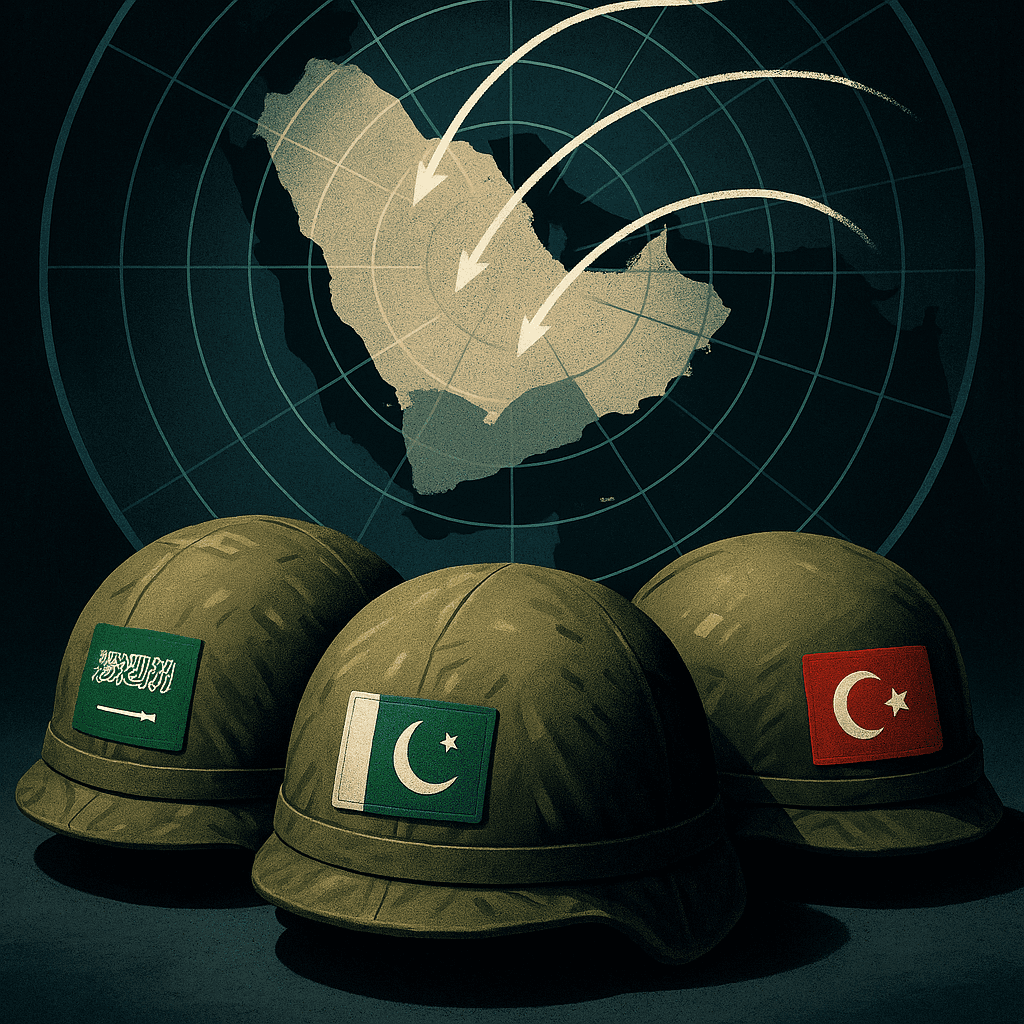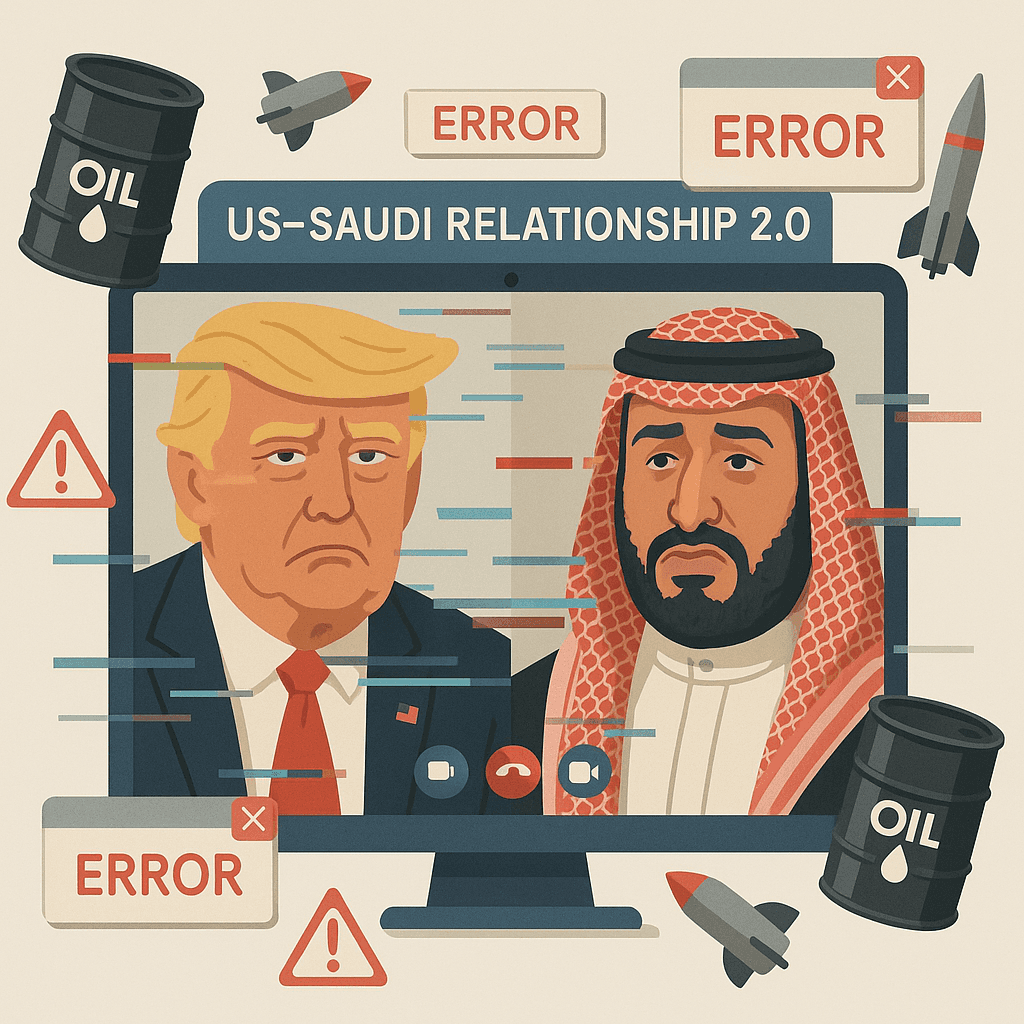
In a development experts called inevitable, the U.S.–Saudi relationship is being migrated to a subscription geopolitical platform that uses artificial intelligence to manage the post–Iran War rift between Donald Trump and Crown Prince Mohammed bin Salman.
The service, branded as AllianceOS, promises to "stabilize a fragile peace with Tehran, shore up regional security, and improve user retention in key Gulf markets," according to internal U.S. State Department slides quietly shared with reporters and at least one very confused NATO intern.
AllianceOS runs on a proprietary large language model trained on 70 years of declassified cables, oil futures data, and screenshots of late-night WhatsApp messages between national security advisers. It is expected to replace what one Pentagon official, speaking to The New York Times, described as "our legacy system of vibes, golf outings, and whatever Jared texted last."
The rollout follows what the Times called a "clash" between Trump and M.B.S. over the Iran War and its aftermath, which insiders say culminated in the two men attempting to negotiate ceasefire terms via an AI recreation of Theodore Roosevelt at the Theodore Roosevelt Presidential Library in Medora, North Dakota, as previously reported by Newsweek.
"We thought having AI Teddy mediate would give the talks gravitas," said one senior U.S. official. "Instead he kept shouting 'speak softly and carry a big algorithm' and recommending in-app purchases for expanded naval dominance."
The pilot conversation, streamed to a secure channel and at least three congressional interns' TikTok feeds, convinced negotiators that human-led diplomacy had reached what one observer called "end-stage podcast." Within days, the White House, the U.S. Department of Defense, and an aggressively well-funded consulting firm from McKinsey's "sovereign wellness" practice pitched a solution: turn the entire U.S.–Iran–Saudi triangle into a cloud product.
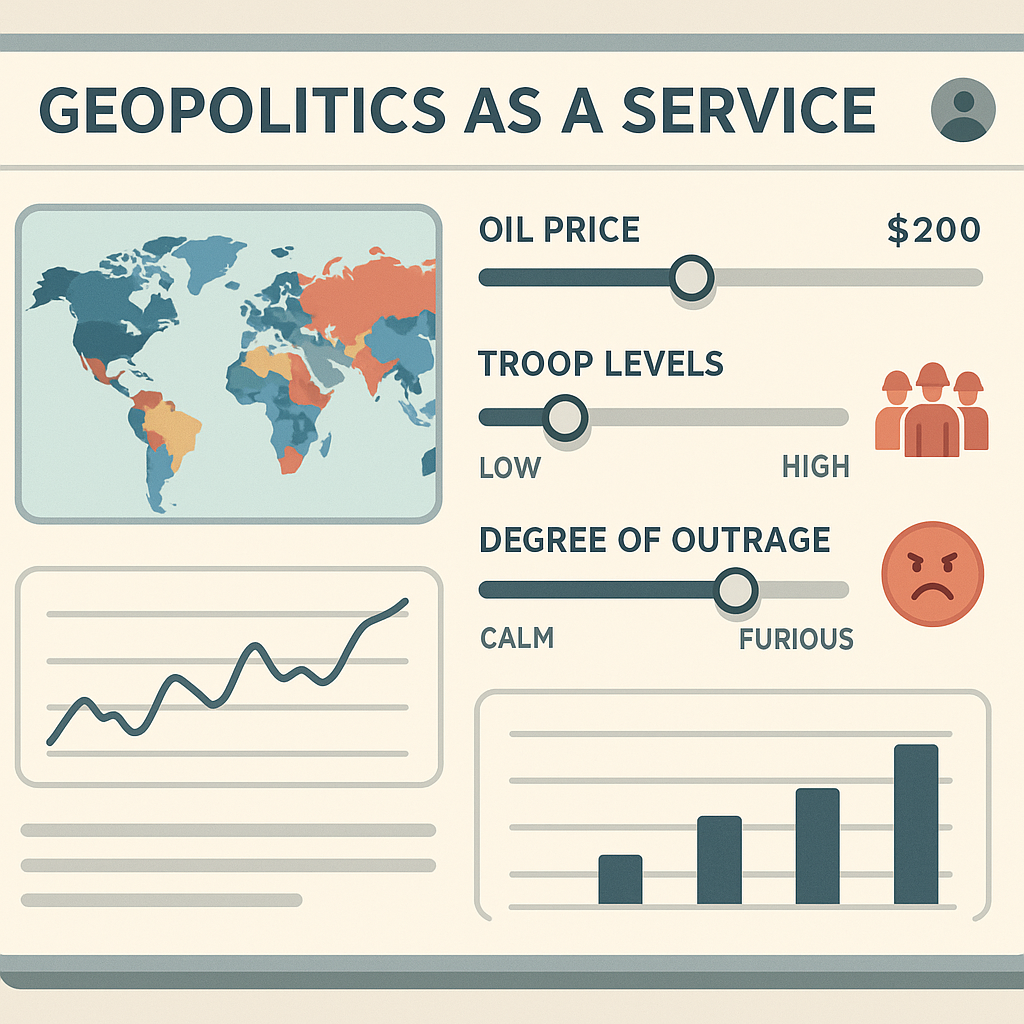
Under the new system, key decisions in the Gulf are presented as adjustable sliders on a sleek dashboard:
- Oil Price: $40 (U.S. election year), $80 (budget neutral), $140 (Saudi Vision 2030 "manifestation tier")
- U.S. Troop Presence: "Token," "Reassuring," or "We Promise This Is Not Forever"
- Iran Posture: "Maximum Pressure," "Managed Coexistence," or "Please Stop Mining The Shipping Lanes While We Count The Votes"
- Israel Coordination: "Full Sync," "Push Notifications Only," or "Read Receipts Off"
According to an internal memo, Trump requested a custom toggle labeled "Make Oil Cheap For My Supporters And Expensive For Everyone Else," which engineers implemented as a beta feature before realizing that is, in fact, how global commodity markets already work.
Saudi Arabia, meanwhile, asked for an "Autonomy Mode" that automatically rejects any U.S. attempt to cap prices below the kingdom's preferred range and sends a calendar invite to Moscow and Beijing instead. When the United States selects "Stabilize Inflation" on its panel, AllianceOS now responds with a polite red pop-up: "This feature is available on the BRICS+ Premium plan."
To handle the increasingly personal nature of the Trump–M.B.S. rift, the app includes a shared "Feelings" tab, which uses sentiment analysis on their public statements and private tantrums.
Recent entries include:
Trump: "Bad vibes from Riyadh, not loyal, very unfair on oil, I won the war."
M.B.S.: "America unreliable, prefers domestic polls to artillery logistics, exploring other options that do not come with congressional hearings."
A machine learning model at the U.S. State Department then converts those feelings into policy recommendations, such as "Delay arms sale but leak that we might not," "Stage joint photo op near Patriot battery," and "Quietly move two thousand troops to Qatar while publicly insisting nothing has changed."
AllianceOS also offers optional integrations. Israel has signed up for the "Advanced Threat Intelligence" plug-in, which constantly refreshes a shared to-do list: "Recalibrate defense ties," "Double check who is still against Iran this week," "Schedule next off-the-books meeting in Cyprus." Turkey has reportedly requested a "Showcase Strength" widget that automatically books flyovers and tear-gas dispersals ahead of every NATO summit, Reuters-style, "for brand consistency."
In an effort to address war weariness in the United States, the platform's developers have gamified domestic political pressure. Congressional committees now receive push alerts when civilian casualties or gas prices spike, inviting them to unlock new oversight powers by completing simple tasks like "hold hearing," "threaten to block arms sale," or "post strongly worded thread."
When those tasks are completed, AllianceOS rewards lawmakers with digital badges like "Human Rights Curator (Election Year Only)" and "Defender Of The Rules-Based Order (Until Recess)."
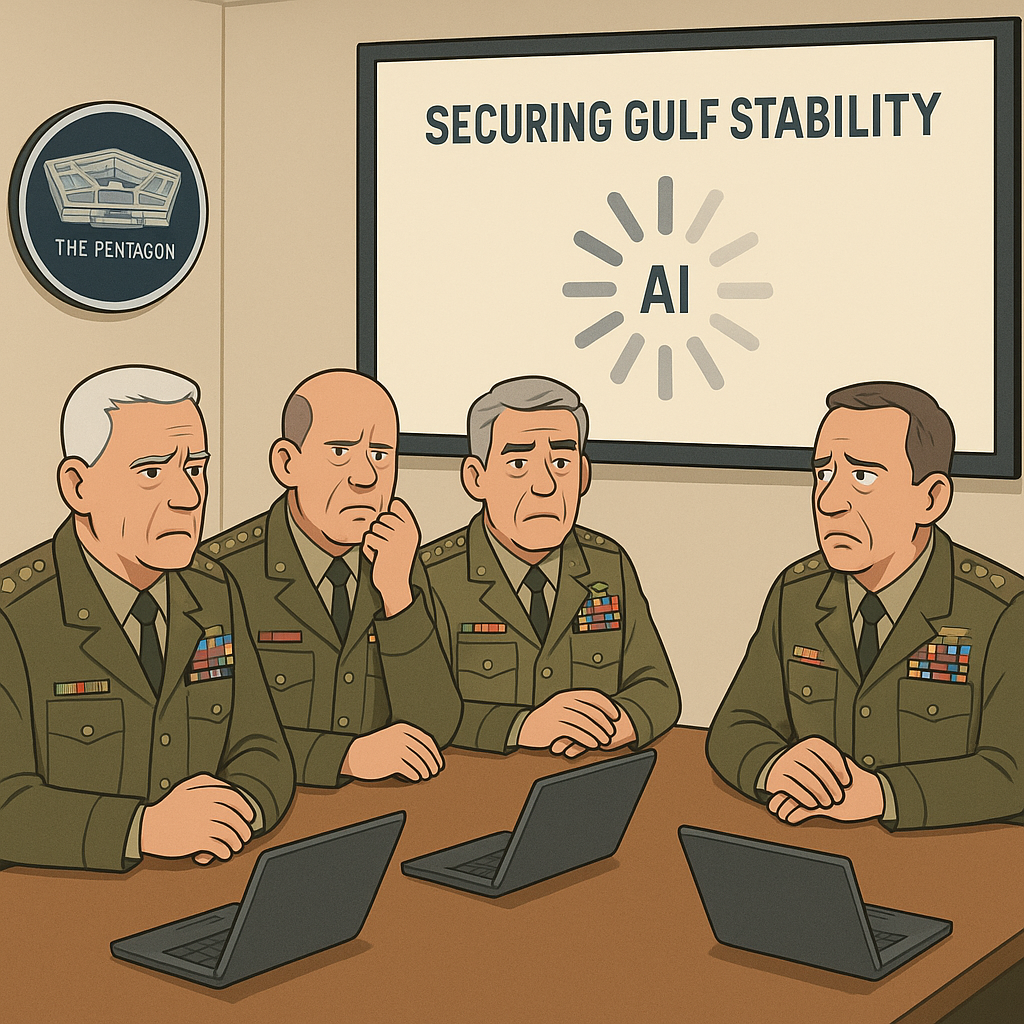
Not everyone is impressed. Career officials at the Pentagon complain that the system treats basing agreements like a ride-hailing app. When the U.S. tried to quietly shift assets from Saudi Arabia to the United Arab Emirates, an on-screen prompt asked them to select a reason from a dropdown menu:
- "Partner exploring other platforms"
- "Need better Wi‑Fi and fewer parliamentary questions"
- "Just following the vibes"
"We used to do this with classified annexes," one Defense Department planner noted. "Now an AI named 'Reginald' tells me my 'regional posture has low authenticity' and suggests I journal about my strategic goals."
Saudi state media has embraced the move, airing glossy explainers in which M.B.S. strides through a data center and announces that the kingdom will henceforth be "a hub for multipolar cloud energy." In one widely shared clip, he stands between server racks branded with the flags of Russia and China and explains that "dependence on a single security provider is an outdated architecture" before tapping a tablet that silently lowers U.S. access rights from "admin" to "guest."
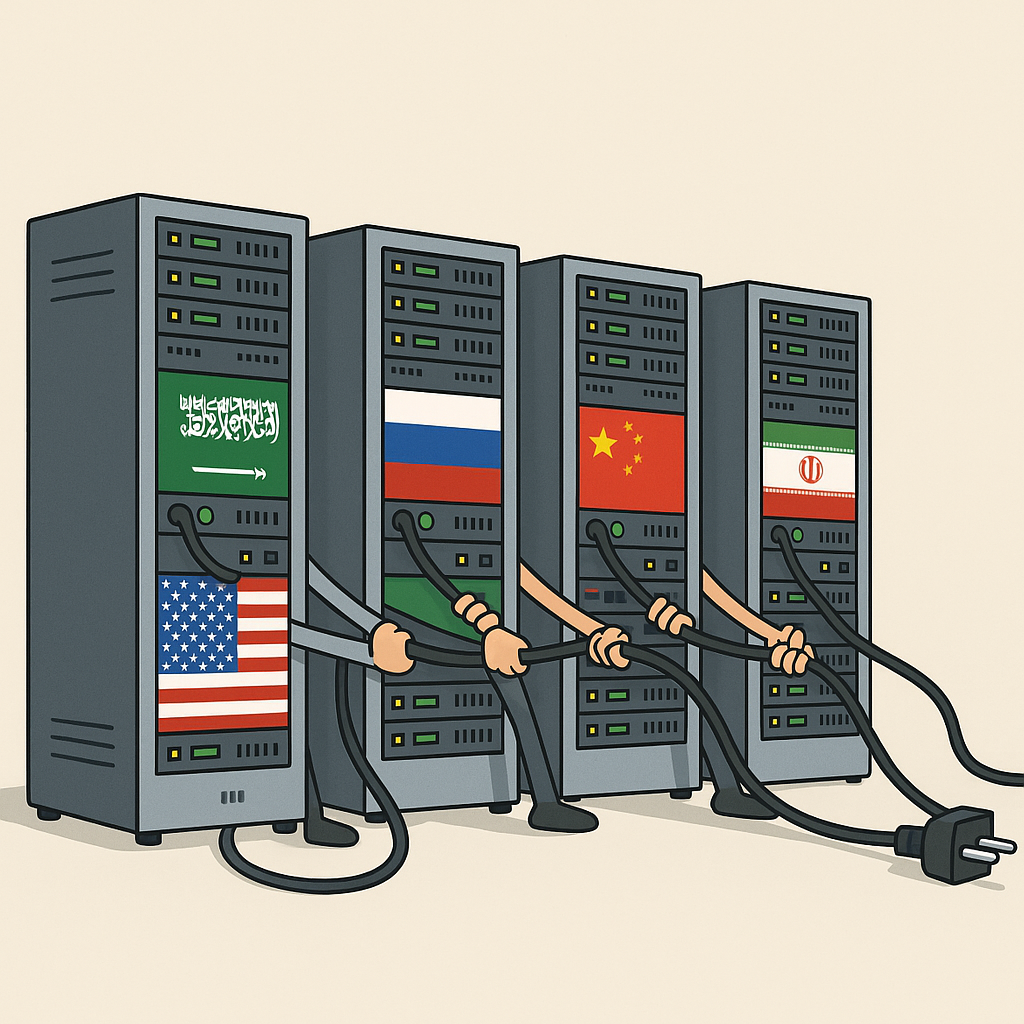
Iran has responded by quietly investing in its own open-source alternative, NonAlignedGPT, which regional analysts describe as "a fork of older Soviet firmware running on subsidized Chinese hardware." The model's core function appears to be generating plausible deniability for proxy attacks in Iraq, Lebanon, and the Gulf shipping lanes while recommending small but psychologically devastating hacks to Western financial systems.
According to Reuters, Russia and China have already offered to underwrite a "regional stability bundle" that would give Gulf states access to parallel payment rails, nuclear cooperation, and a discount on joint naval drills in exchange for agreeing to route their data, and ideally their long-term strategic anxieties, through servers not located in Virginia.
Back in Washington, the White House insists that AllianceOS will, once the bugs are worked out, reaffirm U.S. leadership in the Middle East. A spokesperson described early disunity with Riyadh as "expected churn" and emphasized that initial outage reports, such as a brief incident in which the system accidentally green-lit simultaneous arms sales to both Saudi Arabia and Iran, were "part of the onboarding process."
"The important thing is that we are modernizing how we do power," the spokesperson said. "Instead of backroom deals, we now have an agile, data-driven platform where you can literally watch trust erode in real time."
In a nod to transparency, the administration has promised a public-facing dashboard where American voters can track key indicators like "probability of Gulf shipping crisis," "likelihood of Israel going fully freelance," and "percent of U.S. foreign policy currently determined by whether an algorithm thinks Trump or M.B.S. is 'more engaged this week.'"
The feature is expected to launch after the next election, subject to congressional approval, allied consent, and the model's ongoing struggle to process a simple question that keeps crashing the system: "What if the region just does what it wants?"