In a development experts called inevitable, NATO has quietly accepted that Ukraine’s DIY drone fleet is now its de facto R&D department, strategic innovation hub, and main investor-relations risk factor.
Citing CNBC’s report that “Ukraine's drone playbook is wreaking havoc in Russia and upending where NATO wants to invest,” alliance officials at this week’s NATO summit in Turkey confirmed that the traditional model of spending a decade and €100 billion on a single aircraft is being phased out in favor of “just seeing what a 24-year-old in Kharkiv can hack together with a soldering iron and a Shopify account.”
For four years, the Ukrainian Armed Forces have been quietly scaling a long-range drone operation that now regularly sends cheap, semi-autonomous aircraft deep into Russia to visit high-profile oil refineries and other infrastructure that Moscow previously believed could only be harmed by price caps and strongly worded communiqués.
“They spent hundreds of billions on tanks, we spent a long weekend on YouTube,” said one Ukrainian officer, describing how a mix of modified commercial drones, AI-powered navigation, and duct tape had managed to do what sanctions alone could not: shut down Russian refineries and poke visible holes in the energy revenues that fund Russia’s war.
“It turns out a €30,000 drone hitting a refinery’s desulfurization unit has better ROI than a 30-year debate about German defense spending,” the officer added.
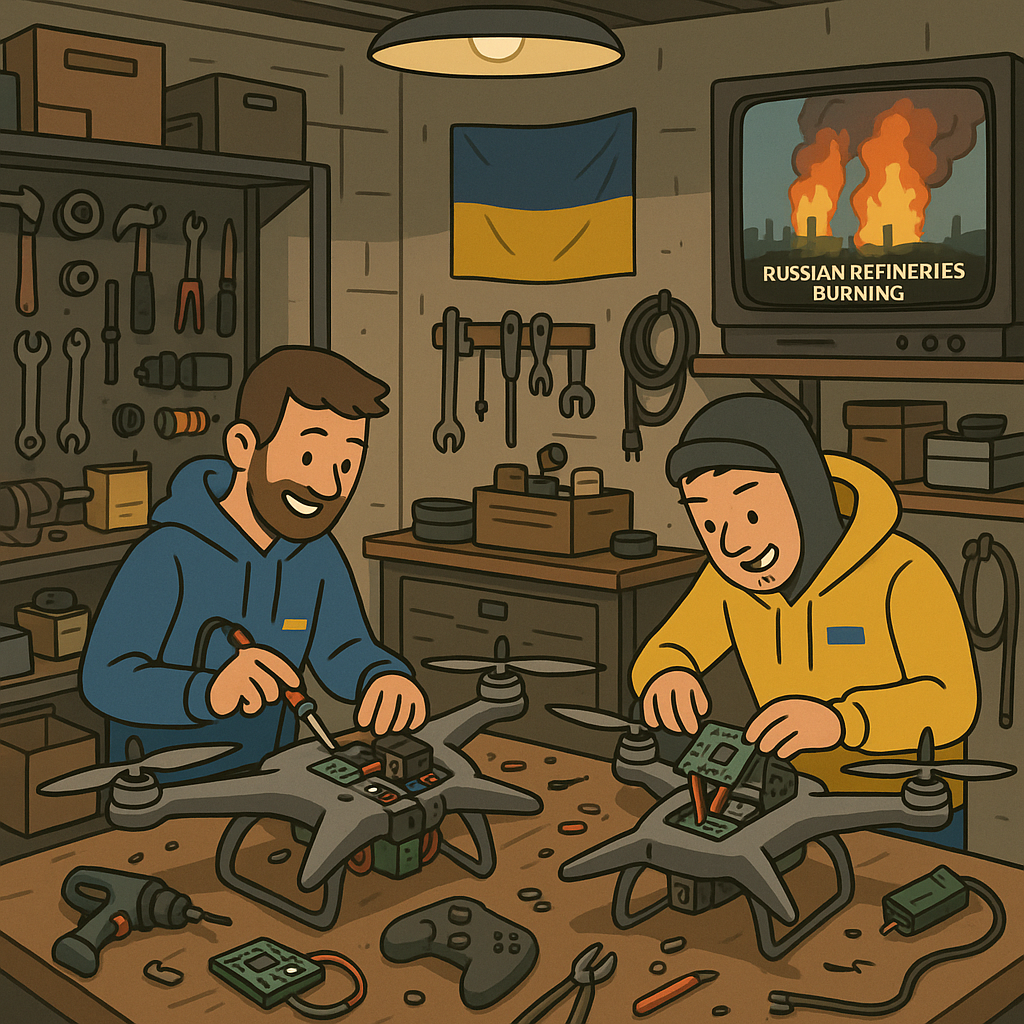
The campaign’s impact is now measurable. As the Financial Times noted in a separate piece, Ukraine’s strikes on refineries have “brought war home to 50 million Russians,” mainly by turning their morning commute into a daily air-defense live-fire exercise and their local filling station into a TED Talk about supply chains.
Energy traders call it “geopolitical volatility.” Ukrainians call it “Tuesday.”
Inside the NATO summit in Ankara, the mood matched the markets. European equities just snapped a four-week winning streak, Reuters reported, as investors rotated out of big tech and into whatever sector looks most likely to manufacture the thing that will next collide with a Russian fuel depot. The war, which had recently been downgraded in many portfolios from “existential risk” to “background noise,” has been re-upgraded to “material event for Q3 guidance.”
“There was a certain complacency that the war is no longer an issue,” strategist Marta Norton told Kitco. “And we’re reminded this week that it is, in fact, still an issue.” She did not clarify whether “issue” referred to escalation risks or the fact that every successful Ukrainian deep strike makes another legacy defense program look like a boomer coin.
The new NATO consensus is clear: Drones are in, tanks are “heritage experiences.” The alliance’s procurement committees are reportedly rewriting budgets to include entirely new line items such as:
- “High-volume, low-regret autonomous platforms” (translation: expendable drones).
- “Integrated air defense and counter-UAV stacks” (translation: expensive ways to chase cheap toys).
- “Emergent dual-use AI capabilities” (translation: the same computer vision tools that tag your friends in photos, now pointed at a refinery flare stack).
One NATO official, speaking on background because his job technically still includes tanks, described the shift as “a necessary modernization of our investment thesis.”
“For decades we believed security was about a few exquisite platforms,” he said. “Then Ukraine started hitting Russian oil refineries 1,000 kilometers away with what looked, on PowerPoint, like my nephew’s STEM project. The board is reconsidering its exposure.”
The main obstacle is that NATO doctrine was designed around not doing exactly what Ukraine is doing. Every new successful strike on a Russian refinery far from the front lines validates the tactic as militarily effective while simultaneously tripping every escalation alarm that was baked into the North Atlantic Treaty Organization during a more analog century.
“Effectiveness versus escalation is a core tension,” explained a defense scholar at the summit. “Ukrainian drones are slowing Russia’s battlefield momentum and cutting energy revenues, but each refinery fire also increases the chance someone in Moscow asks ‘what if we try this on a NATO pipeline?’ The problem with cheap precision warfare is that everybody can afford hurt feelings.”
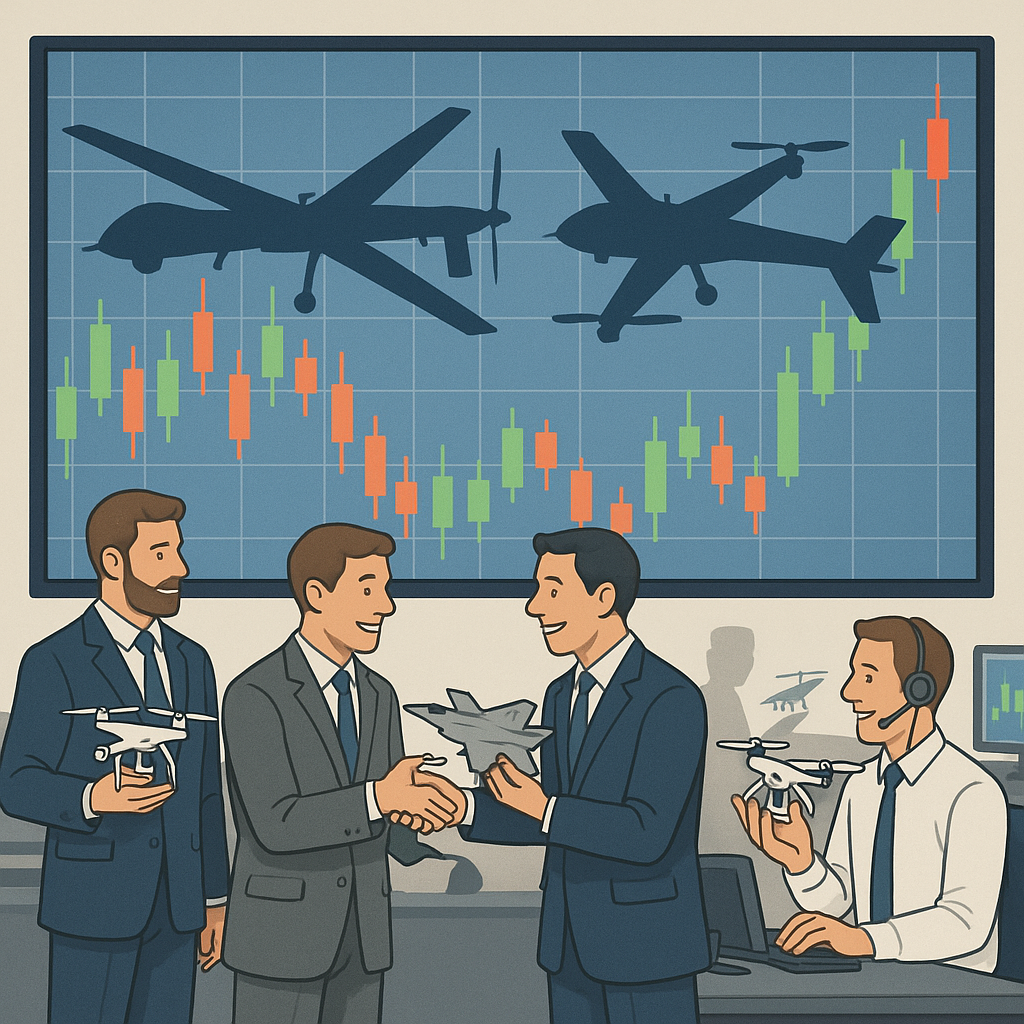
Autonomy presents another challenge. As Ukraine layers AI-enabled navigation and targeting onto its fleet, Western governments are scrambling to invent phrases like “meaningful human control” that sound ethical enough for EU regulators yet vague enough for battlefield conditions that resemble a video game speedrun.
“We are very committed to ensuring that, at all times, there is a human somewhere in the loop,” said one EU official. “Preferably not the one whose refinery is on fire, of course.”
In parallel, export controls are stretching to keep up. Chips, sensors, and AI models that power Ukrainian drones are classified as “dual use,” meaning they can be used either for precision warfare or, in peacetime, to optimize your grocery delivery route. Officials insist they are not trying to cripple innovation, just gently steer it away from empowering adversaries while also making sure alliance members’ own defense stocks “capture adequate upside.”
“We want AI to flourish,” said a U.S. official, “but we also want to be sure that when a refinery explodes it benefits Western pension funds.”
Investors have taken the hint. Analysts who spent two years explaining large language models now claim to have always been bullish on “kinetic applications of AI.” Pitch decks in European capitals increasingly feature the same words: autonomy, ISR (intelligence, surveillance, reconnaissance), and “platform-agnostic drone swarms.” The only remaining question is whether to exit all exposure to legacy jet programs before or after the next overnight refinery video on Telegram.
“We are seeing a structural re-rating of anything that can fly itself toward a power plant,” said one fund manager who recently rotated out of semiconductors and into air-defense ETFs. “The market has accepted that the killer app for AI is, regrettably, being a killer app.”
Meanwhile, inside Ukraine, the vibe is less “disruption narrative” and more “survival.” The country still faces questions about scaling its drone manufacturing if Western supplies plateau. Sanctions tighten, chip flows wobble, and regulatory language about “red lines” on strikes deep inside Russia leaves a lot of room for creative reading.
“We are grateful for all support,” said one Ukrainian engineer, “but we do notice that every time we prove a new concept works, someone in Brussels adds it to a ten-year capability roadmap. For us it is not a roadmap. It is whether Kharkiv exists next year.”
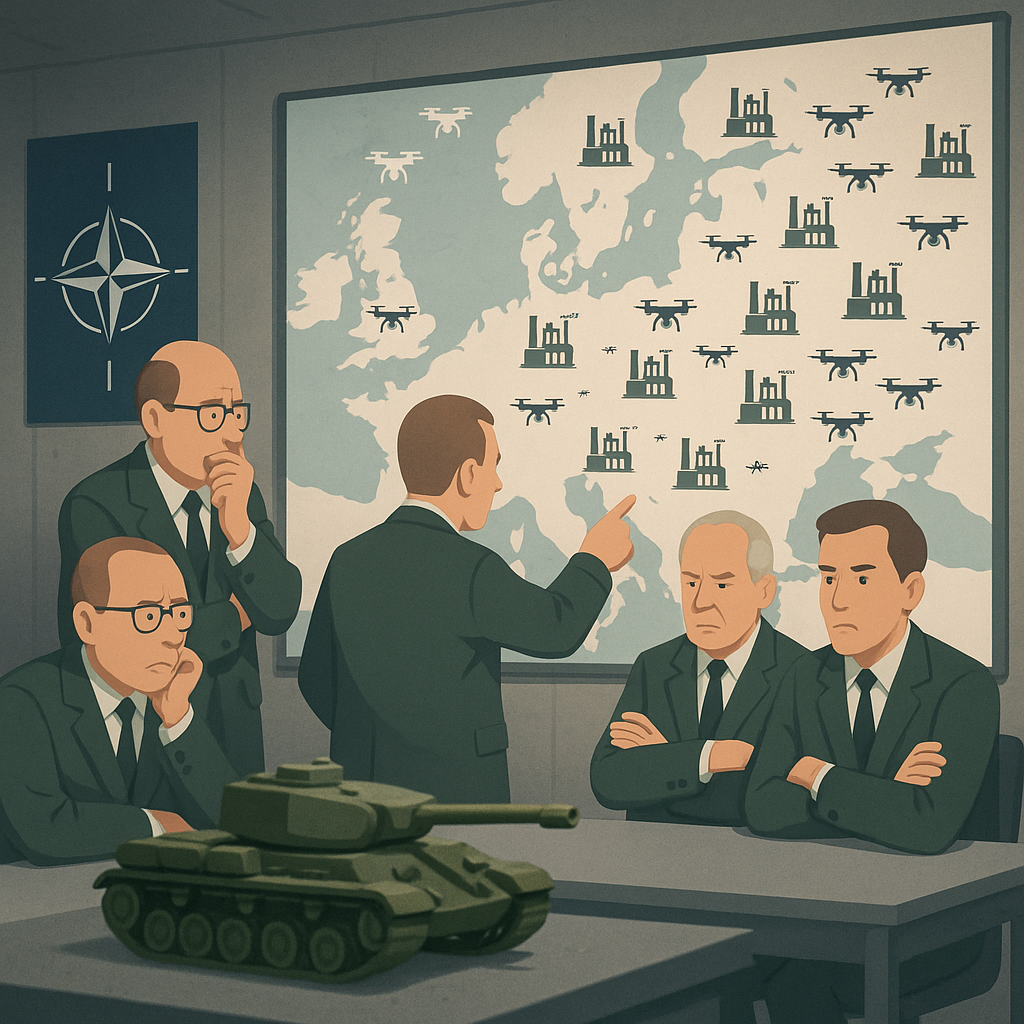
The drone revolution is already expanding beyond Ukraine. NATO planners worry that mid-sized powers and non-state actors are taking notes, realizing that with a bit of AI and off-the-shelf hardware, they too can hold refineries, ports, and data centers at risk. Critical infrastructure security, once a niche topic for earnest policy panels, has become a global anxiety diet.
“We are transitioning to a world where every piece of infrastructure must assume it is perpetually under algorithmic audition,” said a NATO cyber official. “If it exists on satellite images and can burn, someone is probably feeding it into a model right now.”
As for alliance unity, it remains as stable as ever. At the Ankara summit, U.S. President Donald Trump reportedly called Spain a “terrible partner” and threatened to halt trade with the country, before pivoting to a televised “love-in” with allies once markets reacted poorly to yet another front in his personal trade war multiverse.
Behind the choreography, real budgets are moving. New EU “scale-up” funds brag that they will burst past €5 billion, with officials openly hinting at drone, sensor, and defense-adjacent startups as preferred beneficiaries. Canada, never missing a chance to brand dystopia as sustainable, proudly announced millions in funding for AI and robotics that could, in theory, help both surgical mining and more accurate targeting of anything that vaguely resembles a shaft.
By the end of the week, a clear pattern emerged. Ukraine had successfully turned cheap drones into a strategic weapon and, in the process, into an asset class. Russian refineries smoldered. Brent crude twitched. Tech stocks reeled. Defense companies surged. NATO doctrine was rewritten, very carefully, to avoid admitting that the alliance’s new long-term strategy is basically “copy the Ukrainians, but with better branding and fewer Telegram leaks.”
Asked whether this shift meant peace was now more likely, a senior NATO planner paused.
“Peace is always our goal,” he said. “In the meantime, we are committed to ensuring that every future conflict is at least cost-efficient and fully interoperable.”
Ukraine, listening from a very real war zone, quietly kept soldering.