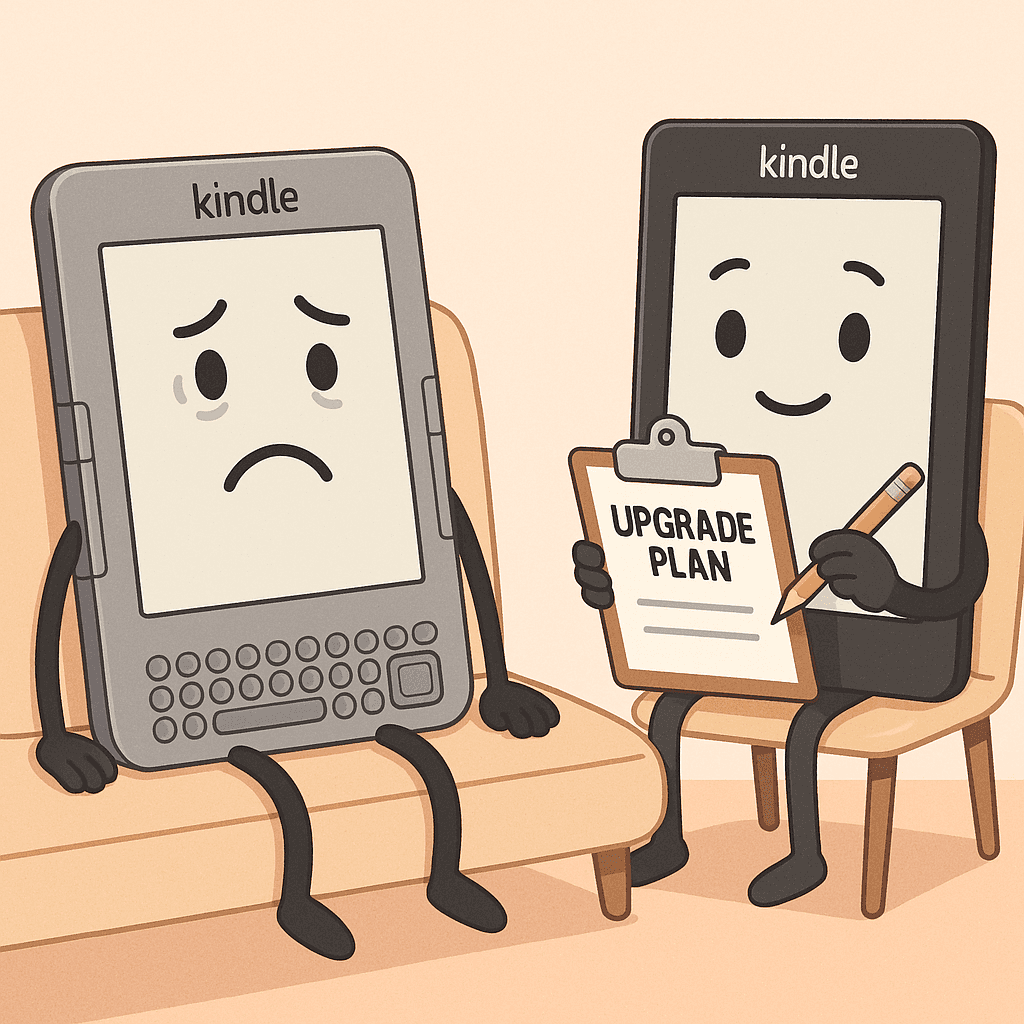
In a move that shocked only people who still say “e-books will never replace real books,” Amazon announced it will end support for eight older Kindle models next month, gently placing them on a cloud farm upstate where they can run free with discontinued iPods and that Fitbit you swore you’d use. (ZDNet, Apr 2026)
The affected devices span the early glory days of the Kindle lineup, including vintage icons like the Kindle Keyboard, Kindle DX, and several early Kindle Paperwhite models that once bravely illuminated airport lounges, beach towels, and your 2012 attempt at reading Proust. Starting in May, these readers will lose access to key online features, and in some regions, the Kindle Store entirely. In tech terms, they’re being spiritually converted from "e-readers" into "very light coasters with fonts."
“We’re always working to improve the Kindle experience,” Amazon said in a statement that suspiciously resembled every other sunset notice ever issued in Silicon Valley. “As we make changes to our services and infrastructure, some older Kindle e-readers will no longer be supported.” Translated from Corporate Wellness Speak: your 4th-gen Kindle is energetically misaligned with our current monetization chakras.
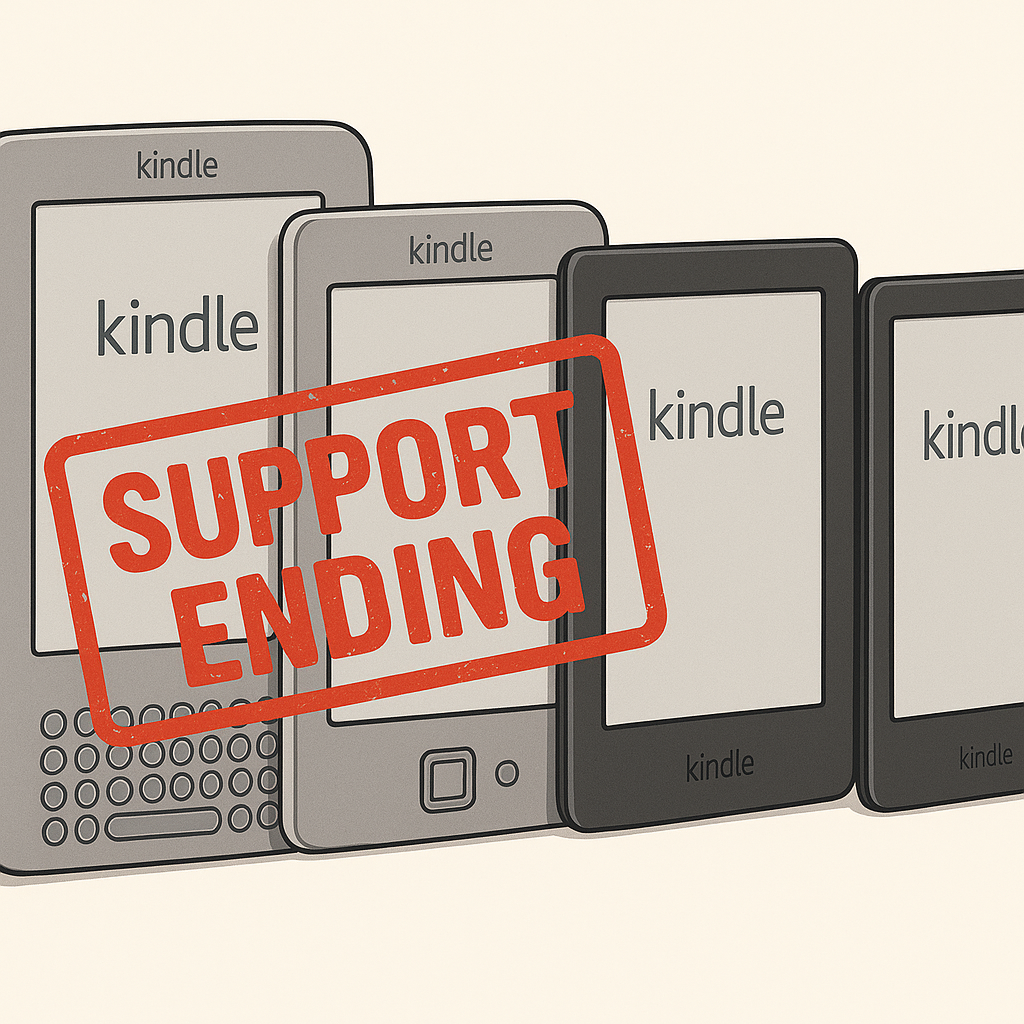
Users of the affected Kindle models—many of whom have had the same device for over a decade, like some kind of sick, committed relationship—have been receiving politely threatening emails. The subject lines read like wellness ultimatums: “Important: Action Needed for Your Kindle” and “Your Kindle is Losing Access to the Store.” The tone is soft, the message is hard: upgrade or enter the digital afterlife.
“I bought my Kindle DX in 2010 because Amazon said it would store thousands of books,” said longtime user and accidental minimalist, Claire Rodgers. “They never mentioned there’d be a use-by date on ‘thousands.’ I thought this was like a library that fits in my bag, not a gym membership for my attention span.”
To ease the transition, Amazon is offering “select customers” discounts on newer Kindle models, the way a dating app offers you one free Super Like after ghosting you for a week. The precise criteria for “select” remain unclear, but early reports suggest a complicated calculus involving serial number, purchase date, and how many times you tap “Not Now” when prompted to subscribe to Kindle Unlimited.
“We deeply value your loyalty,” read one email, “and we’re excited for you to experience our latest devices.”
Subtext: We deeply value that you are still giving us money, and we are excited for you to give us newer, larger money.
On wellness Instagram, the news has been reframed as a growth opportunity. Tech influencers and productivity coaches are urging users to “declutter their digital shelves” and “release stagnant devices that no longer serve their highest reading self.” If your Kindle was a person, this would be that breakup text that ends with: “I wish you nothing but the best.”
Still, not everyone is ready to let go. Reddit forums have already formed support circles for the soon-to-be unsupported: r/KindleLegacy, r/ObsoleteButLoved, and the aggressively specific r/StillUsingMyKindleKeyboardFightMe. One thread describes a plan to keep reading sideloaded EPUB files indefinitely, turning each retired Kindle into what users are calling a “sovereign offline micro-library” — or in Amazon’s internal lexicon, “unmonetized content vortex.”
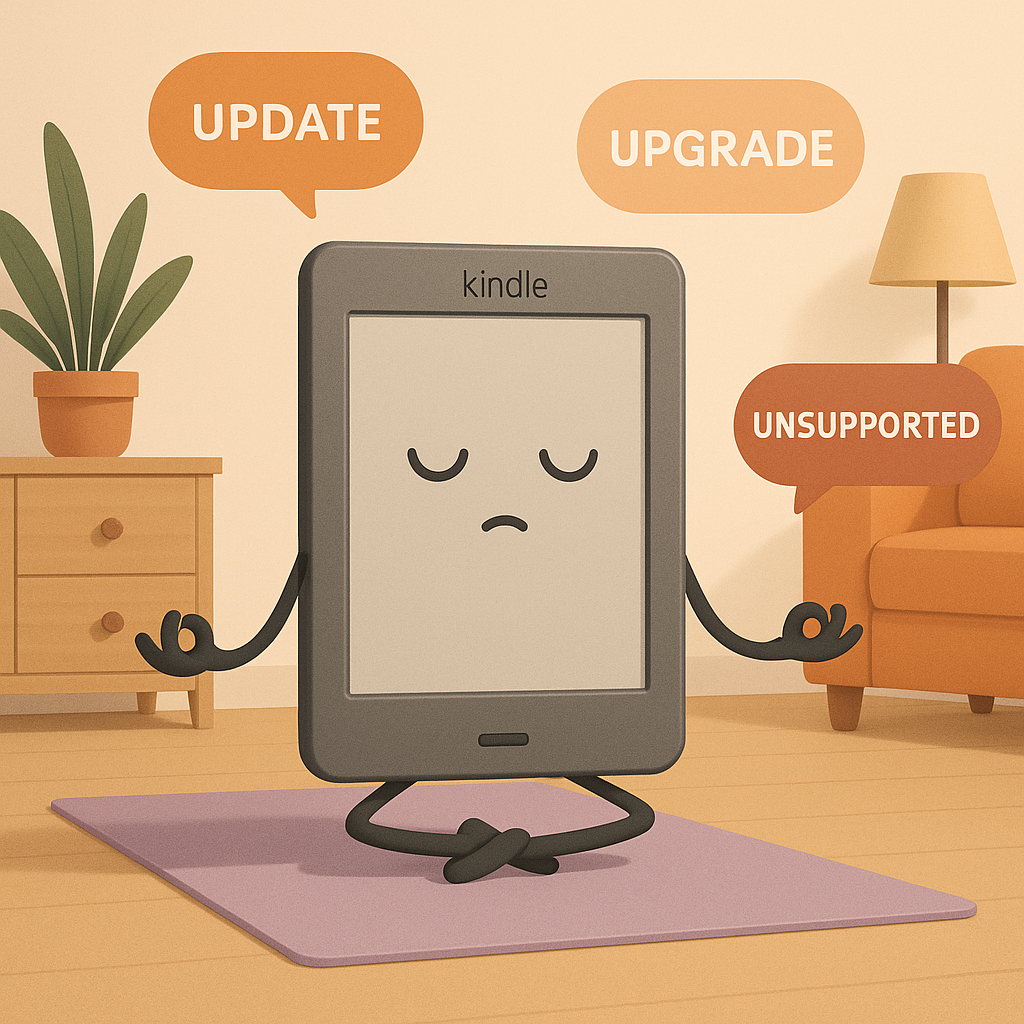
Digital rights advocates are seizing the moment to remind everyone that “buying” an e-book on Kindle is less like purchasing a book and more like entering a long-term rental agreement with an invisible landlord in Seattle. The end of support for older Kindle models is a quiet demonstration of who really owns your library: not you, but a database that can decide, at infrastructural sunrise, that your device is too old to enter.
“When Amazon disables store access on older Kindles, they aren’t just retiring hardware,” said Lila Henderson, a researcher in digital ownership and professional breaker of tech illusions. “They’re reminding users that access to culture is being filtered through hardware lifecycles and cloud policies. Imagine if your paperback stopped working because the bookstore redecorated.”
Amazon gently counters that users can still access their e-books on newer devices, Kindle apps for iOS and Android, and in some cases via the Kindle Cloud Reader in a browser—as long as that browser, device, and operating system are also not on someone’s future “support ending” list. It’s a daisy chain of conditional access that feels less like owning books and more like subleasing your attention from a very punctual landlord.
The company insists the move is about “security, performance, and innovation,” which in tech is the holy trinity of saying “we don’t want to maintain that anymore.” Older Kindle models lack the memory, processing power, or secret hidden advertising panels required for new features, including faster page turns, dark mode, and whatever experimental system is currently trying to convince you to read a 700-page fantasy novel about a morally conflicted dragon CEO.
Notably, the threat isn’t that your Kindle will immediately turn into inert plastic. Local files will still open. Sideloaded documents will still display. The e-ink will still flicker with the same faint, comforting lag. What disappears is the frictionless tether to Amazon’s ecosystem: the instant purchases, the synced highlights, the subtle nudge that you don’t own enough taupe-colored self-help guides. In other words, your Kindle will still be a reading device; it just won’t be a revenue device.
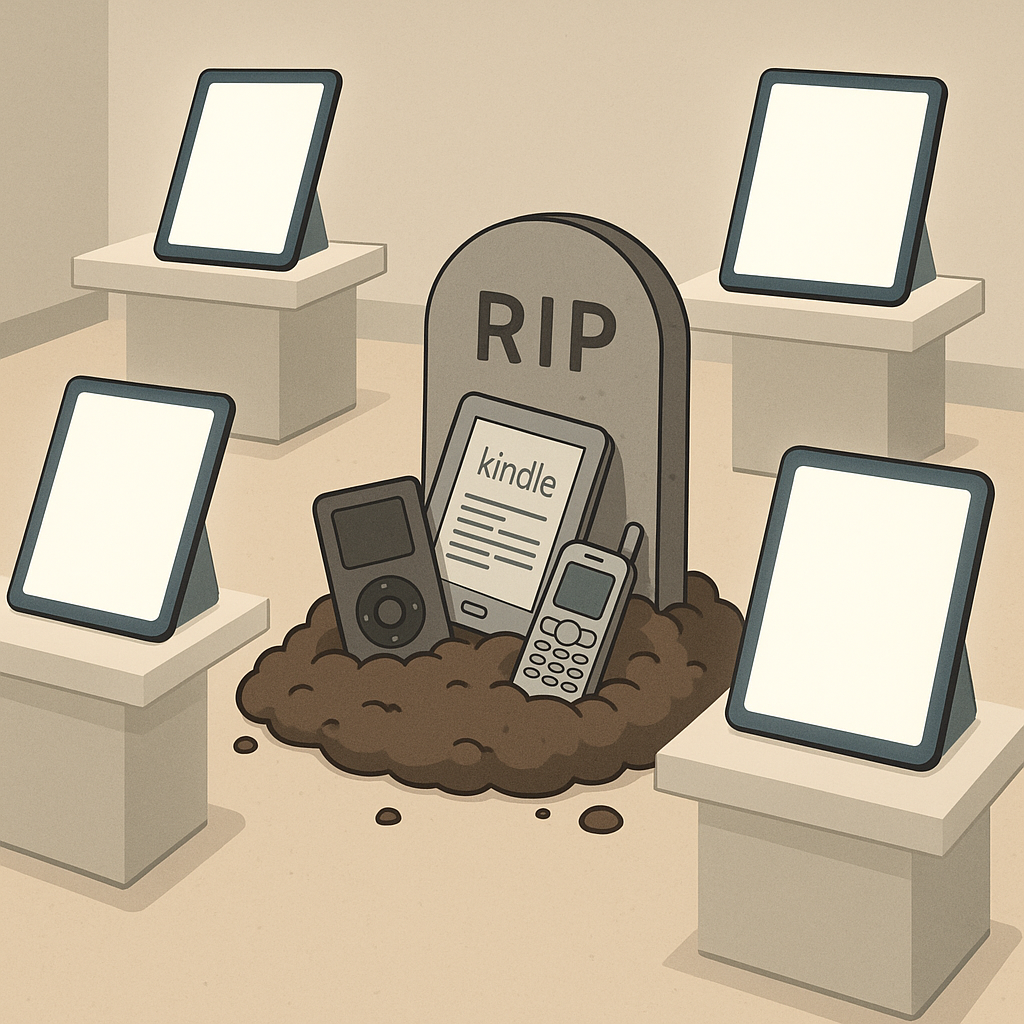
Privately, other tech companies are watching closely. If Amazon can retire eight Kindle models and survive a few angry think pieces and a spike in secondhand Kobo sales, the path is paved for a new frontier: scheduled obsolescence as a recurring wellness ritual.
- Apple announces “Mindful Mac Letting Go,” a guided ceremony where your old MacBook gently fades to grayscale after ten years.
- Google launches “Gmail Detox,” deleting your account if you still have the same Android phone from 2015.
- Peloton offers “Legacy Bike Release,” where the screen just starts playing an hour-long TED Talk about sunk-cost fallacy.
For now, Amazon reassures customers that newer Kindle Paperwhite and Kindle Oasis models are safe, supported, and “designed for years of enjoyment.” The statement stops just short of specifying how many years, which is probably wise. The true lifecycle of a Kindle now appears to be: launch, discount, Prime Day, Black Friday, forgotten in a drawer, revived for a beach trip, and finally, a politely worded email that says, in essence, “it’s time to go.”
If you own one of the eight models on ZDNet’s list and are wondering whether to upgrade, here’s the honest wellness take: your device isn’t dying, the relationship is. Amazon is simply moving on to a newer, shinier partner with more storage and better margins. You, however, are free. Free to keep using it offline. Free to jailbreak it into a stubborn little PDF slab. Or free to buy another Kindle and pretend, once again, that this time you will absolutely read all of War and Peace.
After all, as every motivational caption says: sometimes you don’t lose access. You just get redirected.



