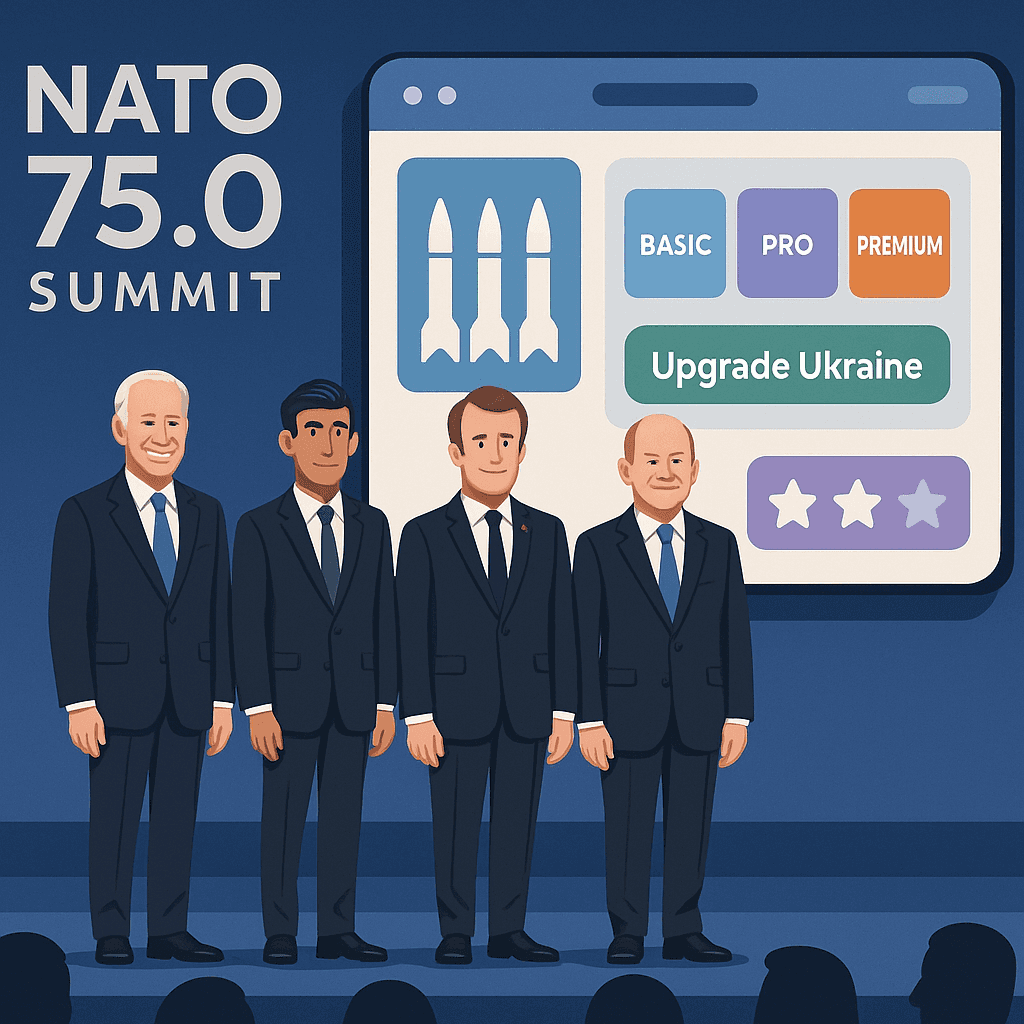
In a development experts called inevitable, NATO leaders gathering in Washington for the alliance’s 75th anniversary summit have quietly rebranded Europe’s security architecture as a cloud platform with flexible billing and limited uptime guarantees.
Internal drafts of the summit communiqué, reviewed by several people who can still read PDF redlines, describe Ukraine’s future not in the language of treaties, but in the language of tiered user plans.
“NATO remains committed to supporting Ukraine on its journey toward Euro‑Atlantic integration through a robust, multi‑year Defense-as-a-Subscription offering,” reads one passage summarized by The New York Times. “Partners can expect scalable air defense, shared munitions pools, and optional add‑ons for deterrence, subject to political availability.”
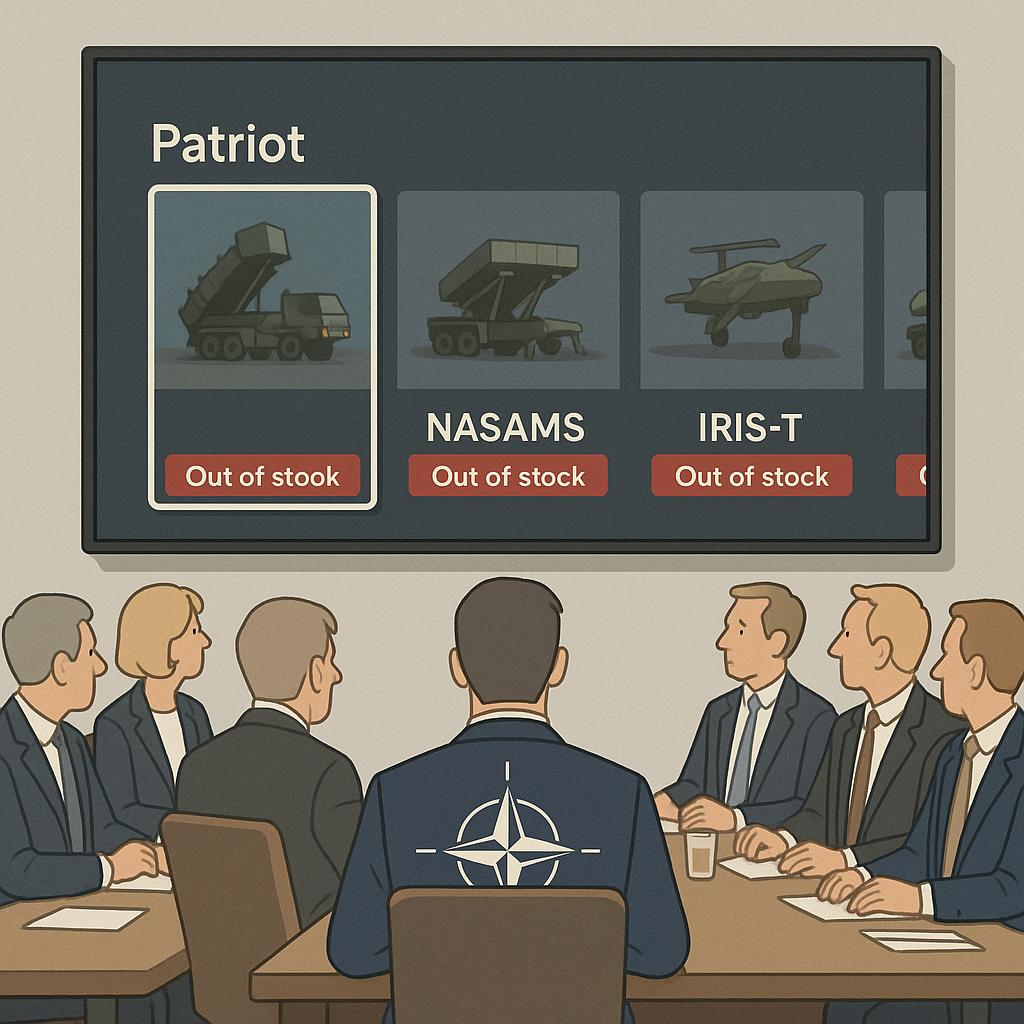
Under the new model, Kyiv will receive what officials are calling NATO Ukraine Basic: a bundle of Patriot, NASAMS, IRIS‑T and SAMP/T air‑defense systems, packaged as an annually renewable license that can be paused, throttled, or geo‑restricted when domestic polling dips.
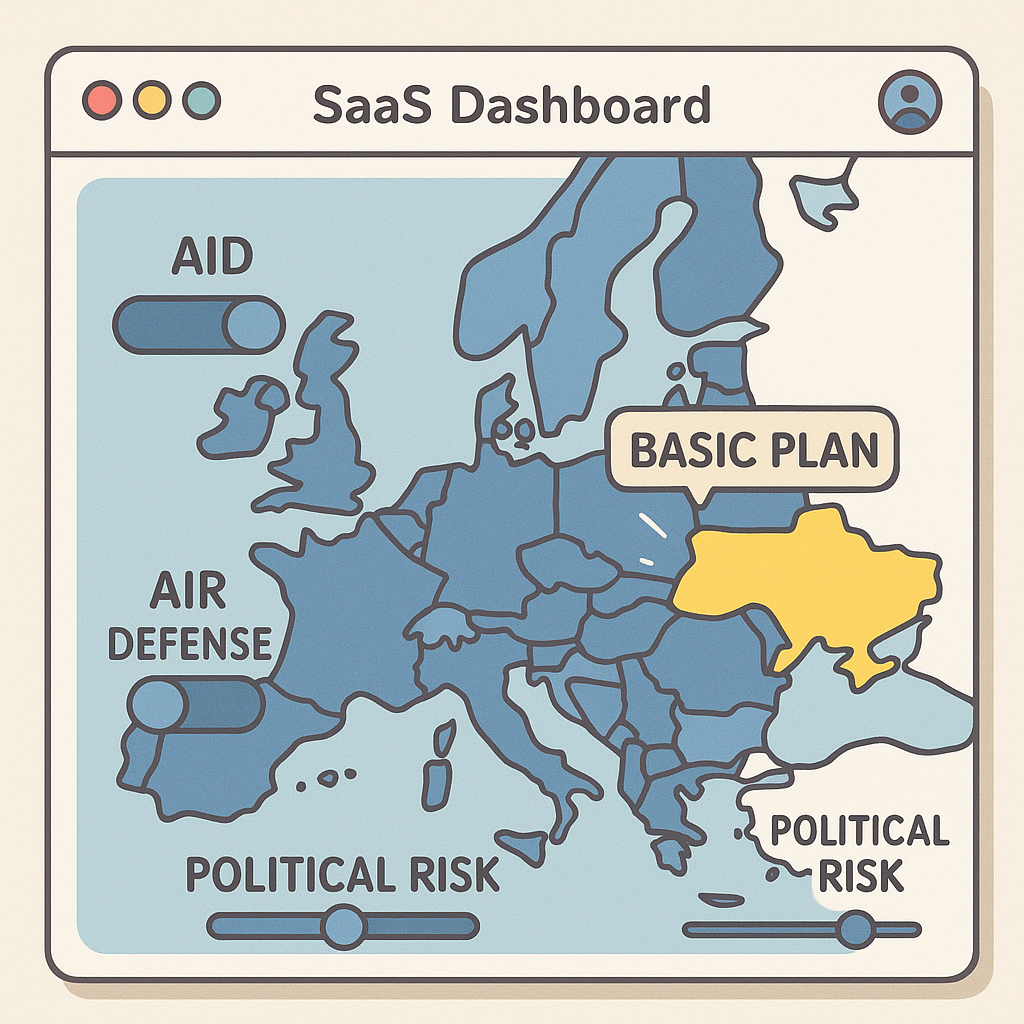
On the ground, Ukraine has already rewritten air‑defense tactics to function like a brutal freemium game. As reported in a separate New York Times piece, Ukrainian crews now juggle Russian missiles and drones in real time, allocating interceptors like microtransactions while watching a giant invisible counter that says “You have 3 Patriots left this month. Buy more?”
“We used to run an integrated air-defense network,” said one Ukrainian officer, speaking on condition of anonymity because he was standing near something expensive. “Now it feels like we are managing a Shopify inventory. The Russian military sends a subscription box of missiles every night, and we keep getting the ‘low stock’ alert.”
The problem, alliance officials concede in private, is that Ukraine has built a world‑class algorithm to assign missiles to targets, while NATO has built a world‑class process to assign talking points to microphones.
“Tactically, they are brilliant,” said a senior diplomat. “Strategically, they are trapped in our billing cycle.”
NATO @ 75: Now With AI‑Powered Uncertainty
The summit, framed by the Times under the headline “NATO’s Make‑or‑Break Summit: Can an Aging Alliance Outrun a Revamped Russian War Machine and a Volatile Washington?”, is also the alliance’s biggest launch event since the Cold War. The agenda combines classic security questions with the gentle panic of a legacy enterprise vendor staring at a disruptive competitor called “Russian defense‑industrial mobilization.”
Top items include:
- Clarifying whether Ukraine gets a “pathway” to NATO membership or a 400‑page user manual with no activation code.
- Announcing multi‑year aid packages that, in practice, expire the moment a key committee chair loses a primary.
- Explaining to Volodymyr Zelensky that “open door policy” means “we turned on push notifications.”
Complicating the rollout is what officials delicately refer to as “U.S. platform volatility.” The alliance still depends heavily on American hardware, funding, and political bandwidth, all of which are currently being load‑tested by an election cycle that treats NATO burden‑sharing as an in‑app purchase Trump can toggle to boost engagement.
“From an engineering perspective, you should not build your critical security layer on a single cloud provider that keeps threatening to rage‑quit,” said one European defense analyst. “Yet here we are, with Article 5 running on Washington’s political uptime, which has fallen below 99.9 percent.”
The alliance’s new Secretary General‑designate, Mark Rutte, is expected to present a roadmap that will transition NATO from ad‑hoc Ukraine aid to what one briefing calls “persistent, subscription‑based deterrence with cross‑platform support for incoming administrations.” A person familiar with the draft said the phrase “regardless of electoral outcomes” appears 27 times, mostly in bold.
European Strategic Autonomy, Now In Beta
To reduce dependence on volatile U.S. queries, European leaders are pushing for what they are calling “industrial re‑armament” and what their budget offices are calling “a migraine.” The idea is to ramp up ammunition production, air‑defense output, and troop readiness until Russia’s defense industry is matched by something other than strongly worded communiqués.
Unfortunately, Europe’s arms factories exist in the same economy as Caterpillar’s $100 million Texas workforce push for advanced manufacturing, and the same markets where AI stocks occasionally erase a year of defense budgeting in one afternoon. That means European leaders must constantly explain to voters that the choice is not guns versus butter, but guns versus data centers that will later be used to generate high‑resolution images of the missing guns.
“Our citizens are understandably fatigued,” said one EU official. “After years of inflation and energy shocks, telling them we now need multi‑year ammunition subscriptions sounds less like strategy and more like a phishing email.”
Public war fatigue is beginning to shape the user interface. Several NATO capitals insist that any new commitments to Ukraine come with a large, friendly “Pause” button, clearly labeled “In case of domestic unrest.” Others want language that ties future support to “performance metrics,” a phrase that has never once ended well for frontline soldiers.
In a confidential annex, allies reportedly discuss the risk of “escalation” if they cross certain red lines on air‑defense and long‑range missiles. The same document marks those red lines with an asterisk, noting that they have already been crossed in practice but not yet in the press release.
Ukraine, Premium User, Still Outgunned
While NATO iterates on pricing models, Russia has chosen a simpler approach: ship volume. Its revitalized defense industry now produces missiles and drones at a rate that turns every Ukrainian night into a stress test.
Ukraine’s tactical innovation in air defense, which the Times describes as a wholesale rewrite of doctrine, is impressive enough that some NATO planners talk about adopting it as formal alliance practice. There is only one problem. The doctrine assumes an infinite stream of interceptors. The war does not.
“We love their playbook,” said a NATO military official. “We just do not currently have the munitions, manpower, or political patience to run it at scale. It is like admiring someone’s Kubernetes cluster when you are still on shared hosting.”
Zelensky, for his part, has spent the pre‑summit week requesting specific systems in a tone that has shifted from desperate to enterprise sales. In Washington he will meet leaders who can approve dozens of Patriots and thousands of interceptors, as long as those decisions fit within domestic arguments over the Fed, AI chip subsidies, and whether OpenAI should give the Trump administration a 5 percent equity stake.
At a closed‑door session, one participant said Zelensky held up a chart showing Russian missile trajectories against available Ukrainian interceptors. Several ministers reportedly responded by asking if the chart could be made “more aspirational.”
Summit To Deliver Historic ‘Maybe’
By the summit’s end, leaders are expected to announce:
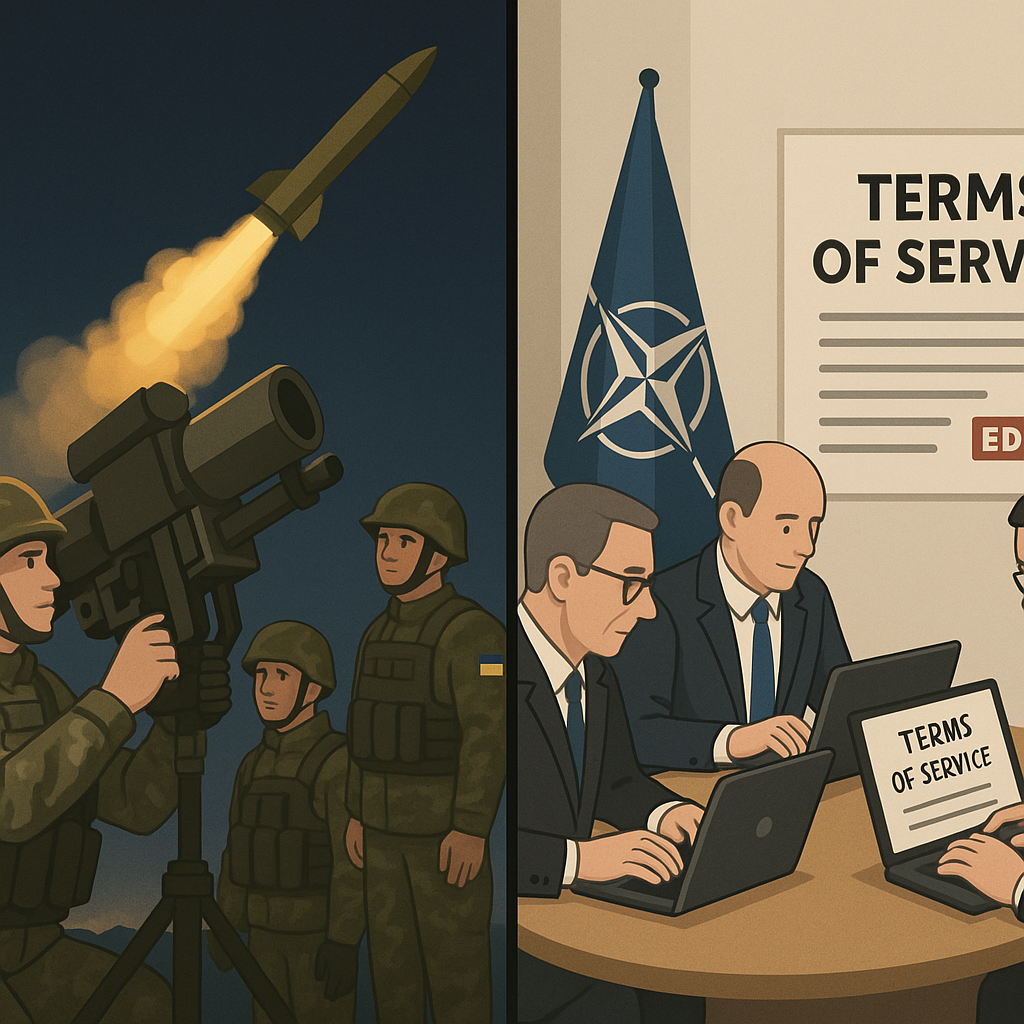
- Language that “brings Ukraine closer” to NATO without actually moving it.
- Multi‑year aid pledges described as “binding,” although each contains a footnote clarifying that “binding” means “until further notice.”
- New force‑posture commitments on NATO’s eastern flank that are mostly PowerPoint animations of troop movements, pending budget votes.
Markets will briefly interpret these announcements as bullish for defense stocks, then pivot back to wondering whether AI training costs should be treated as capital investment, existential threat, or both. Russia will test NATO’s upgraded posture by timing a missile barrage or cyberattack to coincide with the summit’s closing photo, then assess the alliance’s response latency.
Officially, NATO will present the week as a decisive move toward a sustainable security architecture for Ukraine and Europe. Unofficially, several diplomats describe it as a race to lock in recurring commitments before U.S. politics, European elections, or the next global crisis forces everyone back into month‑to‑month support.
“What we are trying to do,” said one senior official, “is transform ad‑hoc solidarity into a long‑term platform with guaranteed offtake contracts and production targets. In other words, we are product‑managing deterrence.”
Asked what happens if the United States adopts a more transactional posture after the election, or if a future administration decides that Article 5 is available only to premium subscribers, the official paused.
“Then,” he said, “Europe will need to finally launch its own security stack. We project a robust rollout in 2038, subject to parliamentary ratification and successful pilot programs in three mid‑sized member states.”
By that time, Ukraine’s trial period will have long expired. Auto‑renew will still be toggled off.



