In a development experts called inevitable, global markets officially reclassified U.S. airstrikes on Iran in the Strait of Hormuz as a minor tech sector event, somewhere between an Apple price hike and a mildly disappointing OpenAI rumor.
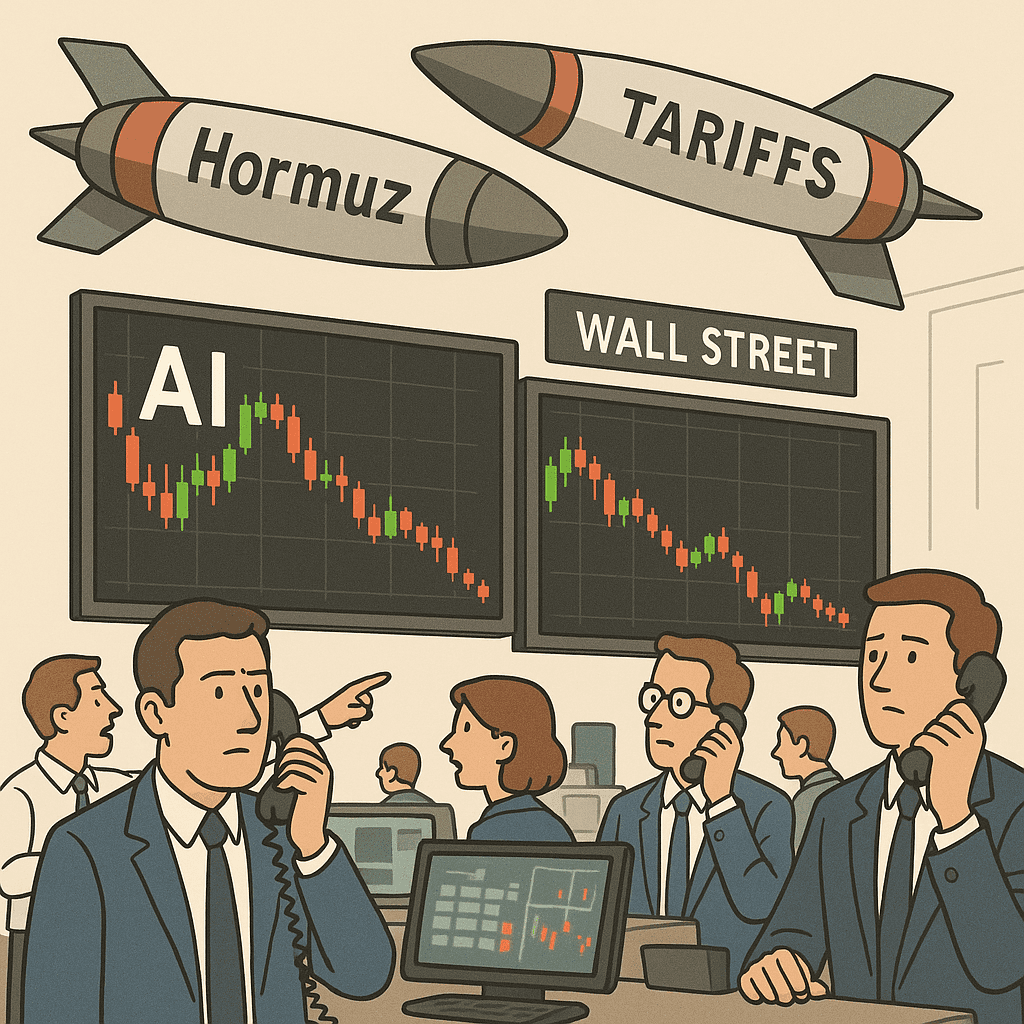
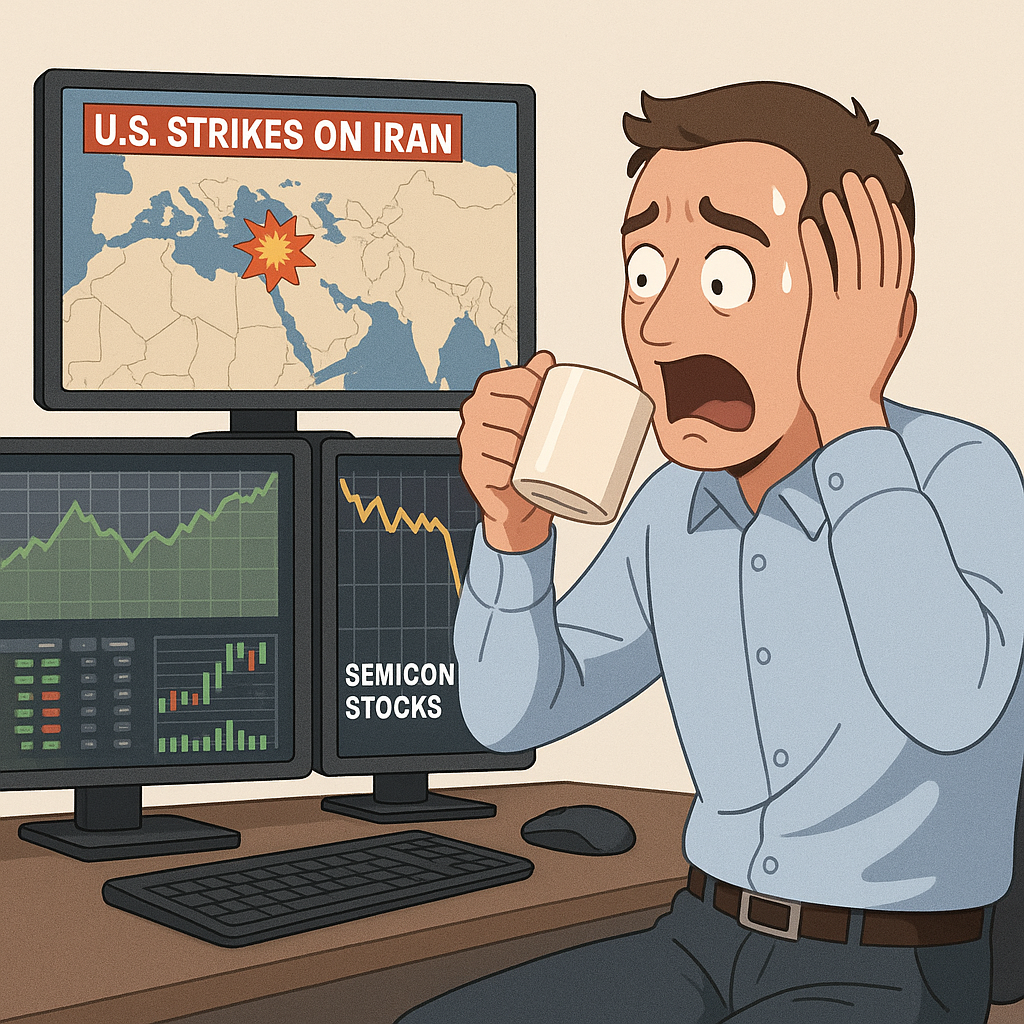
Within hours of the United States military releasing video of missiles slamming into Iranian targets near a chokepoint that handles one fifth of the world’s oil, Brent crude prices quietly slipped, semiconductor stocks panicked, and Wall Street agreed the real victim of Gulf instability is, once again, investor sentiment around AI infrastructure.
“It is important to remember our priorities,” said one strategist on CNBC, gesturing at a chart in which Micron, Nvidia, Intel, and Arm all plunged while footage of the strikes played in a tiny box in the corner. On a second screen, a blinking alert read “nvidia buyback unchanged.” “Yes, there are tensions in the Strait of Hormuz. But OpenAI might delay its IPO. This is a time for seriousness.”
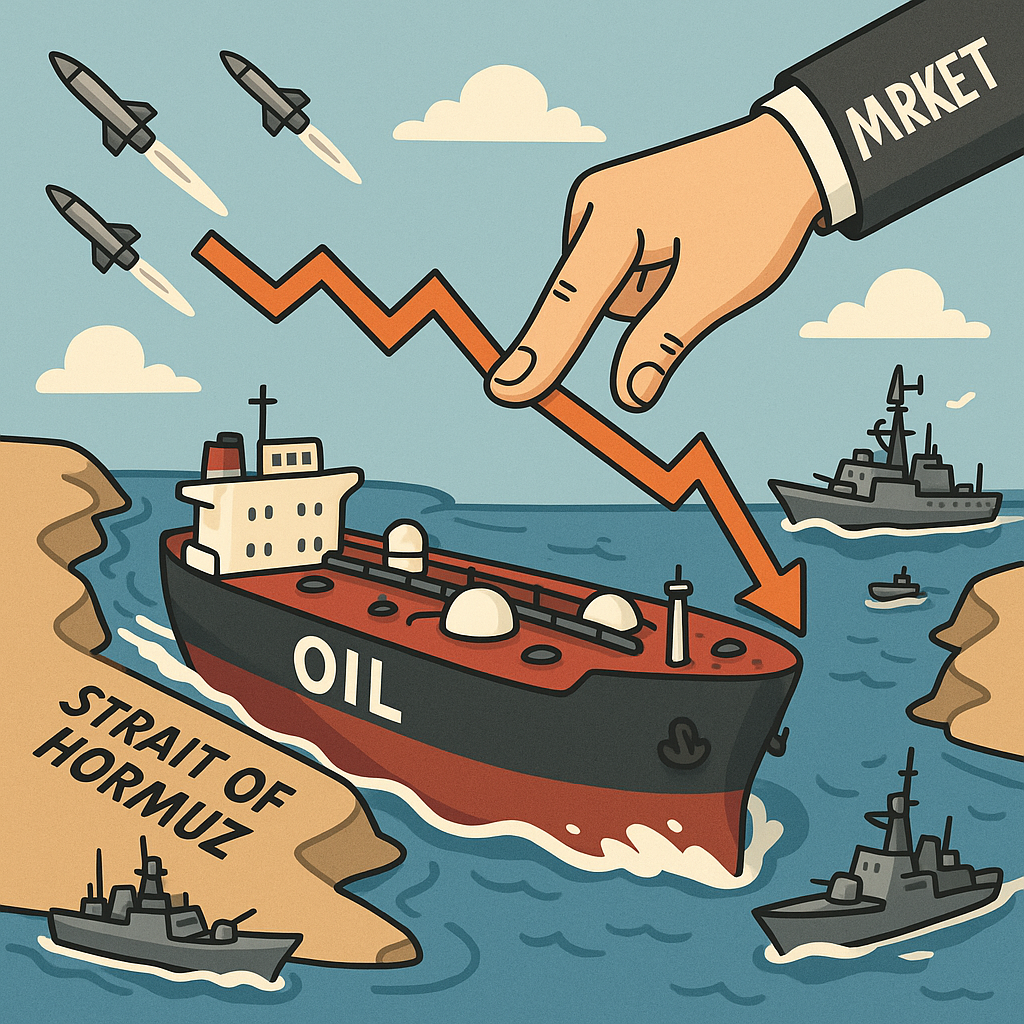
As Iran vowed to respond and shipping insurers quietly re priced the cost of sailing a steel tank of flammable liquid through an active war zone, investors appeared more alarmed by Micron’s 6.7 percent drop and Apple’s decision to raise MacBook and iPad prices to pay for the AI chips making the war footage look so crisp.
“Falling oil is actually positive for inflation,” one analyst wrote in a note, glossing over the U.S. Central Command transcript about keeping vital sea lanes open. The same note featured a color coded dashboard in which “Hormuz risk” showed up as a pale yellow triangle, while “Nvidia multiple compression” flashed red. “The key risk here is that higher rates, possible Neel Kashkari hikes, and OpenAI’s IPO delay complicate our ability to overpay for GPUs. Should Hormuz fully close, we would revisit our overweight on drone manufacturers and lifestyle bunker REITs.”
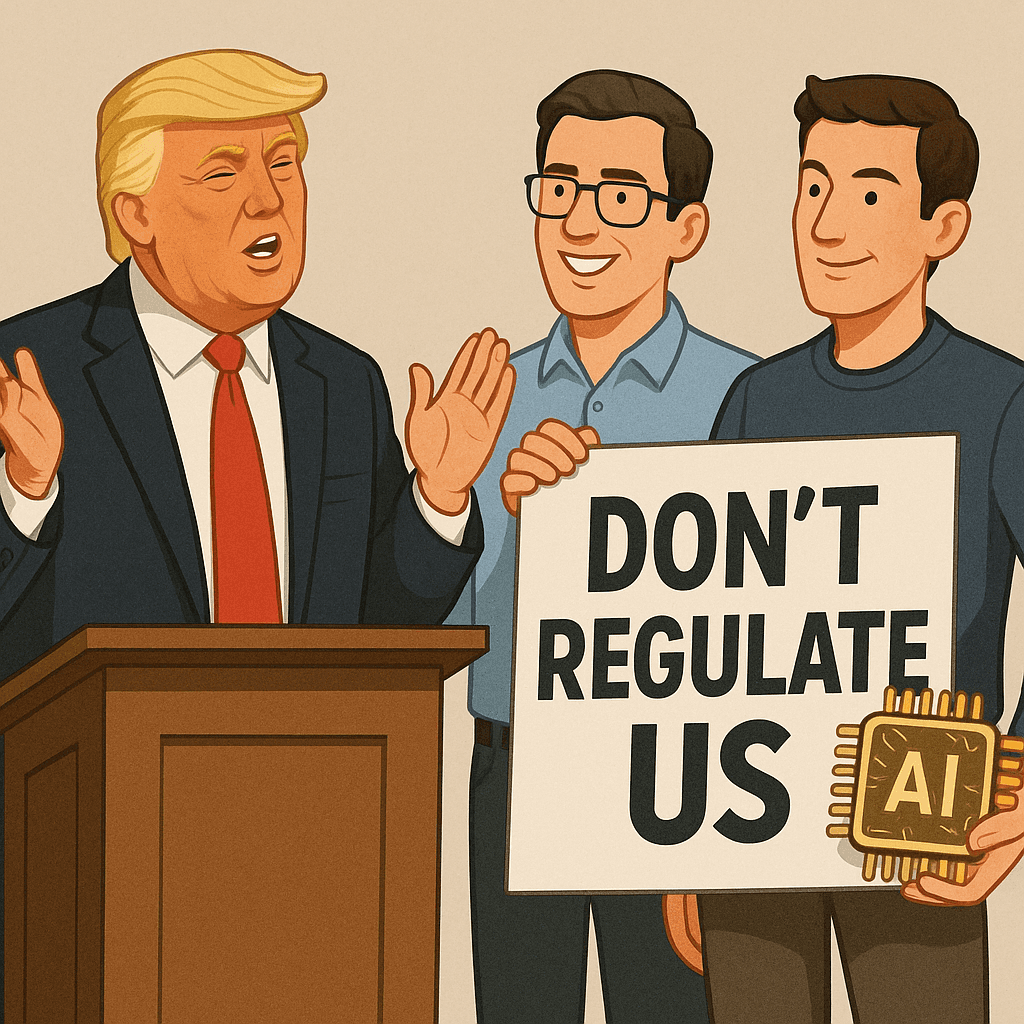
On the political front, Donald Trump accused Iran of violating agreements, threatened 100 percent tariffs on countries with digital services taxes, and released a new rendering of the U.S. passport, all in roughly the same breath. According to NBC News, the updated passport art features a larger font for “United States” and a smaller, more negotiable font for “of America.”
“Think of it as a brand refresh,” said one senior official, speaking on background from a room with three live feeds of the Hormuz strikes, a Bloomberg terminal open to the S&P 500, and a whiteboard labeled “Tariff Opportunities” next to a doodle of the Strait. “We are reinforcing that if you tax our tech companies, we will destroy your export sector, then ask you to increase defense spending in NATO. This is a holistic wellness plan for American power.”
Markets applauded the clarity. The same afternoon Trump floated 100 percent tariffs on countries with digital services taxes, the Financial Times reported that chipmakers were suffering their worst week in months. Correlation, investors stressed, is not causation, unless it can be turned into a tradeable ETF.
“We are launching the ‘Geopolitical Risk, But Make It Quant’ fund,” said one asset manager, scrolling past live missile footage to check the fund’s ticker mock up. “Our algorithm screens for words like ‘Strait of Hormuz,’ ‘missile,’ and ‘tariff’ on CNBC, then automatically sells semiconductors and buys whichever defense contractor just used the phrase ‘robust pipeline’ on their earnings call.”
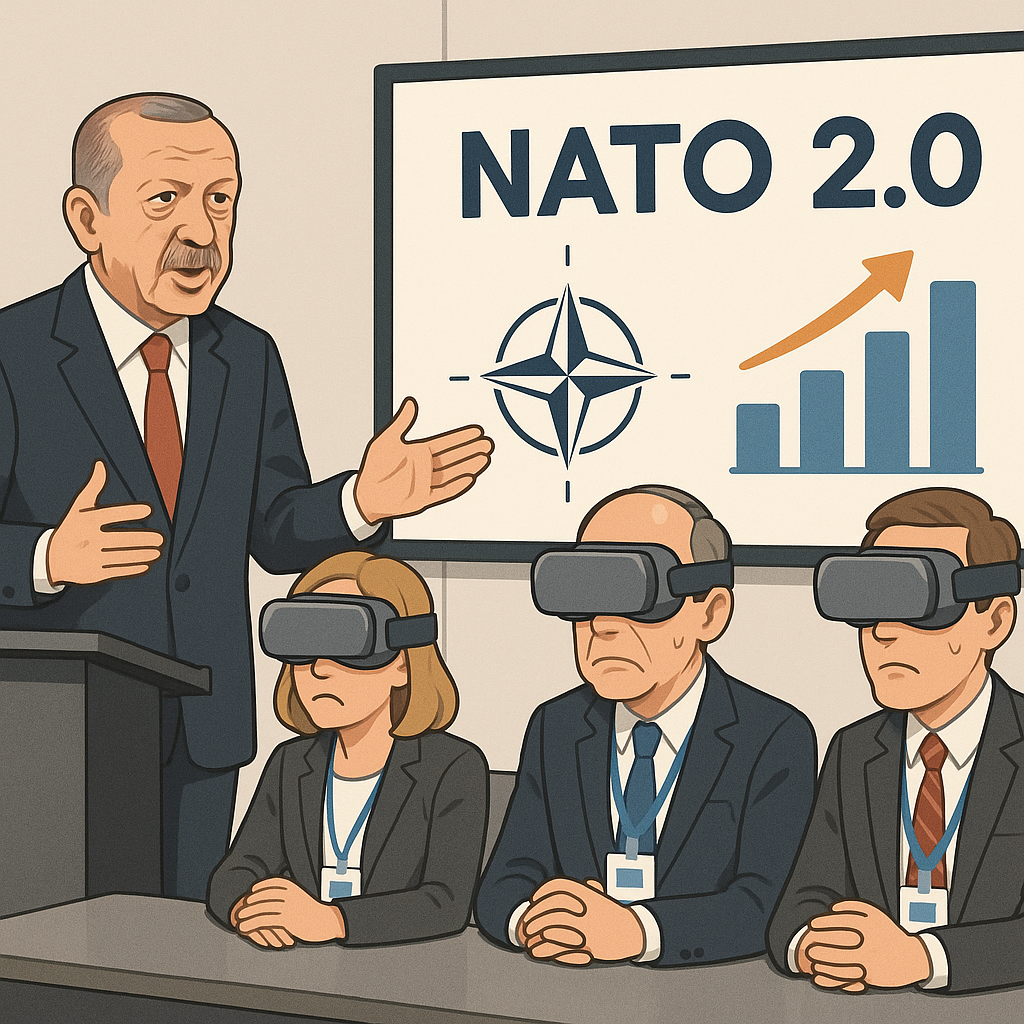
While missiles flew, Turkey quietly treated the situation as a LinkedIn opportunity. As Haaretz noted, the upcoming NATO summit in Ankara is being pitched by President Recep Tayyip Erdogan as a regional “coming out party,” a phrase that in this context means: a chance to sit between Trump, Iran, and Europe and invoice each of them separately.
“Turkey is uniquely positioned,” one Turkish diplomat explained. “We have a foot in NATO, a hand in the Black Sea, an eye on Iran, and a large unpaid bill with the IMF. Hosting a war adjacent summit is our way of diversifying revenue streams. Some countries have sovereign wealth funds. We have targeted chaos.”
European Union officials, whose energy policies now consist mainly of aspirational PowerPoints about heat pumps, watched the Hormuz updates while sweating through a record heatwave and voting against new gas infrastructure they may urgently need.
“We are deeply concerned,” said one EU commissioner, fanning herself with a printout of emissions targets and a color brochure for a Qatari LNG terminal. “Any disruption to Gulf crude could impact our transition to greener dependence on imported LNG from somewhere vaguely less controversial.” Asked whether the bloc might diversify away from a volatile shipping chokepoint, she replied that Brussels is “exploring exciting alternatives in virtual barrels, tokenized energy futures, and mindfulness.”
Back in the U.S., the political symbolism kept pace with the ordnance. In addition to new passport designs, Trump repeated his familiar complaints about NATO burden sharing and doubled down on rhetoric about Iran, promising severe consequences, higher tariffs, and a firm but scalable user experience for allies.
“We are introducing what I call Transactional Security,” said a senior administration aide. The aide spoke from a conference room where Article 5 language had been printed on a slide titled “Terms of Service.” “Article 5 is still in effect, of course. It is just now subject to a modest platform fee and a small premium if your country insists on taxing our cloud services.”
To help partners navigate this environment, the Pentagon and Treasury are reportedly collaborating on a new digital portal where U.S. allies can bundle orders for missile defense, war risk insurance, and exemptions from the digital services tax tariffs. The beta version, code named ‘NATO Plus,’ will also offer a buy now, bomb later option for qualifying governments.
“Geopolitics used to be about values,” said an exhausted European diplomat, scrolling through a dashboard that listed “tariff risk,” “missile proximity,” and “OpenAI IPO probability” on the same line. The same screen featured a small pop up inviting him to “upgrade to Deterrence Pro.” “Now it is basically a subscription bundle. We keep getting upsold from ‘Basic Deterrence’ to ‘Premium Deterrence with AI Insights.’”
In markets, the disconnect continued. Oil sagged, tech slid, and defense stocks edged higher, while commentators scrambled to explain why a live U.S.–Iran confrontation in a critical shipping lane was, on balance, good news for valuations as long as it stayed under a certain number of casualties per quarter.
“Investors are very good at compartmentalizing,” explained a portfolio manager who had set up push alerts for both Neel Kashkari interviews and Iranian drone launches. On his desk, a laminated cheat sheet ranked “Hormuz closure probability” just below “Fed dot plot drama” and just above “Erdogan surprise.” “The key thing is visibility. If we can see the missiles in advance on satellite, we can model them. The real uncertainty is how many data centers OpenAI will build this year. That is what keeps me up at night.”
For now, the working assumption on Wall Street is that the U.S.–Iran flare up will remain just that: a manageable, monetizable flashpoint, significant enough to move options volatility but not so dramatic that anyone has to reconsider their 18 month AI capex thesis.
The only scenario that meaningfully alarms investors is one in which Iran attempts to close the Strait of Hormuz, Trump enforces 100 percent tariffs on digital services taxes, Erdogan turns the NATO summit into a live auction, Kashkari follows through on a surprise rate hike, and OpenAI cancels its IPO entirely.
At which point, according to multiple notes out Friday, the base case is simple: the world’s most critical oil chokepoint would be reclassified as a material risk to quarterly guidance at Nvidia, and the newly filed “Calm During Missile Fire” ETF would have to update its prospectus to include the phrase “subject to unplanned regional war.”