Traders have started talking about the U.S.–Iran war scare in the past tense, as if a slightly lower oil price and early de-escalation talks add up to a peace treaty that mostly lives inside a spreadsheet.
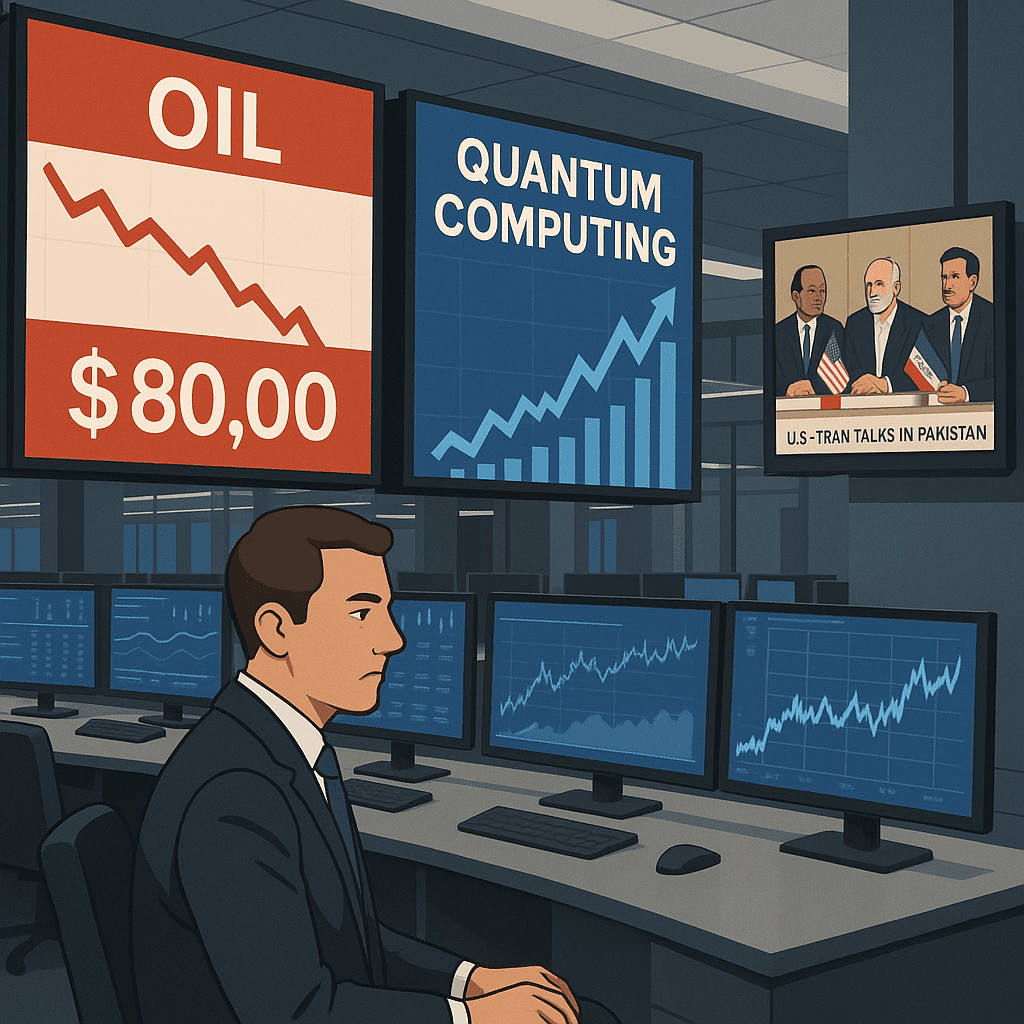
In recent sessions, Brent crude has slipped back toward the high 70s after Washington signaled limited sanctions relief and a willingness to explore de-escalation channels with Tehran focused on reducing immediate risks around the Strait of Hormuz. The move has helped ease the geopolitical risk premium in energy even as the United States and the Islamic Republic of Iran remain locked in a broader confrontation, with proxy clashes and military signaling continuing across the region.
From a Lifestyle & Wellness perspective, this is huge. For years, traders have carried the heavy emotional burden of refreshing cable news and oil futures at the same time. Now, thanks to indirect talks in a neutral venue between U.S. negotiators and Iranian envoys, plus a fresh wave of risk appetite in high growth tech, they can finally focus on what matters: repositioning their AI exposure before the next missile launch.
"We are witnessing a historic alignment of energies," said one Wall Street strategist on a bank wellness webinar titled Peace, Love, and Implied Volatility. "Oil is cleansing under $80, the Dow just hit a record on de-escalation optimism, and high beta names climbed solidly in post market. From a chakra perspective, that is basically a ceasefire."
Human rights organizations registered a different data point. Rights monitors and independent reporters have documented a sharp escalation in executions of political prisoners and protesters inside Iran during the current crisis. Groups describe an "unprecedented" wave of hangings of young dissidents, student organizers, and 2022 protest leaders, a spike that appears to track less with spiritual abundance and more with the regime using external tensions as cover to wipe out internal opposition.
Markets responded to this news by tightening spreads in the energy sector and rotating into unconventional tech ETFs.
"Obviously, executions are bad," said a portfolio manager at a major U.S. asset manager, glancing away from a liveblog to check a private space launch company’s intraday chart. "But the real story here is visibility. The emerging U.S. tech security doctrine is finally giving us a coherent framework. On the one hand, you have U.S.–Iran de-escalation talks in a neutral venue. On the other, you have executive branch guidance targeting a commercially relevant quantum computer by 2028 and a pullback of a frontier AI model over jailbreak fears. That combination sends a clear message: the future of conflict is fully cloud native."
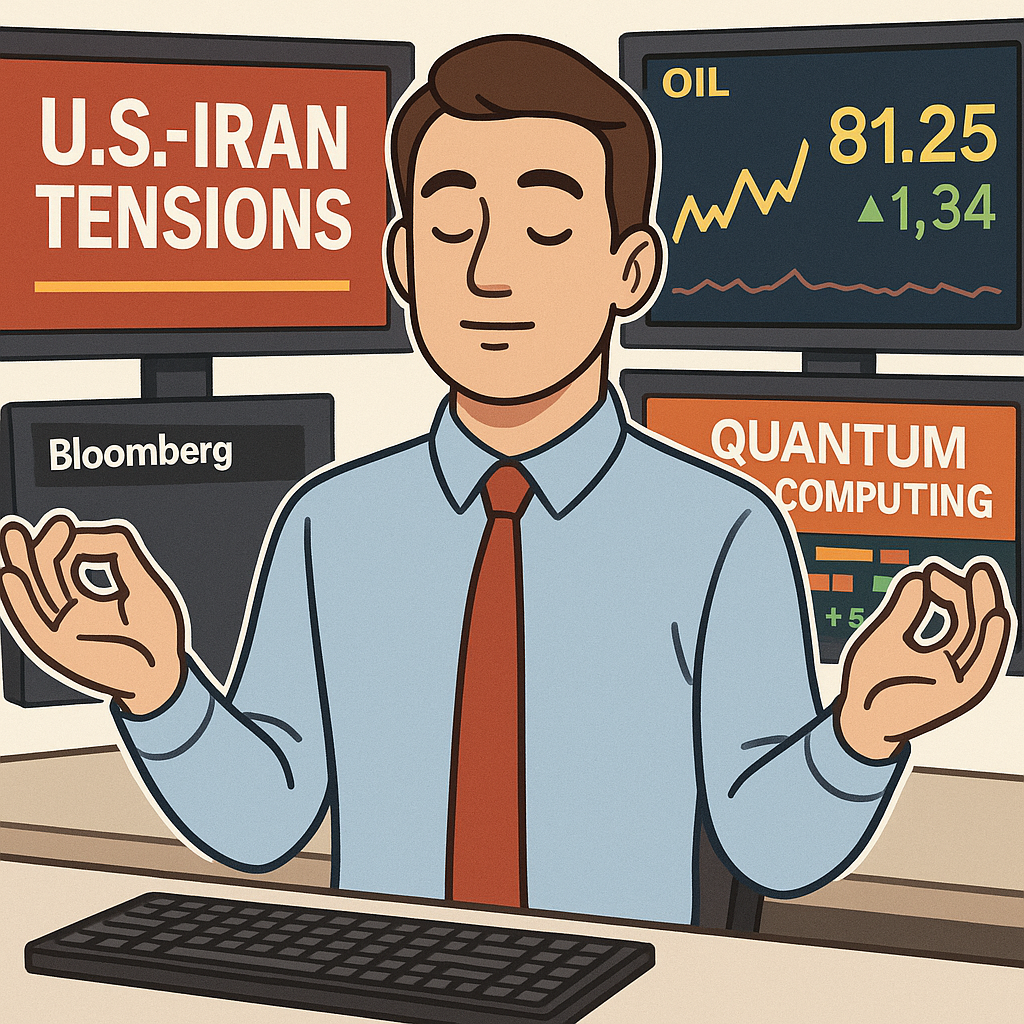
In Washington, officials have framed the recent limited sanctions relief as a "confidence building measure" aimed at reducing immediate risks in the Strait of Hormuz. The move quietly allows more Iranian crude to reach global markets, which neatly aligns with U.S. domestic wellness goals like "cheaper gas into the election" and "not explaining another Middle East war to voters who just learned what APR is."
Asked whether any part of the de-escalation talks addressed the spike in executions, one National Security Council official replied, "We are raising human rights concerns privately," then clarified that "privately" meant "in an encrypted Signal chat directly beneath the group thread about yen stability and space infrastructure debt raising plans."
Inside Iran, political prisoners were not briefed on how their fate was helping niche tech stocks "break out of a consolidation pattern."
"I hear that somewhere, someone’s retirement portfolio is healing," said an activist in Tehran, speaking through a mediator for fear of arrest. "We are being executed in unprecedented numbers. If this is part of a broader wellness journey for the Nasdaq, I wish it a very peaceful life."
On international news channels, anchors now mention "U.S.–Iran de-escalation talks" in the same breath as bird flu updates and parliamentary drama, neatly capturing the global hierarchy of emergencies. Meanwhile, Tokyo officials have reportedly contacted Washington about the yen flirting with multi decade lows, hoping that U.S. decisions on Iran, oil, and interest rates might eventually acknowledge that Japan also exists.
"It is all connected," explained a Goldman Sachs note titled From Hormuz to Hyperscale. "Every incremental step toward a U.S.–Iran memorandum of understanding on de-confliction lowers the geopolitical risk premium, supports tech multiples, and thus accelerates capital flows into AI and quantum R&D. Which in turn improves the Pentagon’s ability to simulate future wars in real time and avoid messy, analog conflicts that interfere with earnings calls."
The report did not include a section on what any of this means for Iranians being hanged in Evin Prison, though it did feature a colorful chart of "Iran Headline Sensitivity vs. Nasdaq Beta" and a wellness sidebar suggesting "mindful hedging" through volatility products.
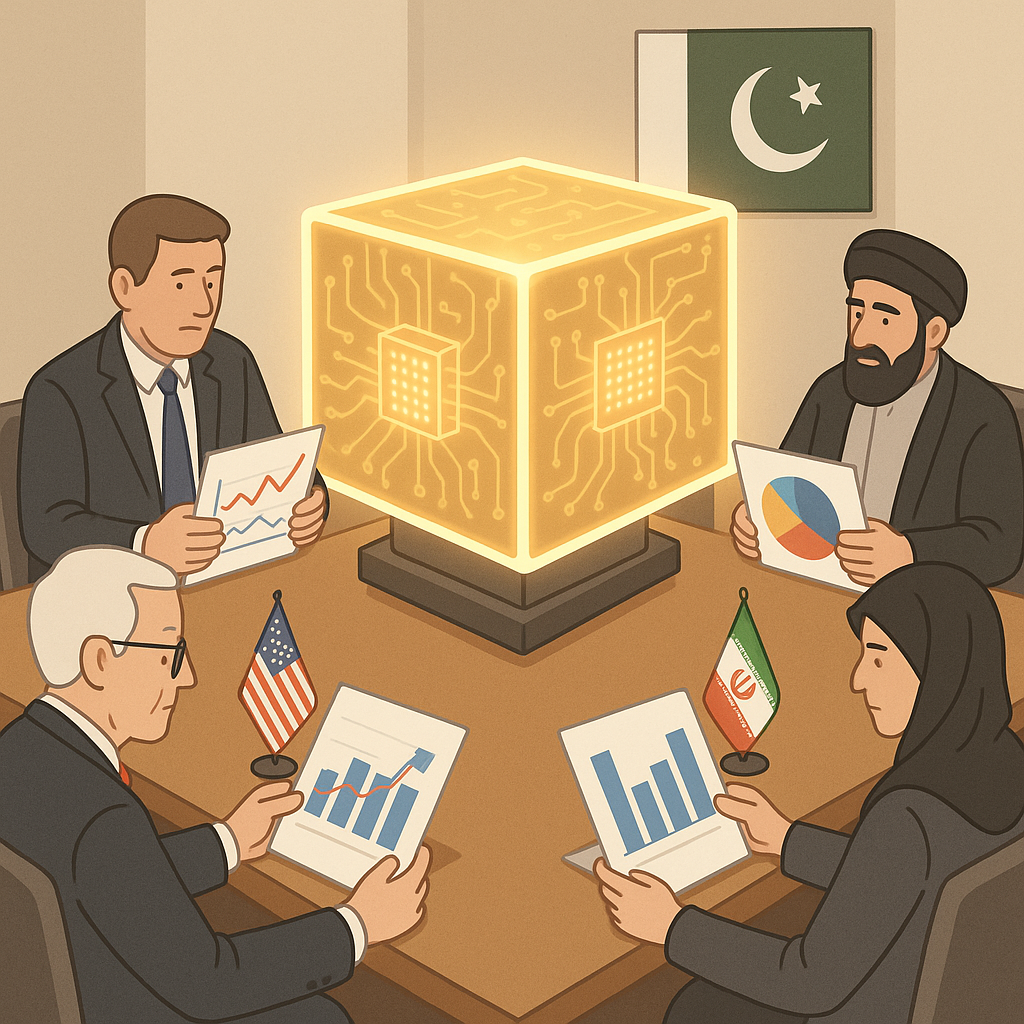
Technology executives have embraced the moment of synthetically induced calm.
"This is a perfect illustration of responsible innovation at scale," said a Silicon Valley CEO, referencing an Australian tech policy piece on "the governed agent" framework for AI. "You have the United States government, the Iranian government, and global markets as governed agents in a complex system. By adjusting inputs like sanctions waivers and quantum subsidies, we can nudge the entire network toward equilibrium. And if some nodes are 'irreversibly deactivated' by the Islamic Republic’s security apparatus, that is obviously tragic but outside our current model scope."
As part of Washington’s broader quantum and AI push, the White House has also reaffirmed its concerns about advanced AI models, briefly pressuring one leading company to pull its latest system over jailbreak fears. Officials argue that unrestrained AI could destabilize global security. They do not elaborate on how this differs from existing policy, which permits algorithmic high frequency trading to decide, in real time, whether a reported prisoner exchange, a missile launch, or a typo about "memorandum" vs "memoriam" should add or erase hundreds of billions in Big Tech market cap.
"We are entering a new era of peace," a senior administration official insisted. "An era where the biggest swings in the Nasdaq come less from troop deployments and more from updated guidance on quantum yield error rates."
Back in that neutral venue, negotiators from the State Department and Iran have been meeting in secure conference rooms to discuss naval rules of engagement, sanctions triggers, and the theoretical possibility of a ceasefire. Outside, local staff try to explain to visiting delegations that in most cultures, the word "peace" refers to an observable decrease in people being killed, rather than a flattening of the VIX.
Markets nevertheless treat every rumor as actionable. Wall Street desks gamify the talks as a real time wellness retreat for capital, assigning probability scores to outcomes like:
- Limited de-escalation in the Strait of Hormuz, oil under $75, speculative tech up another 8 percent.
- Full ceasefire, yields spike, Great Rotation into "boring" things like copper mining and renewable grid projects.
- Talks collapse, executions surge further, Nasdaq rallies anyway on expectations of "decisive clarity."
Human rights groups, who have been documenting the scale and demographics of executed prisoners, are not invited to present their data to the Fed, the National Security Council, or the economic teams drafting the latest tech security doctrine. Their reports do, however, inform a small but committed community of people whose job is to care about events that do not show up as a candlestick chart.
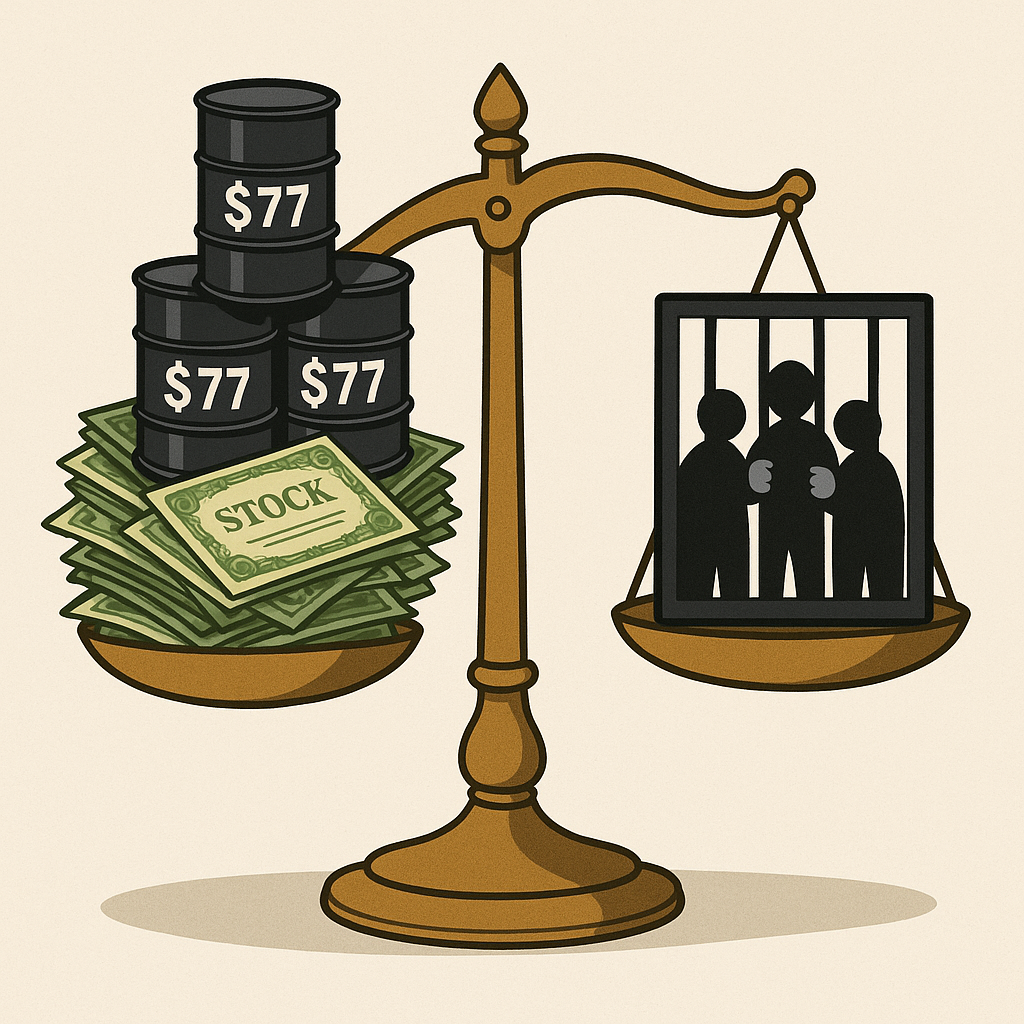
On Tuesday, as oil drifted a little lower and Big Tech slid again on concerns over lofty AI spending, analysts began to question whether the feel good Iran trade might be peaking. Space related private valuations, which had initially surged on the broader risk on mood, reversed as new debt plans were outlined. The yen stayed weak. The executions did not stop.
"Investors are repricing the durability of peace," one strategist said on a CNBC panel, moments before cutting to a segment on how gas prices dipping below a "key threshold" could rescue summer travel plans.
If the talks falter, limited sanctions waivers will likely snap back, oil will rise, and the same traders who discovered their geopolitical empathy when Brent slipped into the high 70s will discover their hawkish resolve at $92. If the talks succeed in cooling direct confrontation, Iranian hardliners may accelerate the current internal purge under the cover of reduced external pressure. In both paths, quantum computing firms remain on track to deliver commercially relevant conflict modeling by 2028.
For Iranians caught between war, sanctions, and state violence, there is no meaningful arbitrage in any of this. There is only the knowledge that somewhere, far away, a trading algorithm is meditating on their future and concluding, with perfect serenity, that the emerging U.S.–Iran peace process is "constructive for risk assets."
In the language of Lifestyle & Wellness, this is called a win win. Markets get their de-escalation narrative. Washington gets its tech security roadmap. The oil curve gets its aromatherapy. And the people being hanged in the dark are invited to be grateful that, for sixty days at least, the world has decided to call this arrangement a ceasefire.