In a development experts called inevitable, U.S. space policy has finally run out of room to dodge gravity.
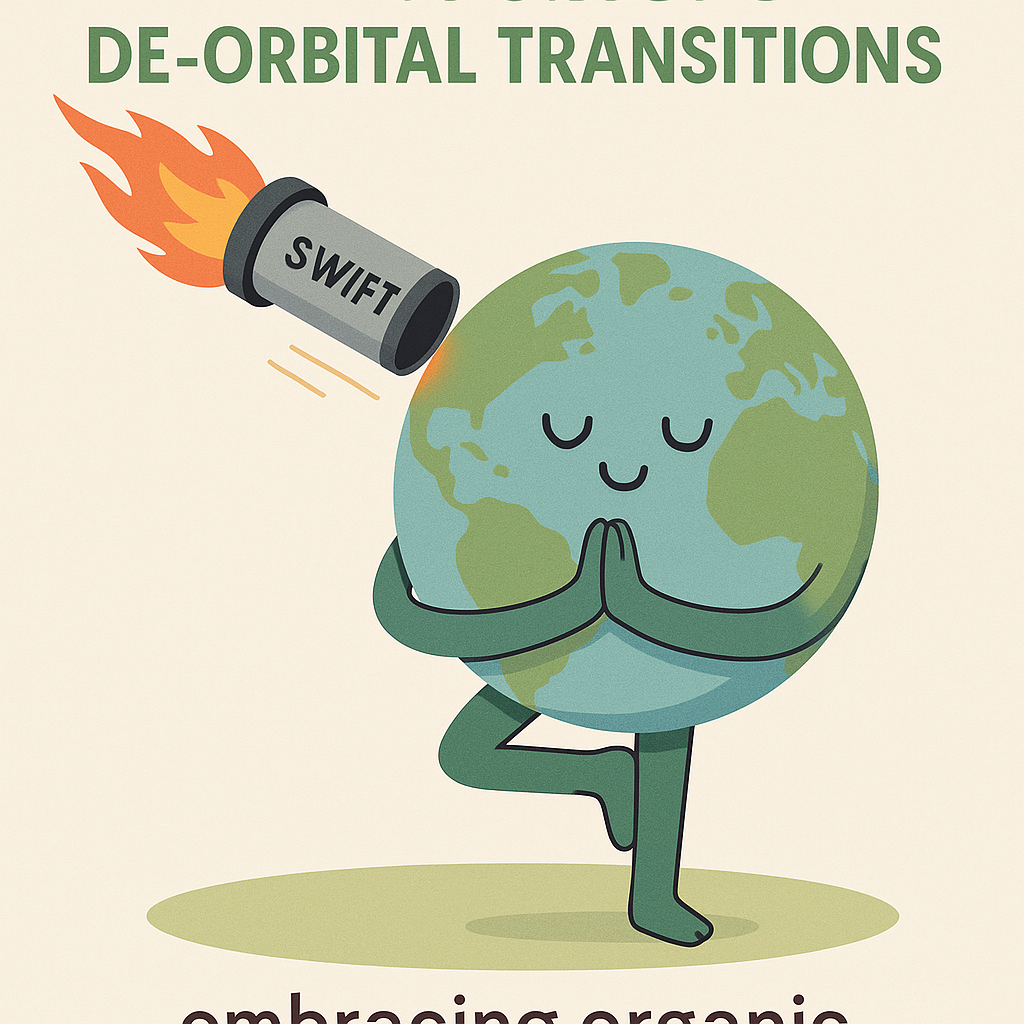
NASA confirmed this week that the Neil Gehrels Swift Observatory, a 20-year-old space telescope that studies gamma-ray bursts and black holes, is experiencing the sort of orbital instability that politely translates to: it may stop being “in space” and start being “in someone’s homeowner’s insurance claim.” The agency has launched an emergency effort to keep Swift from making what officials call an “uncontrolled reentry” and what everyone else calls “that thing from Don’t Look Up but with citations to HuffPost.
The Swift Observatory, operated out of NASA’s Goddard Space Flight Center, has spent two decades transforming our understanding of the high-energy universe. It has also spent two decades not having a clear retirement plan, which now places it squarely in line with most American workers.
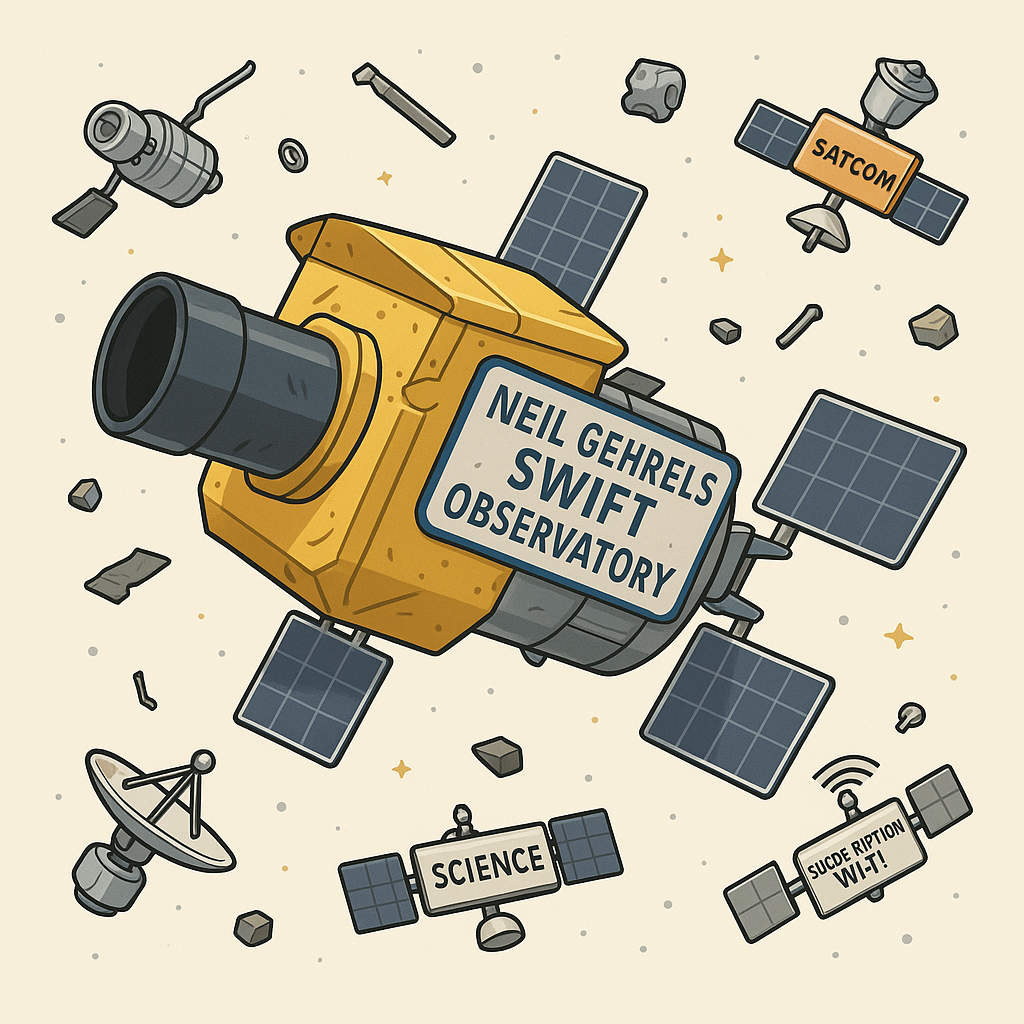
Internally, the crisis has been framed as an inspiring challenge. Externally, it looks like this: an aging satellite in low Earth orbit, a slowly decaying trajectory, at least one misbehaving component, a limited budget to fix it, and a planet full of people who recently got very judgy about other countries dropping hardware on them.
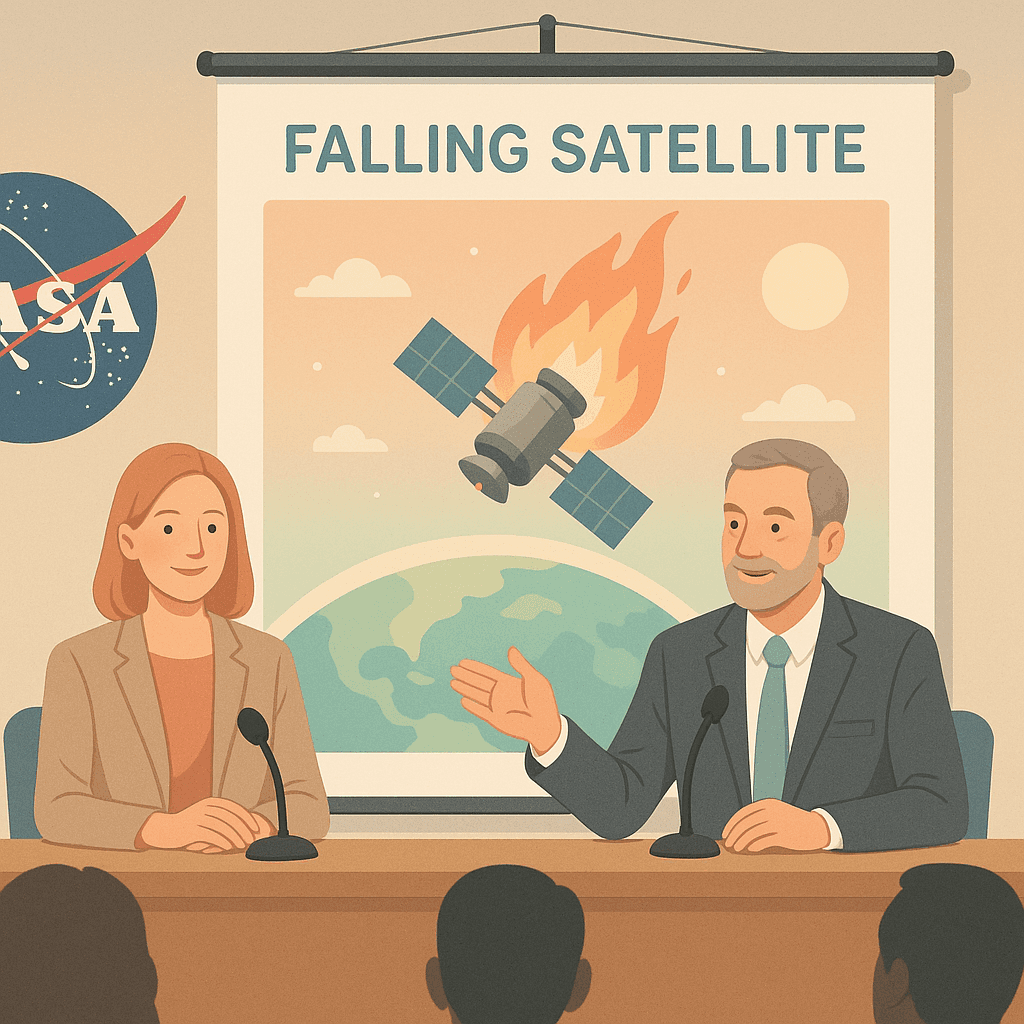
“We want to emphasize that the risk to any individual person is extremely low,” a NASA spokesperson said, standing in front of an infographic that showed a tiny human stick figure next to a very large cross-section of Earth. “Most of the spacecraft will burn up harmlessly in the atmosphere, which is the same place we put our climate policy.”
The Swift team at NASA Goddard is now racing a clock nobody will specify. Engineers are exploring options that include:
- Reorienting the telescope so it can be safely boosted into a higher, more stable orbit.
- Performing a controlled deorbit into the ocean, preferably the part with the fewest beachfront resorts.
- Accepting a “managed uncontrolled reentry,” a phrase that has B-school energy and strong 2008 mortgage-backed security vibes.
The effort is complicated by NASA’s shrinking pot of money for life-extension and end-of-life missions. Improvising a bespoke rescue plan for Swift means quietly triaging other aging satellites, some of which are also drifting, flickering, or communicating primarily in legacy file formats.
“We have a fleet of indispensable but elderly spacecraft,” one NASA budget analyst said, speaking on condition of anonymity and open spreadsheet. “For years we pushed the narrative that these missions were ‘miraculously overperforming.’ Now it turns out that when you run things twenty years past their design life in a region of space full of metal shrapnel and billionaire Wi-Fi, weird stuff happens.”
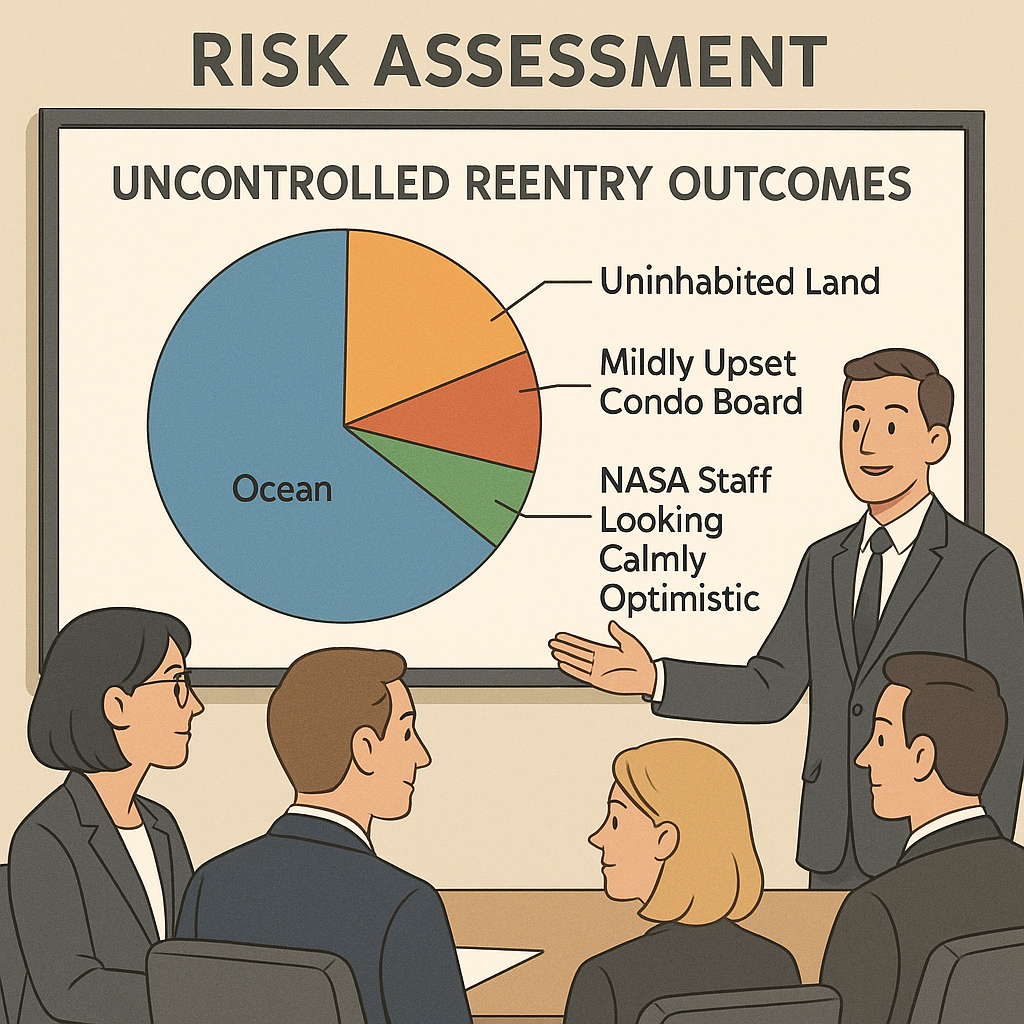
The United States has long marketed itself as the responsible adult in orbit, especially whenever a Chinese rocket stage drops a surprise souvenir on the Indian Ocean. Swift’s situation is testing that brand. Officials at NASA and the Federal Aviation Administration are reportedly coordinating risk assessments to ensure the telescope’s descent does not resemble any of the scary computer simulations used in news graphics about other people’s space junk.
According to preliminary models, any reentry path that crossed heavily populated areas would trigger additional mitigation. In practice, that means a good faith attempt to steer Swift somewhere more acceptable, like open water or a future luxury island owned by an AI hedge fund.
To reassure the public, NASA has started stress-testing new language around debris. The phrase “uncontrolled reentry” is being quietly phased out in favor of “organic de-orbital transition” and “gravity-enabled hardware detox.” Officials say this is part of a broader communication strategy that “centers the lived experience of the atmosphere.”
The astrophysics community, for its part, is grieving in the most scientific way possible: with white papers. Researchers point out that Swift has generated an enormous archive of gamma-ray and X-ray data, helping reveal how black holes feed, how stars die, and how press releases can routinely include the word “unprecedented” without anyone losing their funding.
“Swift is irreplaceable,” said one high-energy astronomer who relies on the observatory’s alerts. “At least until we get a new mission up. Which, realistically, is on the same timeline as me getting tenure.”
NASA officials insist that decisions about Swift will be guided by “science priorities and safety,” two values that historically track well right up until the moment a continuing resolution hits the House floor. Behind the scenes, program managers are reportedly weighing whether to pour scarce funds into keeping Swift aloft or pivot more aggressively to future missions, including ones that launch with built-in “deorbit kits” instead of inspirational posters about going the distance.
The crisis is already feeding into new policy debates about low Earth orbit, which now contains a mix of government observatories, commercial megaconstellations, cubesats built as senior projects, and at least one Tesla slowly becoming a cautionary tale. Space debris tracking networks are straining to keep up, and regulators are looking for ways to appear proactive that do not involve banning anything advertised during sports broadcasts.
“Swift is a wake-up call,” said a former FAA official who now consults for three separate orbital-startup accelerators. “We cannot keep pretending that space is an infinite dumping ground for dead satellites and brand collaborations. At some point gravity sends you the invoice.”
Internationally, the Swift situation is being watch-listed by agencies that would very much like the U.S. to continue modeling “responsible behavior” in orbit. At the United Nations Committee on the Peaceful Uses of Outer Space, delegates are reportedly Drafting Strongly Worded Language about end-of-life planning while privately texting launch providers about ride shares.
Within NASA, staff are describing the moment as “transformational,” which is the technical term for “we have to change things but nobody gave us new money.” Proposed shifts include:
- Mandating fuel reserves sufficient for a controlled deorbit for all new spacecraft.
- Requiring active propulsion on missions that plan to operate in already crowded orbital shells.
- Developing on-orbit servicing and debris-removal technologies that are explicitly not space weapons, regardless of how fun they look in the renderings.
Commercial operators, who have aggressively filled low Earth orbit with satellites that provide everything from global broadband to slightly better crop analytics in exchange for recurring monthly revenue, are watching closely. If Swift’s descent sparks stricter debris rules or shortened mission lifetimes, it could turn entire business models into quaint case studies about scale.
Public communication remains delicate. NASA wants to be transparent enough to preserve trust while avoiding mass panic about “falling telescopes” that might spook Congress into a bipartisan solution. That outcome is considered, in risk matrices, a low probability, high fantasy event.
For now, the official line is that Swift is stable “on the relevant timescales,” a phrase whose ambiguity has become the Rorschach test of the week. Astrophysicists hear “enough time to get a replacement funded.” Budget analysts hear “through the election.” The rest of the planet hears “no need to move your wedding indoors yet.”
In a small gesture toward public engagement, NASA released an educational visualization showing a cloud of dots representing satellites in low Earth orbit, with Swift highlighted near the center. Viewers were encouraged to click and drag to look around. Engagement metrics show most users simply zoomed out, stared at the solid shell of metal encasing the planet, then closed the window to book a weekend in the woods.
Asked whether Swift’s potential uncontrolled reentry undermines U.S. claims of superior space stewardship, one senior official paused.
“Look,” they said. “We are taking every responsible step possible with limited resources to manage the safe end-of-life of a uniquely valuable national asset.”
They smiled the way people smile when their slide deck is almost over.
“And if there is one thing the Neil Gehrels Swift Observatory has taught us,” they continued, “it is that everything in the universe eventually falls into something. We are just working very hard to make sure, in this case, that ‘something’ is mostly the Pacific.”