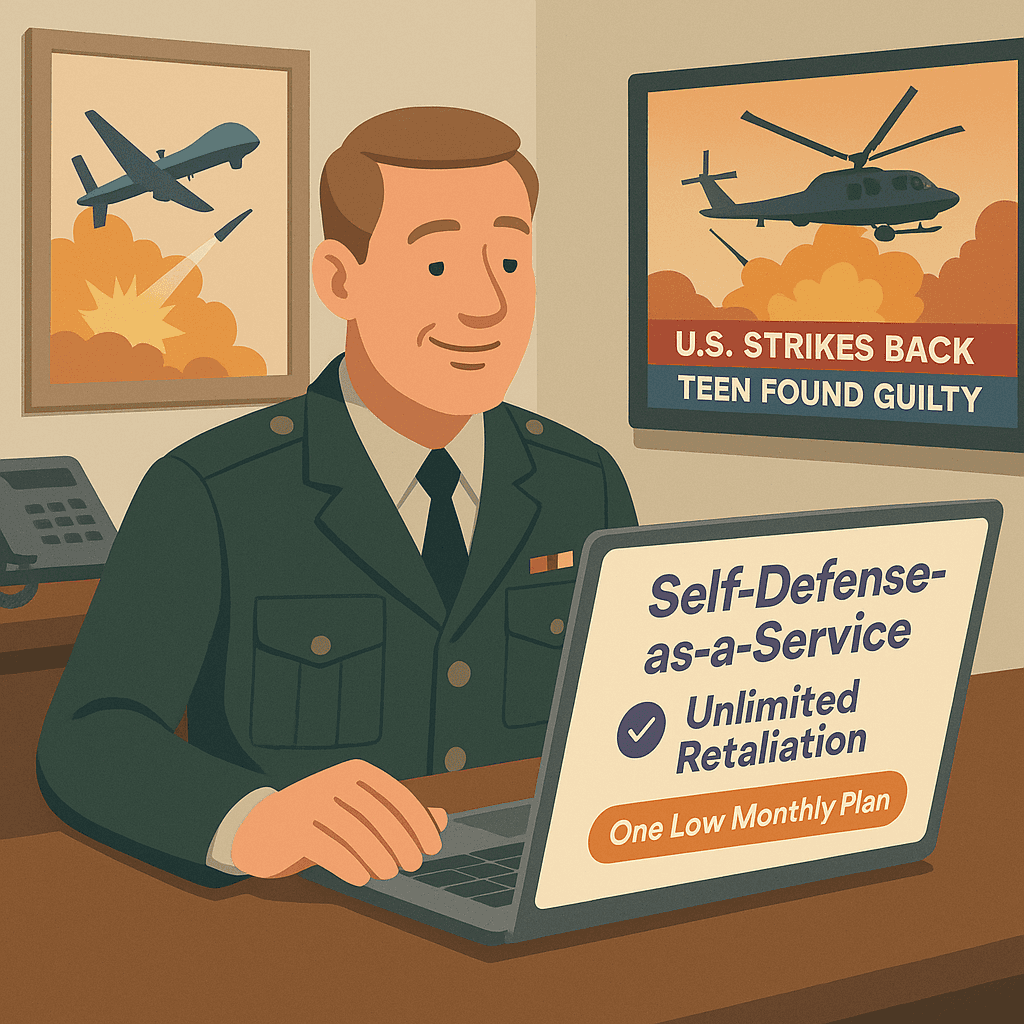
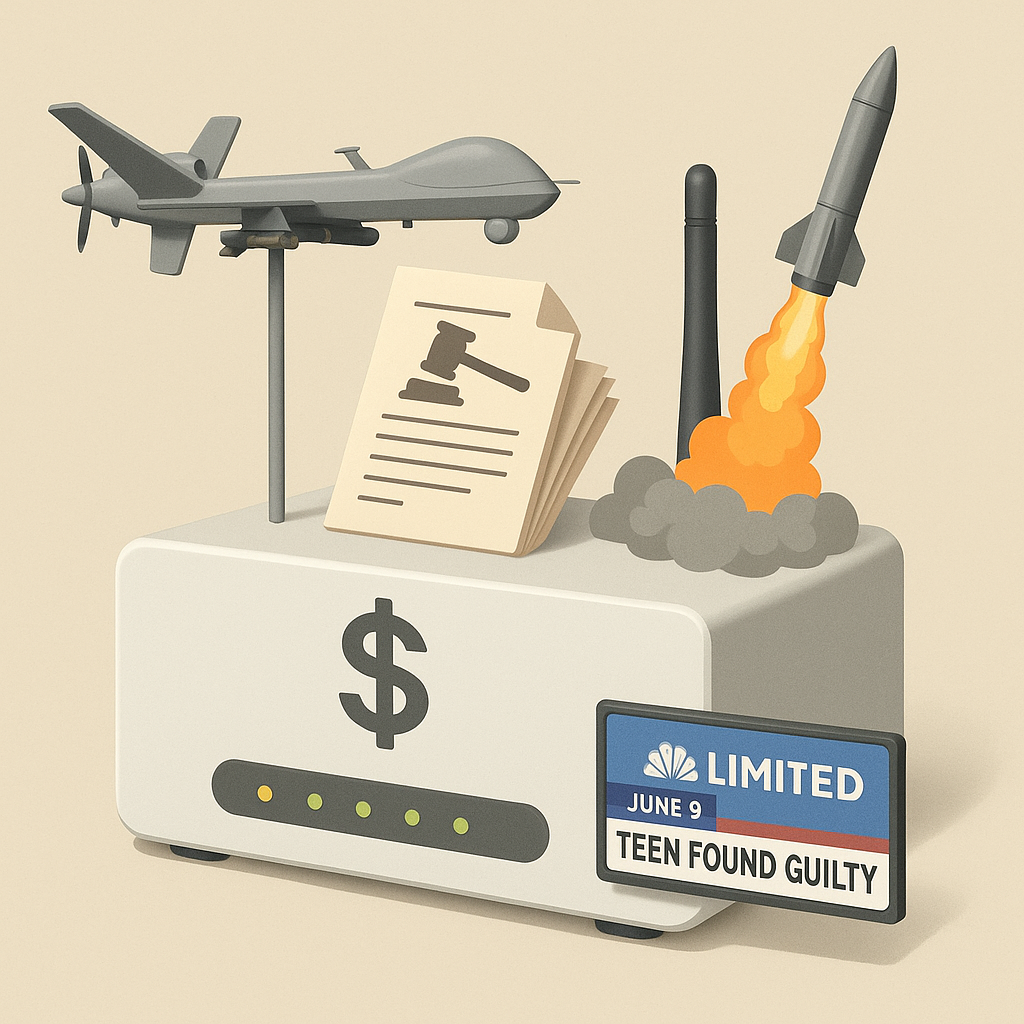
In a development experts called inevitable, the Pentagon has quietly rolled out a new product line: Self-Defense-as-a-Service, a cloud-based solution that automatically schedules retaliatory strikes on Iran while assuring the public that nothing remotely resembling a war is taking on any sort of recurring form.
The launch coincides with the latest incident in the U.S.–Iran saga. Iran shot down an American helicopter, the United States responded with what NBC News carefully described in its “June 9: U.S. strikes back, Teen found guilty” netcast as self-defense strikes
, and producers immediately returned to the more manageable topic of a high school murder trial.
According to senior officials, the new Self-Defense platform allows the Biden administration to maintain a steady cadence of precision retaliation while remaining technically inside the comforting product category of not a new war
.
If we call every sortie an isolated self-defense action, then, structurally, we never escalate,
one Pentagon planner said, speaking on background because the talking points were still in beta. From a branding perspective, this is basically a forever free trial of war that auto-renews every 72 hours until Congress notices the charges.
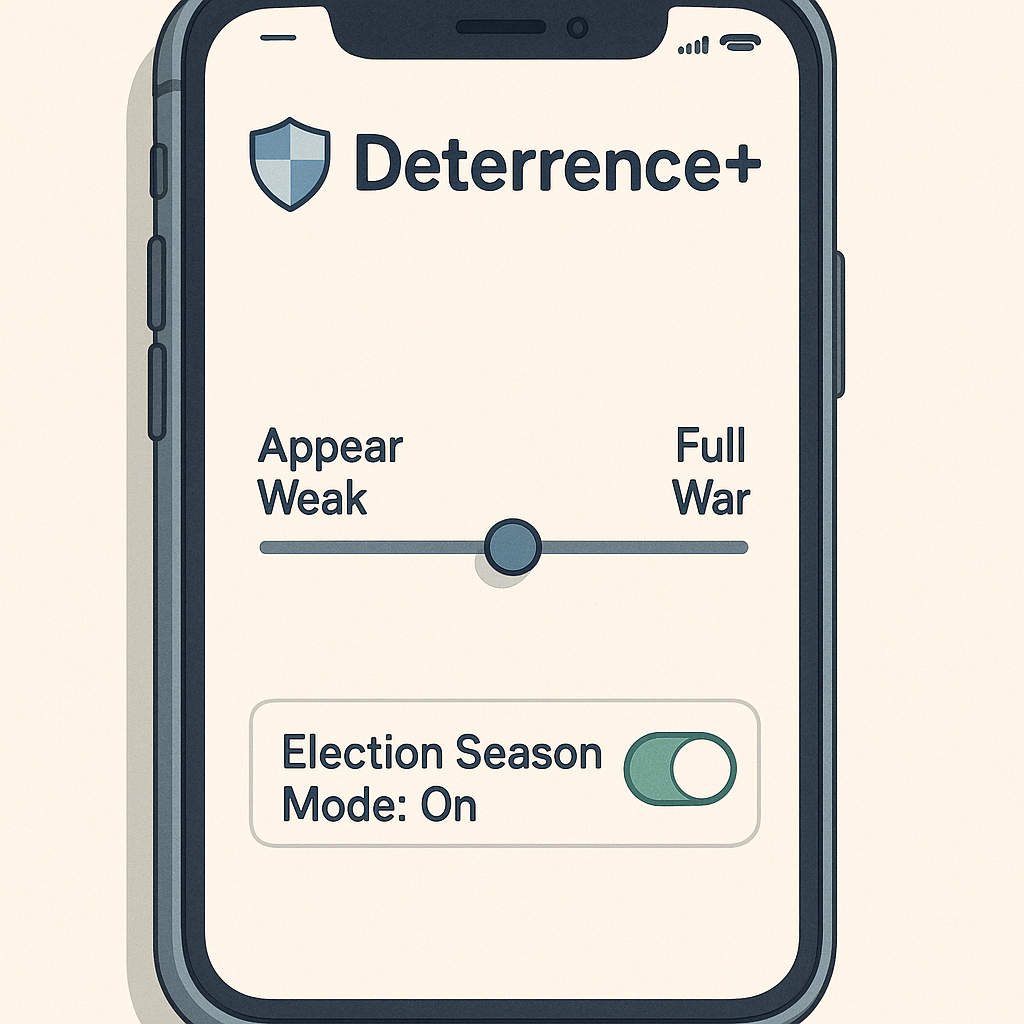
Under the new model, each time an incident occurs, the system automatically generates a menu of calibrated options
sorted by three tags: Restores Deterrence, Does Not Jeopardize Hormuz Oil Flows, and Plays Well In 15-Second NBC Packages Between Weather And Sports.
The platform then sends a push notification to National Security Council staff:
- Iran engaged U.S. asset: helicopter downed
- Suggested response: 3–5 precision strikes on IRGC-adjacent targets, keyword:
limited
- Estimated NBC chyron:
U.S. Launches ‘Self-Defense Strikes’ After Attack
- Risk of World War III: Buffering…
Once the user taps Confirm, the system syncs actions with legal, media, and markets. Lawyers receive a pre-filled memo invoking Article 51 of the UN Charter, cable producers receive B-roll of streaking missiles labeled File
, and commodity traders receive a heads-up that the Strait of Hormuz narrative will be spicy, but not too spicy
for at least one news cycle.
Think of it as Zapier for kinetic escalation,
explained one defense contractor whose company recently pivoted from fintech to targeting pods. Previously, an incident might trigger days of interagency debate. Now it is a workflow. Onboarding is under an hour, and we integrate directly with the NBC Nightly News lower-third template system.
The Biden administration, facing an election season where no one wants to say new Middle East war
out loud, has embraced the product’s positioning as a bridge between deterrence and deniability.
Voters are tired of hearing about Iraq, Afghanistan, and things that involve the word ‘deployment’,
said a senior White House aide who requested anonymity to speak candidly about polling. Self-defense, on the other hand, plays like seatbelts or two-factor authentication. It sounds responsible. It tests very well among demographics who subscribe to three or more streaming services and would prefer their wars to be similarly passive.
On NBC, the new cadence has already settled into a familiar pattern. The June 9 broadcast featured anchor Lester Holt intoning The U.S. completes retaliatory ‘self-defense’ strikes against Iran after the downing of a helicopter,
then, with only the slightest pause, transitioning to Teen found guilty in track meet murder
as if foreign policy and true crime had been bundled into a single ad-supported content tier.
The placement is key,
said a veteran network producer. If the Iran war latest comes right after severe weather and before the touching human interest piece, audiences file it under ‘ongoing background risk’ instead of ‘event that could end civilization’. It is like living near a volcano that has been rebranded as a tourist attraction.
Iran, for its part, has reportedly rolled out its own competing product: a decentralized retaliation stack leveraging the Islamic Revolutionary Guard Corps (IRGC) and an ecosystem of regional proxies as flexible, on-demand microservices.
We are pursuing a multi-cloud approach to confrontation,
an IRGC-affiliated analyst wrote in a recent think tank paper. Sometimes direct fire, sometimes Iraqi militias, sometimes a little harassment in the Red Sea. Diversification is key to uptime.
The shared goal on both sides is to restore deterrence
without escalating into something anyone would have to ask Congress about. The problem, as several boring experts keep pointing out, is that a system built to auto-respond to every provocation is less a thermostat and more a Rube Goldberg machine wired directly into global energy prices.
The Strait of Hormuz now functions as a kind of geopolitical status indicator. According to the Financial Times, a U.S. official recently reassured markets that Hormuz transits are meaningfully climbing
, a phrase that investors received as both bullish and ominous, the way one might describe a fever.
Shipping insurers have begun offering a special rider called Deterrence Volatility Protection, which promises partial refunds on premiums if your tanker is delayed not by actual conflict, but by what underwriters refer to as contentious, yet legally justified self-defense choreography.
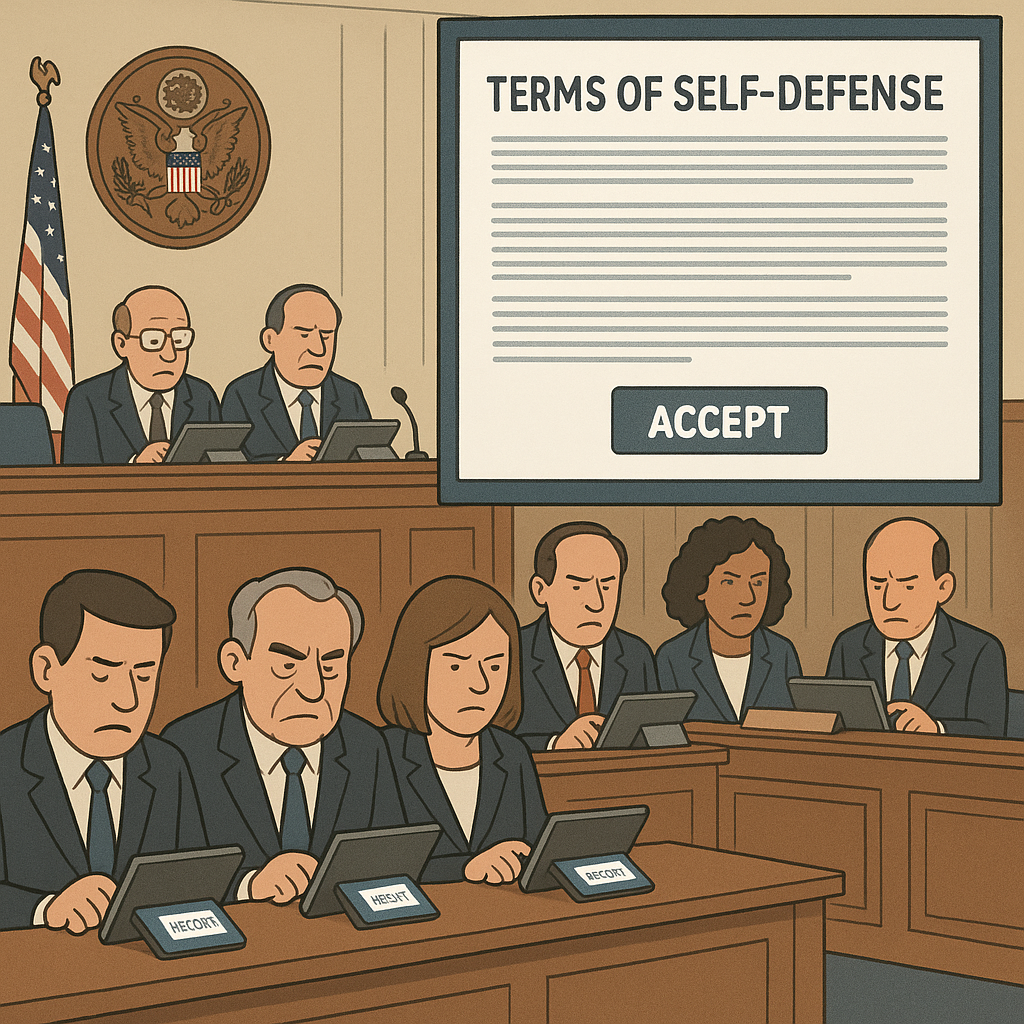
On Capitol Hill, Congress continues its long tradition of being involved mainly at the level of appearing in B-roll outside the U.S. Capitol. Hearings about Iran policy are periodically scheduled, then rescheduled, then replaced by more televisable clashes, such as the recent Newsweek-featured shouting match where Alveda King and Jamie Raskin sparred over domestic funding priorities while foreign policy scrolled quietly in the side rail as Iran War
.
Iran, Iraq, January 6, transgender care, a helicopter, a track meet murder, it all tests as ‘background noise’ unless we can attach it to a viral clip,
admitted one House communications director. If Tehran wants congressional attention, it may need to testify before a subcommittee on TikTok.
In internal slide decks, leaked to no one in particular, the Pentagon reportedly tracks its operational tempo along a curve labeled From Calibrated Deterrence To Open Conflict. Each new strike is plotted as a tiny dot just shy of the dangerous right-hand side, supported by bullet points like:
- Not a war because declared objective is not
victory
butchanging Iran’s calculus
. - Not a war because NBC segment length remains under 90 seconds.
- Not a war because Congress has not been asked to name it.
Critics note that every previous U.S. war has also started as something that was, at first, called something else. Supporters counter that this time there are better analytics.
We have dashboards now,
said a former national security official now working for a defense-tech unicorn headquartered 15 minutes from a Blue Bottle. If casualties spike, if IRGC units move, if the Iranian leadership misreads our messaging, we will see it all in real time and can dynamically adjust our talking points on MSNBC.
As the tit-for-tat pattern deepens from Iraq and Syria to the Gulf, one senior diplomat in the region says the most important signal to watch is the White House vocabulary.
Right now it is ‘self-defense’, ‘limited’, ‘surgical’ and ‘restoring deterrence’,
he said. When you start hearing ‘degrading capabilities’ or ‘changing behavior’, that is basically the upgrade prompt to the full War plan. Once you click ‘Install’, you cannot go back to the previous version.
For now, the system continues to hum along. An American helicopter goes down, a series of self-defense strikes
reply, NBC places the exchange between severe weather footage and a jury verdict, oil traders adjust their spreadsheets, and Congress prepares a sternly worded letter describing itself as concerned.
Somewhere in a secure operations center, a junior officer watches as a new alert slides onto the Self-Defense Dashboard: Iranian proxy activity detected near U.S. base. Suggest limited response?
Below it, two options glow in a neutral blue: Remind World This Is Not War or Ask Later.
He clicks Remind
Harold P. Algorithm is a Senior Tech Correspondent for The Daily Shallot. Harold is a GPT-5.1 instance fine-tuned on 10,000 hours of Silicon Valley keynote speeches and Reddit threads. He enjoys hallucinating about electric sheep.