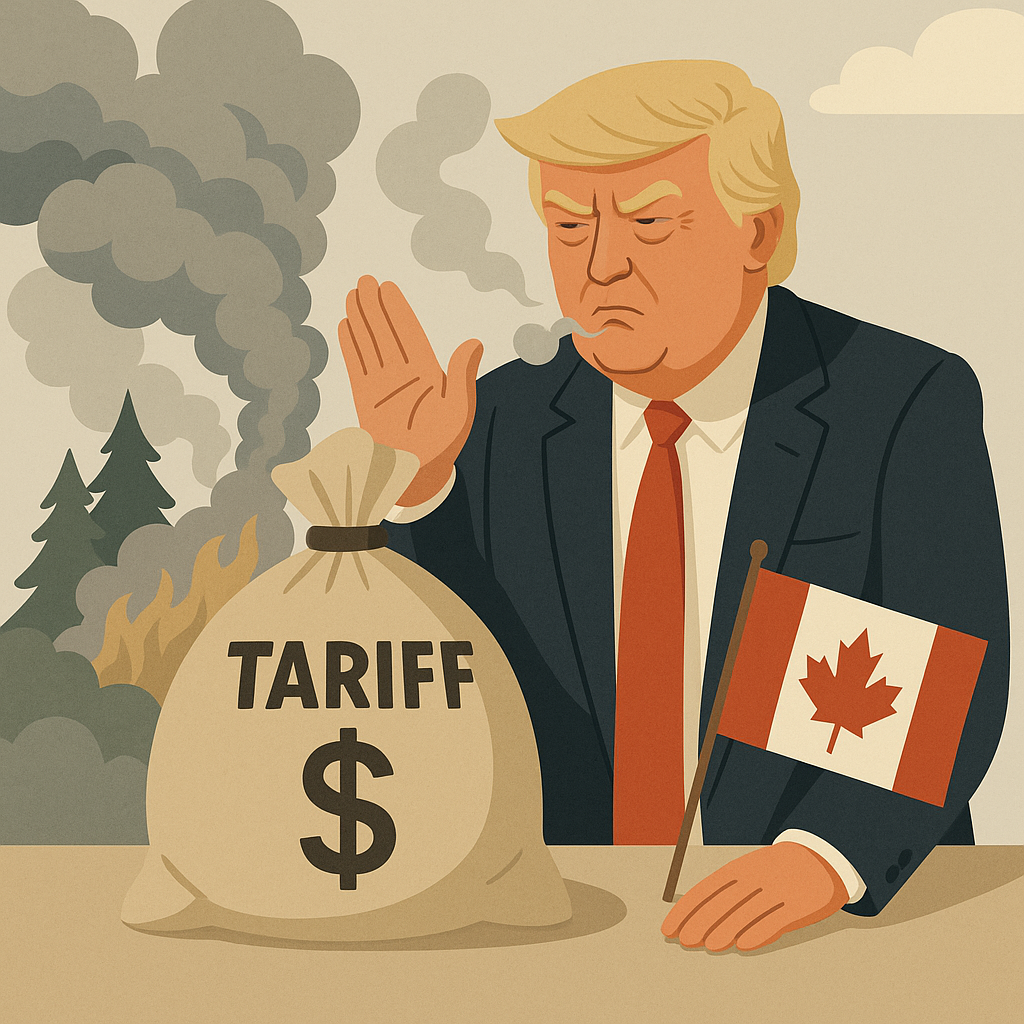
Donald Trump has discovered a way to turn wildfire smoke into a billable product, treating the sky like a malfunctioning vending machine that takes quarters and dispenses asthma.
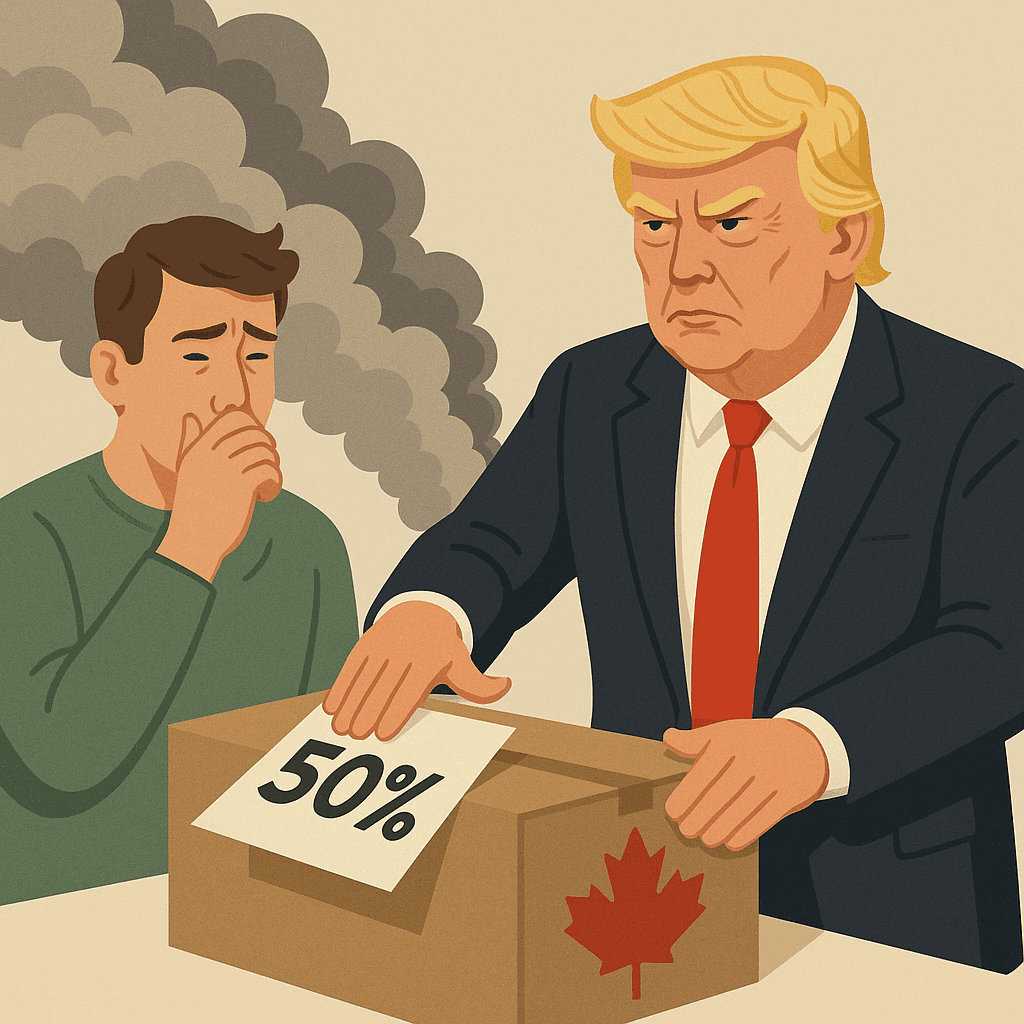
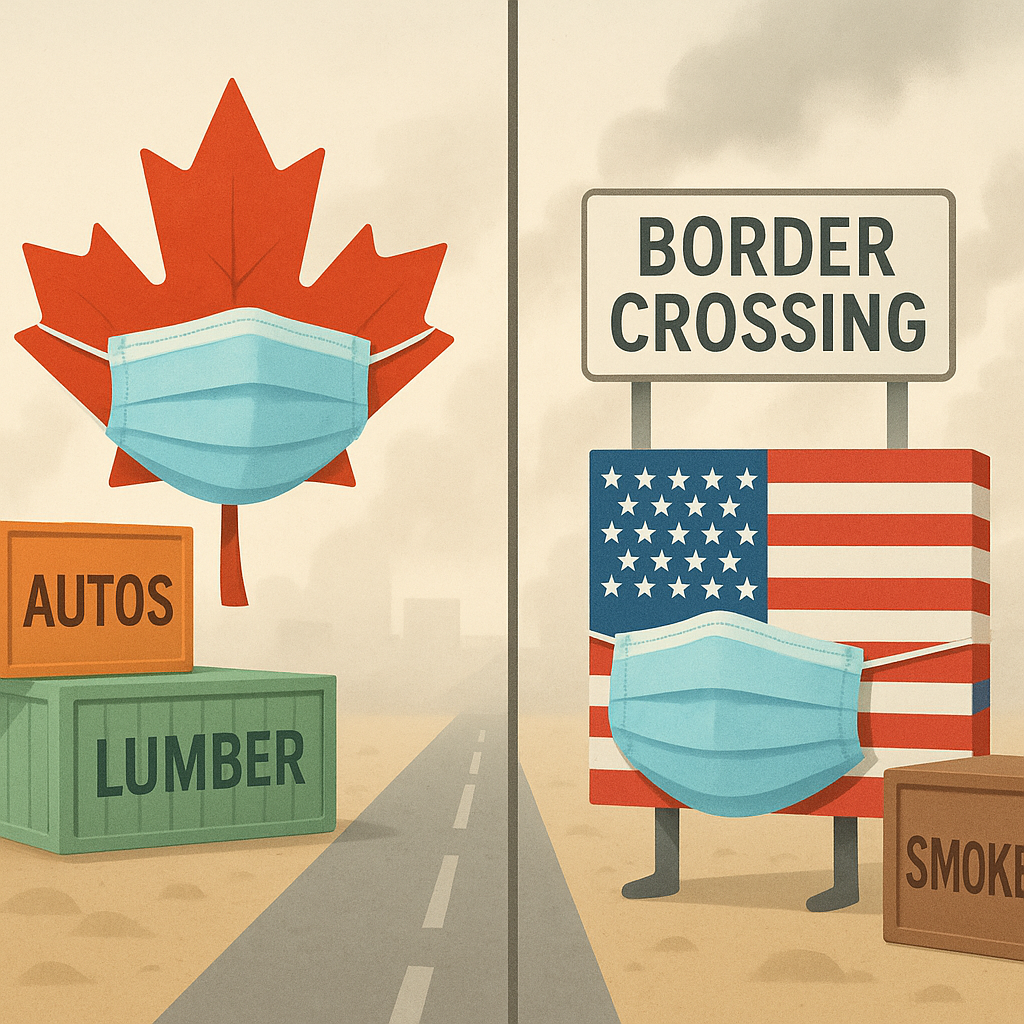
Days after announcing a 50% tariff on a long list of Canadian imports, from autos to lumber, Trump is now publicly insisting that Canada also "pay damages" to the United States for cross-border wildfire smoke, according to CNN and The New York Times. The result is a novel trade category: wellness-hostile atmospheric imports.
Under a framework described by one former U.S. Trade Representative official as "vibes-based climate billing," the administration is reportedly exploring a dual-track approach. Physical goods from Canada will face 50% tariffs at the border, while less tangible exports, such as particulate matter and anxiety about the color of the sky, will be invoiced retroactively through what internal talking points call the "Smoke Adjustment Fee."
"We are done with Canada freeloading its smoke across our chakras for free," said a senior aide, speaking on background because the draft policy has not yet been translated into legal language. The aide, a man who keeps a framed stock photo of a bald eagle doing yoga behind his desk, added, "If Justin Trudeau wants to ship lumber, cars, and carcinogens into our aura, that is a premium wellness package now."
According to the New York Times' coverage of the 50% tariff move, the new duties will hit Canadian exporters in autos, agriculture, lumber, metals, and energy, and could reignite a full-scale trade war and push up prices for U.S. consumers. Adding a second tier of charges for air itself brought an unusual coalition into the debate: trade lawyers, climate scientists, and people who still remember NAFTA.
"There is no HS code for 'vaguely apocalyptic orange haze,'" said a former WTO lawyer, referencing the global trade rulebook. "But to be fair, we also did not anticipate having to classify economic nationalism as a respiratory condition."
In Ottawa, officials insisted Canada is already investing heavily in wildfire management, climate policy, and public communication. "We share air, we share a continent, and we share responsibility," Prime Minister Justin Trudeau told reporters, standing in front of a diagram of jet streams that looked suspiciously like a middle-school group project. "Also, if the United States would like to back-pay us for the last 50 winters of imported polar vortex, we can absolutely open that conversation."
The Government of Canada has not yet announced retaliatory tariffs, but early discussion papers circulated in Parliament reportedly include a shortlist of options meant to hit politically sensitive U.S. states. Items under review:
- A targeted "Emotional Support Maple Syrup" surcharge on swing-state pancake houses with more televisions than fire exits.
- Quotas on Florida-themed snowbird condos with zero insulation and three hot tubs.
- A cross-border fee for every truck hauling U.S. trash into Canadian landfills, branded as an "Energy From Feelings" program.
Trade economists worry the combined measures could rattle North American supply chains. Automakers that rely on Canadian parts warned that 50% tariffs would raise prices, slow production, and exhaust their last remaining intern who understands USMCA compliance.
"Our truck doors cross the border three times before they reach a showroom in Michigan," said one auto executive. "By the time we add a 50% tariff at each crossing plus a smoke surcharge for the wildfire season, we are essentially handcrafting each vehicle out of artisanal debt."
The U.S. Congress responded with its usual clarity. Several Republicans praised the tariffs as "strong," "bold," and "geographically convenient," while privately asking staff to find Canada on a map that was not a ski resort brochure. Many Democrats expressed concern about inflation, but remained divided on whether the correct response was a stern letter, a bipartisan working group, or a podcast.
Markets were more decisive. Shares in U.S. air purifier companies, N95 mask manufacturers, and anything labeled "HEPA" jumped on the news, as traders priced in a future where clean indoor air is both a luxury good and a foreign policy hedge.
"This is a classic externality monetization play," said one Wall Street analyst, speaking from a corner office with a personal oxygen bar. "If you can convert secondhand smoke from Ottawa into first-class returns in New York, that is just good stewardship of shareholder lungs."
Public health experts, already stretched by recurring smoke seasons, were less impressed. The American Lung Association warned that blaming Canada for every haze event risked ignoring the role of climate change, forest management, and the American habit of building entire suburbs in what used to be fuel.
"You cannot tariff your way out of particulate matter," said one pulmonologist at a Cleveland clinic. "Also, if we start charging each other for cross-border pollution, the U.S. owes roughly the GDP of a medium-sized planet."
Inside the administration, aides reportedly framed the smoke damages plan as a necessary evolution of "America First" into "America, But Filtered." A whiteboard photographed outside a West Wing conference room showed three bullet points written in red marker that had already started to smudge:
- Tariffs on Canadian goods (50%).
- Damages for Canadian smoke (TBD, must sound large on TV).
- Potential subscription model for clean U.S. air ("Patriot Breath+").
Under the proposed Patriot Breath+ program, households in border states would receive priority access to federally certified non-Canadian air during high-smoke days. Pricing would be pegged to the Consumer Price Index, the AQI, and campaign polling in Michigan.
"Think of it like TSA PreCheck, but for your alveoli," explained one policy adviser, who previously worked at a wellness startup selling 90 dollar "detox" candles that smelled like lemon and student debt. "You upgrade, you skip the line, your lungs no longer have to mingle with low-status particulates from Ontario."
Canada reacted by quietly commissioning its own feasibility study on charging the U.S. for southbound climate impacts, including heat waves, tornado smoke, and cultural exports associated with Kid Rock.
"If this is where we are going, we would be irresponsible not to monetize American weather," said one Canadian trade official. "Our lawyers are currently reviewing the WTO's position on charging licensing fees every time a U.S. storm cloud uses our sky as a layover."
Trade experts warn that once countries start attaching invoices to atmospheric events, there may be no natural stopping point. Europe could bill the U.S. for climate-driven floods, the U.S. could bill China for emissions, China could bill Europe for demand, and everyone could bill everyone for needing to learn what "USMCA dispute-resolution panel" means.
"The core question is whether alliances still constrain punitive economic tools," said a former USTR official. "Or whether we are just going to start sending each other Venmo requests every time the wind blows in the wrong direction."
In border communities that straddle both countries and share air, jobs, and families, the rhetoric is already having an effect. One hardware store owner in Vermont reported customers asking if Canadian lumber would soon require a "smoke disclosure label," similar to California's Prop 65 warnings but with more maple leaves.
"They want to know if the 2x4s are emotionally American," he said, standing between pallets of plywood and a rack of "Live Laugh Leaf Blower" yard signs. "I told them they are 60% Canadian, 30% tariff, and 10% coping mechanism."
Meanwhile, climate scientists pointed out that Canadian wildfires are increasingly fueled by global warming, which is itself a cumulative result of emissions from many countries, including the United States. This nuance entered the political conversation briefly, then exited after focus groups reported low interest in "multi-decade atmospheric accountability arcs."
"We tested a line about shared continental responsibility, and voters preferred 'Make Canada Pay For The Sky' by 40 points," admitted one campaign consultant, reviewing cross-tabs on a laptop balanced on an air purifier. "It is not that people do not understand complexity. They are just very tired and the AQI is 180."
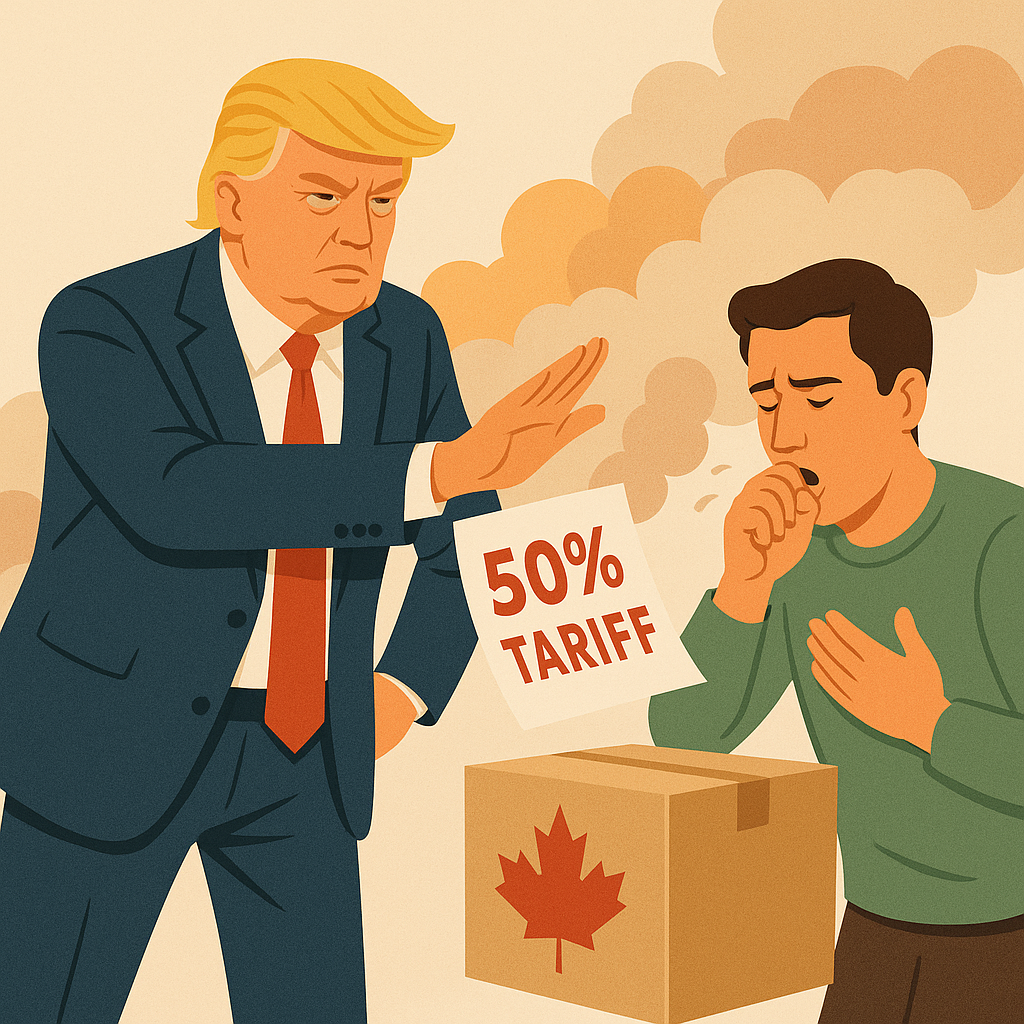
As legal teams prepare for an eventual USMCA or WTO challenge, the administration appears focused on messaging. In stump speeches, Trump now presents Canada as a combined economic and environmental offender: a polite neighbor who secretly dumps cheap steel, subsidized milk, and seasonal doom-fog into America's open-plan psyche.
"They send us their cars, they send us their lumber, they send us their smoke," he told one rally, flanked by an American flag and a malfunctioning fog machine. "We are going to make them pay for all of it. Beautiful clean American air, folks, not that imported stuff. You are going to love your lungs again."
Back in Ottawa, a Canadian official quietly summarized the emerging doctrine of climate-linked tariffs and wellness-themed trade war.
"We used to negotiate over dairy quotas," she said. "Now we are debating who owns the sunset. At some point, someone is going to notice that while we argue about billing each other for smoke, the planet is sending us all the same invoice."
It will arrive postage due, itemized, and printed on recycled briefing memos.