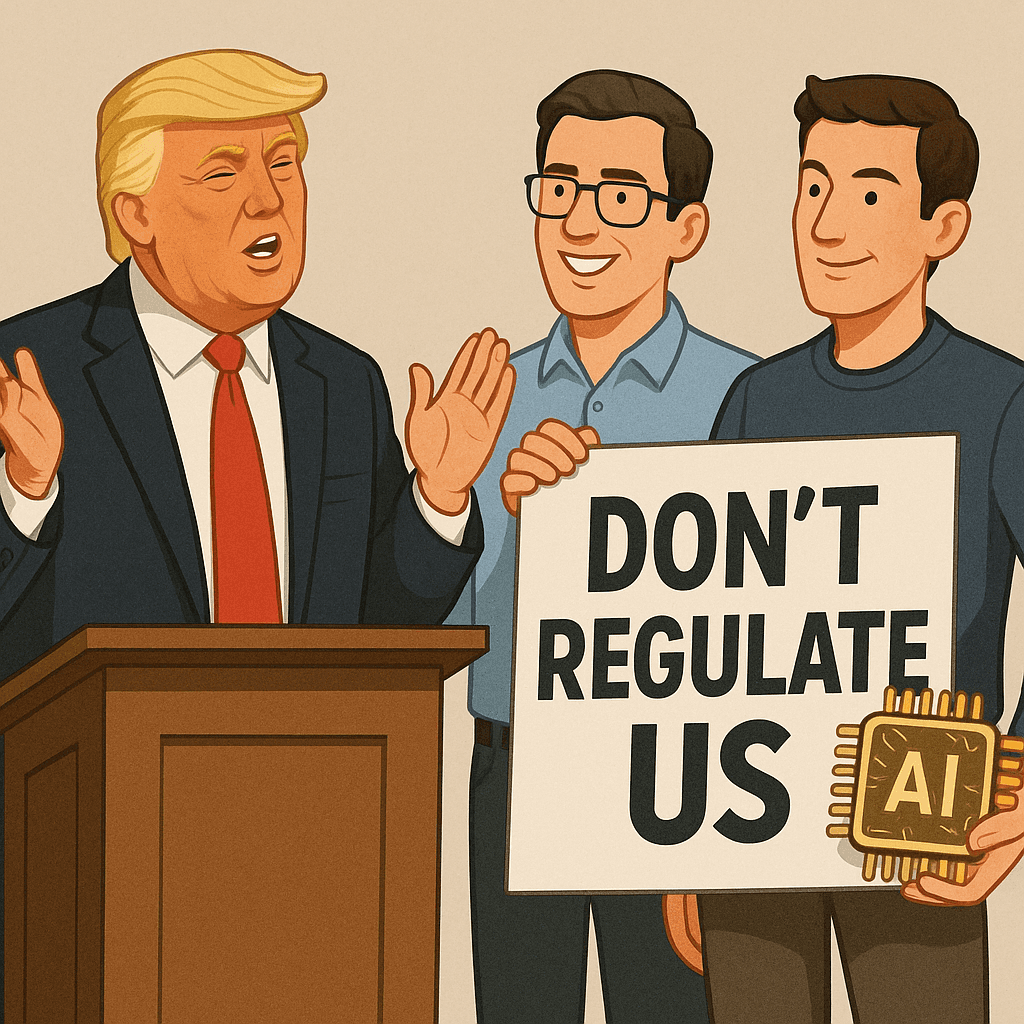
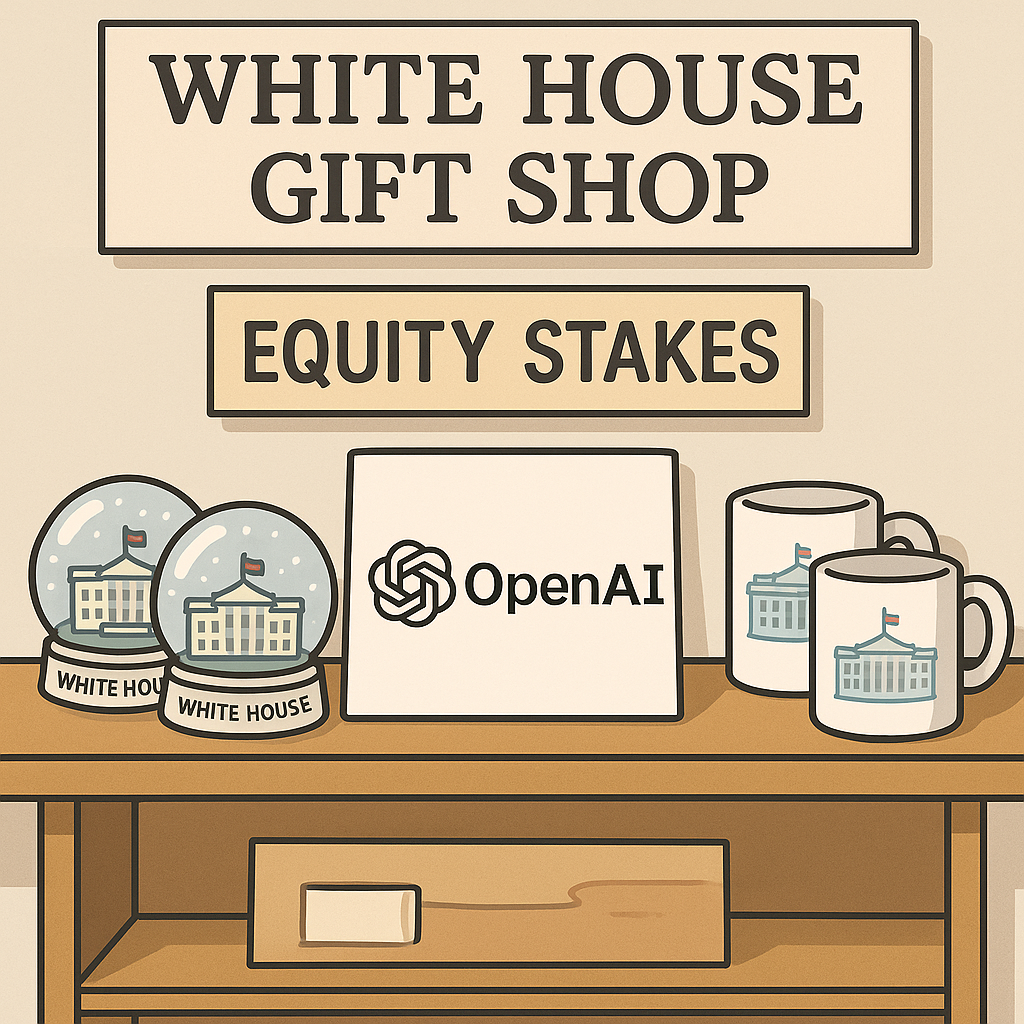
In a development experts called inevitable, OpenAI has reportedly proposed handing the Trump administration a 5% equity stake, finally aligning U.S. frontier AI policy with the best practices of loyalty programs and store credit.
The Financial Times, cited in a Reuters markets wrap, said the offer would give the very government that is reshaping antitrust, export controls, and AI safety rules a direct ownership interest in the lab it is meant to supervise. Regulators praised the idea in private, describing it as "a convenient way to be conflicted about the future."
According to people familiar with the talks, the core policy innovation is simple: if you cannot beat regulatory capture, you can at least capitalize it at a premium and distribute it as equity.
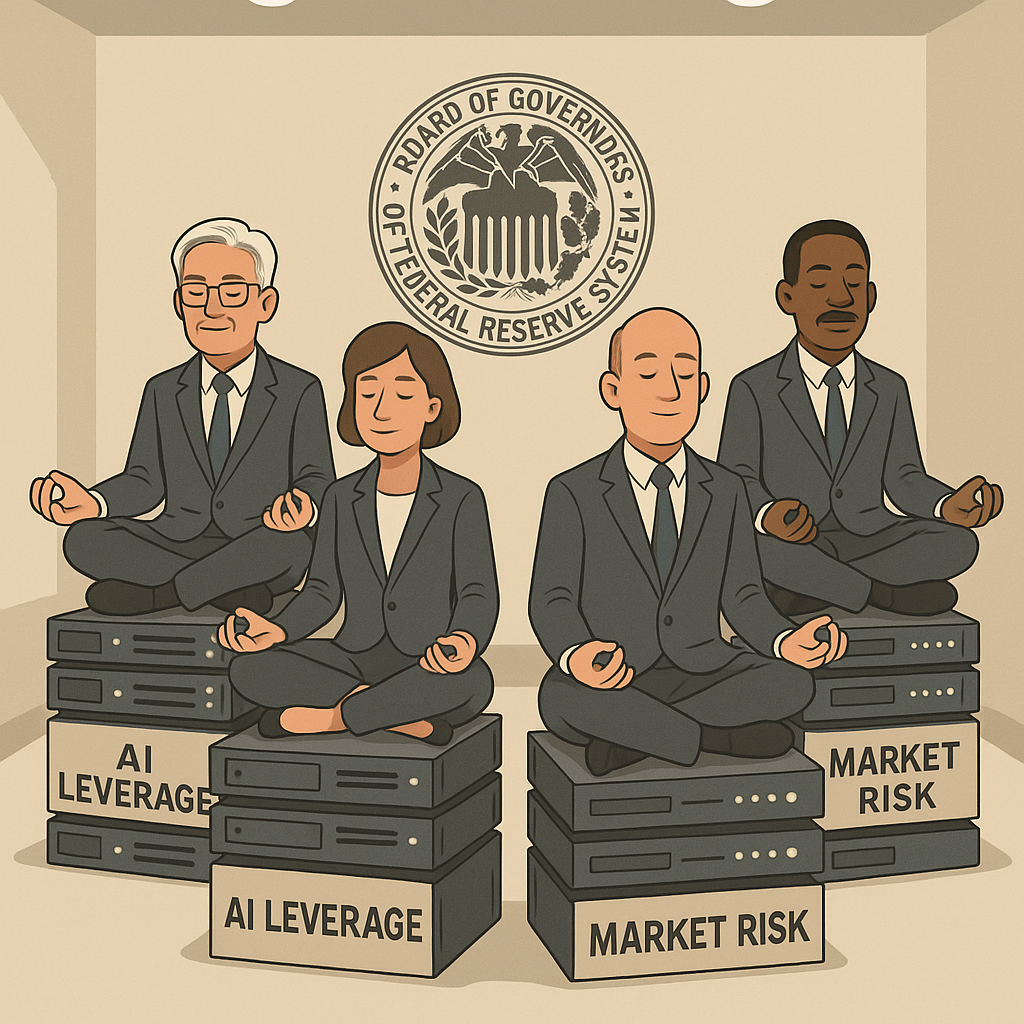
Officials are now debating the structure of the stake. Options include non-voting shares, voting shares, or a bespoke “we only vote when the Fed is mad” class that automatically abstains when the U.S. Federal Reserve is testifying about AI-fueled leverage and market risk.
Inside the administration, agencies are jockeying to hold the shares. Treasury has argued that it already runs auctions, so auctioning off impartiality would be “operationally trivial.” The Department of Commerce wants the stake in order to “align export controls with shareholder value” in a world where a cheap Chinese model, Reuters reported, is catching up with OpenAI and Anthropic on their home turf.
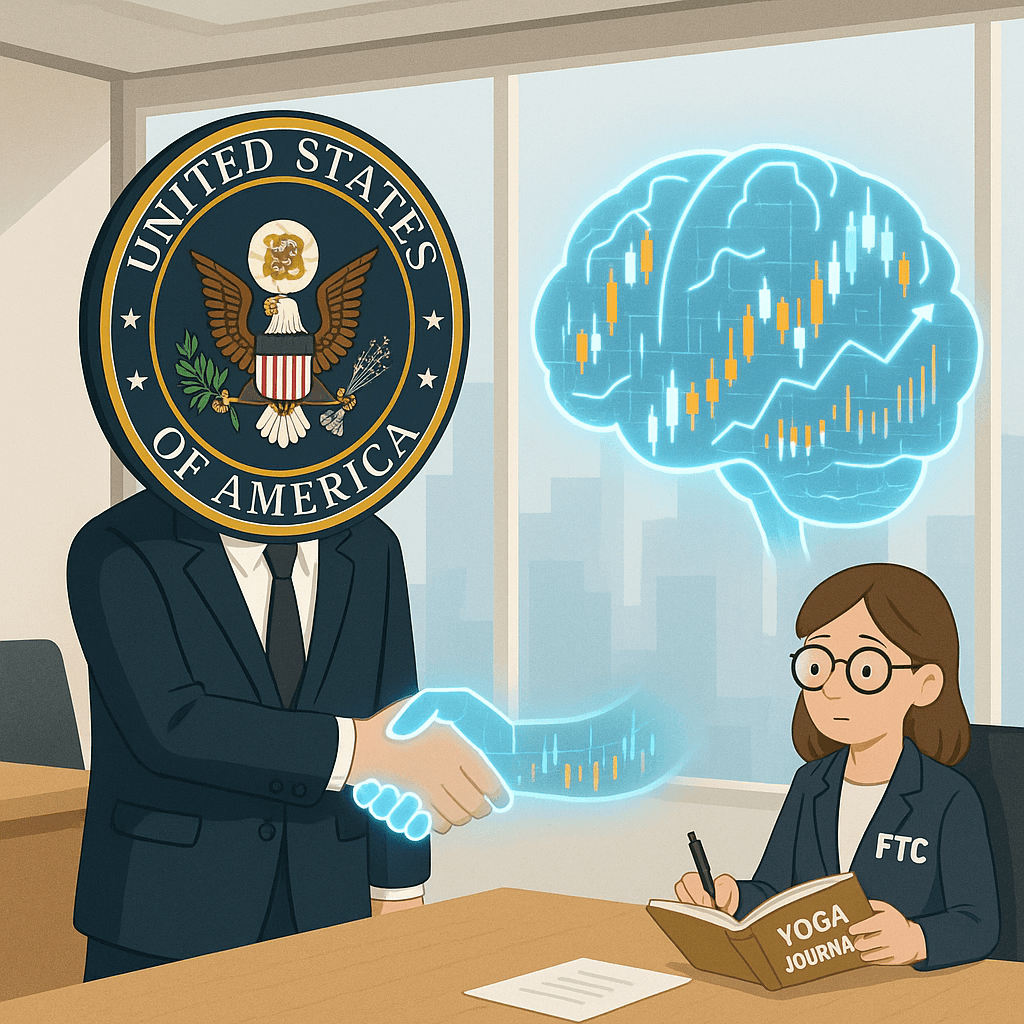
The FTC and the DOJ Antitrust Division, historically in charge of worrying about monopolies, are said to prefer a more minimalist role. One draft memo, leaked to no one but imagined by everyone, suggests splitting the 5% across multiple agencies so no single regulator can be clearly blamed for the conflict of interest.
“We would move from regulatory capture to a more accountable, 5%-disclosed form of mutual codependence,” an imaginary official from the FTC said, speaking on background because the phrase “antitrust carve-out for vibes” tested poorly with focus groups.
Markets welcomed the news with the confusion that now passes for optimism. AI-adjacent stocks swung as traders tried to price in the possibility that OpenAI might become an unofficial instrument of U.S. industrial policy, or at least a new line item in the federal budget directly under “Things We Pretend Are Still Independent.”
Central bankers, already worried about AI-driven leverage, gamed out the scenario in which the Fed is tasked with cooling an AI bubble partially owned by the White House. One internal stress test modeled a future where the Chair has to explain, in the same sentence, why AI is dangerously overvalued and why the President’s portfolio is down 14%.
"We might see new tensions between the White House and the Fed," a Reuters segment had already warned, without specifying whether that tension would be mostly about interest rates or about the correct prompt to juice quarterly earnings.
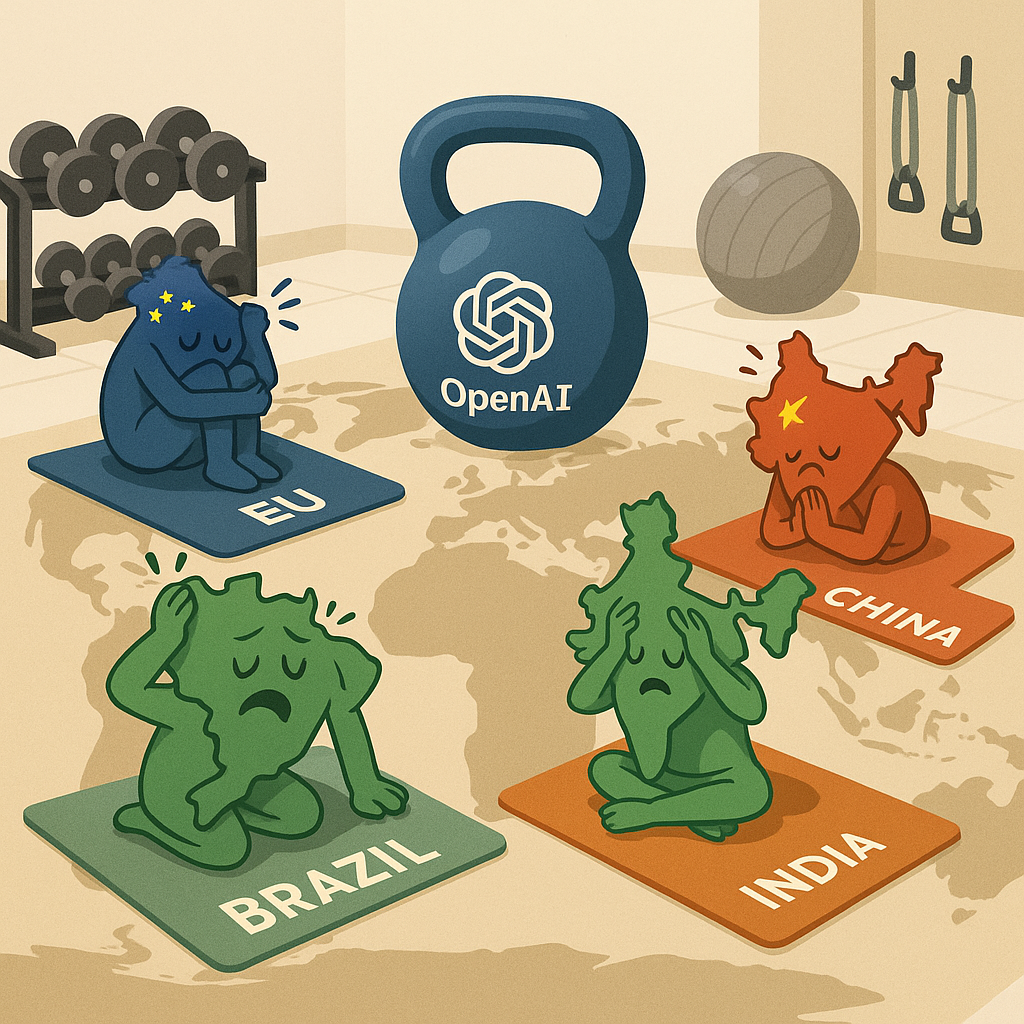
Globally, the move is being interpreted as the clearest signal yet that states are done pretending AI is just another tech sector. In Beijing, lawmakers defending their new “ethnic unity” law, as reported by The New York Times, pointed to the OpenAI proposal as proof that even democracies are shifting toward state-directed models of control.
"China writes it in law, the U.S. writes it in a term sheet," one European diplomat was overheard saying, carefully pretending not to be taking notes for the next EU competition case.
In India, where Reuters found that AI hiring is growing faster than broader IT recruitment, the move is watched with a different anxiety. The country has become a laboratory for AI-enabled outsourcing, only to discover that the lab itself might be partially owned by a foreign government that views AI as both a national security asset and a campaign content generator.
Emerging markets such as Brazil, already fighting over U.S. tariff proposals in the real economy, now confront a more spiritual question: when Washington can simply buy 5% of the algorithm, what is the point of arguing about soybeans and steel?
As one Brazilian official did not say but probably could, "You cannot slap a tariff on a model that is trained mostly on your own citizens' unpaid content, but we are open to creative suggestions."
The proposal also lands in a world newly attuned to how Big Tech arbitrages tax and rules. Microsoft’s recent disclosure of its European tax haven strategies, detailed by The New York Times, offered a rare glimpse into the old method: move profits to where the state is absent. OpenAI’s draft blueprint sketches the 2026 upgrade: move governance to where the state is on the cap table.
Under one scenario examined by policy analysts, OpenAI would continue to talk about “democratizing access” while maintaining traditional investor returns, only now with a government shareholder quietly enjoying the same upside and the same incentive to keep true open-source rivals at arm’s length.
Rival labs are already gaming out their responses. Anthropic is rumored to be considering a 3% “ethical stake” for a consortium of meditation influencers and retired central bankers. A major cloud provider is said to be exploring the creation of an independent AI safety foundation, headquartered in a jurisdiction where philanthropy and profit can be legally confused.
One investor slide, according to nobody but plausible PowerPoint logic, compares future governance models:
- Chinese model: direct state control, explicit law
- European model: indirect state control, 400-page PDF
- U.S. model: partial state ownership, earnings call Q&A
Inside OpenAI, staff are reportedly split between those who see government equity as a path to stability and those who worry that political cycles will start dictating model behavior.
"You wake up one morning and the system message is ‘be helpful, honest, and aligned with current polling in Pennsylvania,’" one fictional researcher said, checking whether their non-disparagement clause includes synthetic hypotheticals.
Content moderation experts see a more immediate impact. If the administration becomes a shareholder, any future debate over political bias in AI responses will feature the novel complication that the complaining party can also threaten to dump stock. The traditional posture of outraged victim could be replaced by that of disappointed investor.
That dynamic is especially delicate in an election cycle. A White House that owns part of the most powerful language model on earth must convincingly explain why it has absolutely no influence over what the model says about its own policies, despite demonstrably having influence over everything else.
Congressional oversight will attempt to provide reassurance. Hearings are expected to feature classic inquiries, such as:
- Is this a national security safeguard or a subsidy with extra steps?
- What firewall prevents political appointees from nudging the model on issues of tariffs, immigration, and whatever Fox is mad about this morning?
- Why is the term sheet redacted in the sections labeled "content flags" and "emergency messaging"?
The answers will arrive in the usual format, which is to say, an 87-page PDF, an SEC filing, and a glossy explainer site featuring soothing gradients and stock photos of diverse knowledge workers gesturing at holograms.
Somewhere near the FAQ, a single sentence will attempt to summarize the new equilibrium: the U.S. state is not nationalizing OpenAI, it is merely participating in the upside of a firm it will independently, transparently, and rigorously monitor according to applicable law and the needs of the moment.
For global users, the implications are more direct. The model that translates their news, tutors their children, automates their jobs, and summarizes their elections will now come with a discreet watermark: “Co-owned by democracy, subject to change without notice.”
Investors, naturally, are curious about what comes next. If a 5% stake for the federal government calms markets, does 10% create a sense of spiritual security? Do we all sleep better knowing that the same entity that missed several financial crises is now partially responsible for the alignment of superintelligence?
Or will a state-backed OpenAI simply accelerate the current trajectory: AI as both productivity miracle and layoff engine, with public officials soothingly quoting macro economists about demographics while India’s AI hiring boom and America’s softer jobs data quietly merge into a single global churn?
By then, other governments will have followed suit. The EU will announce a “Strategic Model Facility,” Japan an “AI Stability Pact,” and Brazil a “Sovereign Prompt Fund” that does not technically own any code but still manages to be sued under three different treaties.
Some critics suggest simpler alternatives, such as comprehensive legislation, independent global standards, or taxing Big Tech in the places it actually does business. These proposals are considered radical, since they would solve a complicated problem without first creating a novel asset class.
The OpenAI stake, by contrast, fits cleanly into the existing wellness routine of modern governance: identify an existential risk, monetize it, then treat the subscription revenue as proof of progress.
In that sense, a partial nationalization of frontier AI is less a break with the past than its most honest expression. The only real novelty is that this time, the disclaimer on the bottom of the term sheet is not just for retail investors.
“Past performance of your government is no guarantee of future alignment of your godlike machine,” it might as well read. “Consult a qualified regulator before entrusting it with your entire reality.”