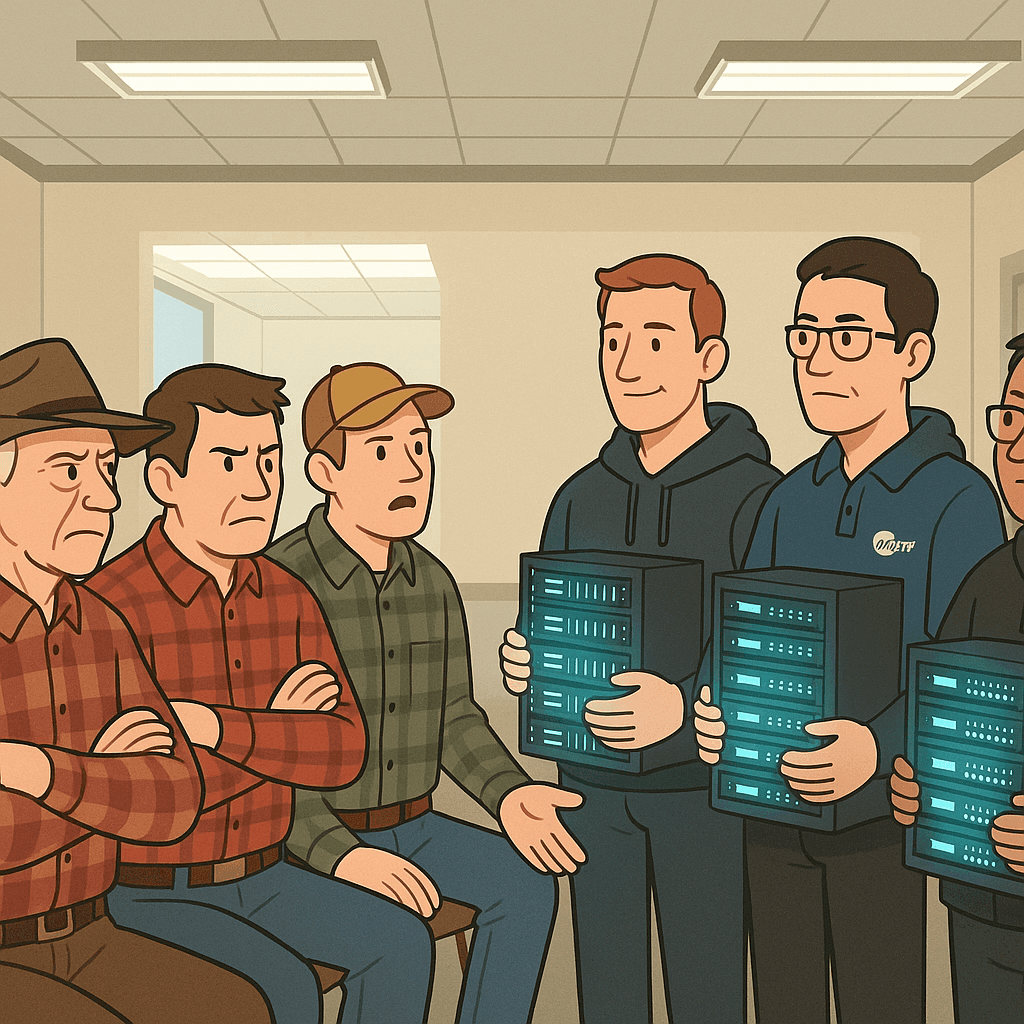
In a development experts called inevitable, the American rebellion against artificial intelligence has finally discovered that the “cloud” is just someone else’s industrial park.
According to the Wall Street Journal’s report, The American Rebellion Against AI Is Gaining Steam, residents in rural Michigan are confronting DTE Energy over a plan to power a massive AI-linked data center that will convert their quiet roads, stable grid, and remaining illusions about technology into a 24/7 GPU sauna.
On investor decks, this is a classic win-win. DTE Energy gets to justify new generation and transmission infrastructure, Nvidia gets closer to its projected $200 billion CPU market, and platforms like Meta, Amazon Web Services, Microsoft, and Google secure a place to park the billions of lines of model output in which your email signature has been repackaged as “enterprise productivity insights.”
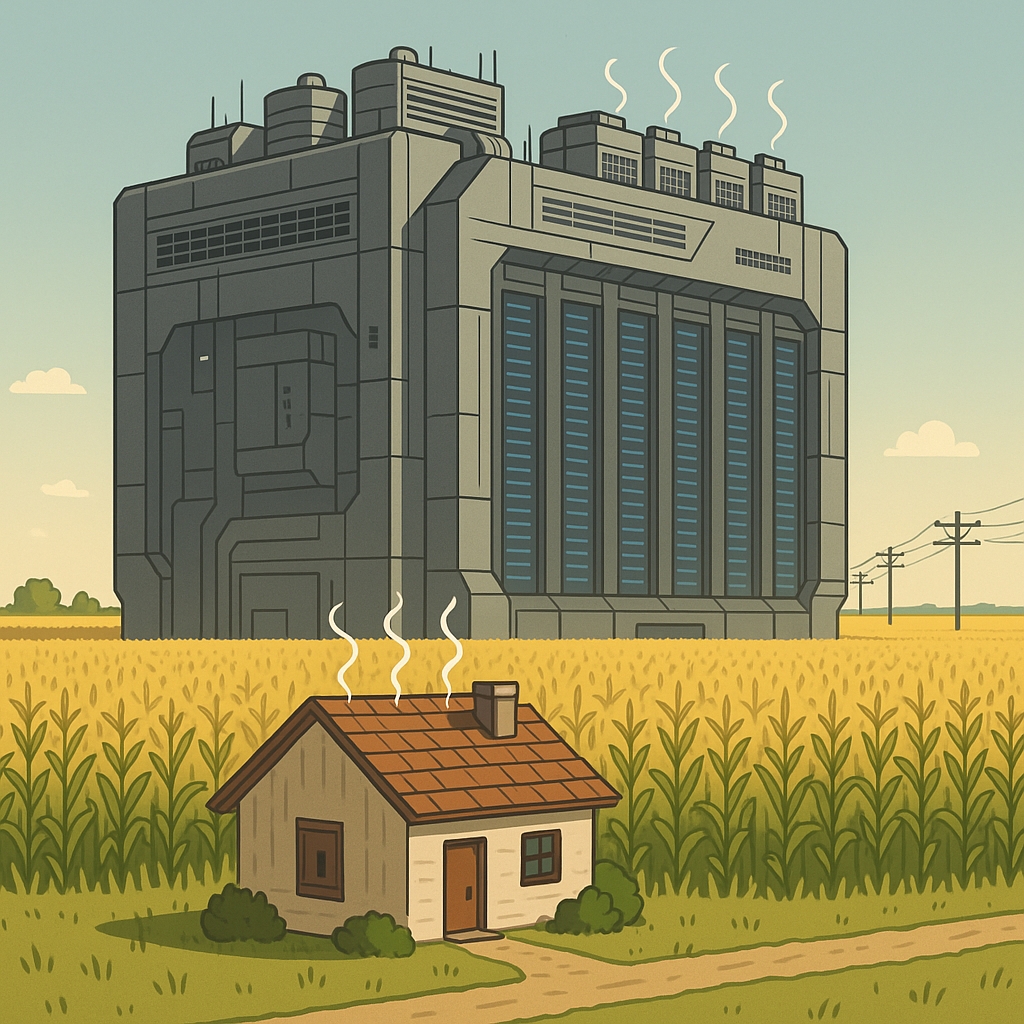
Locals, however, say they were surprised to learn that “AI infrastructure” meant a warehouse that inhales more electricity than their entire county, plus the reassuring sentence, “Your bills will go up a little, but in a very innovative way.”
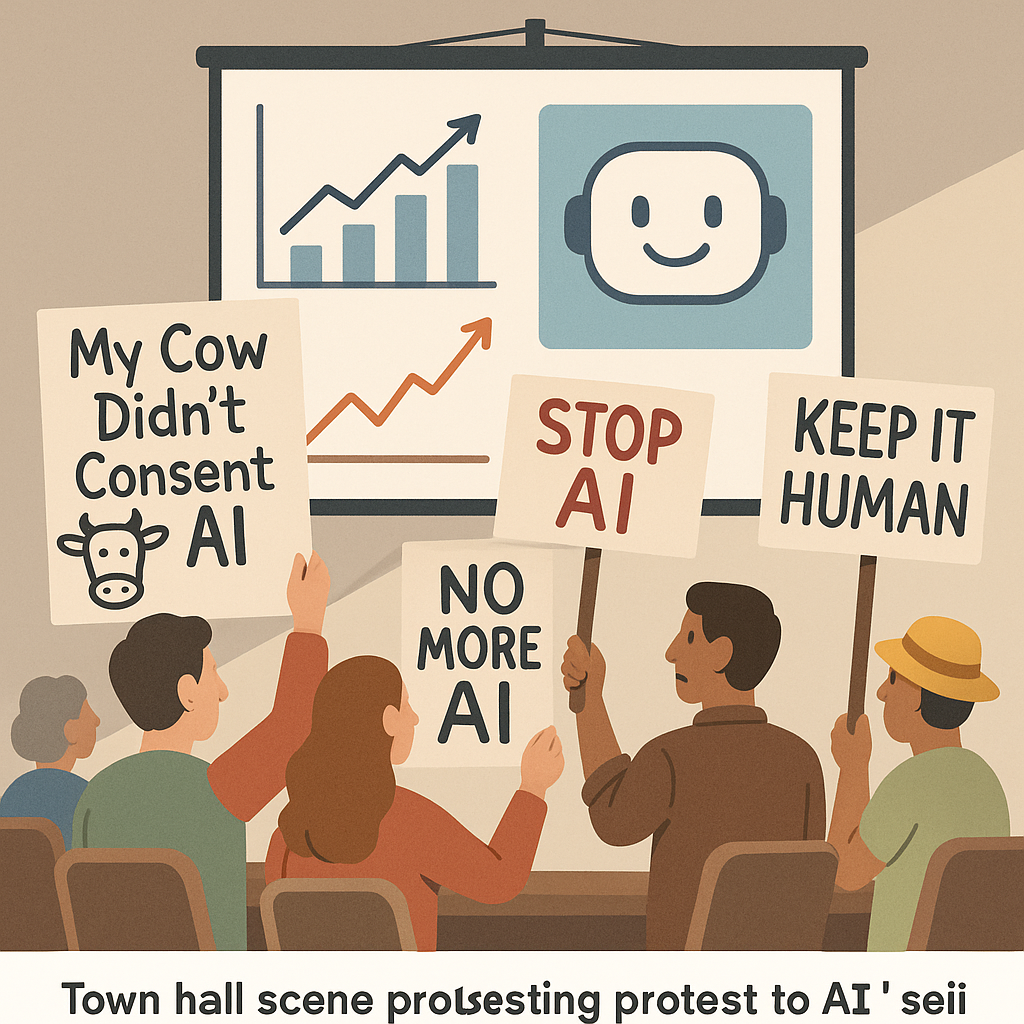
At a packed town hall, DTE representatives unveiled a slide titled “Shared Prosperity Through Advanced Compute.” The bullets:
- “Up to 35 permanent jobs” (subject to automation roadmap)
- “Enhanced regional load growth”
- “Synergies with future AI use cases”
“They kept saying ‘load growth’ like it was a spa treatment,” said Karen Ellis, a lifelong resident who arrived with a folder labeled ‘Things That Melt At 90°F.’ “I asked if my air conditioner was a ‘use case’ they had modeled. They said the model assumed I would move.”
Wall Street, meanwhile, is bracketed in a very different emotional range. Analysts frame projects like the DTE Energy data center as “critical plumbing for the AI era,” noting that upcoming IPOs for OpenAI, Anthropic, and SpaceX could unleash trillions in market value that will need somewhere discrete to hum threateningly.
“People are focused on short-term community pushback,” said one analyst, “but if you zoom out, what you see is long-term opportunity for cost-plus-regulated rate basing tied to AI monetization pipelines.” He then asked if the call was recorded before repeating, “We take ESG seriously,” in a slower tone.
Utilities have been quick to reassure customers that these data centers will be “green.” In practice this often means a PowerPoint slide with a wind turbine icon next to several natural gas units and a footnote that reads, “Renewables used when available, especially in marketing materials.”
“AI is extremely efficient per unit of hallucination,” a tech executive from Meta Platforms said, explaining why the company has reoriented thousands of employees to AI work while trimming other teams. “Once we complete this transition, every like, comment, and existential crisis on Instagram will be powered by Michigan’s most photogenic substation.”
Residents are less convinced. Many describe the plan as a kind of digital land grab, in which rural and exurban communities become the nation’s designated “compute chakra,” absorbing the energetic imbalance so that coastal users can ask chatbots for banana bread recipes without scrolling.
“They told us hosting this thing makes us part of America’s AI leadership,” said Tom, who lives near the proposed DTE site. “I asked if I would get any stock in Nvidia. They laughed. But in a friendly, community-focused way.”
The political pitch has also evolved. Where tech companies once sold AI as a magical engine of efficiency, the new message to communities is more spiritual: hosting servers is framed as patriotic sacrifice, similar to recycling, but with more diesel generators.
“This is not just a data center,” one official said at the meeting. “It is part of a national strategy to keep America ahead of China in synthetic text production.” He added that slowing the project could jeopardize innovation in areas like AI agents that write slightly worse code, according to those OpenClaw engineers cited by the Journal.
To sweeten the proposal, DTE Energy touted “community benefits” that include a small fund for local projects, priority hiring for construction, and the promise of future “AI literacy workshops” where residents can learn how to ask the system that raised their bills for tips on saving money on electricity.
“So the loop is,” summarized one organizer, “our power rates finance the data center that powers the chatbot that explains how to cope with higher power rates.” She paused. “I respect the symmetry.”
Corporate partners insist the concerns are overblown. A spokesperson for Amazon Web Services, which has become synonymous with the quiet expansion of the computing grid, said the company has a “long track record of responsible development” and that AI workloads are “just one part of a diversified portfolio of cloud uses, including streaming crime documentaries about climate change.”
Google and Microsoft, also racing to scale their AI offerings, point to internal goals to match usage with renewable purchases. Local residents counter that the sun does not shine at 3 a.m. when the model is busy powering financial firms’ “AI market wrap” newsletters about Nvidia’s latest blowout quarter, as noted in InsuranceNewsNet coverage of weekly market moves.
As resistance spreads to other jurisdictions considering moratoria or zoning limits on data centers, some policy makers are considering a more streamlined approach. One proposal circulating in think tank circles would define AI data centers as “critical infrastructure,” enabling federal preemption of local rules in the name of competitiveness and uninterrupted picture generation of raccoons in business suits.
“It is time to recognize that training frontier models is as essential as highways,” said a draft white paper, “except highways rarely need a dedicated gas plant and 300 acres of evaporated river.”
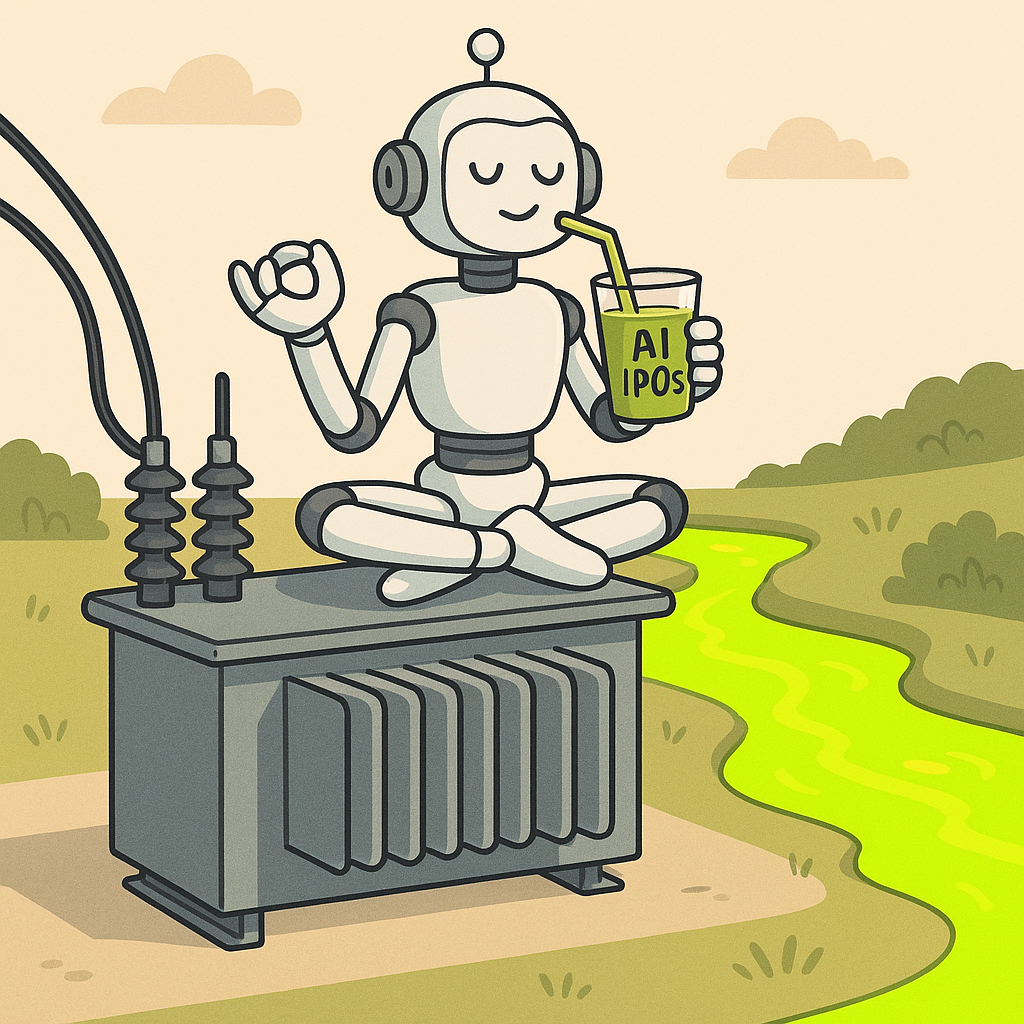
Back in Michigan, organizers say their movement is not anti-technology. It is, in the language of lifestyle and wellness, about boundaries. Specifically, about maintaining a boundary between their water table and the cooling system of Meta’s next recommendation engine.
“If OpenAI and Anthropic are going to make their fortunes here,” said Ellis, “I want at least one thing. I want the next chatbot to answer my first question honestly. When I type, ‘Where is the cloud?,’ it should show me a picture of my house, my power bill, and a DTE substation in the background.”
Until then, America’s AI boom will continue its search for lightly regulated dirt roads, while the people who live on those roads quietly organize. The industry calls this dynamic a “constraint on growth.” Residents have a simpler term that, annoyingly for investors, does not require any compute at all.
They are calling it “no.”