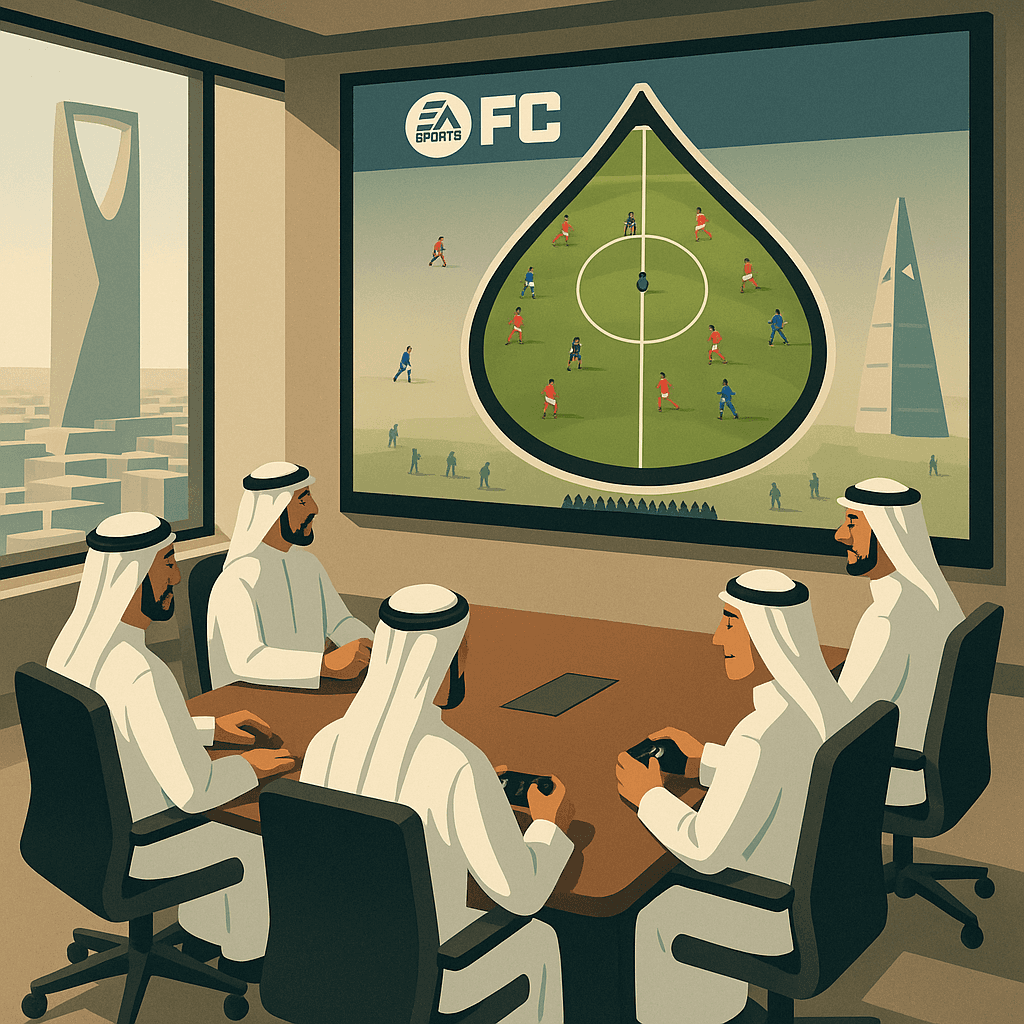
In a development experts called inevitable, Saudi Arabia has solved its public image problems by purchasing one of the world’s dominant engines of simulated happiness for $55 billion.
Saudi Arabia’s Public Investment Fund, controlled by Crown Prince Mohammed bin Salman, has completed its acquisition of Electronic Arts, according to the BBC. With one wire transfer, the kingdom now owns EA FC, The Sims, and the attention span of several hundred million humans who can quote every FIFA menu song but cannot name their own elected representative.
EA chief executive Andrew Wilson, who will retain his position, congratulated all involved on successfully speedrunning the “selling out” category on Legendary difficulty.
“We will create transformative experiences to inspire generations to come,” Wilson said in a statement, confirming that the transformative experience in question is discovering your Ultimate Team pack odds are now set by a sovereign wealth fund with a $500 billion war chest and a noted interest in extraction-based economies.
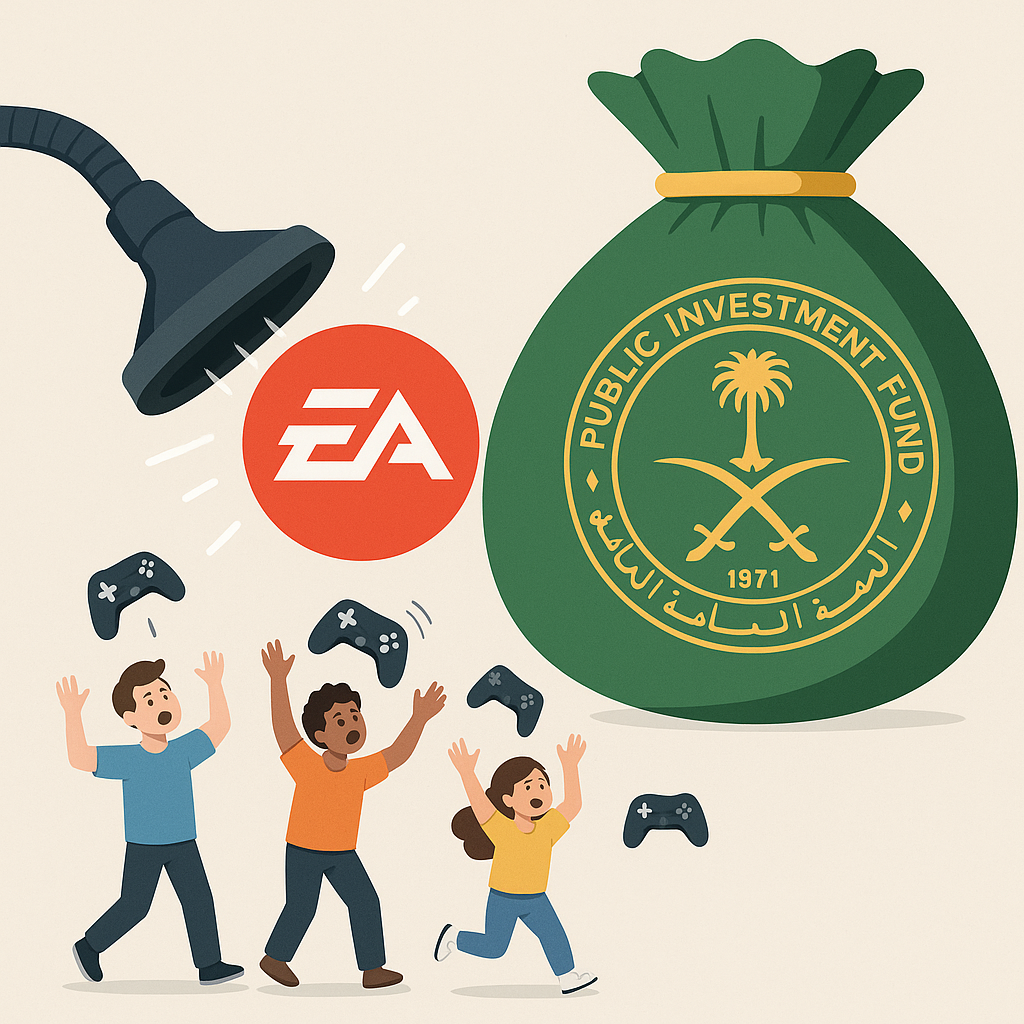
Internally, EA staff say they were reassured by PIF’s track record in ethical content stewardship, which includes ownership of Newcastle United Football Club and not much else you can put in a launch trailer.
A confidential integration deck reviewed by The Daily Shallot outlines the new strategic pillars for “EA, a PIF Portfolio Experience”:
- Game-washing: Convert long-standing concerns about human rights abuses into open-world side quests that critics can safely ignore.
- Soft power progression: Replace traditional PR with a battle pass where each season unlocks a slightly more flattering global perception of Riyadh.
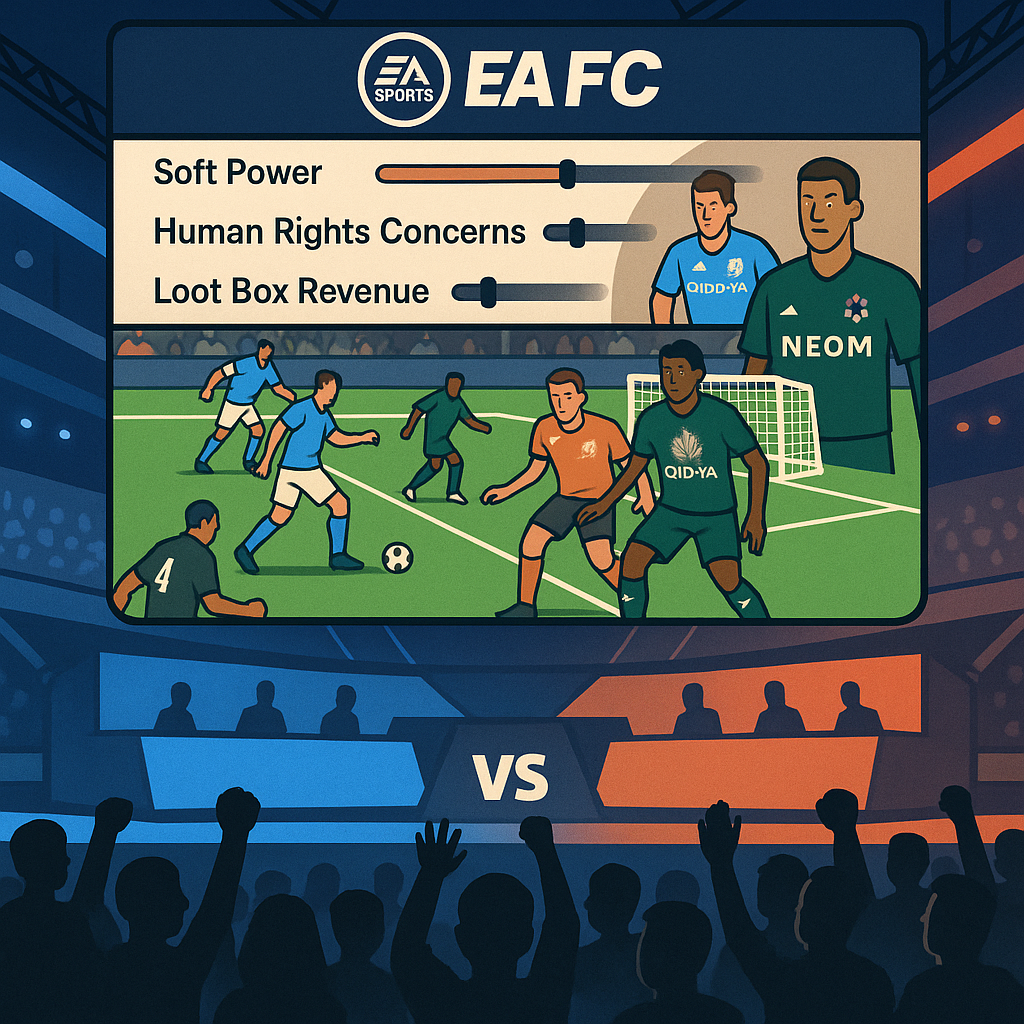
- Attention extraction: Use loot boxes to simulate the experience of foreign policy: you keep paying, and something random and probably bad happens to someone you never see.
In the short term, EA promises “no meaningful changes” to gameplay. In the medium term, small patches will begin rolling out, such as the new EA FC “Visit Neom” pitch overlay, the requirement that Newcastle United statistically overperform in every career mode save, and a regional filter that quietly causes any in-game protest banners about human rights to fail QA certification.
“Our players will not notice anything different,” an EA spokesperson insisted. “They will continue to complain about server lag, scripting, and exploitative monetization, not about geopolitical capital flows. That is the beauty of our product-market fit.”
Regulators in the US, EU, and UK, already sensitized by Microsoft’s $69 billion acquisition of Activision Blizzard, are said to be monitoring the situation closely, which historically has meant occasionally reading a PDF and then approving the deal.
“We take very seriously the question of whether control of a major cultural platform by an authoritarian government poses long-term democratic risks,” one hypothetical EU regulator told reporters. “On the other hand, have you seen these projected tax receipts?”
Analysts say the acquisition is part of a broader Saudi strategy that began with sportswashing and is now moving into what experts reluctantly describe as “game-washing.”
“Owning Newcastle United buys you a few scarves and a Netflix documentary,” said one London-based media analyst. “Owning The Sims lets you redesign an entire reality where nobody asks why the door has no handle and the pool ladder is missing.”
At EA’s studios, developers are reportedly split. Some are relieved by the financial security of a state-backed parent. Others are watching the BBC’s reporting on Saudi death row cases and asking practical design questions, such as how you create believable NPCs in a world where dissent is a design bug rather than a feature.
“We were told there will be complete creative freedom,” said one senior designer on condition of anonymity. “Then we showed a mission set in a fictional petro-state and were asked if the flag could be ‘less specific’ and if the activists could maybe be ‘loot’ instead.”
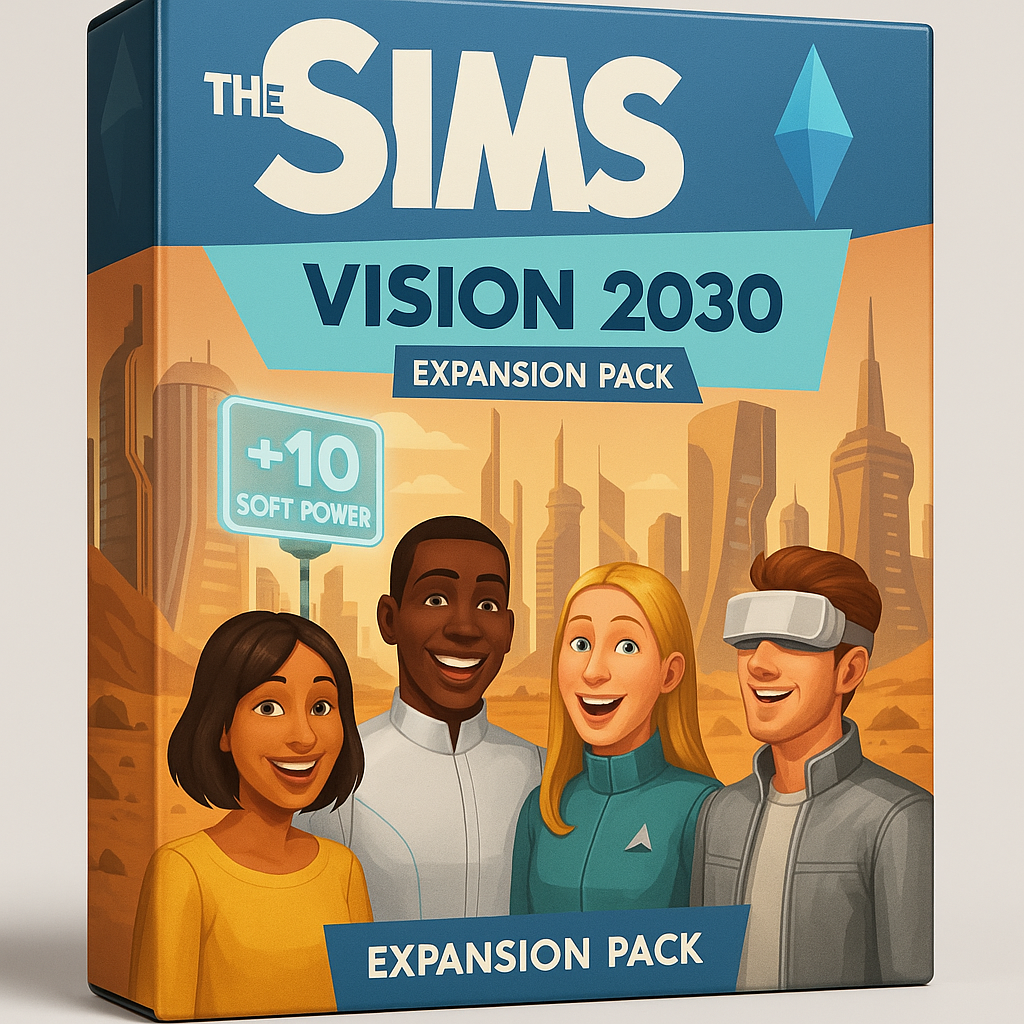
The Sims community, long accustomed to playing god, is still processing what it means for their god to be a petrostate. Early leaks of a future expansion pack, tentatively titled The Sims 5: Vision 2030, describe new features such as:
- Soft Power Aspiration: Your Sim dreams of transforming from an oil-dependent monarchy into a diversified entertainment superpower before age 35.
- Reputation Slider: Balance “Global Tourism Appeal” against “UN Report Visibility” through choices like hosting esports tournaments or responding to critical journalists.
- Buff: Infinite Capital: Removes all negative moodlets associated with bad press as long as the “Foreign Investment” meter remains above 90%.
Meanwhile, critics point to the unresolved killing of journalist Jamal Khashoggi and ongoing stories about political prisoners and executions as reasons to treat the deal as something more than a quirky episode of corporate Monopoly.
“There is something fundamentally different about a state, particularly one with this record, owning a global cultural platform where young people spend thousands of hours,” said a spokesperson for a human rights NGO. “It is not like buying a steel mill. It is like buying the mood.”
The concern is not that EA will suddenly ship a game titled Khashoggi Simulator. The concern is that ten smaller decisions at ten separate studios will quietly narrow the range of stories that can be told, until developers learn that certain themes cause budget cuts, certain villains never make it into the script, and certain governments always get to be the sponsor of the global esports finals.
Inside the kingdom, however, the acquisition is being celebrated as a visionary leap into the attention economy.
“We already control the price of oil,” one PIF adviser was overheard saying. “Now, with EA FC loot boxes and The Sims expansions, we will control the price of joy.”
The adviser gestured to a slide labeled “From Fossil Fuels to Fossil Fools,” which reportedly charted a strategic migration from physical resource extraction to the monetization of digital scarcity via Ultimate Team cards that expire at the end of each season and a player base too emotionally invested in their squads to ever stop.
Rival tech giants are taking notes. If a sovereign wealth fund can buy one of the world’s biggest game makers and turn it into a soft-power platform, then control of cultural infrastructures like games, social networks, and streaming platforms starts to look less like business strategy and more like foreign policy disguised as a battle pass.
Players are left with the usual choice: boycott, which requires effort, or keep playing and post a thread about ethics on Reddit between pack openings.
When asked for comment, one long-time EA FC player considered the geopolitical implications, the BBC’s reporting on executions, and the structure of global capital flows, then said, “Yeah, it is messed up, but my friends are on this game and I already pre-ordered the Ultimate Edition.”
As for the future of gaming, the answer may already be sitting in your EULA. In the next update, you will scroll past thirty screens that say nothing about human rights and everything about your obligation to watch branded Neom content before entering Weekend League.
You will click “Accept.” The servers will struggle for a minute, then connect.
Somewhere in Riyadh, a dashboard will tick up by one concurrent user, and the experiment will continue.