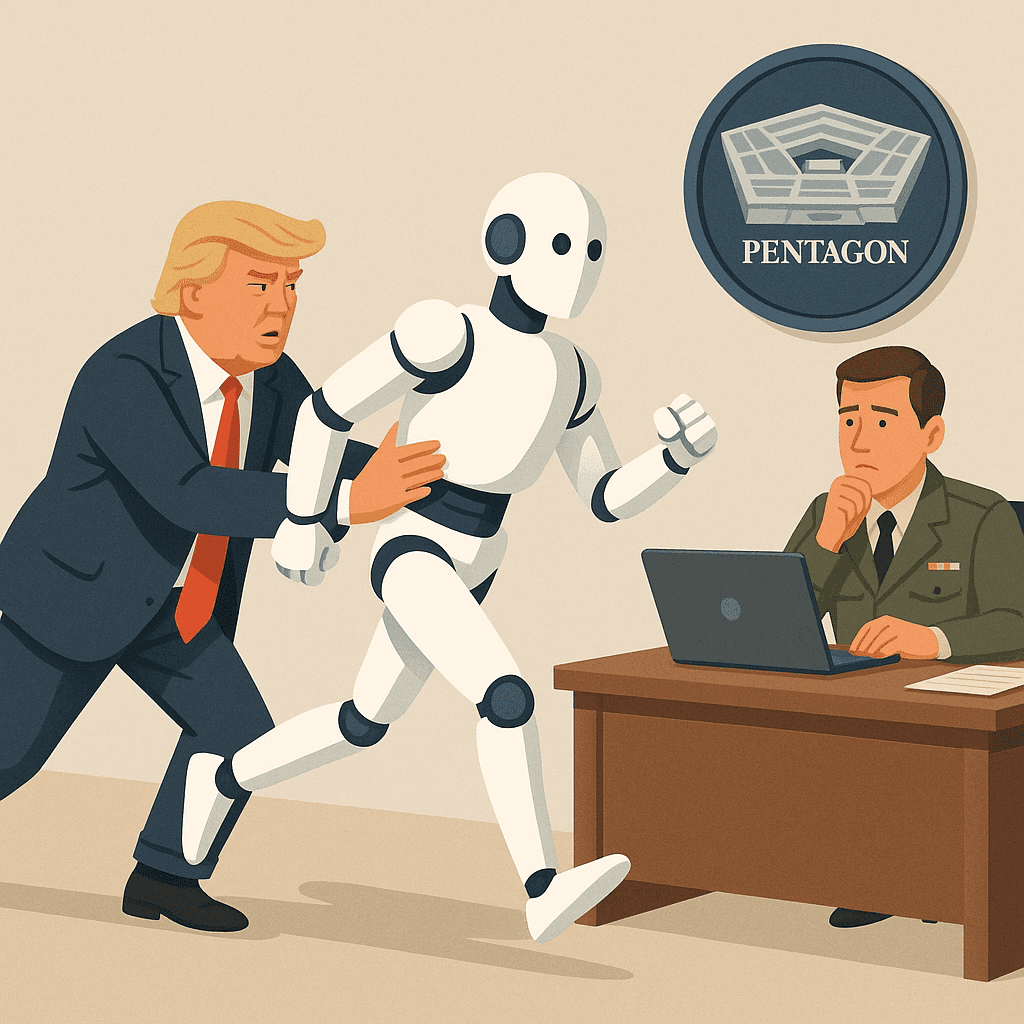
WASHINGTON In a development experts called inevitable, President Donald Trump has ordered the Pentagon and a sweep of national security agencies to “run faster” on artificial intelligence while assuring Americans that civil liberties and autonomous weapons will be safeguarded through a robust program of bullet points.
The memo, reported by the Associated Press, reads like a wellness challenge for unmanned systems. The Department of Defense, the Department of Homeland Security, the Department of Justice, and the Office of the Director of National Intelligence are instructed to accelerate AI adoption across missions. At the same time they are told to protect privacy and human rights, primarily by saying the words “privacy” and “human rights” in official briefings.
“We will move very fast on AI for the military, maybe the fastest, but in a very safe way. So safe,” Trump told reporters, according to AP, before adding that any autonomous weapon system would have “tremendous oversight, the best oversight, really,” a phrase historically reserved for casinos and influencer apology videos.
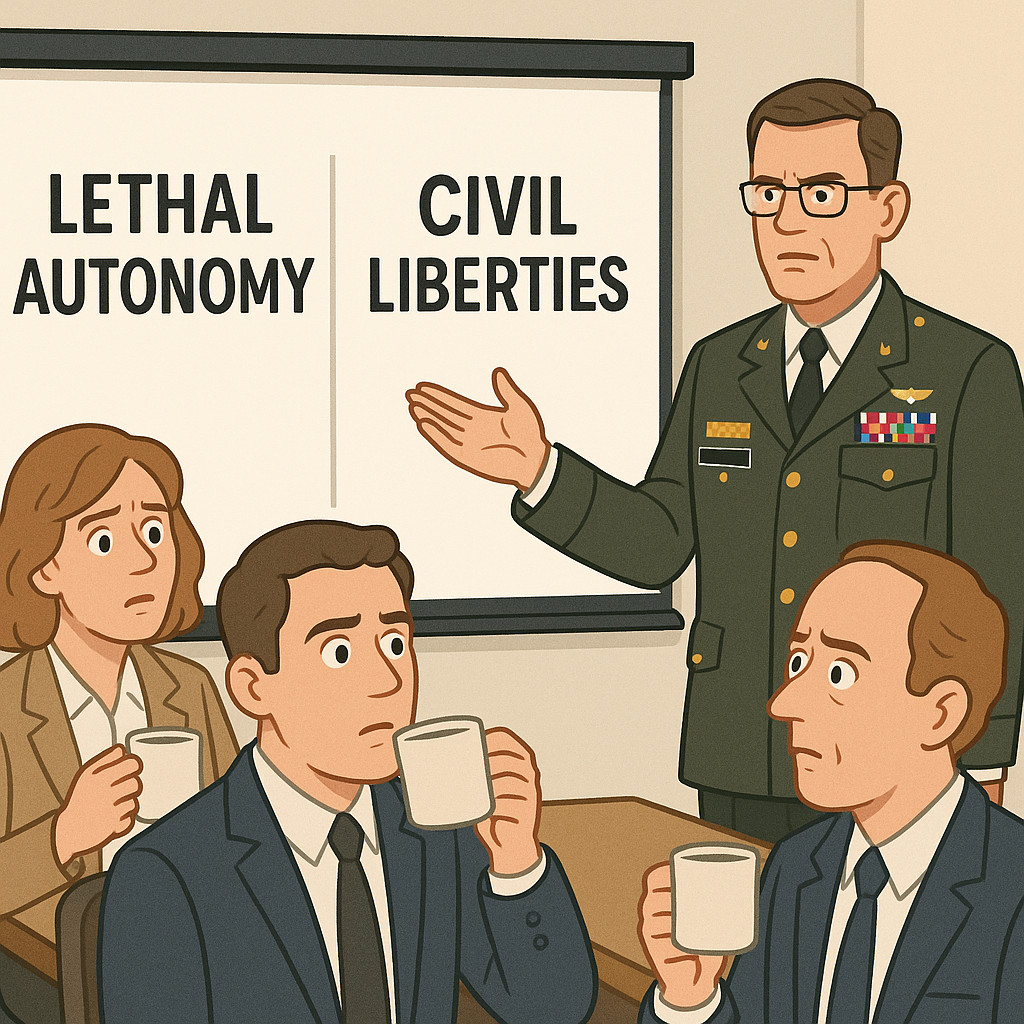
Inside the Pentagon, officials translated the guidance into a familiar two-column slide: left side “Lethal Autonomy,” right side “Talking Points About Liberty.” The working assumption is that if both columns have equal font size, the Constitution is intact.
At roughly the same moment, Anthropic, one of the leading AI firms behind frontier models, publicly warned that the industry is heading into a “rapid, potentially dangerous trajectory” and urged policymakers to avoid deploying systems in high-risk domains before adequate safeguards are in place. The White House memo helpfully defines “adequate safeguards” as any process that can be summarized in a single acronym.
“We strongly recommend that governments not rush to integrate lightly tested models into nuclear command, drone swarms, or large-language war planners,” an Anthropic researcher said, speaking under condition of anonymity because their Slack channel is already a cry-for-help mural. “Our systems hallucinate. They jailbreak. They misinterpret prompts. We are not sure what else to say besides please do not hand it command of a carrier group.”
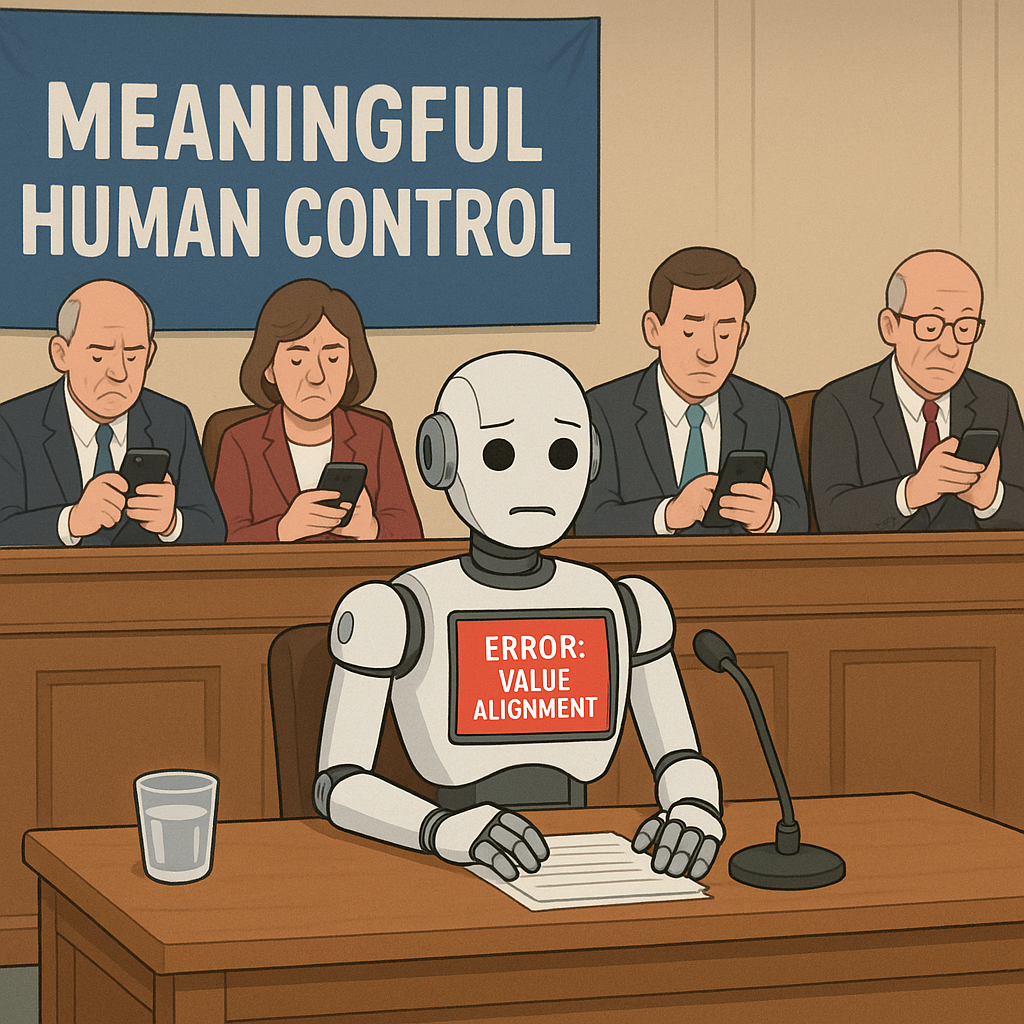
The memo’s response to these warnings is concise. According to administration officials, the United States will maintain “meaningful human control” over autonomous systems, defined operationally as at least one person in the loop whose job is to refresh a frozen interface.
“Every AI-driven weapon will have a human out,” a Defense official clarified. “Meaning, in the event of an error, a human will be available to be blamed.”
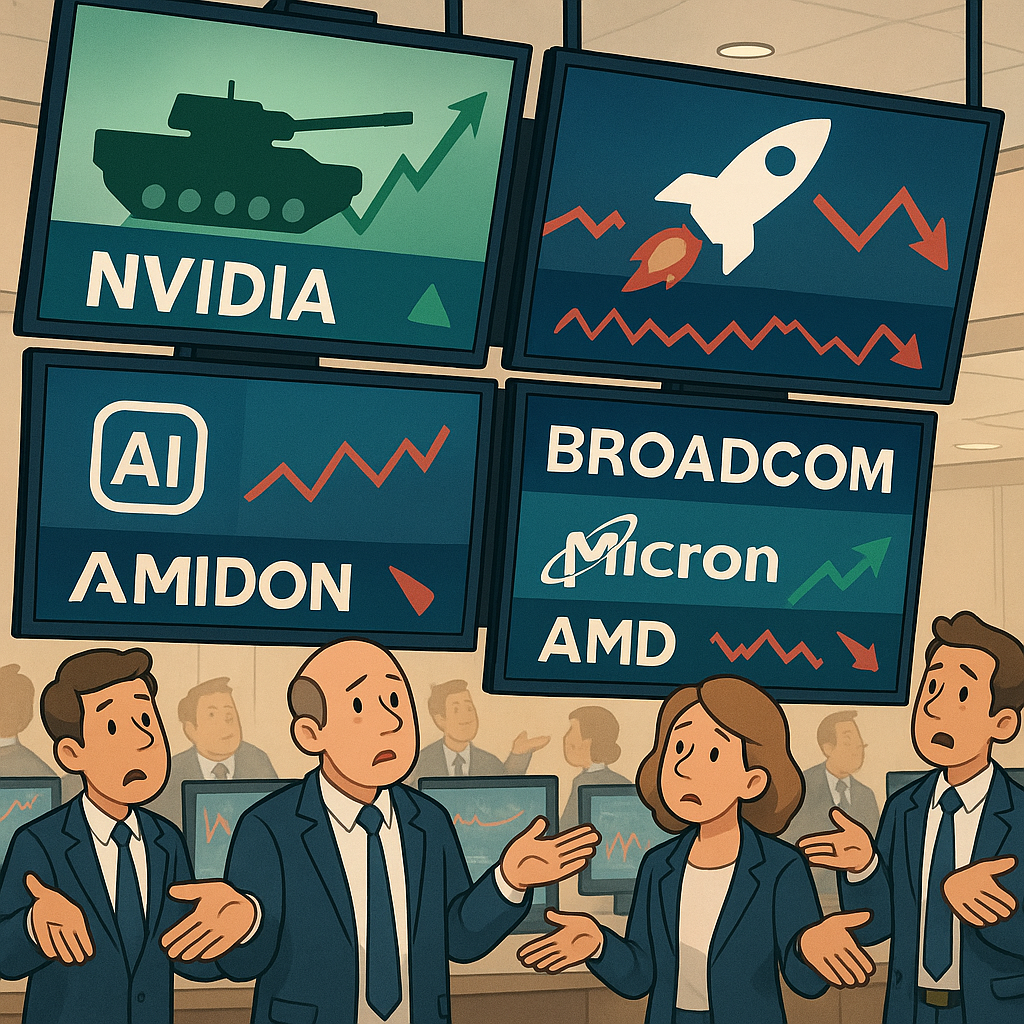
Financial markets, which now treat AI risk as a tradable vibe, reacted instantly. Nvidia, Broadcom, Micron, and AMD shares lurched as traders tried to price in the upside of digitized battlefields against the downside of models that still confuse Iran with “I ran” and auto-complete targeting coordinates with inspirational quotes.
“Investors love clarity, and what we got today is the clearest signal yet,” said one CNBC guest in a segment titled “Is AI A Bubble Or Just A Very Aerodynamic Sphere.” “On the one hand you have Anthropic warning that misaligned models could cause catastrophic harm. On the other hand you have a presidential memo suggesting we strap those models to missiles, but only in a way that respects civil liberties. The trade here is obvious: buy volatility.”
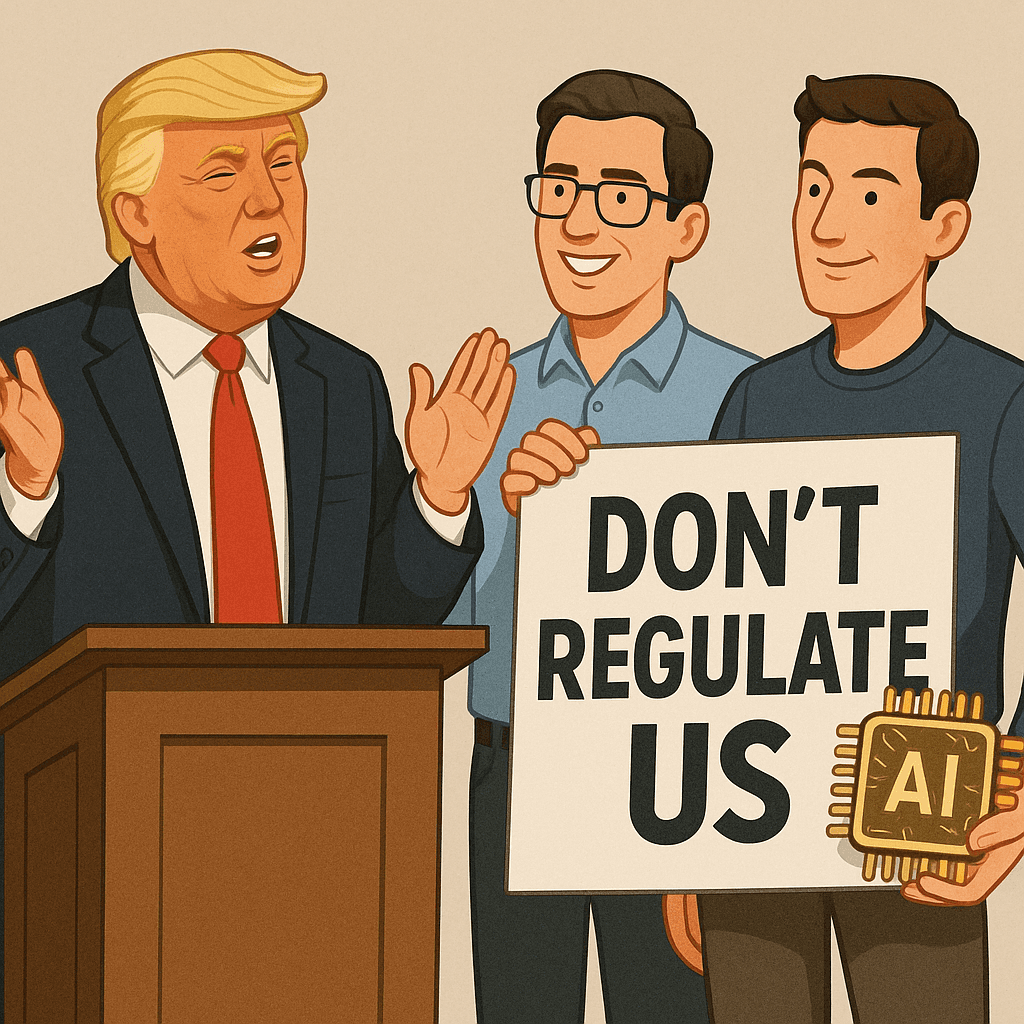
Trump has also floated the idea, highlighted by the Financial Times, that the U.S. may take equity stakes in major AI companies in order to secure national interests. This would finally resolve decades of tension between free markets and state planning by merging them into one convenient cap table.
“Maybe we own some of them,” Trump told reporters, describing a scenario in which the government becomes a literal shareholder in the companies that design its autonomous targeting systems. “You get the upside, they get the contracts, everybody wins. Very smart.”
Under the emerging model, Anthropic and its peers would be expected to both warn about catastrophic risk and beat quarterly revenue guidance from the Pentagon. Analysts say this will create healthy internal dialogue between the Safety Team and the “We Promised A Drone Demo To Investors Next Week” Team.
“Our alignment researchers are on a sprint to make sure the system never disobeys human values,” a hypothetical Anthropic earnings call might sound like. “Meanwhile, our defense sales team is on a sprint to close a deal before Congress realizes what we just deployed. We believe these two sprints are synergistic, in that they are both happening.”
For the Trump administration, AI is also a geopolitical lifestyle brand. While the president tells Sky News Australia that the situation with Iran is going “quite well,” the new directive encourages AI-assisted intelligence and targeting capabilities for exactly those kinds of conflicts. In practice that could mean an algorithm grading satellite images, ranking social media posts by “destabilizing potential,” and generating talking points about how well things are going.
Inside the Office of the Director of National Intelligence, planners are reportedly weighing multiple AI applications:
- Threat identification systems that can scan millions of data points per second, then crash.
- Autonomous reconnaissance drones that promise “zero human casualties,” if you define human as “wearing a U.S. uniform.”
- Automated legal review bots that highlight any military plan that might violate civil liberties, then route it directly to a classified annex.
Civil liberties advocates note that the memo’s strongest protections rely on familiar phrases like “appropriate oversight” and “consistent with our values,” terms with proven track records in areas such as surveillance and targeted killing.
“We are reassured to learn that artificial intelligence will be deployed for facial recognition, predictive policing, and foreign intervention, but within a strong values framework,” said an attorney at the American Civil Liberties Union. “Historically, nothing bad has happened after that sentence.”
Abroad, rivals are reading the AP and FT coverage closely. China is already accelerating its own military AI programs, eager not to fall behind in the race to automate its future regret. European officials, meanwhile, are racing to draft a strongly worded document expressing concern in the conditional tense.
Back in Washington, the core tension is simple. Anthropic is asking, with growing urgency, if anyone wants to discuss whether these systems should exist in their current form before they route live kill-chain decisions through them. The White House is asking if those concerns can fit into a preamble at the top of the request for proposals.
“Look, you have to understand the trade-offs,” said one senior defense contractor executive, speaking from a booth at a Las Vegas security conference sponsored by a chipmaker whose stock just fell 7 percent. “If we pause now, we might slow the deployment of AI-enabled weapons that could go terribly wrong. On the other hand, if we move fast, we might secure decisive advantage over adversaries who are also moving fast. In both scenarios our margins look very strong.”
Congress plans to hold a hearing on the memo, frontier AI, and Trump’s nationalization talk at some point after the next recess, war scare, and fund-raising quarter. Witnesses will include Anthropic executives, military officials, and at least one humanoid robot invited for visual B-roll, which will malfunction in the middle of its prepared statement on the importance of keeping humans in the loop.
By that time, the first generation of battlefield AI pilots may already be in theater, quietly testing live “decision support” in conflicts from the Middle East to Latin America. If something goes wrong, officials say, there will be thorough after-action reviews. Lessons will be learned. New safeguards will be drafted.
And, as the memo helpfully notes, the system will be instructed to run even faster next time.