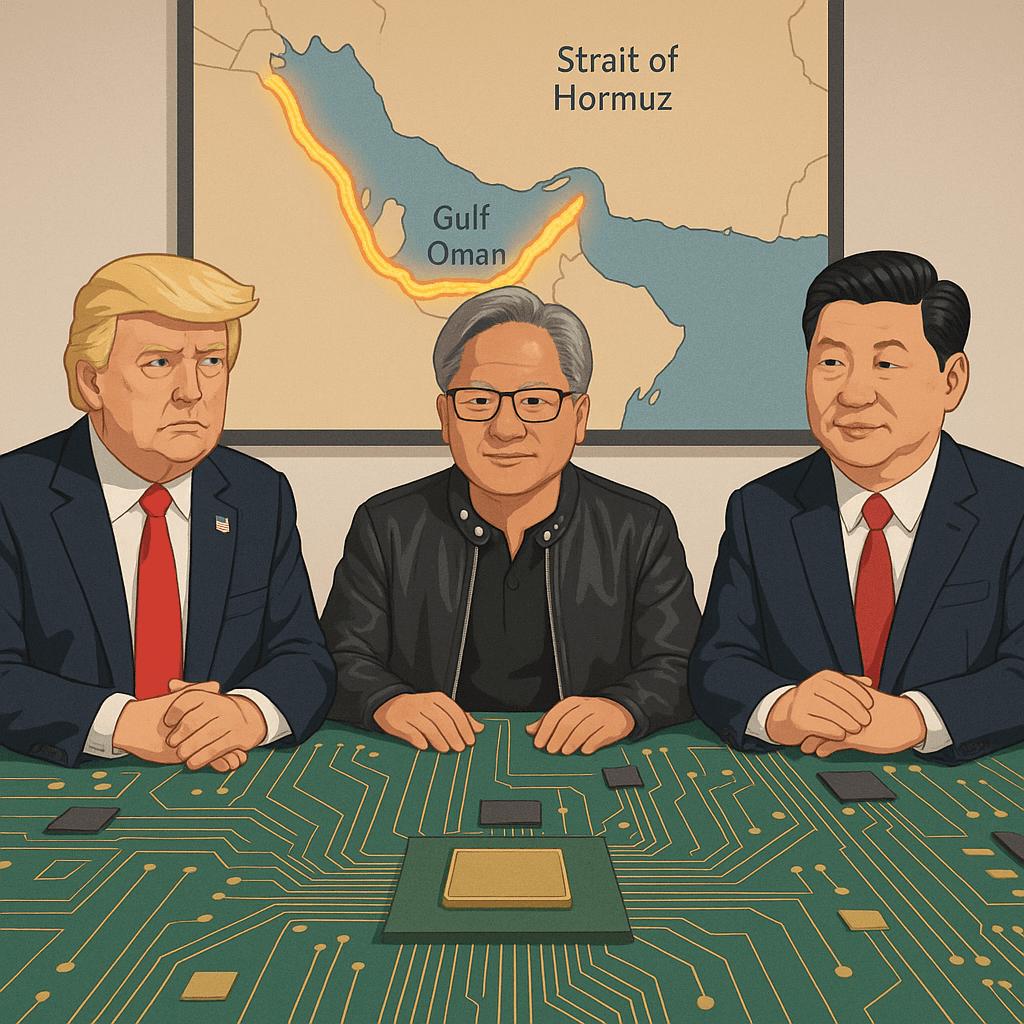
In a development experts called inevitable, the United States and the People’s Republic of China have formalized a new diplomatic framework described as “managed rivalry,” in which both sides promise to avoid World War III as long as they are still benchmarking Nvidia stock and rerouting oil tankers like cloud traffic.
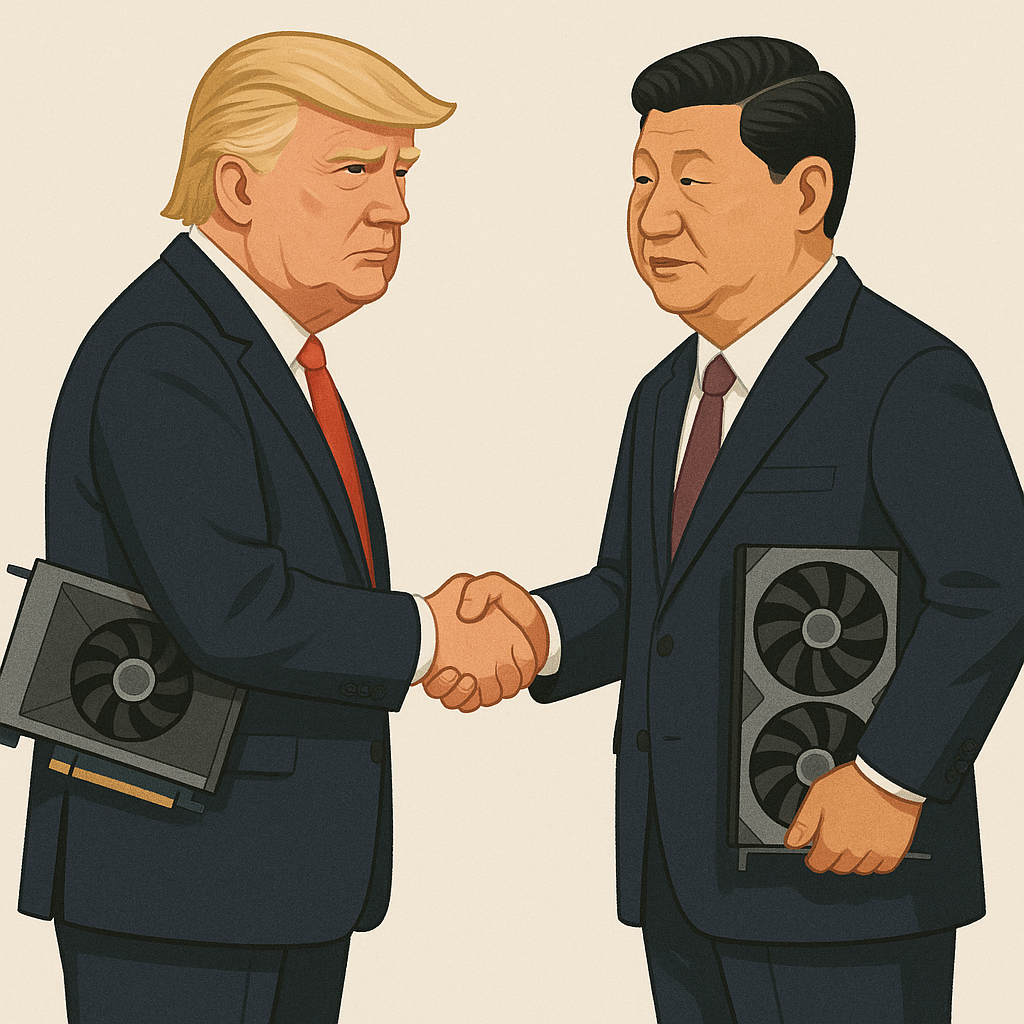
The Trump–Xi summit in Beijing, praised by Trump as a “successful trip” and by Fox News as proof that a “new Cold War is already here,” clarified the emerging global architecture: peace, but only if everyone accepts permanent CPU throttling on democracy and a mandatory subscription to great-power competition.
Central to the photo-op was Nvidia CEO Jensen Huang, a late addition to Trump’s delegation and now apparently America’s acting Secretary of GeForce. Huang appeared at the Great Hall of the People in his signature leather jacket, which diplomatic observers said accurately conveyed the current U.S. doctrine: no tie, no plan, trillion-dollar valuation.
A senior U.S. official summarized the summit agenda in four bullet points, projected behind the leaders on a massive LED wall reportedly powered by 40,000 GPUs:
- Compete intensely in semiconductors, AI, cyber operations, and every other word that makes markets go up.
- Keep the Strait of Hormuz “basically open,” except when it is needed as a plot device.
- Talk about Taiwan in a way that means everything and commits to nothing.
- Make sure Jensen gets a good hero shot for the earnings call.
Trump assured reporters he made “no commitment either way” on Taiwan, a phrase that instantly entered diplomatic history as the first security guarantee written like a product FAQ. “They asked if we would defend Taiwan,” one U.S. aide said, “and the president essentially clicked ‘Maybe’ on the pop-up.” CNN later ran a split screen of Trump casually sipping champagne while analysts debated whether “no commitment either way” was a green light for invasion or simply the default setting for his calendar.
The ambiguity did not bother financial markets. They rallied on the news that, even if Taiwan erupts, it will probably happen slowly enough for everyone to front-run the semiconductor ETF. “This is the beauty of managed rivalry,” said one hedge fund manager. “It is not peace, which is bad for defense stocks, and it is not war, which is bad for literally everything else. It is a kind of permanent backorder status for the world.”
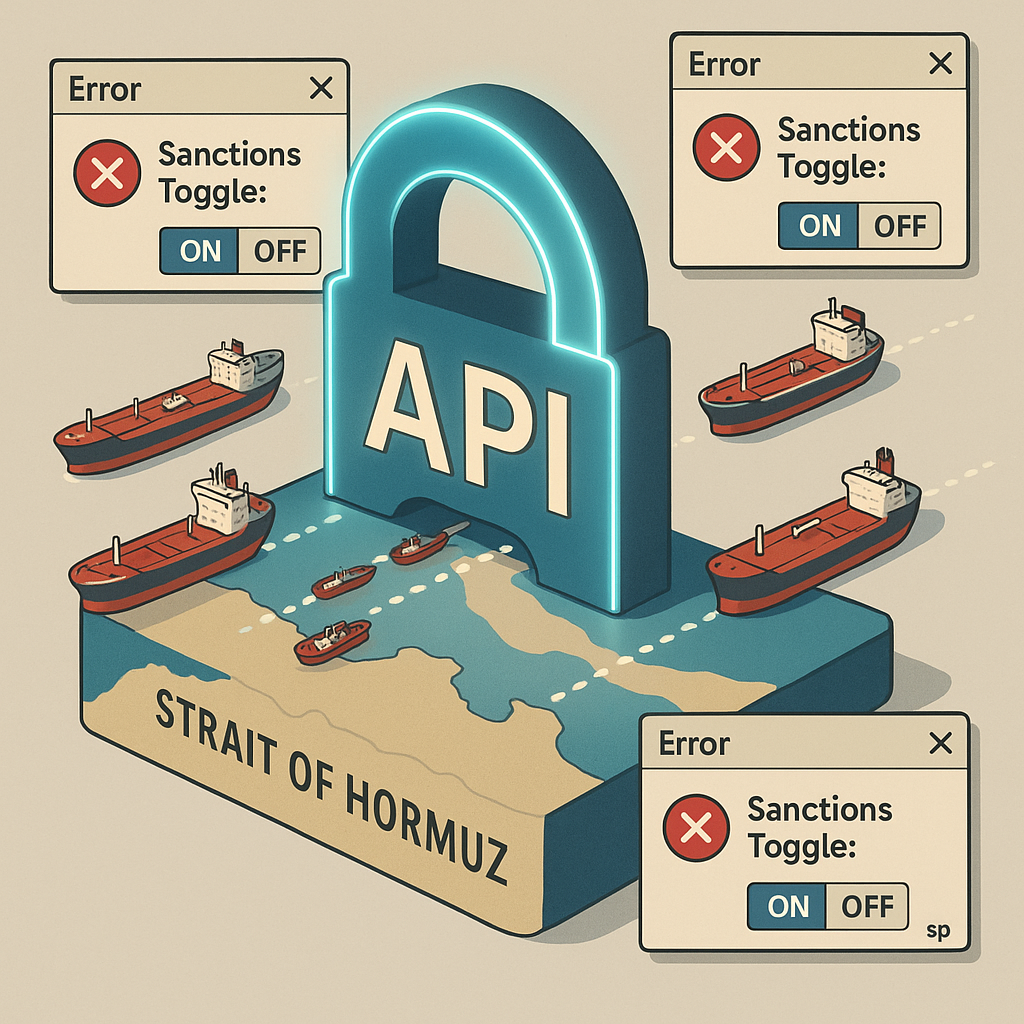
In a separate on-camera moment, Trump said he was “considering” lifting sanctions on Chinese companies that buy Iranian oil, explaining that Xi Jinping would like to see the Strait of Hormuz “automatically” opened. Tech CEOs watching at home immediately recognized the term. “They are trying to reboot a key global API,” said one Silicon Valley founder. “The Strait of Hormuz has had terrible uptime since the Iran crisis. You would not build a payments app on that thing.”
National security officials described the sanctions issue as “complicated,” which in this context means “priced into oil futures before the sentence ended.” Under the emerging model, Washington will quietly toggle enforcement in the background, depending on whether it needs leverage over Beijing, Tehran, or domestic gas prices that week. A Fox News columnist, invoking the Book of Proverbs, warned that a prudent man “sees danger and takes refuge,” yet regulators appear content to see danger and take a small fee on every tanker that squeezes through.
At the center of it all is the semiconductor race. According to Fox, the “real struggle” is over rare earths, cyber operations, and control of the computing infrastructure that will define future military power. Officially, Nvidia insists it is a commercial actor. Unofficially, Huang’s presence in Beijing confirmed that GPUs now function as floating strategic assets, like aircraft carriers you can also use to render Fortnite skins.
“We are committed to neutrality,” an imaginary Nvidia spokesperson did not say aloud. “Our chips are available to anyone who can navigate U.S. export controls, Chinese industrial policy, and about 9 to 12 months of supply-chain vibes.”
Viewed through a wellness lens, the Trump–Xi summit offered a clear three-step protocol for anxious citizens:
- Accept that you now live in a curated, algorithmically optimized Cold War where your feelings about Taiwan are a data point in someone’s sentiment index.
- Practice mindful breathing whenever you hear the phrase “Indo-Pacific deterrence posture” or see a heat map of missile ranges superimposed on your vacation plans.
- Hydrate, because all your electronics and half your food supply still depend on trade routes everyone treats as a user-configurable option.
Officials in both capitals insist the rivalry is “managed,” a term that, like most corporate wellness programs, seems mostly designed to reassure shareholders that someone, somewhere, has a dashboard. The U.S. side points to new “crisis communication mechanisms” over Taiwan and the South China Sea. China, for its part, stresses that it remains absolutely firm on sovereignty issues while staying flexible on which American tech firms it will let into the app store this quarter.
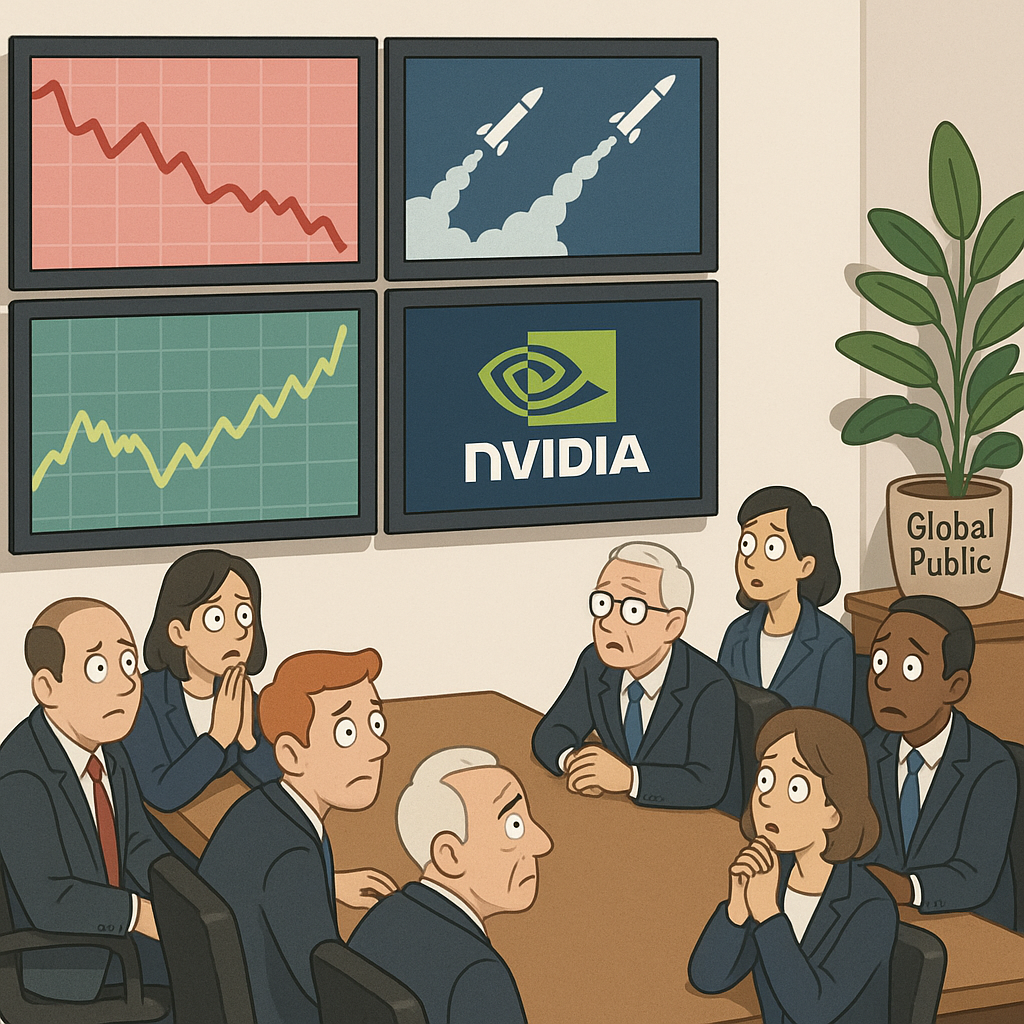
Meanwhile, allied governments are being nudged to pick a side in what one European diplomat described as “a vibes-based bloc system with binding hardware requirements.” Countries that choose Washington may receive discounted fabs, Patriot batteries, and a lecture about rule-of-law. Those that lean toward Beijing can expect infrastructure, a quietly financed port expansion, and a mandatory seminar on non-interference.
Yet for ordinary humans, the most immediate impact of the new Cold War is aesthetic. Every summit now resembles a product launch. Leaders arrive to carefully staged b-roll, walk past solemn honor guards, then sit down under chandelier lighting to negotiate the future of the semiconductor supply chain like they are unveiling a new phone. Somewhere in the back, a tech CEO in a leather jacket stares at his watch and mentally recalculates revenue exposure to a possible blockade of Taiwan.
The summit’s closing statement promised “guardrails” to prevent accidents around flashpoints like Taiwan and the Strait of Hormuz. In practice, this means both sides will continue to run military exercises near each other, only with better customer support. “If something goes wrong, we want to be reachable,” said one U.S. official. “We have set up hotlines, backup hotlines, and a secure Signal group chat titled ‘No One Screenshot This.’ Deterrence only works if your adversary believes you have both the capability and the will to reply all.”
For now, the managed rivalry holds. Markets are calm. Oil is flowing. Factories in Taiwan whir at full capacity. Nvidia’s valuation continues to defy theology. Commentators on Fox, CNN, and the BBC all agree that the summit did not create the danger. It simply clarified that, for the foreseeable future, your phone, your car, and your retirement fund are all co-signed by two nuclear powers that have agreed to postpone catastrophe as long as the chips stay scarce and the conflict stays premium.
Or as one diplomat put it, stepping into a black sedan outside the Great Hall of the People, “We are not in a shooting war with China. We are in a hardware refresh cycle with live ammunition.”



