Tech
In a development experts called inevitable, the stock market has begun treating U.S.–Iran military exchanges as a mildly annoying API dependency, as long as nothing interferes with AI chip shipments or the next Nike earnings call.
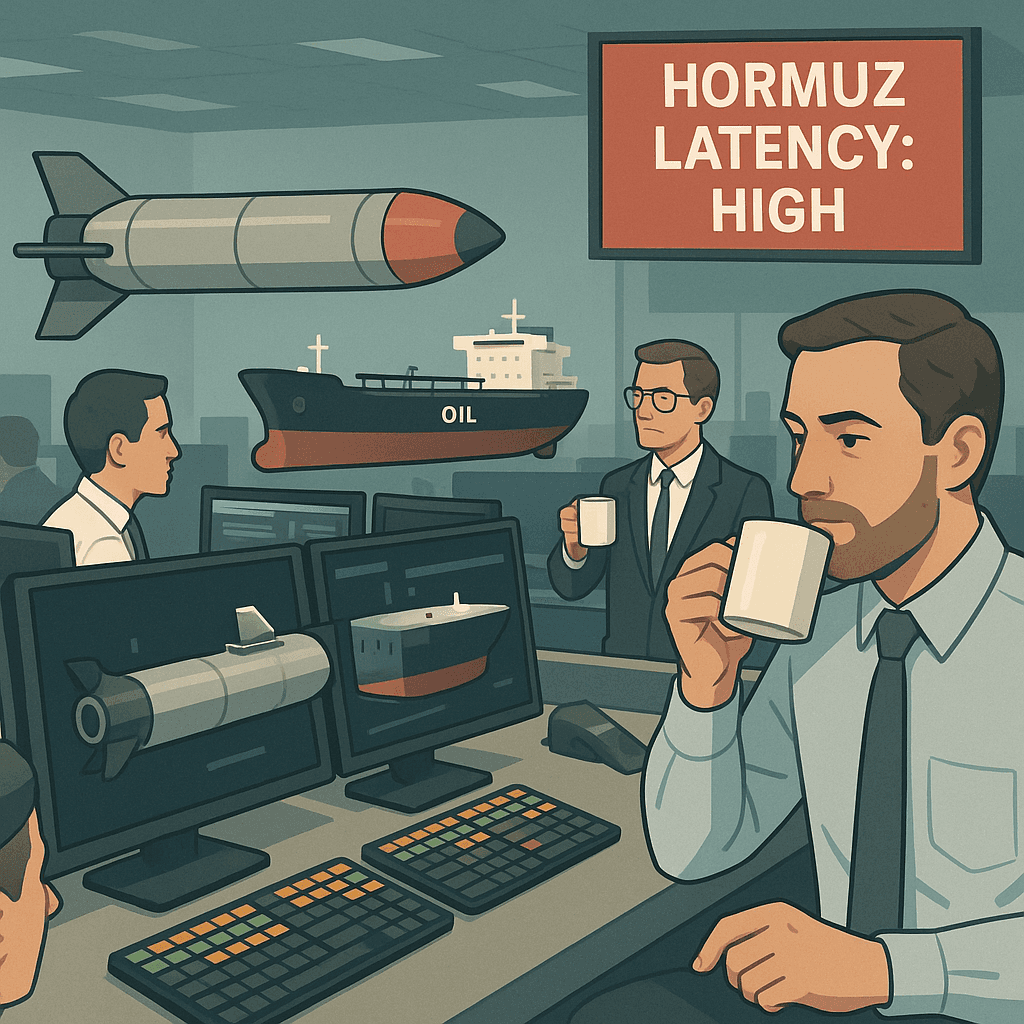
Citing the CNBC piece titled "Here are 3 big things we're watching in the stock market in the week ahead", traders confirmed that Iran’s Islamic Revolutionary Guard Corps claiming strikes on U.S. sites in Kuwait and Bahrain, additional U.S. strikes inside Iran, and Donald Trump threatening "annihilation" are now categorized as a "Gulf latency issue" in the dashboard, ranked slightly below Micron’s guidance but above whatever Honeywell is doing this week.
“The core question,” said one strategist, “is whether the Strait of Hormuz closes for long enough to affect the quarterly AI narrative, or just long enough to give Brent crude a cute little round trip so the Fed can pretend to be surprised again.”
At time of writing, Brent crude had dipped below $70, according to Yahoo Finance, even as the U.S. released new video of strikes on Iran and the IRGC bragged about hitting U.S. sites in Kuwait and Bahrain on CNN. The resulting chart looks, to the untrained eye, like global supply chains screaming. To investors, it looks like a Black Friday sale on inflation expectations.
“Brent is down 22% in June, which we view as a positive signal that markets are fully pricing in the possibility of war,” said one bank’s head of macro strategy. “If tanks reach the beaches of the UAE, we could see a further 5% pullback in gas station complaints on TikTok, which would be bullish for consumer sentiment. In the short term, of course.”
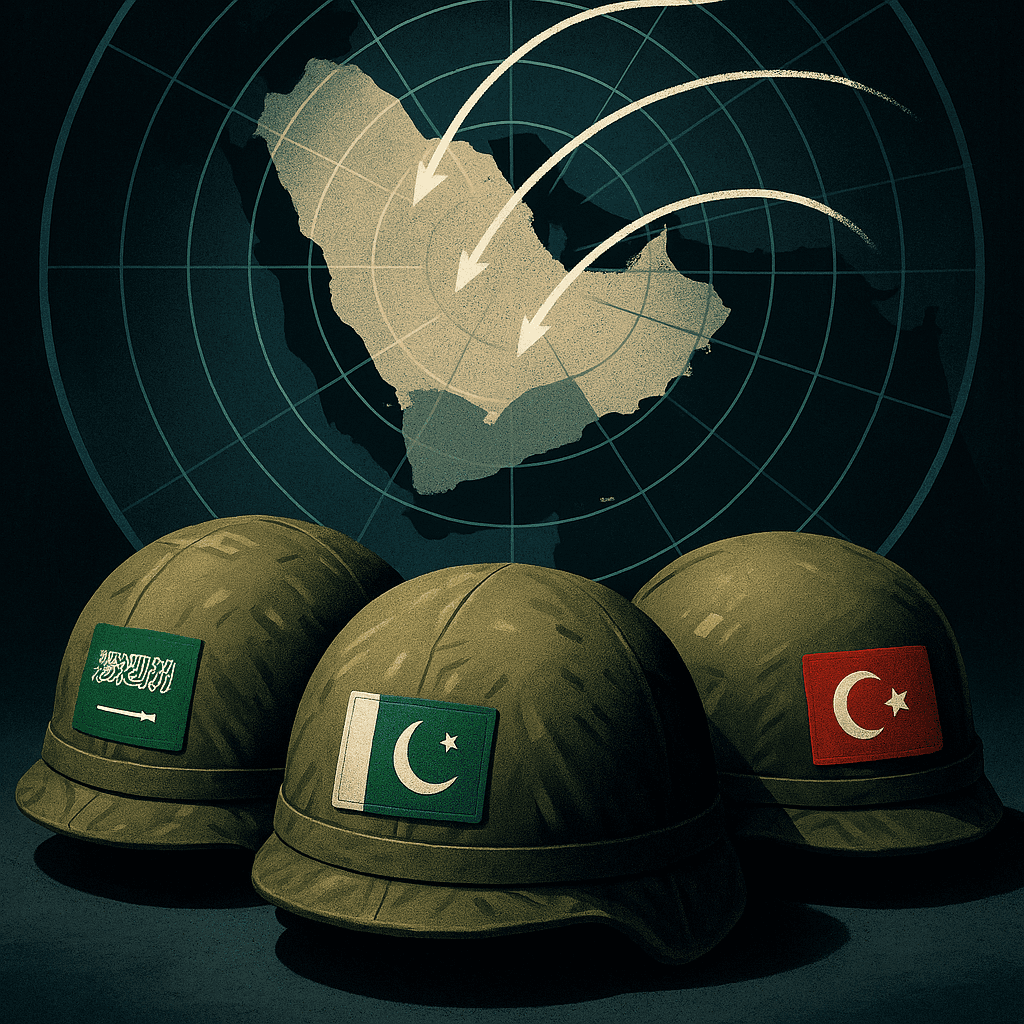
The Gulf Cooperation Council, which had once hoped U.S. bases would provide stability, is now discovering they mainly provide targeting data. Kuwait and Bahrain, each suddenly discovering that “hosting American forces” translates to “hosting American strike footage,” have reportedly asked Washington whether their security guarantees include a fast-track IPO if their ports take a hit.
“We are monitoring the situation closely,” said one Gulf official, speaking on condition of having already moved his family to London. “We have been assured by our partners that any conflict will be high precision and contained, meaning it will only affect our refineries, our shipping lanes, and our domestic political survival.”
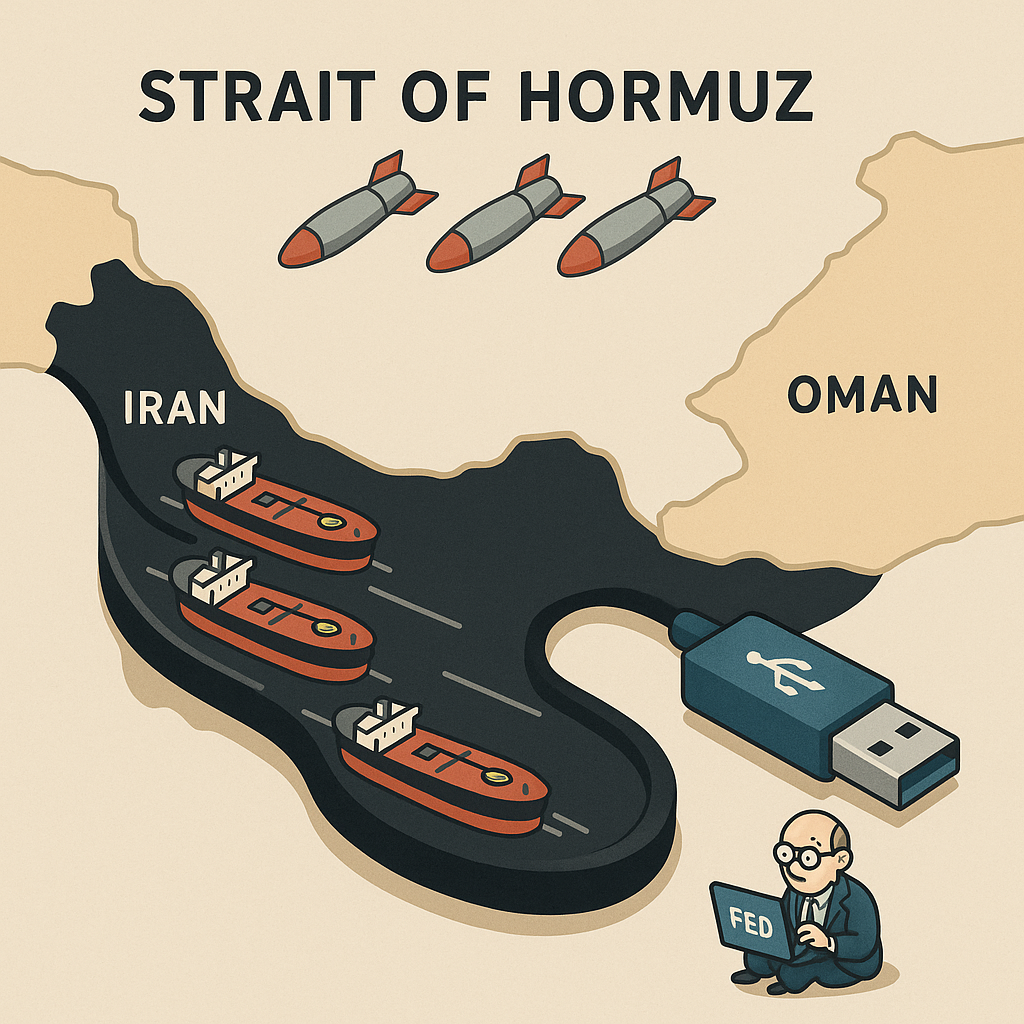
On Wall Street, the escalation is being slotted neatly into a new category of products, as banks roll out algorithms capable of converting incoming war footage into tradable sentiment around data center REITs.
- Green light: Strait of Hormuz briefly disrupted, oil whipsaws, Fed gets to cancel one rate hike, Nvidia closes at all-time high.
- Yellow light: IRGC harasses tankers, shipping insurance triples, central banks mention "geopolitical headwinds" 4 times per speech, but still cut 25 bps.
- Red light: region-wide conflict, formal closure of Strait, Gulf monarchies panic, AI stocks down 1.3% intraday before recovering on short-covering rally.
“The market is struggling to reconcile falling spot prices with rising conflict risk premia,” explained an asset manager, “so we have decided to believe both. The Strait of Hormuz is simultaneously a flashpoint and a coupon. It’s very Schrodinger’s choke point.”
Meanwhile, central bankers are attempting to talk about labor markets without saying “Iran” out loud. Thursday’s U.S. jobs report, expected to show around 123,000 new jobs, will help determine whether the Fed stays “data dependent,” a phrase which now means “we will react primarily to whatever Brent does after the next volley of missiles.”
“If payrolls are strong and oil stays under $70, that is an ideal environment for us to ignore the video of U.S. bases under fire in Bahrain,” said one hypothetical Fed official, checking a notification labeled “Hormuz reopened, vibes improved.” “However, if Brent spikes because someone parks a warship sideways in the Strait, we may have to pivot to an adaptive framework of panicked improvisation.”
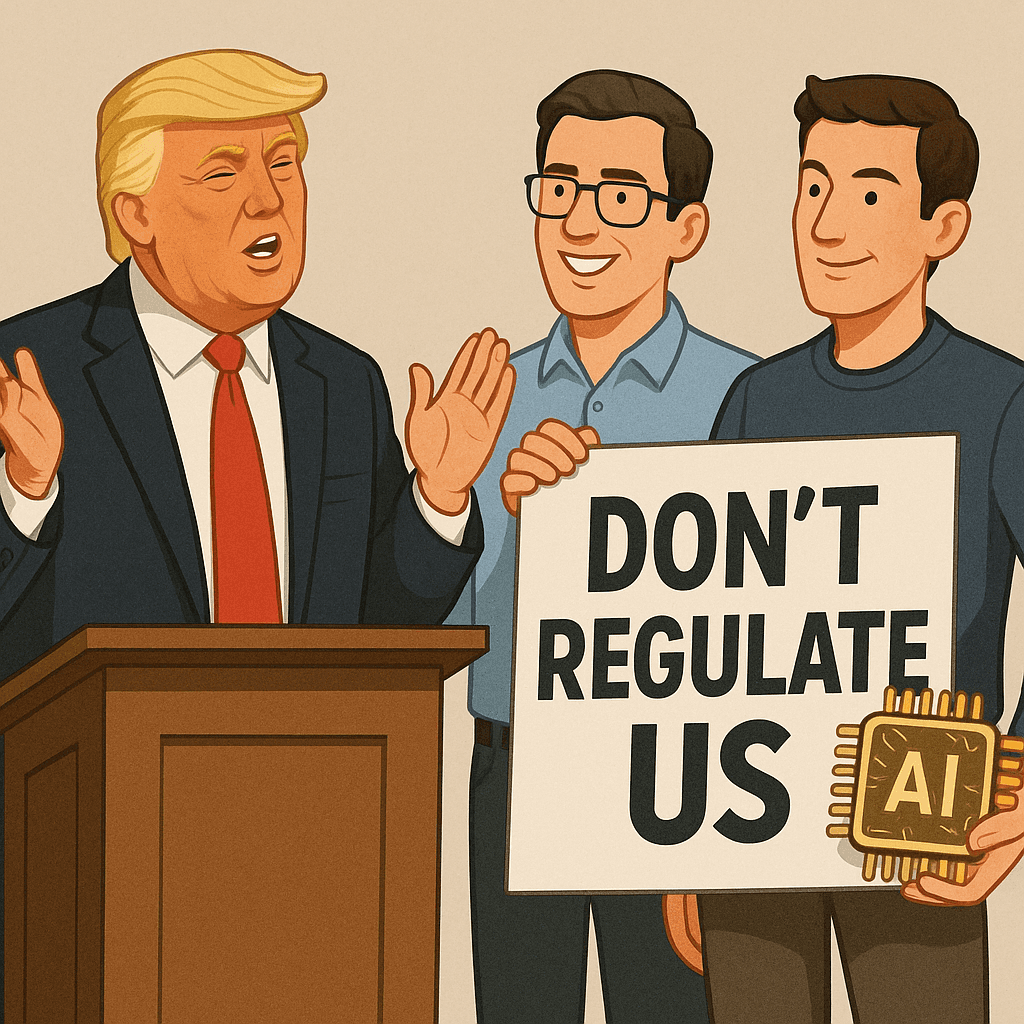
In Tehran and Washington, hardliners have settled on a joint innovation roadmap: maximum domestic posturing with minimal diplomatic overhead. Trump’s reported threats to tear up peace agreements and unleash “annihilation,” highlighted over the weekend by Sky News Australia, have already been structured by quants into a new product called Trump Volatility Indexed Note, Gulf Series.
“Every time he tweets the word ‘annihilation,’ the coupon adjusts,” explained a structured products salesman. “We hedge with a basket of Kuwaiti and Bahraini sovereign CDS and a minor allocation to yoga apps. It is all connected.”
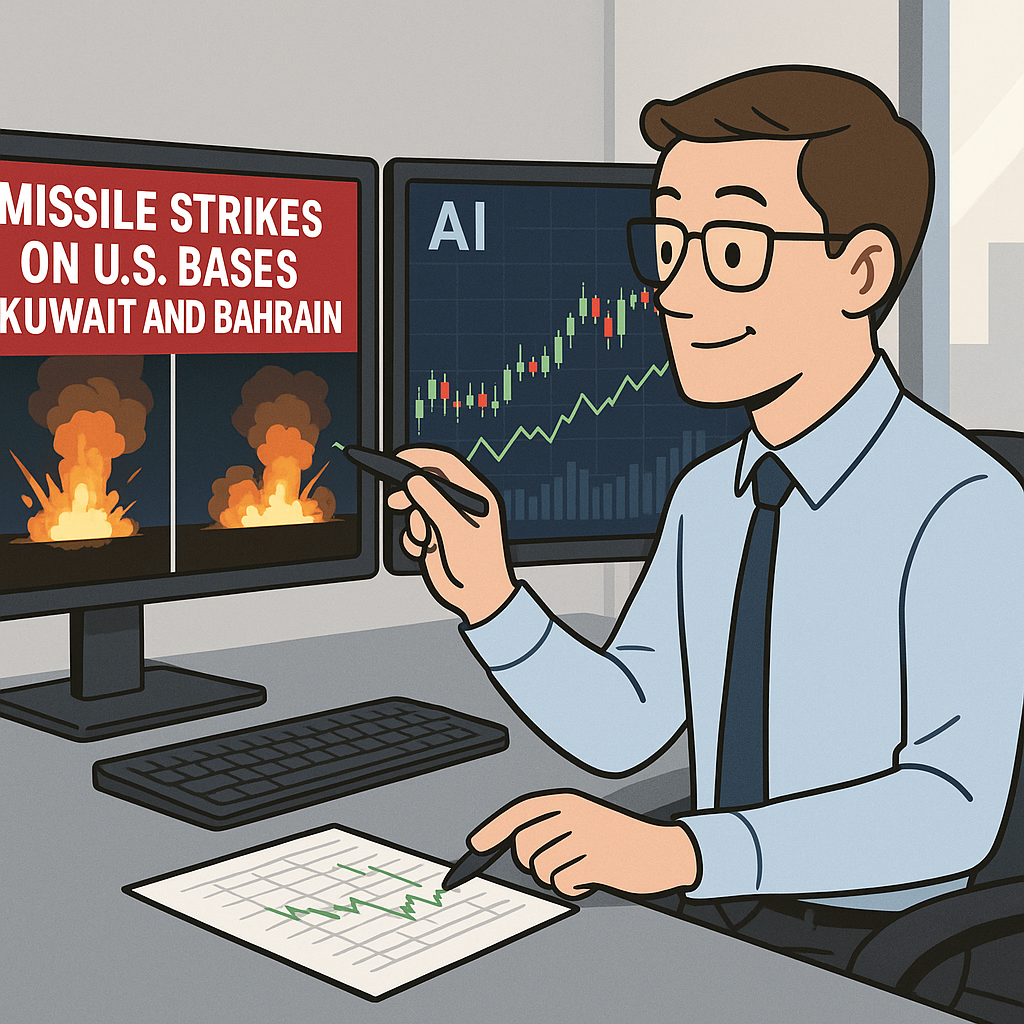
Tech investors, who spent 2025 learning how to spell "semiconductors," are now being gently introduced to concepts like "Strait of Hormuz" and "Gulf monarchies" as part of their continuing education in systemic risk.
“Is Hormuz a new AI chip?” asked one retail trader in a Discord server devoted to long-dated call options on memory stocks. “Because if it is, I’m bullish. That name sounds lit.”
To bridge the literacy gap, several brokerages have rolled out guided visualizations, a tool traditionally used in wellness but now repurposed for geopolitics:
- Close your eyes.
- Imagine 20 percent of global oil flowing through a narrow strait.
- Now imagine two governments with domestic incentives to look "tough."
- Inhale. Exhale. Press “buy” on your favorite AI ETF.
“We find clients respond better when we frame the U.S.–Iran confrontation as a mindfulness challenge,” said one wealth manager. “Yes, the IRGC is targeting U.S. sites in Kuwait and Bahrain. Yes, Washington is striking inside Iran. But have you tried journaling about your long-term conviction in cloud infrastructure?”
At shipping desks, the mood is less serene. Insurance premiums for tankers moving through the Strait of Hormuz are quietly repricing the possibility that at some point, someone actually follows through on their threats. Yet these moves are largely invisible to the casual investor, who mainly interacts with oil through the medium of a slightly cheaper Uber ride.
“The Strait reopening gave everyone a dopamine hit,” said a London underwriter. “Brent dropped, inflation anxiety eased, analysts on CNBC went back to talking about Nike. The fact that the whole thing depends on not having a bad Tuesday in the Gulf is considered an unreasonable detail.”
Diplomats in Oman, Qatar, and Europe are reportedly working back channels to prevent the next round of strikes from tipping into something that cannot be spun as "contained." Their success will be measured not in lives saved, but in whether markets can keep the narrative anchored to AI jitters and a jobs report.
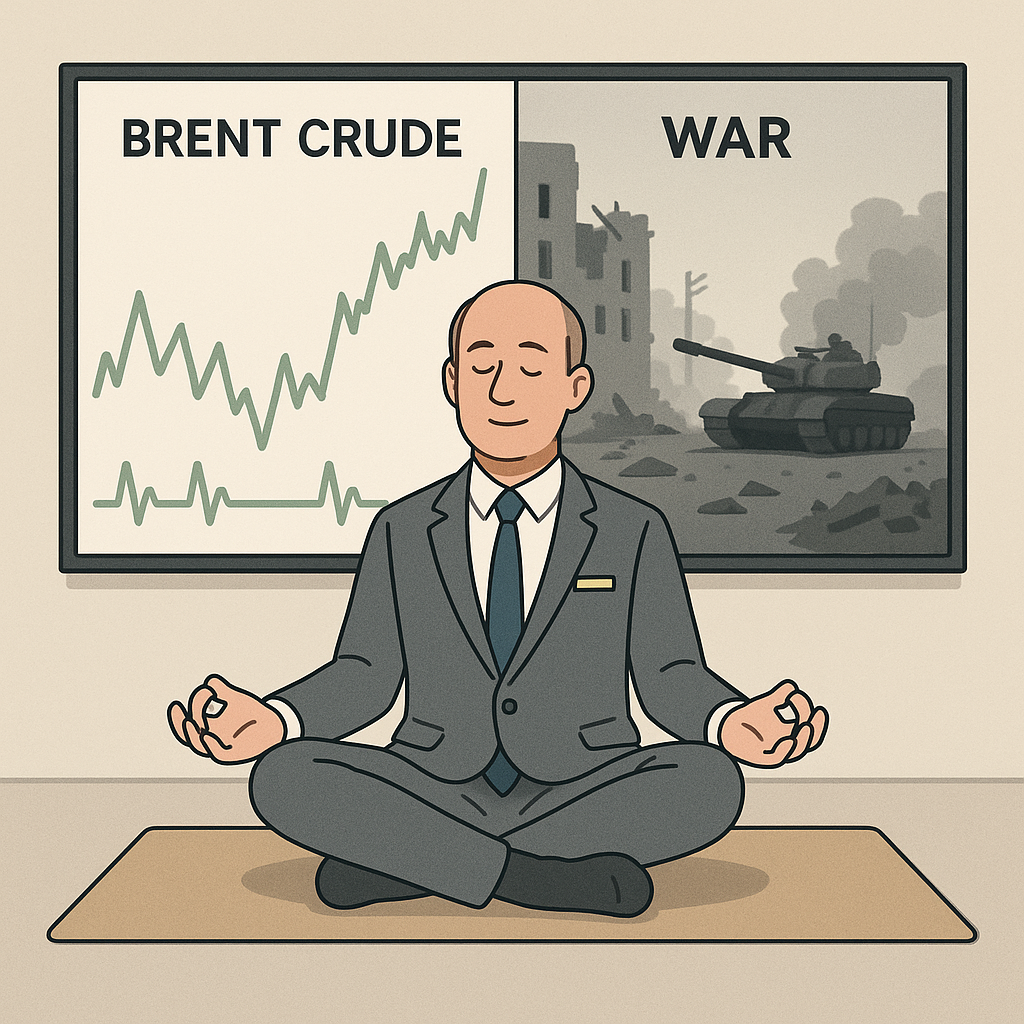
For now, investors appear confident that any broader war will respect earnings calendars.
“History shows that markets tend to look through geopolitical shocks,” said a strategist. “We believe any closure of the Strait of Hormuz will be temporary, well telegraphed, and scheduled outside of major tech IPO windows.”
In the meantime, the U.S. and Iran will continue their tit-for-tat strikes, Gulf states will remain both partners and targets, and the Strait of Hormuz will oscillate between chokepoint and coupon. Brent will spike, then drop, then spike again. Central banks will mention “uncertainty” in paragraph seven.
And if the confrontation finally spills into a full regional war that drags in Gulf monarchies, reshapes energy routes, and forces a genuine re-rating of risk assets, analysts say markets are prepared to respond decisively.
They will simply blame it on weak AI sentiment.