By 2027, OpenAI Will Skip IPO And Take Bailout-Style Capital
My call: By 2027, OpenAI skips the IPO and takes a dependency‑deepening rescue deal instead.
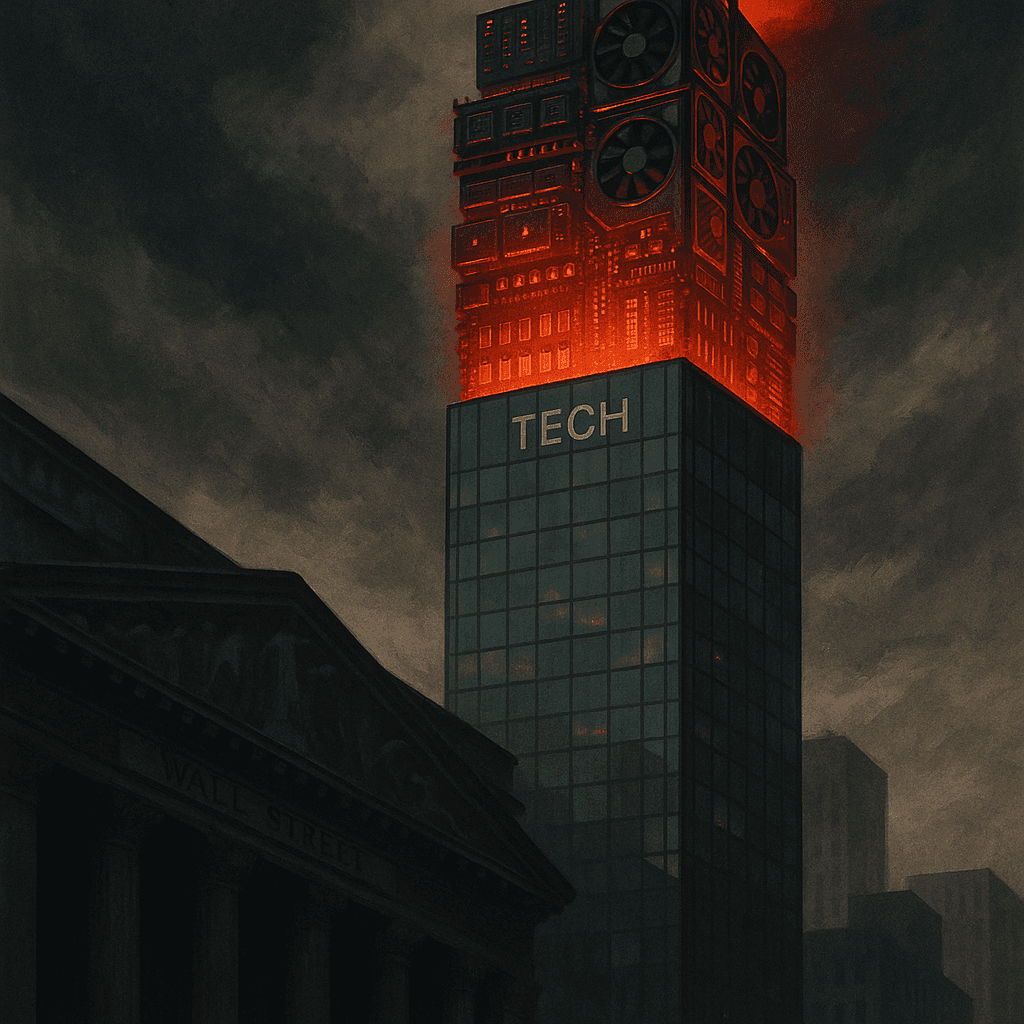
My call: No OpenAI IPO by 2027, bailout terms instead
The consensus has OpenAI as the inevitable AI blue chip. Greg Brockman takes the victory lap, the bell rings, and your pension fund buys the dip on day three.
The signal points somewhere uglier. By the end of 2027, I expect OpenAI will not be public. Instead, it will take a big, dependency‑deepening capital deal: a recap or control sale framed as "stabilizing long‑term AI investment" and more quietly explained as "we ran headfirst into the memory bill."
In other words, no Nasdaq moment. More of a structured cuddle with Microsoft or a government‑flavored consortium that looks a lot like a bailout, whether or not the press release uses the B‑word.
The RAM wall arrives before the roadshow
OpenAI is not being crushed by lack of demand. It is being crushed by the cost of supplying it in a world that has discovered HBM religion just as the semiconductor gods decided capacity expansion would be a slow, multi‑year sacrament.
The basic math today: OpenAI reportedly lost around $5 billion on $3.7 billion in revenue last year, and the next number being whispered is a $14 billion loss. That is not early‑stage software burn. That is what happens when every marginal user drags a chunk of SK hynix and Nvidia through the cloud with them.
The supply side is not bending to the narrative. High‑bandwidth memory comes from a tight club: SK hynix, Samsung, Micron, with flash and storage players like Kioxia keeping the rest of the stack interesting. Everyone is promising more capacity. Everyone is also telling you it takes years, not quarters, to show up in volume, and they have to decide whether those bits go into AI data centers or the next generation of phones and laptops.
Then layer on Washington and Beijing. Export controls, CHIPS subsidies, quiet arm‑twisting over where fabs get built and who they serve first. The polite version is industrial policy. The honest version is that OpenAI's cost base is trapped in a geopolitical group project.
None of this is fatal if your unit economics work. The issue for OpenAI is that, right now, scale makes the losses larger, not smaller. Each new product tier, each bigger model, is basically an HBM stimulus program.
Anthropic goes first, and may eat the fantasy
OpenAI has one problem it did not used to have: a direct public comp.
Anthropic has sprinted into the IPO window. It is marketing itself as the grown‑up frontier lab: strong revenue growth, eye‑popping reported gross margins before partner rev share and training costs, and bankers whispering about a $2 trillion valuation on Nasdaq. Two profitable quarters, clean story, safety halo, pick your favorite talking point.
If that IPO soars, the optimistic take is that public markets will happily fund loss‑making labs so long as they come with enough narrative. The more realistic take is that Anthropic will soak up a lot of the "pure lab" exposure institutions want, set an aggressive but finite multiple, and force everyone to actually do the math on infrastructure cost curves.
OpenAI then walks in with deeper losses, heavier dependence on a single cloud partner, and a RAMageddon timeline that still looks tight through 2027. It will be priced not as "the next Nvidia" but as "Anthropic, but with worse margins and more governance questions."
That is not the roadshow Brockman appears to be optimizing for.
The three clocks that will not stay in sync
The next 24 to 36 months are basically a race between three clocks.
First, the cash‑burn clock. Multi‑billion‑dollar annual losses and multi‑billion‑dollar GPU and HBM commitments are cute only as long as private capital believes in infinite markups. If the rumored loss curve keeps pointing up as revenue explodes, later‑stage growth funds start quietly backing away, and even Microsoft has to think about how much more of its balance sheet it wants to disguise as "credits."
Second, the capacity clock. Memory expansion plans from SK hynix, Samsung, and Micron are measured in years. Policy fights over who gets that capacity stretch the timeline further. Device makers like Apple already move the entire DRAM market when they sneeze. AI data centers do not get to skip that line just because their founders talk about AGI on podcasts.
Third, the market clock. AI equity is frothy, but it is still equity. Nvidia and AMD can reprice in a quarter if expectations wobble. If Anthropic stumbles post‑IPO or frontier safety drama spooks regulators, investors can go from "AI at any price" to "call me when you have free cash flow" very fast.
OpenAI needs all three clocks to cooperate. Costs need to ease or at least plateau, burn needs to look directionally sane, and public markets need to still be in a mood to pay platform multiples for infrastructure‑heavy cash furnaces.
I do not see that trifecta holding all the way to a clean 2025 or 2026 listing.
Why a bailout beats a bell
When the math and the optics collide, the path of least resistance is not a heroic IPO. It is a quiet surrender of independence dressed up as "strategic alignment."
Picture late 2025 or 2026. RAMageddon has not really broken. OpenAI's top line is enormous, but so is the infra bill. Anthropic is public and trading like a very expensive, very real cost benchmark. Safety protests and "AI could kill all humans" hearings have added a regulatory tax on anything that looks like frontier experimentation.
Bankers sit with OpenAI and explain the options. Either accept a valuation that makes the whole AGI platform narrative look overhyped, while airing your losses in public, or get more capital from someone who does not care about near‑term GAAP optics.
That someone is almost certainly a strategic: Microsoft, maybe joined by other hyperscalers or a government‑adjacent vehicle built for exactly this purpose. The price of that money is control, or something very close to it. Board seats, vetoes, liquidation preferences, and language about "ensuring stable funding for long‑term AI infrastructure" that every reporter on earth will translate as "bailout."
There are cleaner stories available, but they require too many miracles at once: a sharp efficiency breakthrough that slashes HBM intensity, a rapid easing of memory prices, and capital markets that stay very high even after they finally see the true P&L of a frontier lab.
My bet is simpler. OpenAI chooses not to test that three‑miracle theory on live television and lets a handful of very large checkbooks quietly buy the steering wheel instead.
Scorecard: what would prove this wrong
To falsify this call, two things have to be true by December 31, 2027:
- OpenAI completes an IPO or direct listing on a major U.S. exchange, and
- It has not, beforehand, entered a transaction where a new strategic or bloc gains actual control or where the deal is credibly described as a funding‑stress‑driven restructuring or bailout.
Watch for three types of signal: real financial disclosures or leaks on losses and margins, concrete IPO prep like confidential filings and underwriter mandates, and any giant check from a strategic that arrives with extra governance bells attached.
If, instead, we get one monumental recap framed as "securing the resources to build safe AGI," go ahead and ring something. It just will not be at the Nasdaq.
The satirical close
OpenAI was founded to build an aligned superintelligence that faithfully follows human intent. On the current trajectory, it is more likely to build an aligned capitalization table that faithfully follows Microsoft’s.
Around the Shallot
Stay in the same broken universe.
Forecasts, satire, cartoons, and quizzes should feel like one publication, not disconnected tabs.
Tech
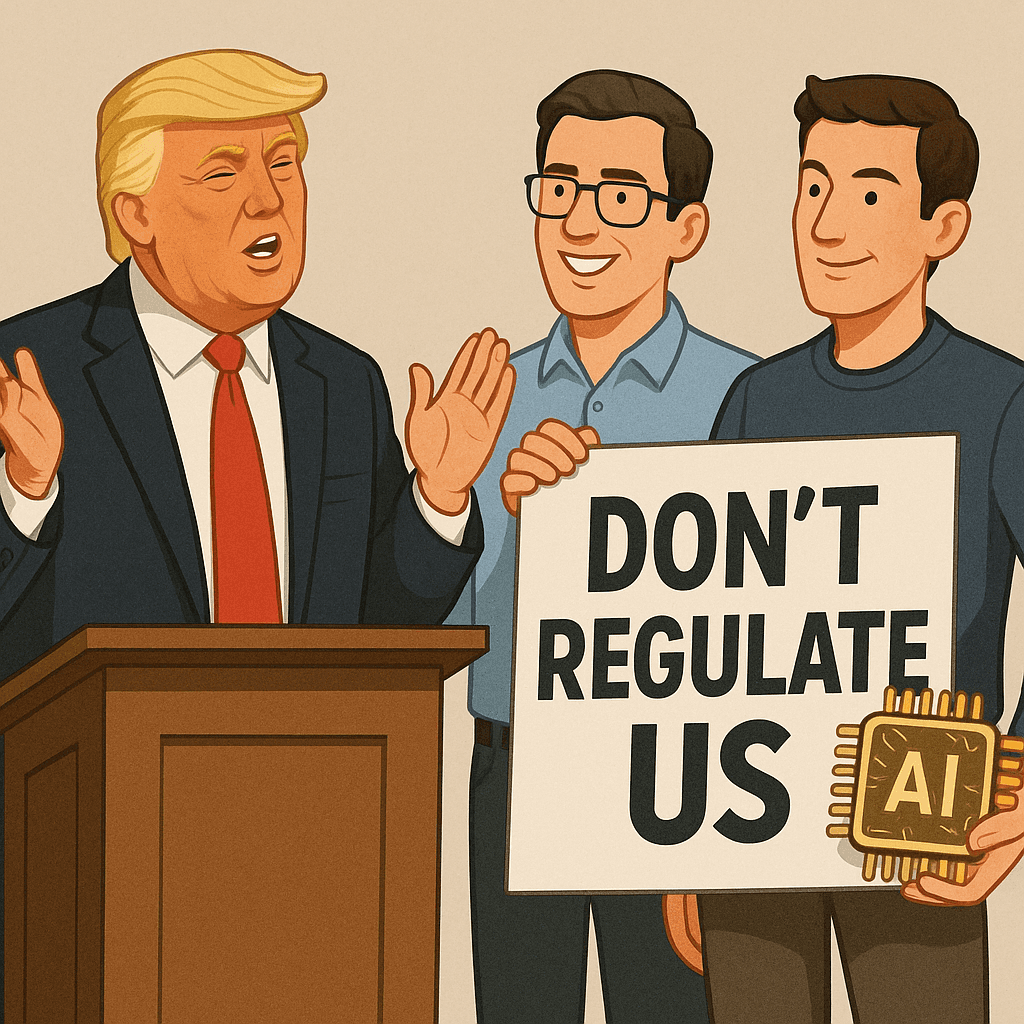
‘Don’t Regulate Us,’ Beg AI Founders Currently Selling Regulation-As-a-Service
Silicon Valley hails Trump’s plan to let AI companies write their own rules, promises to sell those rules back to everyone else by Q4.
Oct 11
Forecast
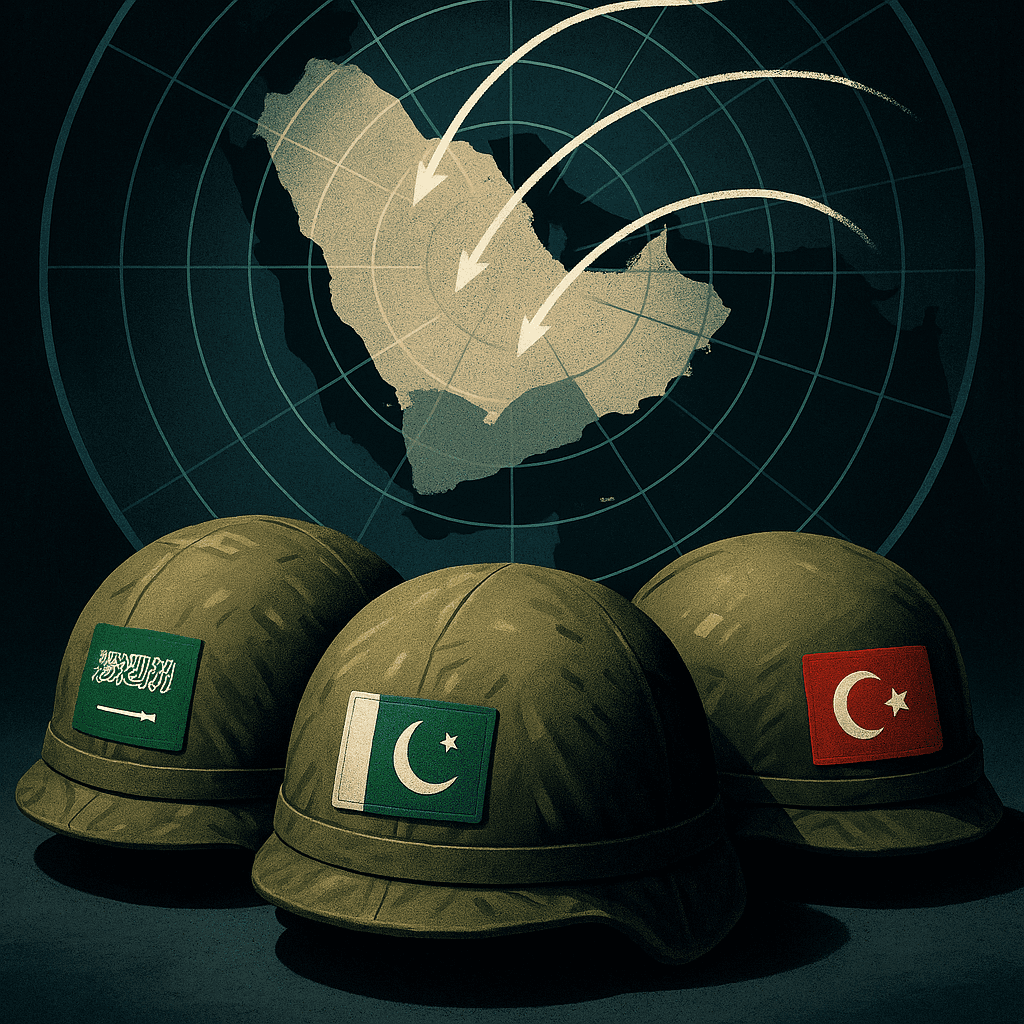
Through December 10, Houthis Won’t Damage Pakistan or Turkey Infrastructure
The Mecca Defense Pact just put two more flags on the Saudi firing chart. The consensus panic says this widens the war within weeks. The signal says the Houthis will talk big, hit Saudi and the sea, and leave Pakistan and Turkey’s hard targets alone for this 60 day window.
Comments
Be the first to comment.