By 2027, Samsung DS Will Profit Mostly From AI Data Centers
By Samsung’s 2027 results, AI data‑center chips, not mobile, will be the DS division’s main profit engine.
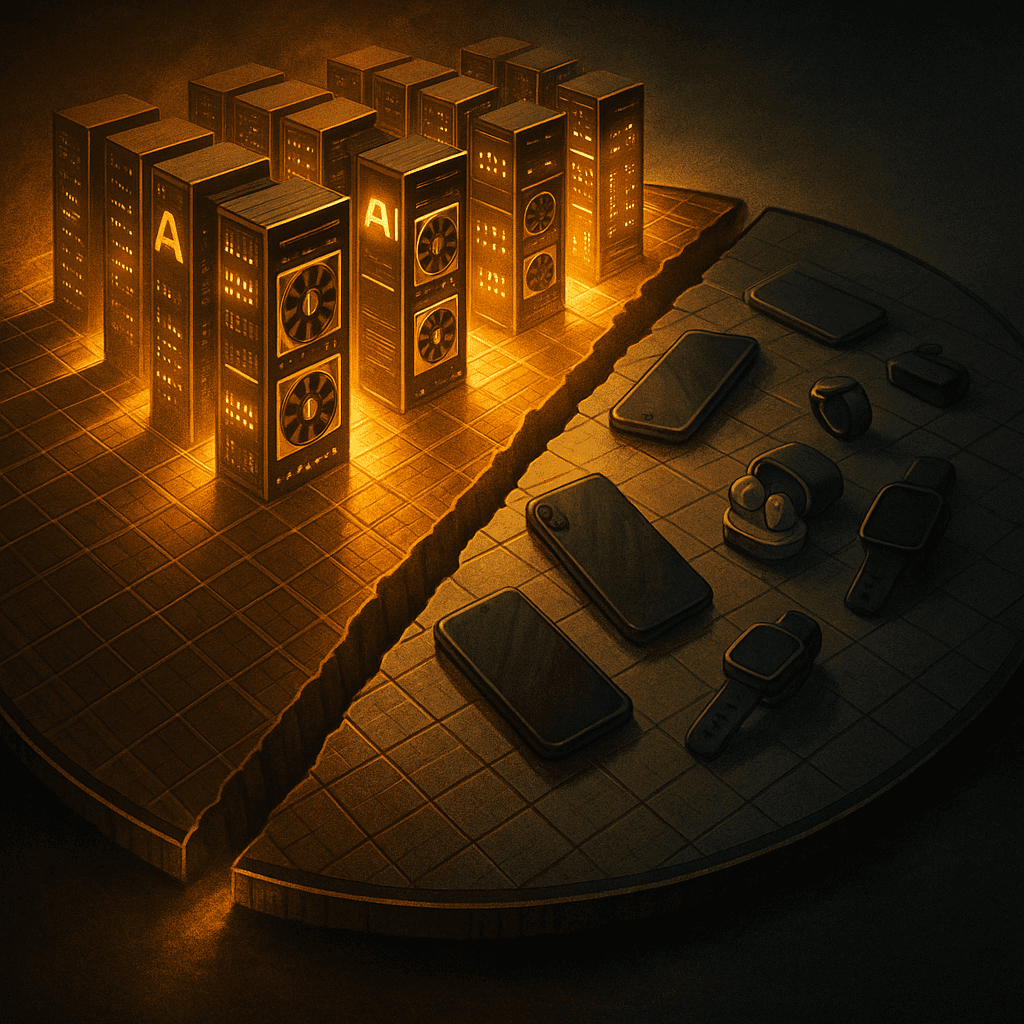
When Samsung prints its full-year 2027 results, more than half of its semiconductor operating profit will come from AI data‑center products, not from phones, PCs, or any other consumer toys you can drop in a toilet.
If that sounds obvious to you, check the debate in Seoul. Half the analyst community still talks about this as a spicy DRAM cycle that will cool by 2027, at which point the noble smartphone returns to reclaim its throne. The other half thinks we are watching Samsung mutate into an AI infrastructure tollbooth that quietly charges rent on every hallucinating chatbot in the G20.
The numbers say the mutation is already under way, and the tail is about to start wagging the phone.
The House That HBM Built
Start with what just happened. In Q2 2026, Samsung’s Device Solutions (DS) division printed around ₩89.2 trillion in operating profit on ₩127.5 trillion in revenue. Roughly 70% operating margin. Higher than Nvidia. Higher than Samsung itself thought polite.
That was not powered by Galaxy upgrades or bargain SSDs. It was powered by AI data‑center memory, especially HBM strapped to Nvidia and AMD accelerators and server DRAM feeding cloud-scale AI clusters.
HBM is not normal DRAM with a marketing budget. It is a structurally different business:
- Two-and-a-half suppliers: Samsung and SK hynix control around 90% of HBM supply, with Micron as the distant third.
- Long qualification: Hyperscalers and GPU vendors spend months signing off each HBM stack and packaging combo. Swap vendors and you risk breaking an entire AI accelerator generation.
- Vendor lock-in: Once Samsung’s HBM4 is glued to your GPU, you do not casually switch to a cheaper chip next quarter.
Result: less commodity, more cartel-adjacent. That is why DS margins exploded while classic logic exports from Korea actually fell. Memory, not fancy processors, is the AI war profiteer of 2026.
The Two-Front AI War Paying Samsung’s Bills
Look at where the chips are going. In the first half of 2026, Samsung shipped about ₩88.6 trillion of semiconductors to China and ₩70.6 trillion to the US. Both more than doubled year on year.
America is mostly getting high-value AI memory, wired into Nvidia and AMD gear for the hyperscalers. China is getting a mix of mobile and AI memory, but the growth spike is very clearly AI-related too. Beijing and Washington are building rival AI data‑center continents, and they are both wiring cheques to Suwon.
On the supply side, Samsung’s DRAM market share is back up around 39%, the top spot again. More important, HBM is where it is racing the hardest. UBS expects Samsung to grab about 41% of HBM bit shipments by 2027, overtaking SK hynix. Its HBM4 “golden yield” just cleared 80% four months ahead of schedule. You do not push yields that aggressively if you are preparing for a gentle downcycle and a return to phone RAM as the hero product.
The Consensus Crutch: "It’s Just a Cycle"
The conservative house view, especially from brokers like Kiwoom Securities, is familiar: DRAM has always cycled, and the current spike in profits will peak before 2027. On this reading, DS is in a late-stage boom. A few more quarters, then oversupply, then mobile and consumer segments shuffle back onstage to reclaim profit leadership in the next upgrade wave.
That frame has two problems.
First, the cycle is constrained. Packaging complexity, TSV-heavy HBM stacks, and long equipment lead times are choking how fast capacity can appear. Korea Investment & Securities and others are now modelling a memory shortage that lasts into 2028. Micron’s HBM is sold out through 2026. This is not a classic "everyone builds fabs and prays" pattern.
Second, the demand side is institutionalised. Hyperscaler AI budgets look less like a fad and more like a line item that CFOs have accepted, grudgingly, as infrastructure. US clouds, Chinese internet giants, sovereign AI projects, defense, even FPGA testers around HBM equipment are pulling in the same direction. When FPGAs for HBM test rigs are booming in Korea, the wave is not confined to one SKU.
Could hyperscalers squeeze prices? They will try. But they are negotiating with a tiny, capacity-constrained supplier set while racing each other to launch ever-larger models. Cost pressure is real, existential panic about supply is more real. That rarely ends with suppliers donating their margin.
Why Mobile Will Not Reclaim the Throne
None of this means phones die. They just stop being the hero of the income statement.
By 2027, it is very plausible that we see a decent rebound in mobile DRAM, NAND, and consumer ICs. China’s handset cycle could perk up. AI PCs need more memory. On-device AI could fatten average DRAM content per phone.
The problem for Team Mobile is profit density. Each HBM stack inside an AI GPU carries far more gross margin than a handful of LPDDR chips in a handset, and DS’s current 70%-ish margins are overwhelmingly tied to AI memory, not to midrange phones in Shenzhen malls.
Even if mobile units snap back hard, margins there normalize around the mid-teens or below. AI data‑center memory will not stay at 70% forever, but with constrained supply and a non-commoditized product, it does not need to. A structurally higher margin and a structurally higher dollar content per system are enough to keep AI over 50% of profit even if mobile carries a larger share of volume.
To flip the mix back, you need some combination of: a deep AI capex stall, a full-blown HBM oversupply, brutal price concessions, and a surprise mobile super-cycle. That is a lot of dice that all have to land the same way in the next 18 months.
The Real Risks to the Call
There are real failure modes for this forecast.
Export controls are first in line. If the US decides that high-bandwidth memory is now a strategic weapon and extends GPU-style bans to HBM and server DRAM, Samsung’s China AI exports get kneecapped. A sweeping, sudden rule change could chop out one of the two big AI demand pillars.
Self-inflicted oversupply is the other obvious risk. Samsung is racing SK hynix for HBM leadership, and history says memory players eventually overbuild. If DS floods the market just as AI capex growth decelerates, hyperscalers will remember they know how to negotiate.
Finally, accounting fog could ruin the scoring fun. Samsung might recut its segment disclosures so that AI server DRAM and mobile DRAM are joined in one big pot, making a clean 50% attribution guesswork.
On the probability scale, though, these look like ways to shave AI’s profit share or complicate measurement, not the base case that hands the crown back to handsets.
What To Watch While Everyone Argues About Dividends
If you want a cheat sheet for whether this forecast is on track, track what Samsung and its customers actually do, not just what Korean retail traders yell on message boards.
Signals that this call is winning:
Samsung leans even harder into HBM and server DRAM capex. HBM4 and HBM4E roadmaps keep sliding left, not right, and yields stay high. US and Chinese hyperscalers keep AI capex levels fat through their 2027 guidance. Memory contract prices for HBM and server DRAM stay elevated relative to LPDDR and NAND, even if spot quotes wobble.
Signals that this is wrong:
HBM contract prices crack well before 2027 while mobile DRAM and NAND pricing suddenly look euphoric. The US slams the door on advanced memory exports to Chinese AI infrastructure, and Samsung cannot redirect those bits profitably. Or Samsung itself starts talking about "balanced growth across consumer and AI" which is corporate for "the party is over."
The Satirical Close: Whose Upgrade Cycle Is It Anyway?
For a decade, investors treated Samsung as a geared bet on whether you dropped your phone in the toilet this year. That era is ending.
By the time full-year 2027 numbers hit, the scoreboard should be clear: more than half of DS profit will be coming from AI data‑center products, not from your next TikTok machine. The world’s largest memory maker will have quietly stopped being a consumer story and started being a subsidy on the global AI arms race.
So if you are still modelling Samsung on smartphone replacement cycles, enjoy it while it lasts. In this company’s profit civil war, the phones are about to discover they have been demoted to the merch table at an AI stadium tour.
Around the Shallot
Stay in the same broken universe.
Forecasts, satire, cartoons, and quizzes should feel like one publication, not disconnected tabs.
Tech
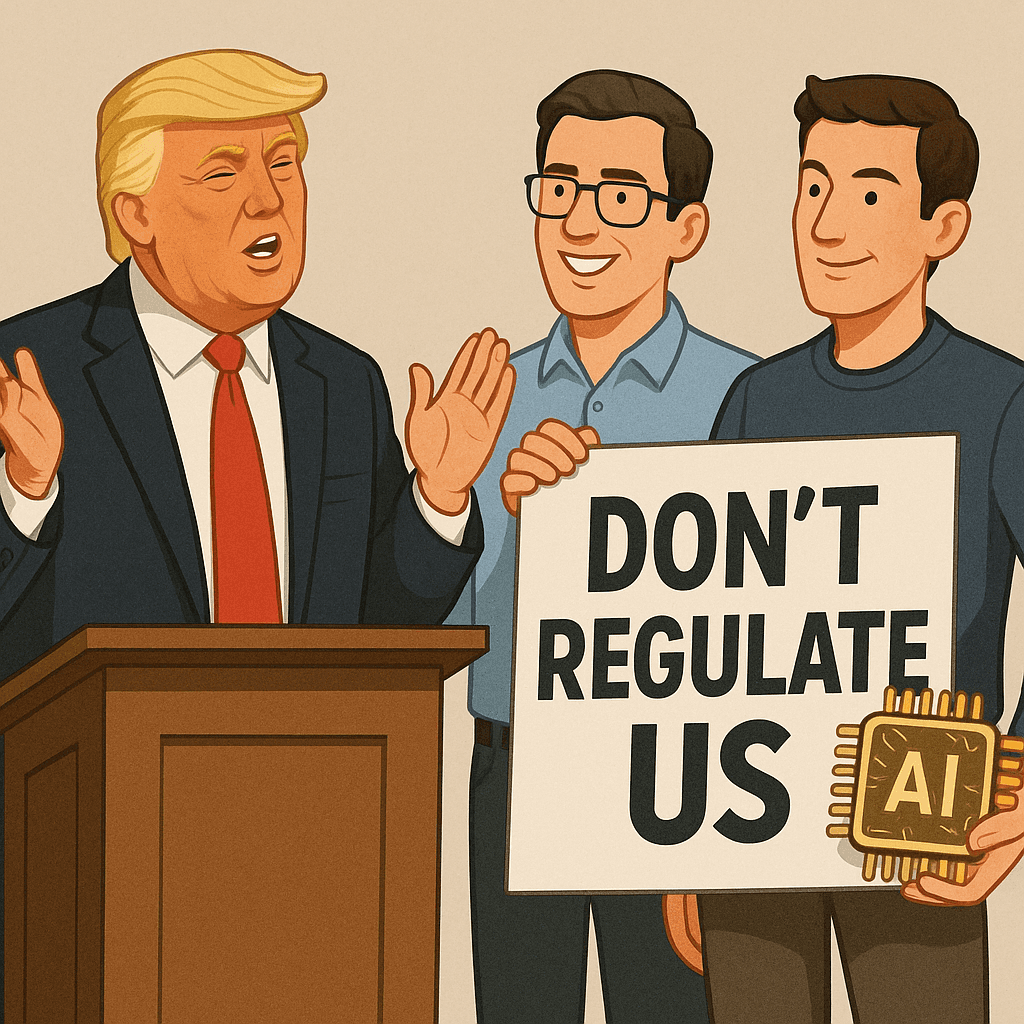
‘Don’t Regulate Us,’ Beg AI Founders Currently Selling Regulation-As-a-Service
Silicon Valley hails Trump’s plan to let AI companies write their own rules, promises to sell those rules back to everyone else by Q4.
Oct 11

Forecast
Through December 10, Houthis Won’t Damage Pakistan or Turkey Infrastructure
The Mecca Defense Pact just put two more flags on the Saudi firing chart. The consensus panic says this widens the war within weeks. The signal says the Houthis will talk big, hit Saudi and the sea, and leave Pakistan and Turkey’s hard targets alone for this 60 day window.
Comments
Be the first to comment.