By Early 2027, China Will Slash Iranian Oil Imports Below 400k bpd
My call: China lets Iranian barrels shrink to a sideshow rather than risk a dollar gun to its head.
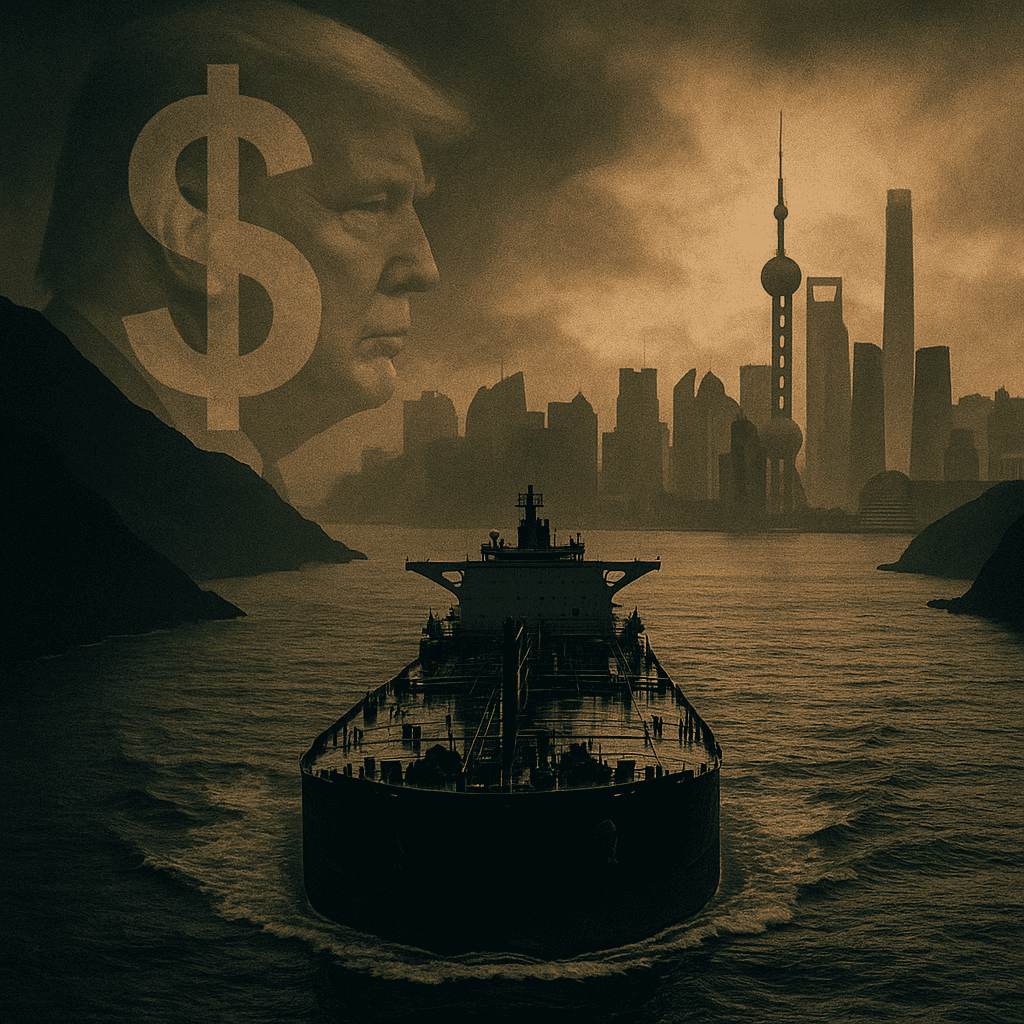
My call: Trump’s Economic D-Day will work just enough. By early 2027, China’s Iranian oil imports will be cut to under 400,000 barrels a day, well below the 2025 glut and lower than today’s war-strained flows.
The Consensus: China Will Just Shrug
The comfortable story goes like this: Trump can hurl all the executive orders he wants, China will just keep slurping up Iranian crude and route the payments through some obscure bank with a fax machine for a compliance department.
The signal says otherwise. China has already chopped Iranian imports by more than half from the 2025 high of roughly 1.4 million barrels per day to closer to 500,000 to 700,000. That is before the Economic D-Day machinery really spins up and while Iran is still trying to move oil through a semi-functional war zone.
If Beijing truly thought Washington was bluffing, those barrels would not have fallen this far already. They did. That is your first tell.
The Call: Below 400,000 Barrels a Day by Q1 2027
Here is the scorable bet.
By March 31, 2027, tracked Chinese imports of Iranian crude will average under 400,000 barrels per day over the prior three months, January through March. That is a real, durable cut from both the pre-war baseline and current levels.
The resolution axis is boring on purpose. We will use mainstream tanker-tracking outfits, the Kplers and Vortexas of the world, which already publish monthly estimates of Iranian shipments into China. If they say the average is under 400,000 barrels a day, this forecast lands. If they show a plateau near today’s numbers, the consensus keeps its comfort object and I eat the crow.
The Drivers: Dollar Fear Beats Barrel FOMO
This is not a morality play. It is a spreadsheet problem in Beijing and an election problem in Washington.
1. The Trump team finally picked a choke point and it is not Tehran. Economic D-Day is less about Iran’s economy and more about turning every intermediary into a hostage. New secondary sanctions now sweep up shipping, aviation, digital assets, gold, and the wider tech stack that moves and monetizes oil. Treasury says it has mapped the ships, fronts, and financial pipes. The next move is not another IRGC cousin. It is the foreign outfits that "turn Iranian oil into money." Translation: Chinese traders and their banks are on deck.
2. China’s addiction is real, but the dose is smaller than advertised. When you read that China buys more than 80 percent of Iran’s shipped crude, it sounds like Beijing relies on Iran. Flip it. Iran relies on China. For China, those barrels are a modest share of total imports, and analysts point out that even a complete halt would not crash Chinese energy security in the near term because inventories are high and Russia plus the Gulf still need to sell.
3. The war and the navy are doing quiet sanctions work. A de facto US naval blockade near the Strait of Hormuz has already throttled Iran’s ability to move oil. Ship-tracking data and official spin do not agree on exact volumes, but everyone agrees on the direction: down. Even if China wanted to keep buying at 2025 levels, Iran cannot ship that much cleanly, cheaply, and on time. Every extra workaround tanker is another compliance red flag for Treasury to circle in red.
4. Beijing will pay a premium to protect its banks. Trump’s Treasury has so far stopped short of sanctioning big Chinese banks. That restraint is not a permanent feature. The whole "no one is above the reach of US sanctions" speech was written for this moment. Beijing’s nightmare scenario is waking up to find a flagship state bank tagged as a primary sanctions risk and suddenly radioactive in the dollar system. If trimming Iranian crude from, say, 600,000 barrels a day to 300,000 keeps that scenario hypothetical, the Politburo can live with slightly higher import costs.
5. Shadow tricks help, but not enough to keep the total steady. Of course some Iranian barrels will keep sneaking in as "Malaysian" or "unknown" through a darker fleet and a more creative paperwork industry. But laundering crude adds friction, insurance headaches, and political heat inside China’s own bureaucracy. You do not build a national energy strategy around ships that turn their transponders off next to suspiciously friendly coastlines. Beijing will use the shadows to soften the cut, not to negate it.
The Pushback: Why The Consensus Still Feels Safe
The main objection is simple: Washington has talked tough about sanctioning Chinese banks for a decade and always pulled the punch. Why should 2027 be different?
Two reasons. First, Trump just re-branded his Iran policy as an "economic onslaught" and "final warning" in an election cycle that needs visible wins. Backing off China after that is not just policy retreat, it is meme material. Second, the starting point is weaker. China is already taking less Iranian crude than in 2025, which means every additional barrel cut buys more leverage for less economic pain.
The other objection: what if global oil goes tight and the White House decides it needs every sanctioned barrel it can get? That is the biggest risk to this call. A major Russian outage or Gulf disruption could force Trump to quietly ease off enforcement so prices do not smash the US consumer. If Brent is screaming at $130, the spreadsheet in Beijing looks different.
Still, the war with Iran itself is a big part of what keeps the market tight. It also keeps Iran’s export routes messy and risky. That combination makes a clean, open defiance of US sanctions less attractive for Chinese refiners, even if the price discount on Iranian oil fattens their margins.
Stakes: Who Actually Loses If I Am Right
If Chinese imports of Iranian crude drift under 400,000 barrels per day by early 2027, three losers stand out.
Iran loses cash and leverage. Its last big buyer turns into a cautious friend that will take fewer barrels on worse terms and mostly through channels that can be switched off from Beijing’s side.
China’s teapot refiners lose their favorite gray-market discount. They will still buy odd lots of dubious origin, but the golden age of easy Iranian arbitrage gives way to more paperwork, higher risk premia, and a Treasury intern who knows their names.
The sanctions-are-fake crowd loses a talking point. If the numbers print where I expect them, Economic D-Day will not have "failed." It will have quietly pushed the world’s second-largest economy to adjust its supply mix to avoid a financial brawl it does not want yet.
India and Turkey, for their part, will mostly hover at the margins, dabbling when prices spike and retreating when Treasury calls. They are supporting actors in a China-centric sanctions drama. Their real job is to demonstrate to Beijing that alternatives exist, but none are worth blowing up your banking system over.
The Satirical Close: D-Day As Directed Energy
Economic D-Day will not "sever every economic lifeline" to Tehran, whatever the podium scripts say. It will do something subtler and nastier. It will make Chinese planners open a quiet Excel tab labeled "How much Iran is this really worth?" and then start deleting rows.
If I am right, by early 2027 Iranian crude in China will look less like a strategic pillar and more like a tolerated side hustle, carefully sized so no big Chinese bank has to explain to the Federal Reserve why it still has a dollar account.
In other words, Trump will not shut down Asian demand for Iranian oil. He will achieve something much more on brand: he will turn it into a fire hazard that everyone pretends is a scented candle.
Around the Shallot
Stay in the same broken universe.
Forecasts, satire, cartoons, and quizzes should feel like one publication, not disconnected tabs.
Tech
‘Don’t Regulate Us,’ Beg AI Founders Currently Selling Regulation-As-a-Service
Silicon Valley hails Trump’s plan to let AI companies write their own rules, promises to sell those rules back to everyone else by Q4.
Oct 11
Forecast
Through December 10, Houthis Won’t Damage Pakistan or Turkey Infrastructure
The Mecca Defense Pact just put two more flags on the Saudi firing chart. The consensus panic says this widens the war within weeks. The signal says the Houthis will talk big, hit Saudi and the sea, and leave Pakistan and Turkey’s hard targets alone for this 60 day window.
Comments
Be the first to comment.