One Grand Slam Will Ban Influencer Credential Categories By 2027
At least one major will explicitly write influencers out of its passes.
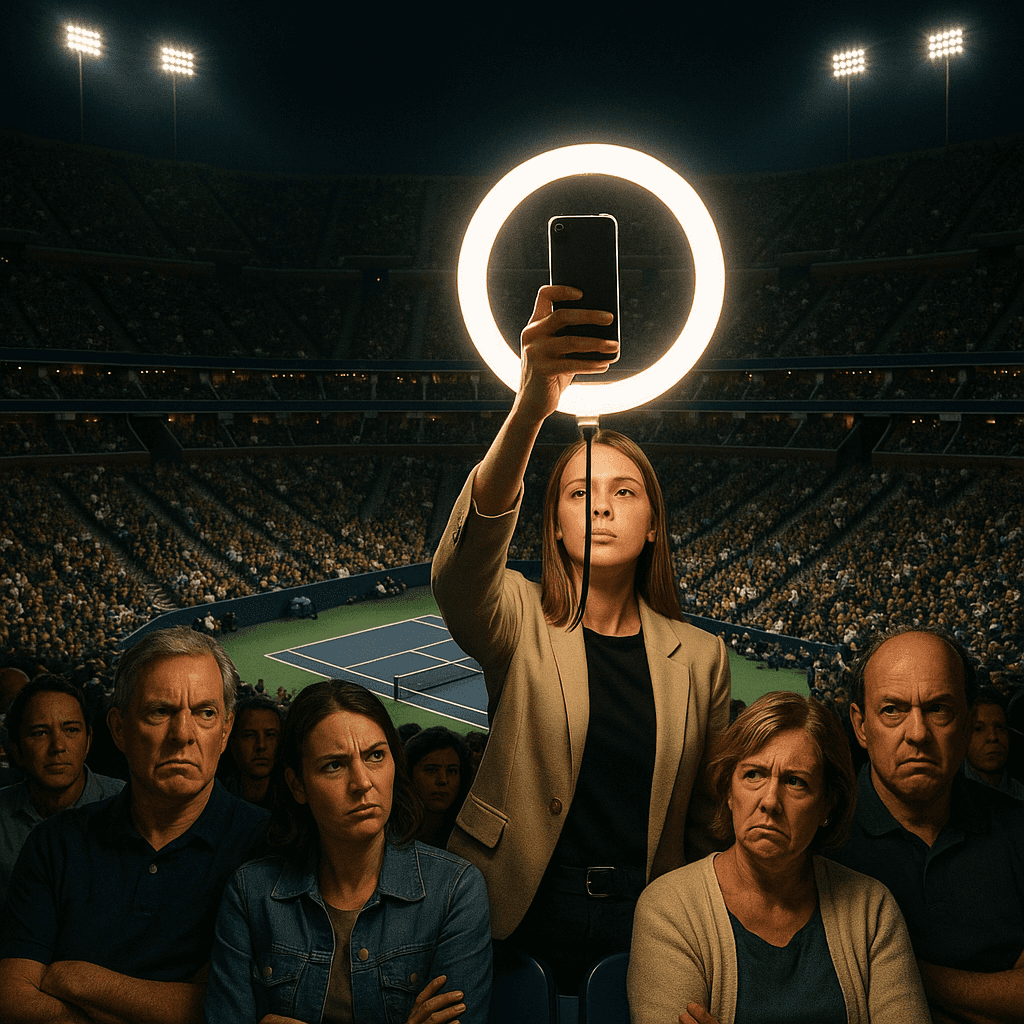
This year’s US Open turned into a live tutorial in why you do not seat ring lights in row three. Content creators stood up mid rally, staged mini photo shoots, and lit court level seats like a Sephora tutorial. What started as a push for TikTok reach ended up looking like a sponsored pop up in the middle of a tiebreak.
The early consensus says tournaments will quietly tighten rules, invent some tiered digital pass, and keep the influencer tap open because reach is oxygen and Gen Z will not watch three hours of baseline grinding without a TikTok in it. The safer bet, in this view, is softer language and firmer ushers.
I think at least one Grand Slam will go further. It will not just de emphasize influencer passes or hide them behind new labels. It will put in writing that influencer or creator specific credentials are not a category it offers anymore.
Scorable version: by January 31, 2027, at least one of the four majors publishes a public credential policy that explicitly prohibits influencer or creator branded passes as a category. No euphemistic rebrand, no silent ghosting. Actual words. No influencer credentials here.
The ring light revolt
You know you have a problem when local TV in Indiana is covering it. CBS4 and FOX59 ran pieces on US Open spectators hauling in lights and camera rigs, disrupting multiple matches. Clips and photos ricocheted around social feeds: spectators treated the stadium like a studio, complete with tripods and bright LEDs during play.
Fan comments were not subtle. People called for automatic bans on disruptive influencers and complained that the Open is no longer meant for tennis fans. The tone was less cranky traditionalist and more paying customer who just had their once a year splurge turned into B roll for someone else’s brand.
Within a beat, Wimbledon surfaced in coverage as tennis’s designated adult. Local segments ran graphics that boiled it down to a simple message from London: no influencer specific credentials after watching New York melt down. It was the sport’s most conservative major sending a transatlantic subtweet: that circus is not coming here.
Why at least one Slam will go explicit
This is not just about etiquette. It is about a sport in a post celebrity hangover trying to decide what it is selling.
The drivers lining up for a written, named ban at one Slam look like this.
1. Influencers are now a distinct, televised problem. The coverage did the categorization for organizers. These were not generic rude fans. They were influencers with gear and commercial intent. That gives tournaments political cover to write a specific line: we do not accredit that category.
2. Wimbledon already drew the outline. Once the Championships are publicly framed as not offering influencer specific credentials, you are two comms edits away from that sentence appearing in the actual accreditation guide. Wimbledon likes explicit tradition. Putting words on paper is a feature, not a risk.
3. Tennis’s product is silence, not spectacle. Basketball can survive vloggers courtside, it was never pretending to be quiet. Tennis sells a hushed, rules heavy ritual that television cameras are built around. The ring light aesthetic is not just annoying, it breaks the core illusion the broadcast lives on.
4. Sponsors want reach, not riots. Brands like the social bump of creator content, but none of them wants their logo sitting next to a viral clip of a match halted while security removes a TikTok shoot from the third row. It is cheaper to funnel creators into sponsor content days and off court zones than to keep betting the stadium will self police.
5. Fans are giving tournaments permission to be villains. The comment sections are not screaming censorship. They are begging for crackdowns. That lets organizers take a strong public line against influencer passes while posing as defenders of the true fan. When your customers hand you a moral high ground costume, you usually try it on.
Why the other Slams will stall and rename instead
So why only one Slam in this forecast, not all four? Because money talks, and in Melbourne, Paris, and New York it tends to speak fluent digital.
The US Open and Australian Open have been the most aggressive in chasing a festival vibe. Night sessions, celebrity boxes, on site brand activations. They have an appetite for creator energy, as long as it is house trained. The French Open exists in its own slightly moody universe and likes to be modern without looking like it is trying.
These are the places that will experiment with the compromise model: no more loose influencer badges, but lots of digital partner or social media passes under sponsor umbrellas. Creators will have codes of conduct, designated filming zones, and more security lectures than a VIP lounge deserves. The word influencer will quietly vanish from the paperwork, but the bodies will still be in the building.
There are also boring legal reasons not to write the word influencer in a ban. What is an influencer, exactly? A YouTuber with a million subs, a tennis blogger on Substack, a grad student with a podcast and a ring light? Once you single out a class that is hard to define, you invite arguments you do not need.
Which is why the likeliest outcome is a split system. Three majors solve the problem with vocabulary games and behavior rules. One leans into the symbolism and prints the heresy in black and white.
Where to watch the policy move from vibes to PDF
If you want to know which Slam is about to call time on influencer passes, do not stare at TikTok. Read the fine print.
The key tells over the next two years:
- Wimbledon’s 2025 and 2026 media guides: do they explicitly say credentials are for news and editorial organizations only, or directly mark influencers and creators as ineligible?
- US Open post mortems: does the USTA talk about influencer categories, or just equipment and security? The more generic the language, the more likely they are headed for a renamed, managed creator tier.
- New clauses in ticket terms: look for distinctions between personal and commercial content creation. If a Slam starts citing influencers or creators by name there, it is rehearsing language for the credential rules.
The failure case for this forecast is not actually that tournaments fall back in love with ring lights. It is that lawyers and comms teams scrub the word influencer from everything, preferring to kill passes quietly through stricter criteria and back channel denials.
In that universe, creators still get in, but mostly as sponsor plus ones and digital media staffers. The chaos goes down, the broadcast looks cleaner, and the policy makes no satisfying, quotable stand. Good for tennis, terrible for columnists.
The satirical verdict
Tennis wanted to replace the Williams Federer Nadal era by inviting the internet to sit courtside. The internet brought its own lighting.
By early 2027, at least one Grand Slam will snap, put the word influencer into the rulebook next to a big red no, and sell it as a brave act of fan protection. Creators will still be there, just in carefully branded pens and VIP suites, filming the same content from 20 rows higher.
Tradition will declare victory, influencers will declare a shadow ban, and somewhere a tournament director will quietly Google how to say no ring lights in Gen Z.
Around the Shallot
Stay in the same broken universe.
Forecasts, satire, cartoons, and quizzes should feel like one publication, not disconnected tabs.
Tech
‘Don’t Regulate Us,’ Beg AI Founders Currently Selling Regulation-As-a-Service
Silicon Valley hails Trump’s plan to let AI companies write their own rules, promises to sell those rules back to everyone else by Q4.
Oct 11
Forecast
Through December 10, Houthis Won’t Damage Pakistan or Turkey Infrastructure
The Mecca Defense Pact just put two more flags on the Saudi firing chart. The consensus panic says this widens the war within weeks. The signal says the Houthis will talk big, hit Saudi and the sea, and leave Pakistan and Turkey’s hard targets alone for this 60 day window.
Comments
Be the first to comment.