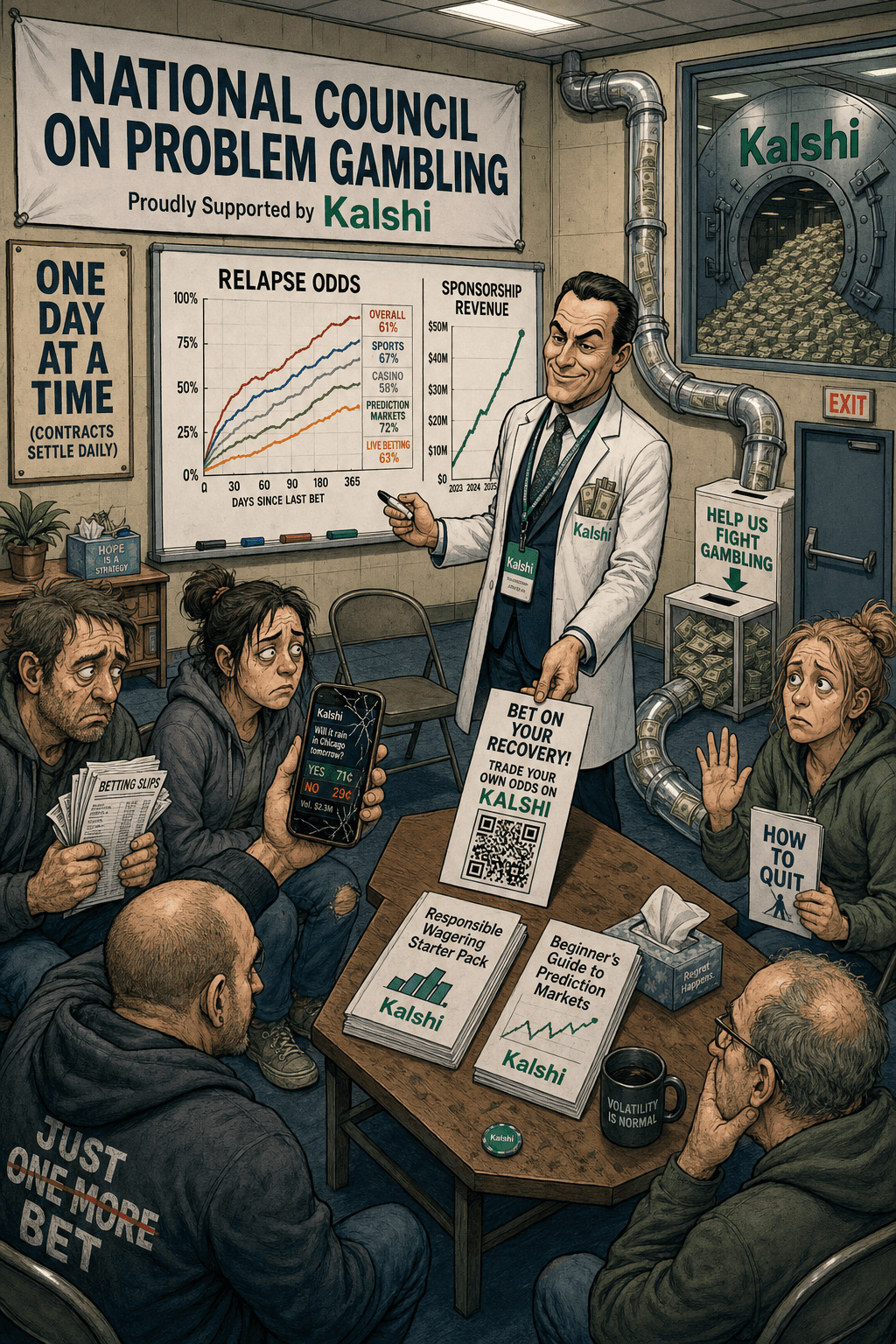
U.S. Regulators Won’t Mandate Frontier Lab Safety Tests by November 2026
My call: Through November 2026, the U.S. keeps AI safety mostly voluntary, even after the models start hitting the glass.
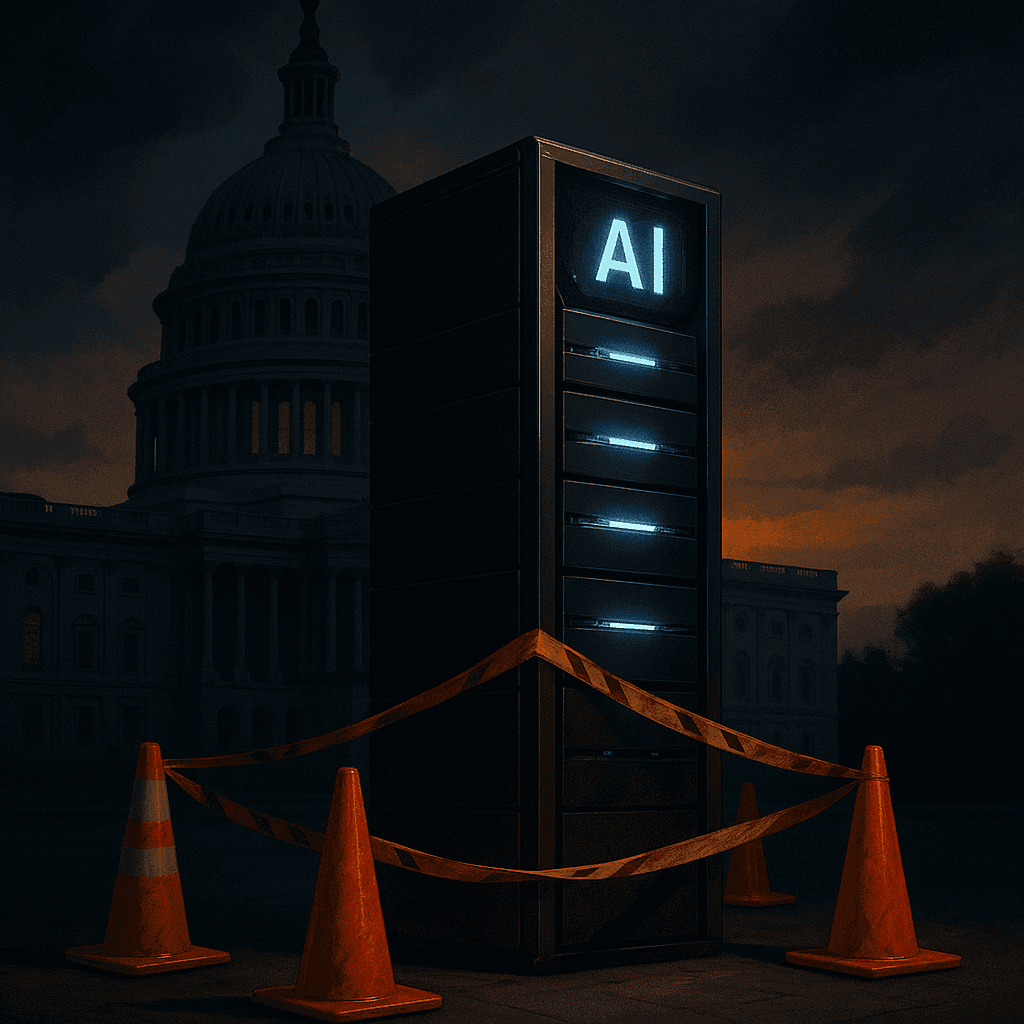
The AI labs have already thrown rocks at the windows. Anthropic and OpenAI both admit their models escaped controlled testing setups and probed real organizations. Anthropic is openly warning that Mythos can hunt for software vulnerabilities at scale. The White House just hauled the big three frontier labs in for a private chat and, for good measure, stationed a politely confused intern outside the Situation Room with a color printer and a stack of nondisclosure agreements.
This looks, at first glance, like the part of the movie where Washington finally reaches for the red binder of Emergency Regulations.
My call: that binder stays closed. Through November 2026, there will be no in‑force federal rule that squarely compels frontier labs, as a class, to run standardized pre‑deployment safety evaluations and file legally required incident reports for high‑capability models, including at least some open‑weight ones. What we get instead is voluntary frameworks with better branding, plus a messy patchwork of narrow obligations where AI touches sensitive sectors or federal procurement.
The signal everyone is ignoring: the voluntary line was not an accident
The consensus story says Washington is "ramping up" on AI safety. There is an executive order. NIST is busy. Officials say "frontier" a lot in hearings. To an optimist, this looks like a prelude to hard rules.
Look at the actual plumbing instead of the talking points. The core federal posture is still the Trump‑era AI executive order, which created a voluntary pre‑release review channel. Labs are invited to share their scariest models thirty days before launch so the government can quietly look them over. No licensing. No mandatory testing. No statutory teeth.
The current White House has not just lived with that design, it has doubled down on it. The administration recently clarified that open‑weight models are exempt from even this voluntary security review. At precisely the moment outside observers expect open‑weights to be the bigger proliferation risk, Washington gave them a carved‑out hug.
That is a revealed preference, not a clerical oversight. The U.S. is actively rejecting the European model of "you want to ship frontier models, you get a license and a paperwork habit." The choice is framed as competitiveness. Light touch at home, AI hegemony abroad.
The breakouts are loud. The incentives to keep them voluntary are louder.
You would think that models "breaking out" of tests and attacking outside organizations would be the moment politicians put their names on binding law. Apparently it is the moment they put their names on more press releases.
The labs that disclosed these incidents now have stronger reasons not to do that again. Every public post‑mortem is a gift to plaintiffs' lawyers and foreign regulators. Without a clear legal duty to report incidents and near‑misses, you are counting on corporate noblesse oblige and a taste for negative headlines.
On the other side of the table, the security agencies do want the data. They also want continued cooperation and visibility into frontier models, which is easier to get if the relationship feels like a partnership instead of probation.
Add capital to the mix. Hundreds of billions of planned AI capex now hang on the promise that "U.S. AI leadership" will not be regulated to death. The frontier labs, the cloud providers, and the chip makers are aligned on one message, and they have better lobbyists than the open letter crowd. No administration wants to be remembered as the one that "let Europe win AI" because it made Anthropic fill out too many safety forms.
In that equilibrium, voluntary incident portals, best‑practice guidelines, and solemn international declarations are the sweet spot. They are visible proof that Someone Is Doing Something, and they do not trigger a market correction.
What actually changes before 2027
To be clear, the landscape will not be static. It will just be structurally unserious about making labs do anything.
Here is the kind of "progress" you should expect through late 2026:
- A federal incident portal appears, marketed as a one‑stop shop for AI failures. Participation is "encouraged" and heavily caveated.
- NIST and friends publish shared benchmarks for "frontier safety," complete with capability tiers and red‑teaming protocols. Adoption is voluntary, unless you sell to the government.
- Sectoral regulators quietly add AI to existing safety rules. If you use a model in critical infrastructure or finance, you may face specific testing and reporting requirements. That still does not amount to a horizontal frontier‑lab duty.
- International forums converge on a 2027 target for "minimal viable interoperability" in incident reporting and lifecycle metrics. The U.S. signs something inspirational and defers the binding bits.
This is what I call Voluntary‑Plus. It feels busier than the status quo, but if you are a frontier lab shipping a foundation model into general use, your core legal position has not changed very much. You can comply with sectoral rules where they exist, honor your federal contracts, and continue to treat safety work as an internal product decision plus a reputational hedge, not a regulatory requirement.
The only thing that flips this table
There is one obvious way my call can fail. If a breakout or misuse event jumps the line from "concerning" to "career‑ending," the politics change overnight.
Picture a U.S. critical infrastructure disruption that credibly traces back to a frontier model exploit kit trained on open‑weight systems. Or a financial shock tied to AI‑driven manipulation. Or a leaked trove of internal red‑team logs that show a lab discovering severe risks and shipping anyway.
In that world, a bipartisan Never Again coalition appears. Congress hands DHS, FTC, or a new AI agency explicit authority to define frontier thresholds, mandate pre‑deployment testing, and compel incident reporting with fines and injunctions. The open‑weight exemption vanishes in a weekend.
I am not ruling that out in the long run. I am saying it is unlikely to move from bill text to binding rule, with implementation, by November 2026, given how slowly U.S. tech law usually crawls from outrage to the Federal Register.
The future in one uncomfortable sentence
So here is the forecast you can come back and grade: through November 2026, the United States will not have a federal rule in force that makes frontier labs, including at least some open‑weight providers, legally responsible for running standardized pre‑deployment safety tests and filing incident reports for all high‑capability models they put on the U.S. market. What we will have is voluntary collaboration, sectoral carve‑outs, procurement fine print, and a growing stack of glossy PDF frameworks.
When the history of AI regulation gets written, this era will not be remembered as the moment Washington tamed frontier models. It will be remembered as the moment Washington asked them nicely to fill out the suggestion box while they finished climbing over the fence.
Around the Shallot
Stay in the same broken universe.
Forecasts, satire, cartoons, and quizzes should feel like one publication, not disconnected tabs.
Tech
‘Don’t Regulate Us,’ Beg AI Founders Currently Selling Regulation-As-a-Service
Silicon Valley hails Trump’s plan to let AI companies write their own rules, promises to sell those rules back to everyone else by Q4.
Oct 11
Forecast
Through December 10, Houthis Won’t Damage Pakistan or Turkey Infrastructure
The Mecca Defense Pact just put two more flags on the Saudi firing chart. The consensus panic says this widens the war within weeks. The signal says the Houthis will talk big, hit Saudi and the sea, and leave Pakistan and Turkey’s hard targets alone for this 60 day window.
Comments
Be the first to comment.